


The discussion about abolishing or reducing water corporations is presented in public discourse as a vital, positive, and technical managerial move, one that is supposed to return authority to local authorities and streamline service to residents. However, in the past month, with a series of flooding events, reality has provided a sharp and clear answer: many local authorities are not prepared, professionally and infrastructurally, to manage complex systems, even when responsibility already lies in their hands.
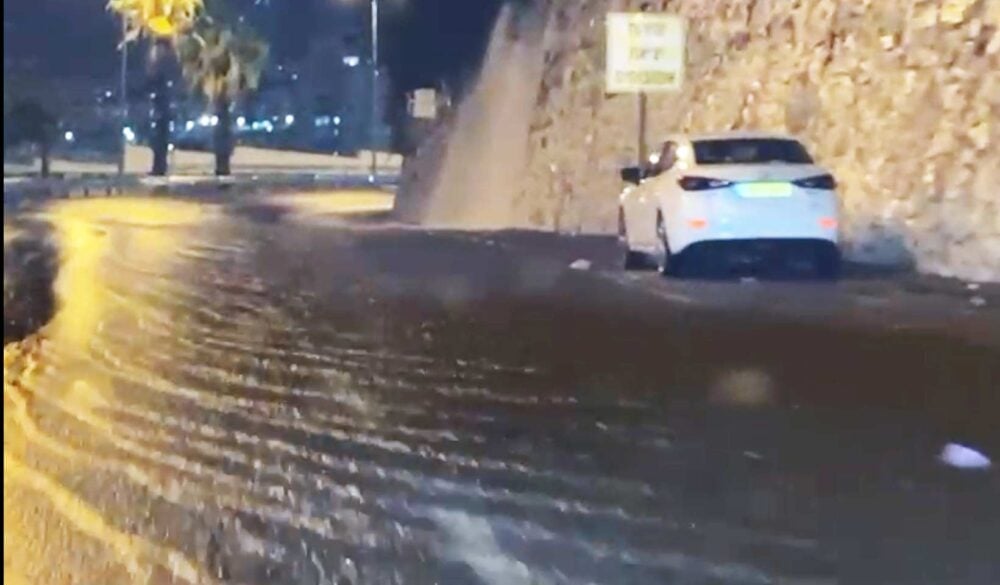
The recent floods are not a one-off event or an unusual glitch. They are a recurring pattern of infrastructural and managerial failure in the area of rainwater drainage, an area that is the direct responsibility of municipalities and local councils. Streets were flooded, traffic was disrupted, property was damaged, and residents were left without a solution, despite early warnings and clear forecasts from the Meteorological Service.
Similar to water and sewage, the field of urban drainage is not marginal. It is a complicated engineering, operational and economic system, requiring multi-year planning, ongoing maintenance, long-term investment capacity and professional management that is not subject to short-term political considerations and is not dependent on election cycles. The floods we have seen recently are not an unexpected natural disaster, but the result of neglect, poor prioritization and an institutional lack of ability to deal with extreme events. They illustrated how deep the gaps in preparedness are and how difficult local authorities are to meet even the tasks within their current jurisdiction.
Against this background, initiatives to abolish or reduce water corporations are a real concern. If authorities have difficulty managing drainage, a defined, local system, how will they be able to manage a complete water and sewage system that includes continuous supply, wastewater treatment, infrastructure maintenance, compliance with strict quality standards, and long-term investment management? Transferring powers is not a solution to the failure, but rather a deepening of it.
This is not to say that water corporations are free from problems. There is room for criticism, improved supervision, increased transparency, and reduction of unnecessary costs. But between informed reform and dismantling the system, there is a huge gap. Water corporations were built precisely to disconnect critical infrastructure from political pressures, chronic deficits, and short-term management. They allow for regional vision, budgetary stability, and the ability to invest in infrastructure even when it doesn't "look good" in a single term.
Flooding events should serve as a warning sign. In an era of climate change and increasing extreme events, weakening the professional bodies responsible for water and sewage infrastructure is not a reform, but a gamble at the expense of national infrastructure and citizens. Instead of dismantling, it is necessary to streamline, strengthen, and deepen the cooperation between local authorities and water corporations and supervise in a professional and thorough manner.
The quality of water and sewage systems has a direct impact on the quality of life. Failure to manage them leads to tangible health risks, the spread of diseases, odor hazards, exposure of vulnerable populations to infections, and deepening spatial inequality. Those who ignore the reality that flooded the streets in the past month may discover that the next damage will be much deeper and more expensive. Environmental, health, and economic damage that will accompany the public for years to come.
Thank you from the bottom of my heart for dealing with critical issues that the general media rarely deals with, and it gave me a different perspective on the water problem. In fact, there is a difficult dilemma here between disconnecting the water corporations, etc., which could create additional problems besides the existing ones as you presented, and which is directly or indirectly related to political matters. At the same time, the residents are interested in their pockets. And when they see what inflated bills they are receiving, they no longer care about anything and are already inclined to agree with the Minister of Energy's move to disconnect the water corporations, etc. I, too, as a resident of Acre and living alone in my home, received inflated and imaginary bills that neighbors told me that even they, as family members, do not receive, and I am already preparing to file a lawsuit against them, as have many other residents of the center who have banded together and hired an attorney to represent them in a lawsuit against the water corporation in their city. And with me, interestingly, the opposite happened. Since they replaced the meters with digital ones, the inflated amounts have decreased.. A mystery unto themselves.. Anyway, thank you for the very important articles on the subject of water. It is clear that your reporters have done their homework on the subject in depth with exceptional talent. May you be blessed and continue and succeed more and more in continuing your fascinating topics. I would be happy to receive regular reports from you, also in general, from your important website. Thank you.