


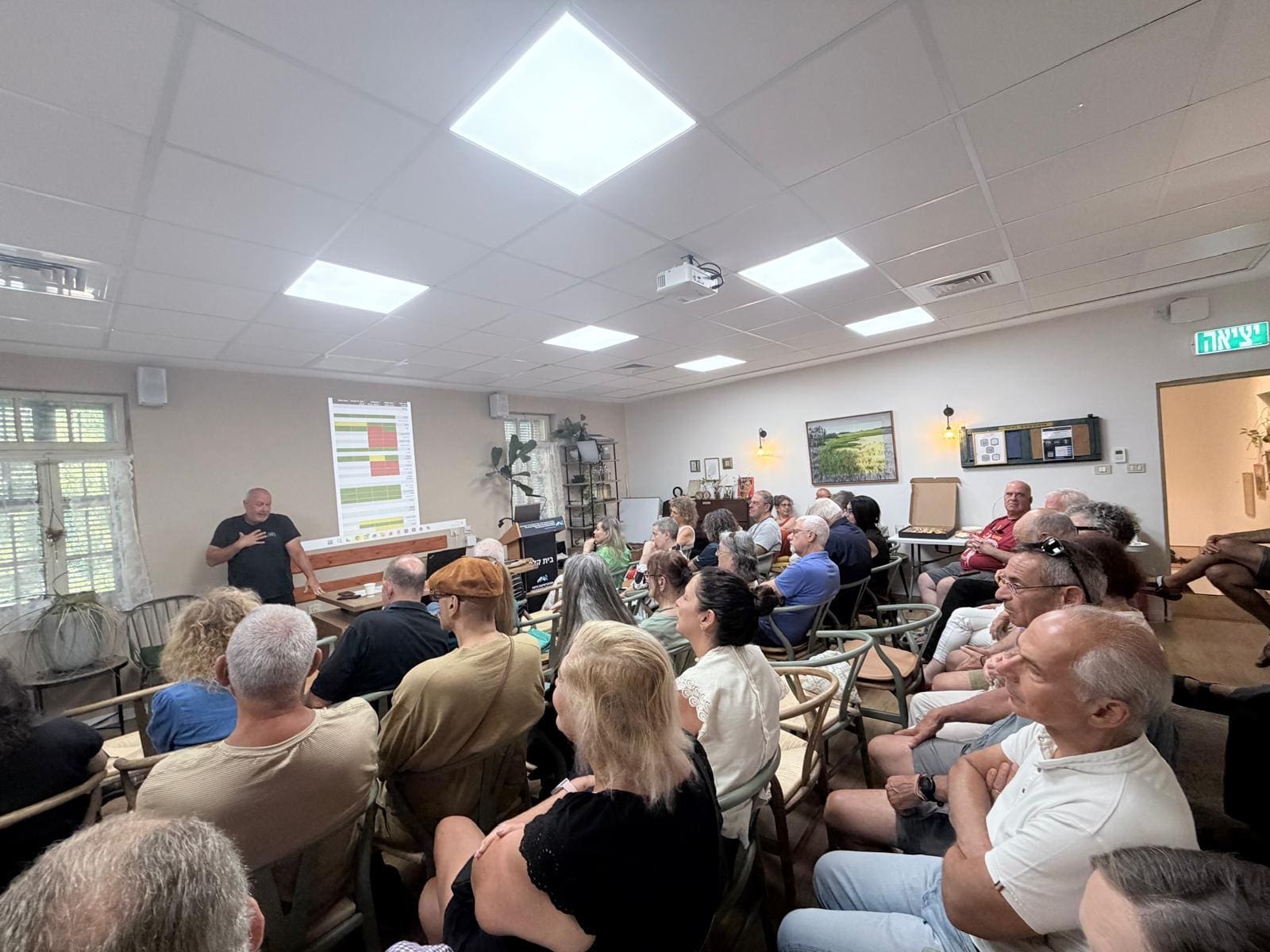
(haipo) On Sunday, July 26, 2026, the public forum of the Council for the Preservation of Heritage Sites in Israel in the Haifa, Western Galilee and Nesher districts convened for a particularly charged meeting held at Beit Keller in central Carmel. The meeting was attended by activists, professionals and public representatives, including Deputy Mayor and Green Party Chairman Avihu Hahn, who listened to a series of testimonies about the difficult condition of the built heritage in the area.
Readings from the field and highlighting local problems
The meeting was opened by Chief Engineer in the Council's Planning Department, Uri Ben-ZioniChairman Niv Wiesel apologized, saying he had to travel to Jerusalem at the last minute for budget matters and therefore did not attend the meeting. After the opening remarks, a lecture and discussion led by Architect and former planning and real estate reporter at Calcalist, Guy NardiThe meeting was moderated by Prof. Yossi Ben-Artzi, Chairman of the District Public Committee, and Oren Agmon from the Council.
At the very beginning of the meeting, residents were flooded with serious problems. Hanna, an environmental activist from Nesher, warned that the city has no "gatekeepers" to protect the trees, and that many residents are not even aware of the existence of an archaeological site in Nesher. She said that her inquiries to the Israel Antiquities Authority and the Waqf's lawyer were not answered by the municipality.
Pardes Hanna as a positive example: "The conservation annex is a basis for work"
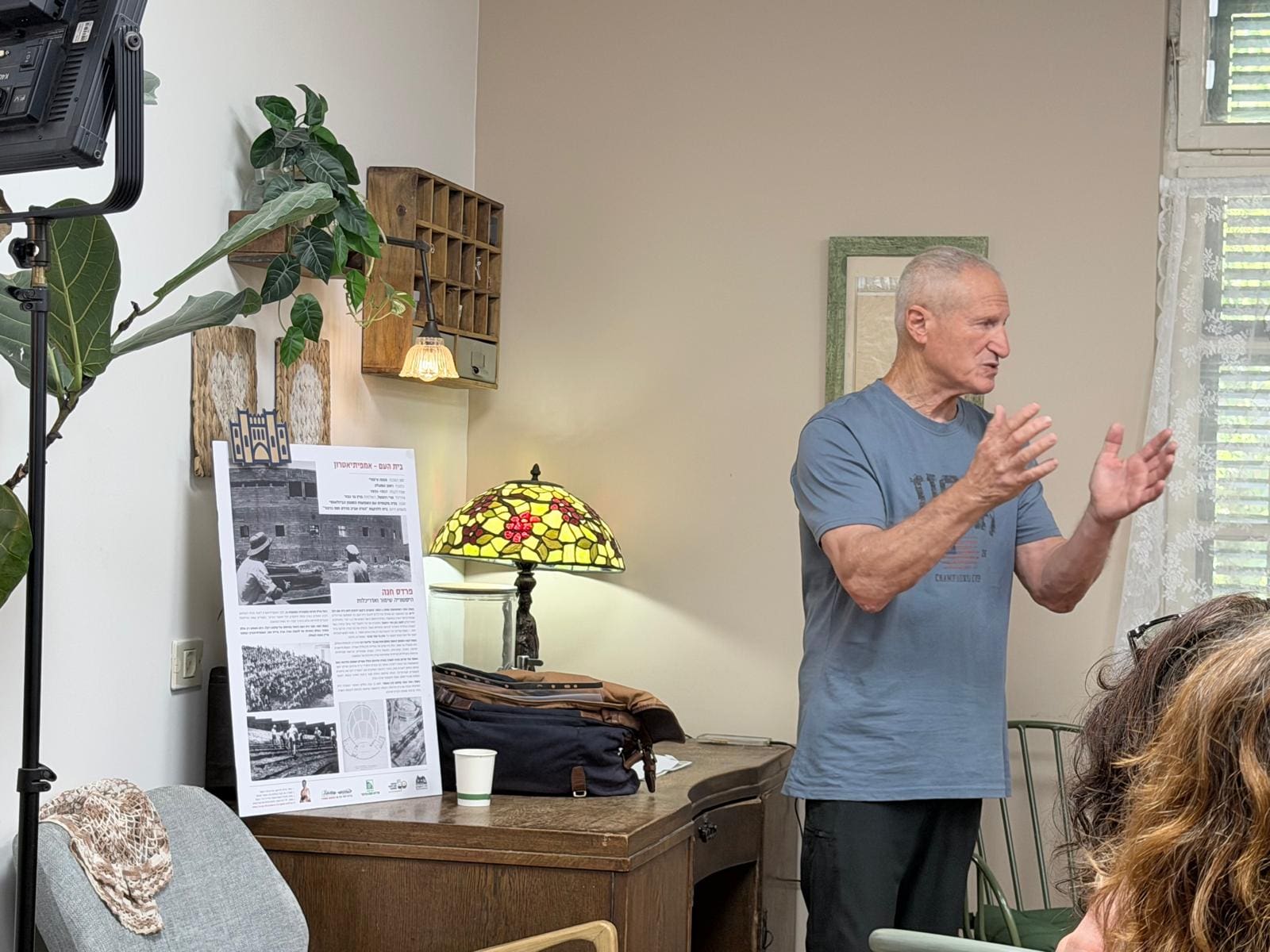
Architect Yoav Tryphon, designer of the Hecht Museum and resident of Pardes Hanna, presented a completely different picture. He said that in Pardes Hanna-Karkur, which has about 50 residents, the preservation annex is a key tool, and most of the historic buildings are concentrated in the heart of the colony. He mentioned prominent buildings such as the Farmer's House and the amphitheater designed by Hari Rosenthal in the 30s, and noted that there is an open historic theater in the colony that many are not aware of and that is on the preservation list. He also noted that a group of activists has been formed with a promising connection to the Preservation Council.
Forgotten Historical Haifa: A 30-Year Study That Goes Unrecognized
Eli Liran, a veteran activist in the Haifa History Association, said that for three decades he has been trying to locate the houses of architect Brewald in the city. Liran discovered a monument by Brewald, and in collaboration with Prof. Ben-Artzi, he proved that this was the first public park on the Carmel, a formation of two circles of trees, in which the cypress system has existed since 1890, decades before the monument was erected in 1937. Despite its importance, the site does not appear on any of the five conservation lists he examined.
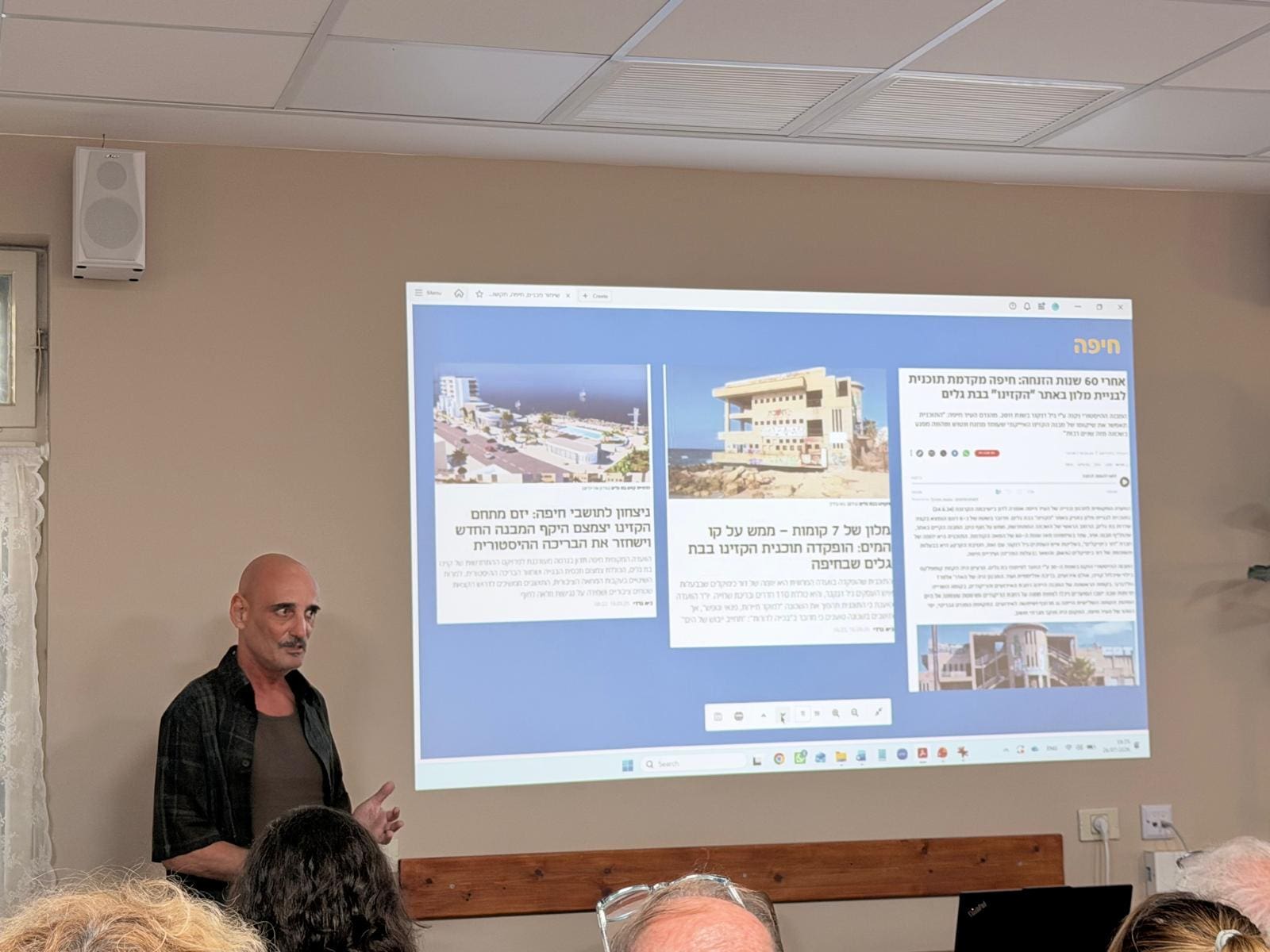
Guy Nardi presents a difficult picture of the situation: "There is no conservation plan in Haifa – everything is open to negotiation"
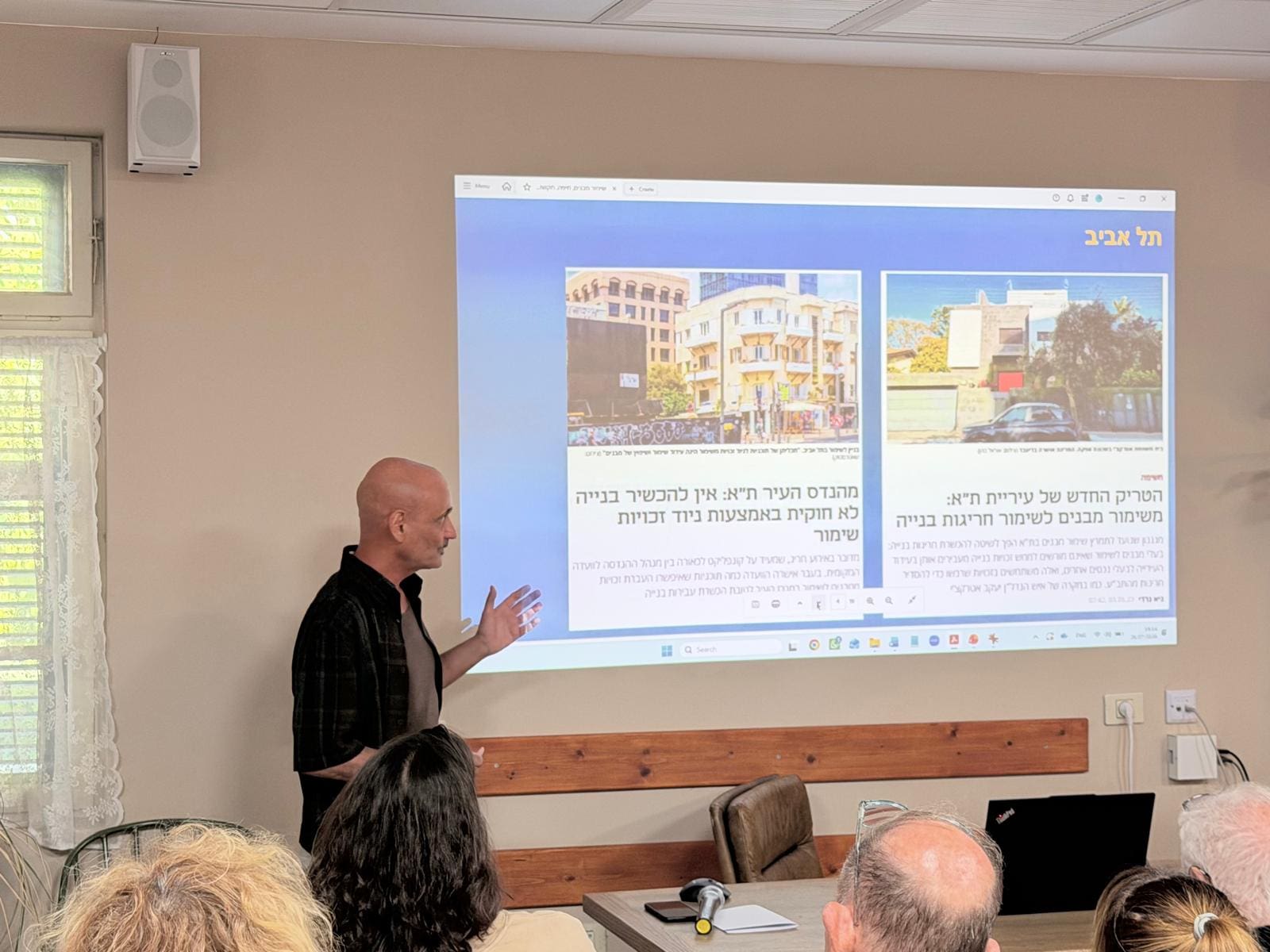
Guy Nardi, an architect who until recently served as a planning and real estate correspondent for Calcalist, presented a difficult picture of the state of preservation in Haifa. Nardi noted that in Tel Aviv, about 1,000 buildings were declared for preservation in 2008, while in Haifa there is no general preservation plan, and therefore it is more difficult to preserve buildings. Nardi emphasized that in all cities in the center of the country there are statutory preservation plans in an advanced state, while in Haifa the situation is only preliminary, only a preservation survey without a binding law. "My articles are based on the assumption that there is a preservation plan, but in Haifa there is no preservation plan and everything is open to negotiation," he said.
"Serial Destruction in Hadar" – A Call to Save Historic Buildings
Nardi gave many examples of the preservation problems in Haifa. He mentioned the Mount Carmel Hotel on the Sea Road and the casino building in Bat Galim, which belongs partly to the developer and partly to the municipality, and described how much energy was wasted on the structure of both buildings, and in the end they were saved. As an architect, Nardi said, there is serial destruction in Hadar, but the architecture there is actually more interesting and the architects are more significant than in Carmel – and yet there is no certainty for any building. He cited as an example Pevzner Street, where a seven-story building is planned on a street where the average is three stories, and without parking for the building’s residents. Nardi also mentioned the Nachum Wilbuschewitz House, where a new building is being built without regard to preservation. At 10 Yitzhak Blvd. in Carmel, there is a villa surrounded by 100-year-old cypress trees that are on the tree preservation list, but there is a developer who intends to build on 27 Sea Road and remove exactly the same trees that the municipality has decided need to be preserved. He also noted that on the street where he himself lives, Jerusalem Street in Hadar, there are buildings built by architect Kaufman, but there is still no preservation. He called on the public, activists, Abiha Hahn and the Preservation Council to help save the Hadar Carmel buildings, saying: "I don't think we can trust the city's leadership and I need the public with me."
It should be noted that Nardi's strong words against the city's conservation policy caused discomfort among some of those present at the meeting, who felt that Nardi's harsh claims against the city's activities were exaggerated. Another person who objected to the remarks was Hahn, who did not agree to accept the claim that conservation attempts in Haifa over the years had failed, as Nardi claimed.
Hahn: “Significant progress in conservation, but we still have a long way to go”
Deputy Mayor Avihu Hahn, who is also the chairman of the municipal preservation committee, rejected Nardi's claims regarding preservation in Haifa and emphasized that significant progress has been made in the past two years: about 300 additional buildings have been added to the preservation list, after years of stagnation. According to him, since the beginning of his term, he has been working to strengthen the field of preservation out of the perception that historic buildings are a public and cultural asset that must be protected.
However, Han also pointed out fundamental flaws in the structure of the Engineering Administration: the field of conservation is subordinate to the City Planning Division, which prevents professional independence for the director of the department and creates a conflict with a policy that is mainly aimed at increasing the number of housing units. In addition, he said, for more than four years, many hundreds of buildings recommended for conservation have not been approved — today, about 1,400 buildings still do not have planning protection.
He noted that he has instructed the city engineer to soon complete the urban preservation policy document, as well as to promote a preservation plan for the Hadar neighborhood, one of the richest areas in Haifa’s architectural heritage. “The mission is clear,” he said, “to complete the approval of all the buildings recommended for preservation and strengthen the professional status of the preservation field, so that Haifa’s architectural heritage will be part of its future.”
Regional Perspective: Hadera as a Parable – and What It Says About Haifa
The discussion revealed that only five sites remain in Hadera for preservation out of the approximately 200 that once existed. The high demand for real estate in the area has turned the struggle for preservation into a race against time. This example reflected the general feeling at the meeting: Development pressures are threatening the historical heritage in the entire Haifa area and the surrounding area.
Summary: Haifa's Heritage at a Crossroads
The lack of a statutory preservation plan in Haifa leaves historic buildings vulnerable to damage. The meeting on Keller Street illustrated how concerned the public is, and how much professionals are warning about the irreversible loss of cultural, architectural and historical assets.
The message that emerged from the forum was clear: This is the last time to act before Haifa's historical heritage disappears under the wave of development.
Did the article interest you?
We don't do preservation before we make sure the building is inhabited and looks reasonably liveable. In the end, we'll become a ghost town of abandoned buildings, but the main thing is preservation.
What can Hadar citizens actually do to help?