


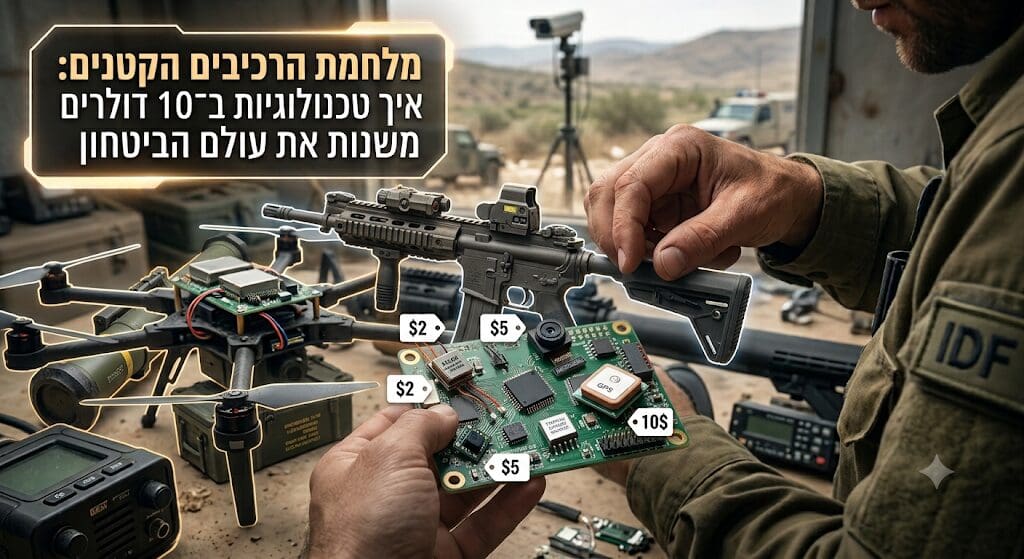
When you think of a strong military and modern warfare, you usually imagine expensive fighter jets, sophisticated missiles, and large defense systems. But beneath the surface, something interesting is happening: The next war will not start with an expensive missile, but with a small electronic component that costs only a few dollars.
The Twist: From Household Products to Military Use
Components originally intended for household appliances or simple manufacturing systems are now becoming a significant factor in the military arena. Their high availability, low cost, and mass production allow countries under embargo or sanctions to circumvent restrictions on the acquisition of advanced weapons. Thus, everyday consumer technologies are suddenly becoming effective and accessible means of power.
Here are four notable examples of how simple products become weapons:
- Security cameras and plastic lenses
- Normal use: Simple cameras that you buy for tens of dollars to guard your home or store.
- Military use: Instead of buying expensive military optical systems that require special permits, civilian or mobile phone cameras are being mounted on drones and unmanned vehicles. Combined with smart software, these cameras help identify and target targets for next to no cost.
- Motion sensors from mobile phones and video games
- Normal use: Small sensors found in every smartphone or game controller to determine whether the device is standing or tilted to the side.
- Military use: The exact same sensors are used to stabilize smart shells, light rockets, or suicide drones. Instead of complicated and expensive military navigation systems, these chips do the job and pinpoint a target for a few dollars.
- Tiny computers for enthusiasts (Raspberry Pi)
- Normal use: Small computers that cost a few dozen dollars, which students and hobbyists use for projects at home.
- Military use: Such small computers now operate various weapons units and drone systems. They serve as the brain that connects the sensors, cameras, and the power button, helping to build field control systems independent of secret military factories.
- Small wireless internet components (Wi-Fi ו-Bluetooth)
- Normal use: Small components that connect devices in the home to the network (for example, to turn on the air conditioner from your phone).
- Military use: Soldiers and organizations use these components to create cheap, encrypted communications networks between drones and field positions. The ability to remotely operate equipment and transmit images without buying expensive military radios makes this homegrown technology a very effective tool in combat.
Why is this so important??
This means that the strength of an army is not measured only by the number of missiles and expensive systems it has, but by its ability to adapt quickly. Those who know how to take simple, everyday technology and turn it into an operational tool, in a blink of an eye, gain a huge advantage on today's battlefield.
Did the article interest you?