



introduction
The attempt to construct theories to explain the world we live in is characteristic of the human species. This attempt exists in all disciplines. It is prominent and very successful in the fields of exact sciences, but it also exists in the social sciences and humanities.
Constitutive historical processes
Collecting data and building theories defines human activity in almost every field. This is also true of history.
The attempt to establish historical theories is complex, and as in any other discipline, it requires constant examination of the correspondence between the theories and the reality they seek to explain.
We are blessed to have the well-known Chinese curse "May you live in interesting times" fulfilled upon us, and thus we witness with our own eyes formative historical processes.
The fact that we inevitably experience them creates a natural curiosity to discover a mechanism that can help us decipher how history works.
The three main theories
Since the 1990s, three major theories have been proposed to explain the course of contemporary historical events.
These are the following three theories:
- "The End of History" by Francis Fukuyama (The Optimist)
- "The Clash of Civilizations" by Samuel Huntington (The Prophet of Wrath)
- John Mearsheimer's "Offensive Realism" (The Cold Realist)
History must be judged from a distance, but the rapid pace of events today is enough to make some of these theories, at least in part, obsolete.
Unfortunately, it was precisely the most optimistic of the three theories that failed. The theory that predicted the triumph of democratic and liberal values failed to predict the developments of the last three decades.
In contrast, the "cold" theory, which does not give weight to values, proves itself to have the best predictive power.
Below is a concise comparison between the three theories:
Francis Fukuyama: "The End of History" (the liberal approach)
Fukuyama wrote his book immediately after the end of the Cold War (1992). He argued that humanity had reached its evolutionary end point in terms of governance.
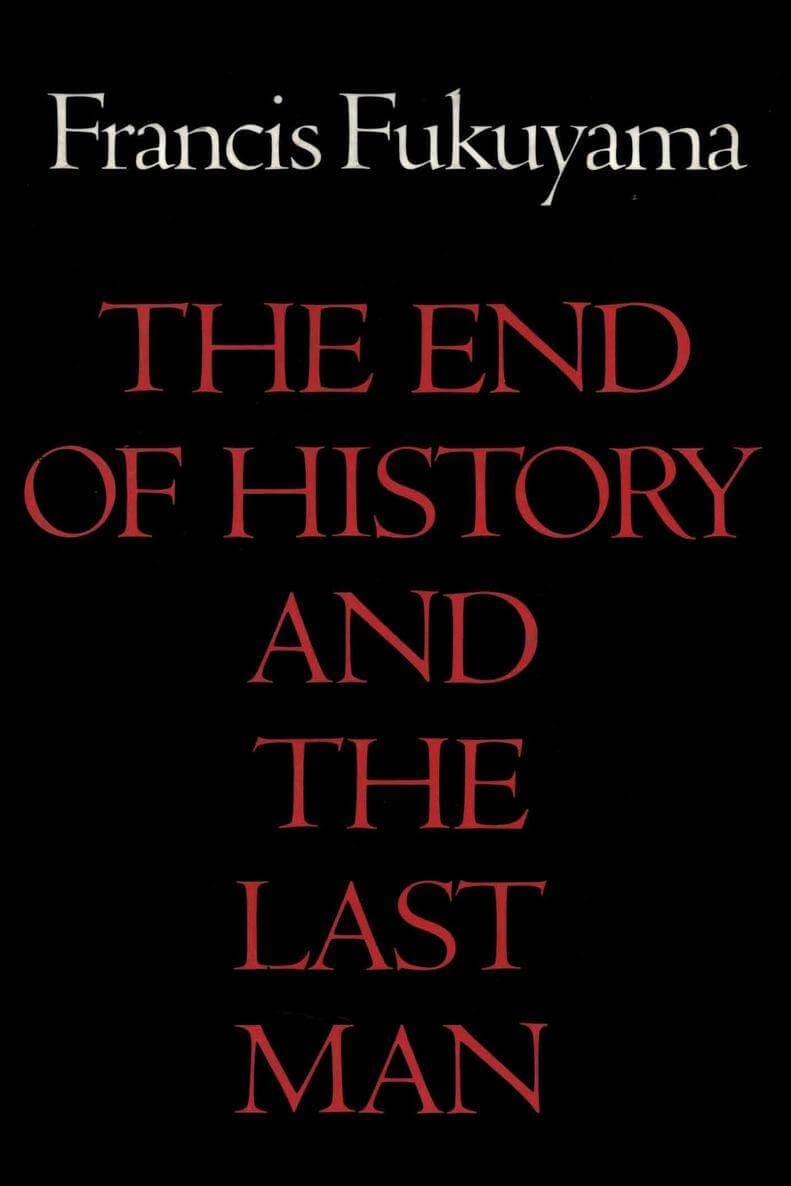
The "End of History" Theory
- The world is driven by ideas and ideology.
- The human need for recognition is satisfied in liberal democracy, which is the latest and most successful form of government.
- After the fall of fascism and communism, liberal democracy was left with no real ideological competitors.
- Democracies do not fight each other, so we should expect fewer wars. The world will become a global economic playground. Politics will become a tool for the technical management of welfare and the free market, freed from the need to manage violent conflicts.
Facing the reality test – "The End of History"
- Overall score: Failed (unfortunately)
- The theory failed to predict the rise of nationalism, religion, and the illiberal forces that emerged in the 21st century.
- The world remains a violent place, plagued by wars and violence.
Fukuyama was wrong in assuming that liberal democracy was a "final product" that people would always want. He did not foresee the democratic retreat, within which processes took place in countries such as Hungary, Turkey, Poland, and even the US and Israel, where the public voluntarily elected authoritarian leaders. Fukuyama himself has been forced to admit in recent years that the public does not always make rational-economic choices.
Samuel Huntington: "The Clash of Civilizations" (The Cultural Approach)
Huntington responded to Fukuyama in 1996, arguing that cultural-religious identity had replaced ideological identity.
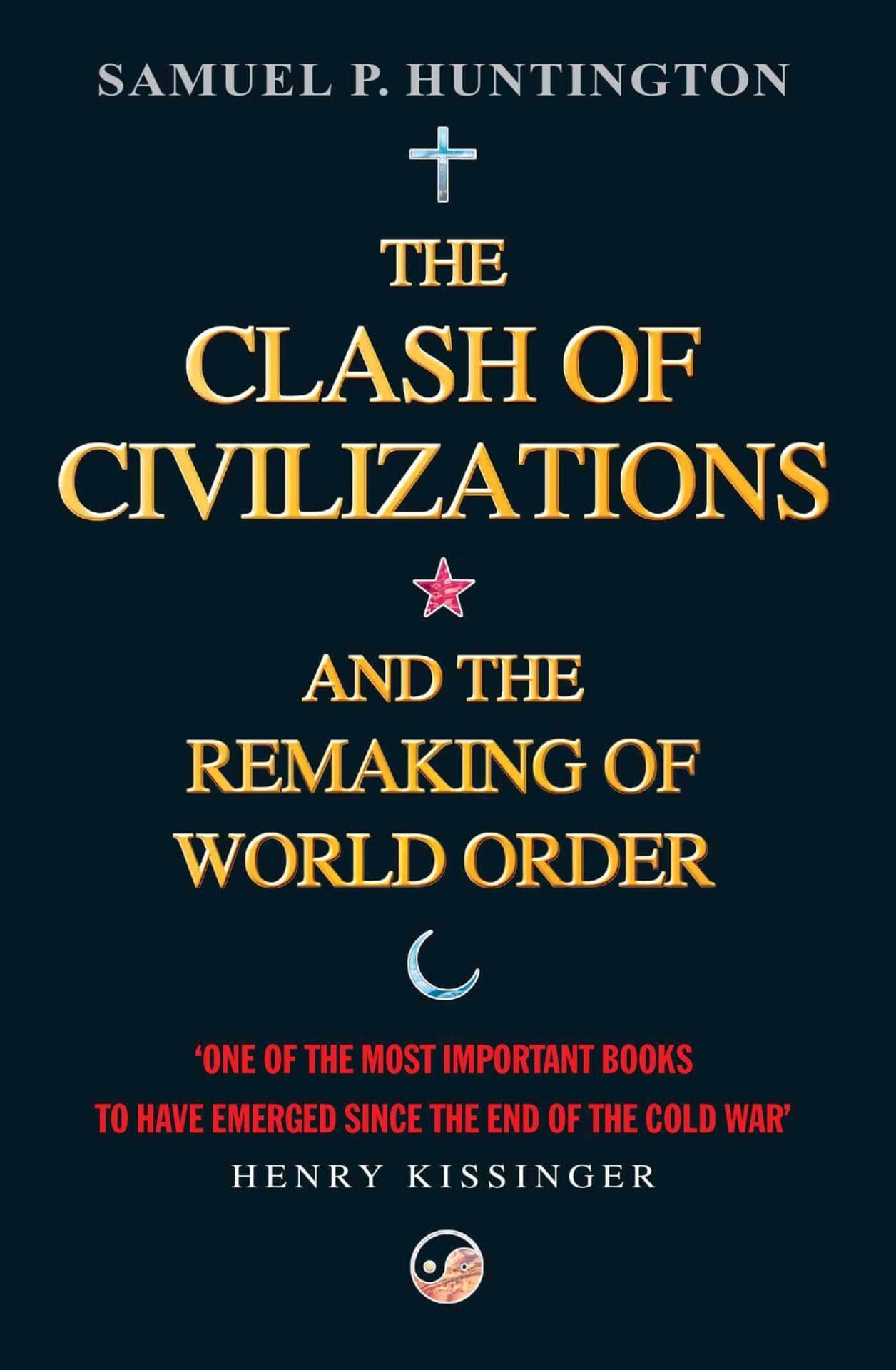
The "Clash of Civilizations" Theory
The world is driven by religion and culture. The main source of conflict in the new world will not be economic or ideological, but cultural. The world is divided into 7-8 distinct civilizations.
- Western civilization (Western Europe, North America, Australia…)
- Orthodox civilization (Russia and Eastern Europe)
- Islamic civilization
- Chinese civilization (Confucian)
- Hindu civilization (India)
- Japanese civilization
- African civilization
According to Huntington, future conflicts will not be primarily ideological or economic but cultural – between the civilizations described above.
Therefore, the future that Huntington predicted is one of inevitable conflicts, mainly between the West and Islamic and Chinese civilizations ("the Confucian-Islamic alliance").
Facing the reality test – The "Clash of Civilizations" theory:
- Overall score: Barely passes
- Huntington correctly recognized that identity (religion, nationality, language) is more powerful than any political ideology.
- The conflict between the West and radical Islam, and the growing tension between the West and China ("Chinese civilization"), fit well with his theory.
- In retrospect, Huntington's definitions of civilizations were too crude. He was wrong to assume that civilizations were uniform blocs, and that conflicts would take place along the fault lines between them. Reality shows the existence of extremely bitter conflicts. בתוך civilizations and not necessarily between them (Sunnis against Shiites, Russia against Ukraine, and even the internal split in Israel).
- In 2026, the cultural clashes predicted by the theory can be seen, but the clashes occasionally go beyond the fault lines between civilizations defined by Huntington into the civilizations and even the countries themselves (internal culture war).
John Mearsheimer: "Offensive Realism"
For Mearsheimer, culture or ideology are background noise. This is a theory of pure "realpolitics". The world is an anarchic system and what determines it is the will to power. This is a rather deterministic and Machiavellian theory, which has no interest in concepts like "values" to explain processes.
The theory – "Offensive Realism"
States are "rational actors" in a black box. The goal of each state is to ensure its survival. Out of these struggles emerge nation-states that become regional hegemons.
- The engine that moves the world is structural insecurity.
- Since there is no "world government," each country must accumulate as much power as possible so that others cannot harm it. In this sense, geopolitics is a zero-sum game.
- The future, according to Mearsheimer, is one of constant competition between countries and especially between superpowers.
Facing the reality test – "Offensive Realism"
Grade: Excellent (unfortunately, as this is a rather depressing theory)
- Mearsheimer predicted in the early 2000s that the rise of China would inevitably lead to a frontal confrontation with the United States, regardless of their system of government.
- The Russian invasion of Ukraine (which is not explained by Huntington) is very clear according to Hirschheimer – Ukraine's accession to NATO threatened Russia's regional hegemony and dictated its behavior.
This approach has been criticized for being too deterministic and ignoring the influence of specific leaders or international institutions. The theory dismisses the power of individual values, ideas, emotions, and decisions, and sees states as soulless "billiard balls."
However, it must be said that the situation in 2026 crowns Mearsheimer's theory as the big winner. In a world of superpower wars and an escalating arms race, he is the man many read and listen to in order to understand the cold power relations.
Israel according to Mearsheimer
It is interesting, in a context devoid of values, to see Mearsheimer's hostile perception of Israel, about which he has nothing positive to say.
According to Mearsheimer, Israel will try to swallow up Gaza, Judea and Samaria and become an apartheid state that will jeopardize its existence. The only solution he sees here is one of two states for two peoples.
Mearsheimer is highly critical of Israel, and his book "The Israel Lobby: US Foreign Policy" (2007) has been described by various sources as "anti-Semitic."
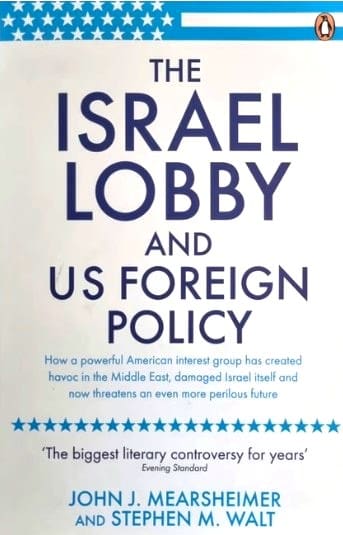
According to Mearsheimer, Israel is not a vital strategic asset for the US; on the contrary, it is a burdensome asset that harms American interests in the Arab world. He also has strong complaints about the Jewish and Israeli lobby in the US, which causes US policy to not always align with its interests.
In this context, it is interesting to note that in 1948, this was also the firm opinion of George Marshall, President Truman's Secretary of State. Marshall was a former general, the father of the "Marshall Plan" that saved the European economy after World War II, and one of the most respected people in the United States at the time. He even told Truman to his face that if the president recognized the State of Israel, he, Marshall, would not vote for him in the upcoming elections.
Truman, as you may recall, did not accept his opinion and recognized the State of Israel 11 minutes after its declaration.
In my opinion, on this point Mearsheimer is wrong, and one can point to very great benefits for the US from its support for Israel. However, at this point in time, his theory is considered the hottest thing in history (even if it has critics), and as a result the man is highly respected, as are his opinions.
Let's just hope that the results of the current conflict with Iran, and the situation in the Middle East at its conclusion, will not give these views a boost.
Graphomania, that's what's happening here.