


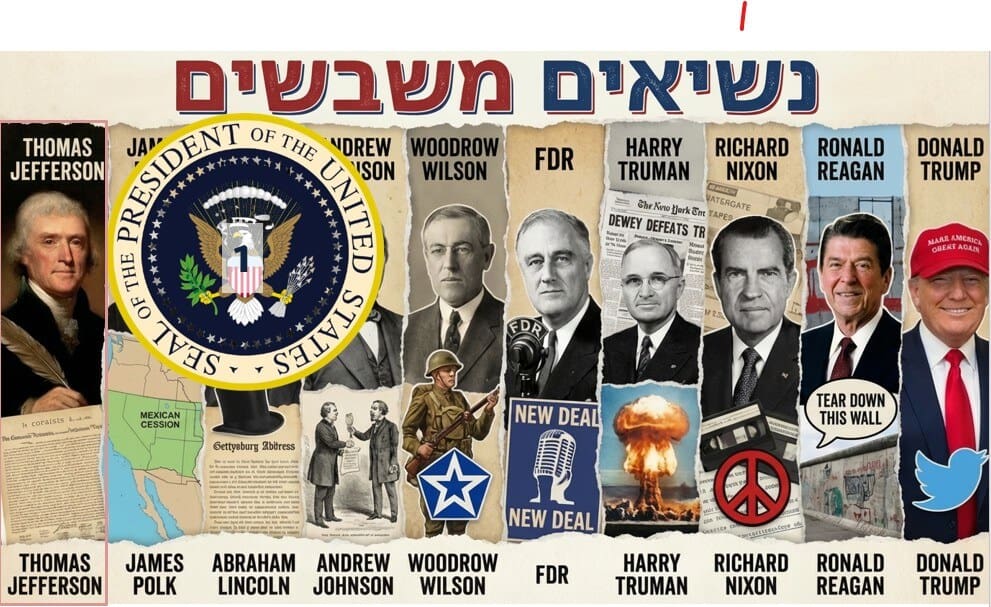
American history is not a straight line of slow progress; it is a series of serpentine leaps, dramatic moments in which one man in the Oval Office decided to gamble it all away.
In this series, we will embark on a journey following exceptional presidents, leaders who often acted contrary to public opinion, against the will of Congress, and sometimes even against their original worldview.
They were strategists who identified historical moments of grace and exploited them to reshape the borders, power, and role of the United States on the global chessboard.
Thomas Jefferson – Third President
In 1803, the United States was a young and fragile nation, centered on the East Coast. Twenty-seven years earlier, Thomas Jefferson had been the man behind America's Declaration of Independence.
In 1803, he was the third president of the world's first democracy.
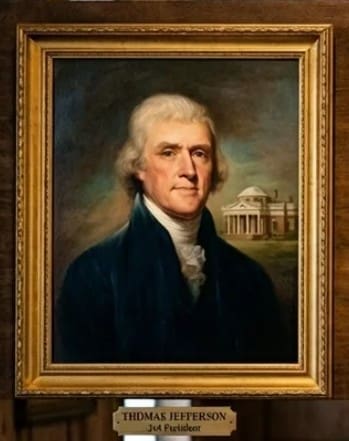
Jefferson, who considered himself an idealist, found himself faced with an irreplaceable opportunity and a personal dilemma.
On the one hand, the opportunity that came his way could have secured the nation's future. On the other hand, its realization contradicted all of his political principles.
The Bottleneck of New Orleans
Early 19th-century America had a geographical problem. Farmers in the West (at the time) depended on the Mississippi River to transport goods south to the port of New Orleans.
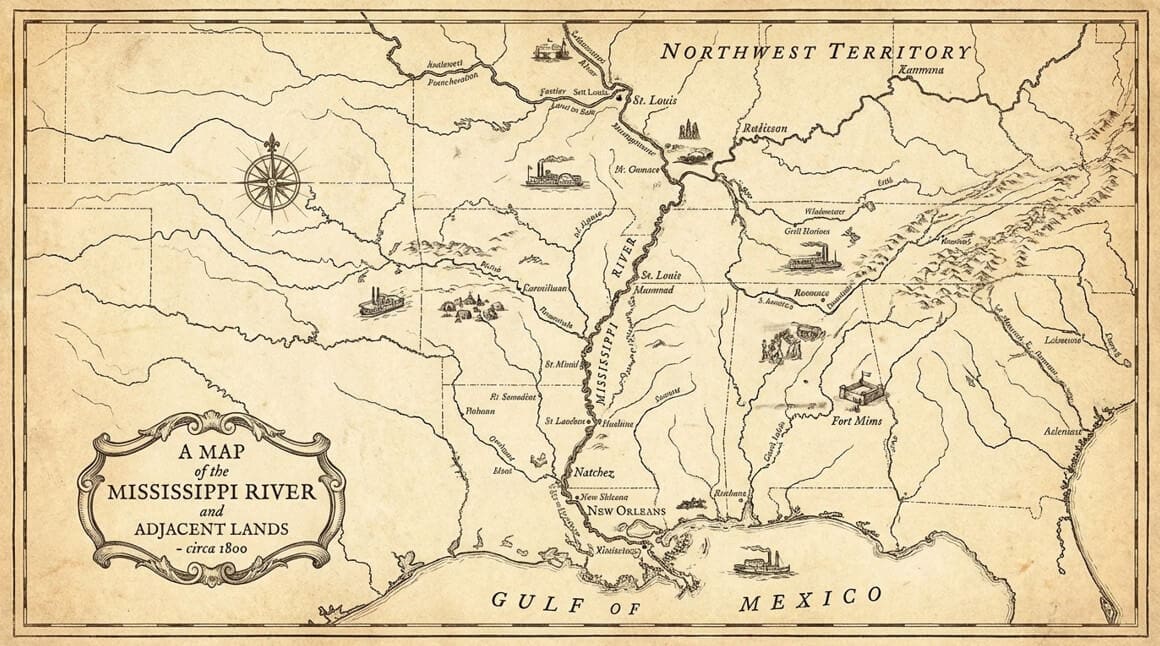
Until 1762, control of Louisiana and the port of New Orleans was in the hands of France, when Spain took it from them.
However, in 1800, Napoleon, then at the height of his power, "persuaded" the Spanish king to return Louisiana to France. In return, the Spanish king received a small kingdom in Italy (Tuscany) for his son-in-law.
This agreement was kept secret for almost two years. The Americans suspected something was going on, but it wasn't until 1802 that the rumors were confirmed.
When news arrived that Napoleon, the most dangerous military strategist in Europe, had gained control of the mouth of the Mississippi River, Jefferson realized that the United States was in strategic danger.
He knew and understood that whoever controls the mouth of the Mississippi has the American economy by the throat.
Jefferson hurried to send James Monroe, his Secretary of State, to Paris. Monroe was given a modest assignment: to buy New Orleans.
But then something unexpected happened. Napoleon needed cash for his wars in Europe. This was after the slave revolt in Haiti, the suppression of which required a lot of resources, and Napoleon lost interest in a colonial empire in the Americas.
Napoleon stunned the Americans with an unimaginable offer. He offered them not just New Orleans, he offered them the entire Louisiana Territory.
This territory did not only include the present-day state of Louisiana. The area offered for sale, approximately 2.1 million square kilometers, stretched from the Mississippi River to the Rocky Mountains.
Napoleon demanded $15 million for this vast territory.
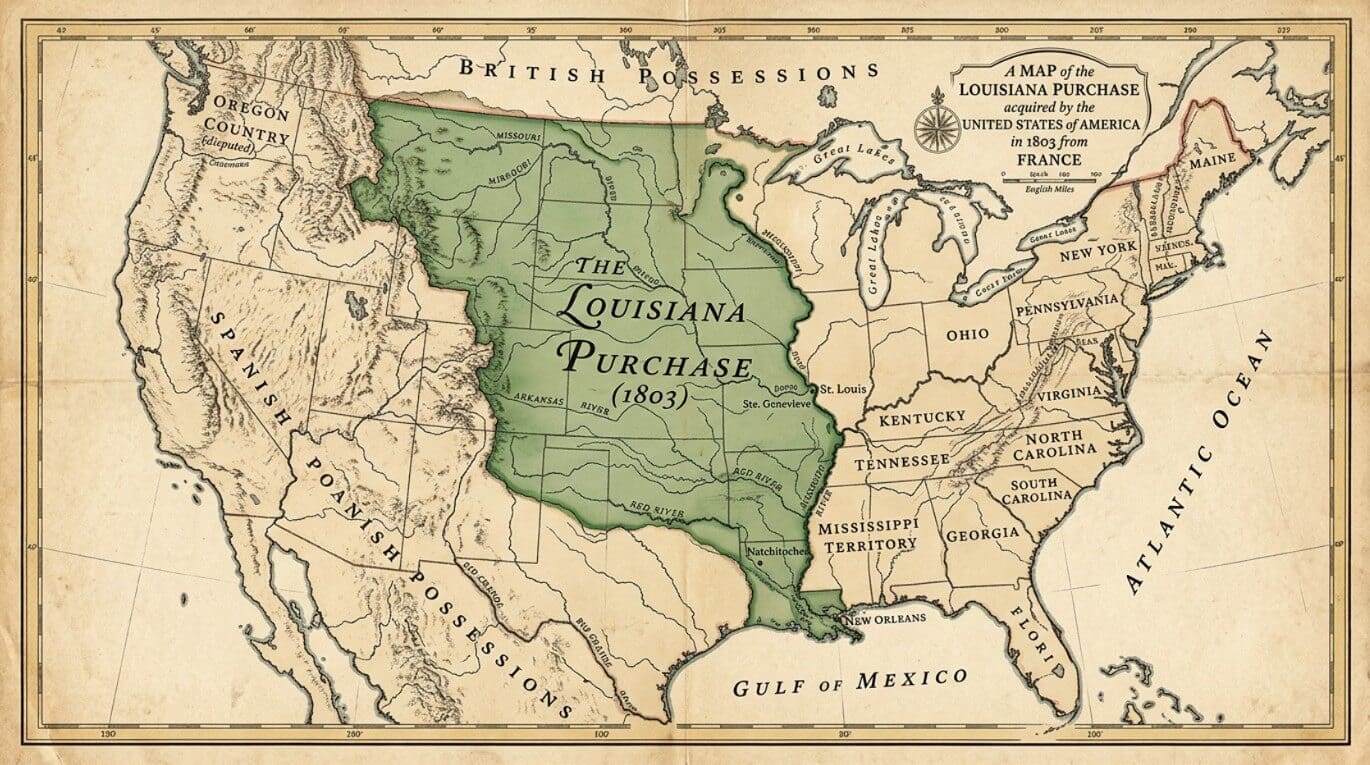
The United States could double its area in one go, at a cost of less than 3 cents per acre (less than a cent per dunam).
Note:
In today's simple purchasing power terms, $15 million is about $450 million, the price of one luxury apartment building in New York. However, in terms of a share of the GDP of the young United States in 1803, it is the equivalent of $40-60 billion today.
The Constitutional Dilemma
Jefferson was a proponent of a "restrictive interpretation" of the Constitution. He advocated "small government" and believed that the federal government was allowed to do Only What is explicitly written in the constitution. He also knew that the constitution did not explicitly allow him to acquire land.
Jefferson was so troubled by the fact that he was acting against his principles that he considered transferring Amendment to the Constitution That will legalize the purchase retrospectively.
His advisors convinced him to back down, because they were afraid Napoleon would regret it and cancel the deal while the Americans were arguing over procedures.
Later, Jefferson wrote to a friend: "I did something beyond the constitution… The government must sometimes do necessary things for the common good".
Jefferson understood that this was a once-in-a-thousand-year opportunity. For him, it wasn't just a piece of land. He invested a huge chunk of the young nation's budget in a vision for the future.
Internal audit
The opposition (the Federalist Party, led by Alexander Hamilton and Fisher Ames) was furious. They attacked not only the wastefulness, but the fact that Jefferson, the man who had always preached a zealous adherence to the language of the Constitution, simply ignored it when it suited him.
They claimed that Jefferson was acting as a "dictator" and that the president had no authority to turn foreigners (French and Spanish residents of Louisiana) into American citizens without due process.
Some Federalists in New England (the northeastern United States) were so terrified by the purchase that they began planning to secede from the Union.
They feared that the vast addition of territory in the South and West would create new agricultural states that would vote for Jefferson's party. They feared that New England would lose its political power forever and become a negligible minority in a vast "agricultural empire."
The decision that changed the world
Ultimately, Jefferson chose pragmatism over ideology.
He used his treaty-making authority as the basis for the purchase, and subsequently passed the agreement in the Senate by a narrow majority.
The results:
- The US doubled its territory overnight
- The purchase made the United States a potential superpower. Without Louisiana, the United States would have remained a relatively small country, surrounded by European powers.
- The French and Spanish threat from the center of the continent was removed.
- Presidential precedent: Jefferson established the concept of "implied powers" - the president's ability to act in the national interest even when the Constitution does not provide explicit provisions.
Thomas Jefferson, the man who championed small government, carried out the first major expansion of government and territory in American history. He understood that vision sometimes requires breaking the rules.
Jefferson chose the "common good" over the language of the law. In stark contrast to his worldview, he thereby set the first and most important precedent of Activist presidency.
Thomas Jefferson was a disruptive president.
Israel is also a dictatorship! Fences around Israel like a gate, you can't escape