


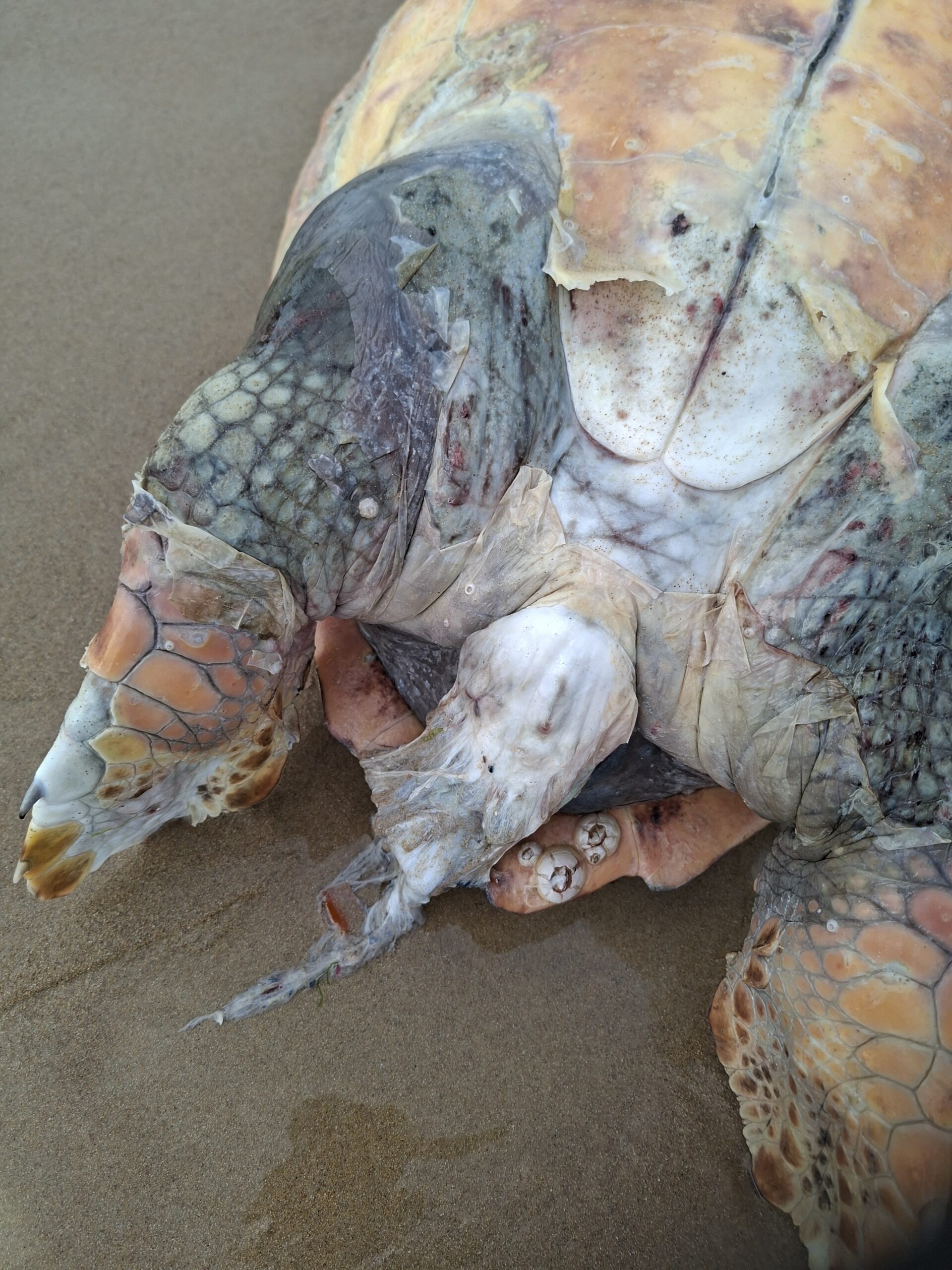
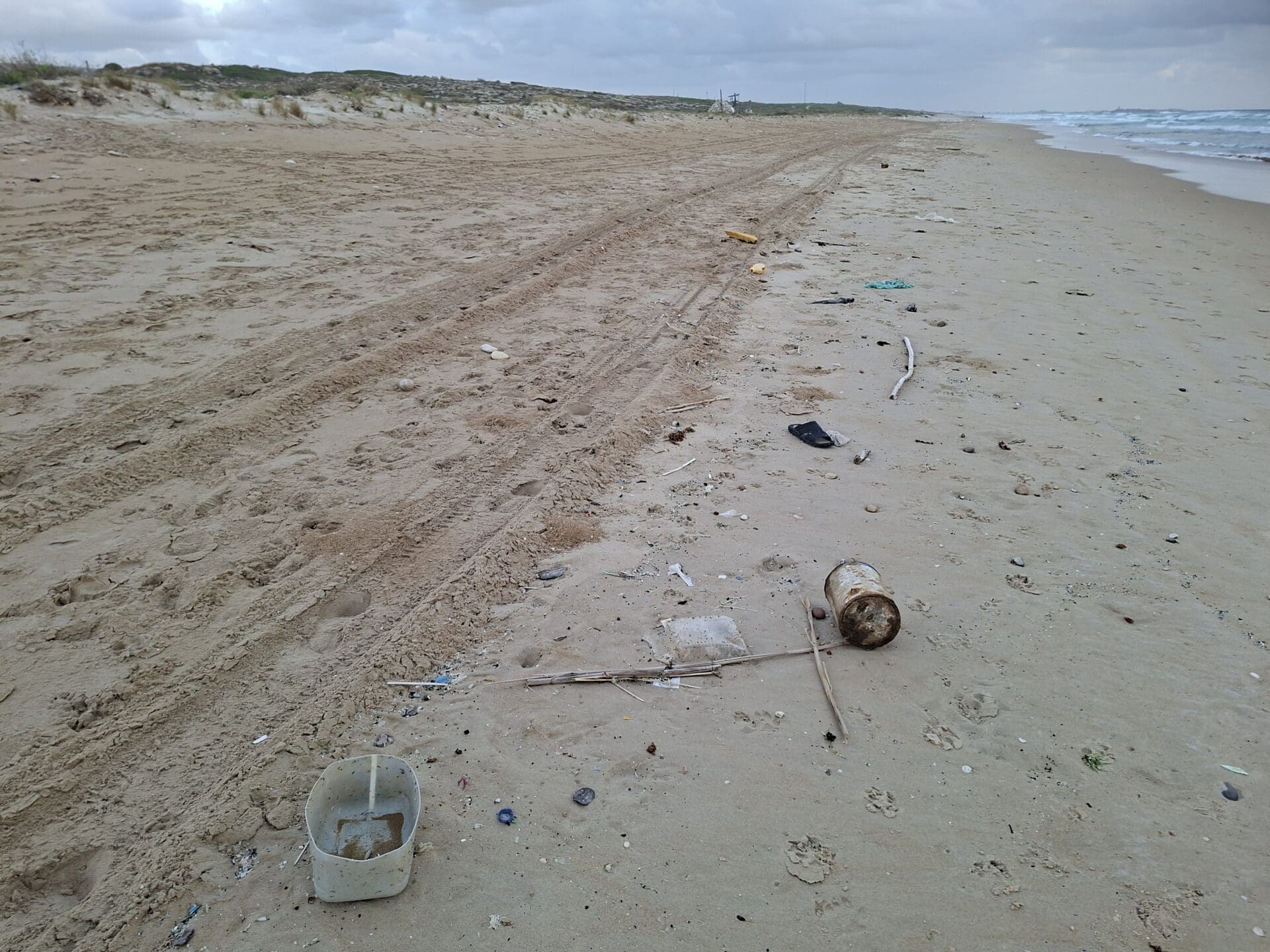
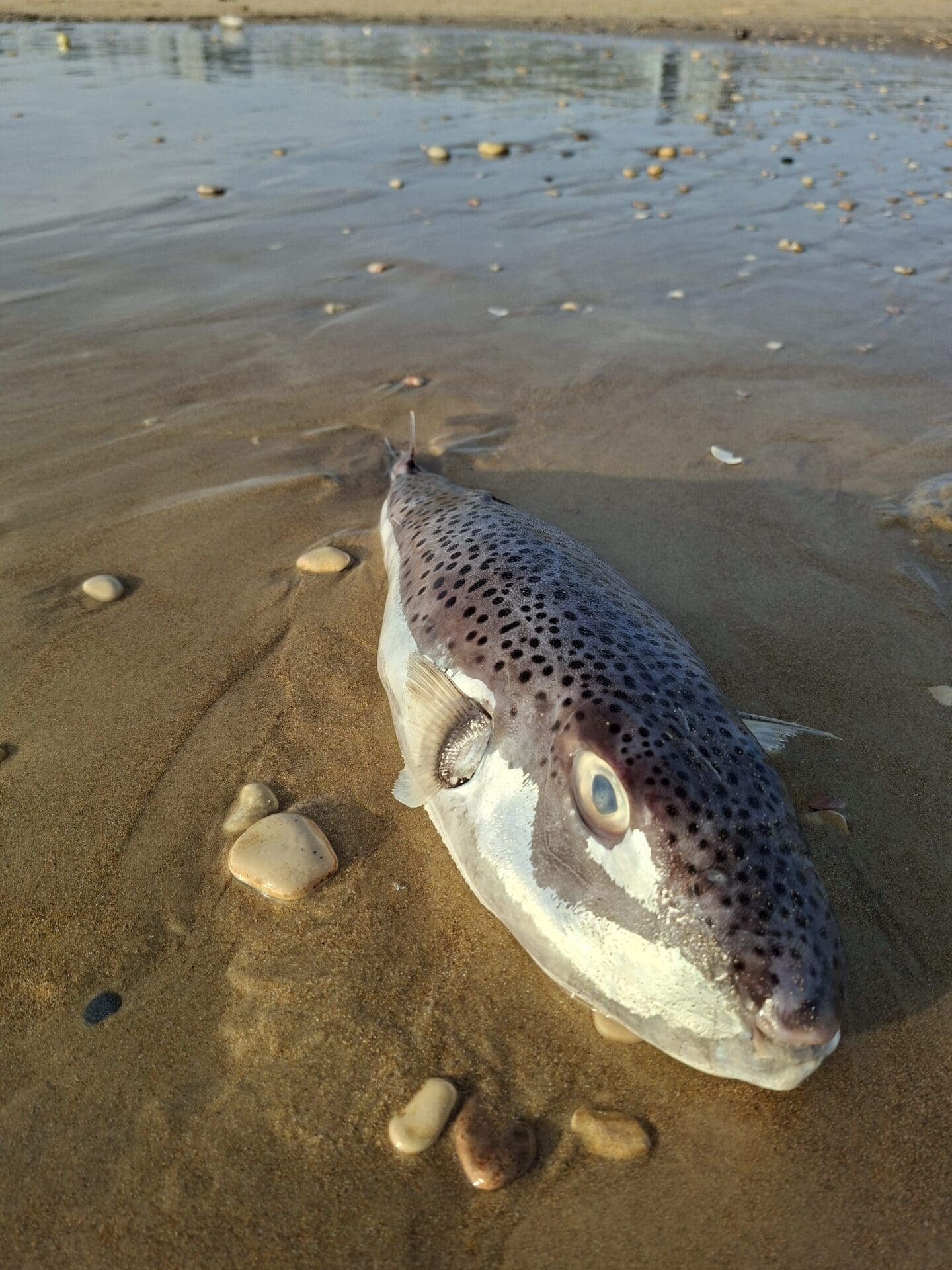
(haipo) Plastic waste and dirt cover the southern stretch of the coast from Haifa towards Tirat Carmel and Atlit. Eden Arnkranz Oren, a biology student at the Technion who regularly runs there, describes the harsh sights of dead animals, bags, bottles and packaging thrown along the coast: “We are polluting ourselves and the sea and are practically exterminating the animals in it.”
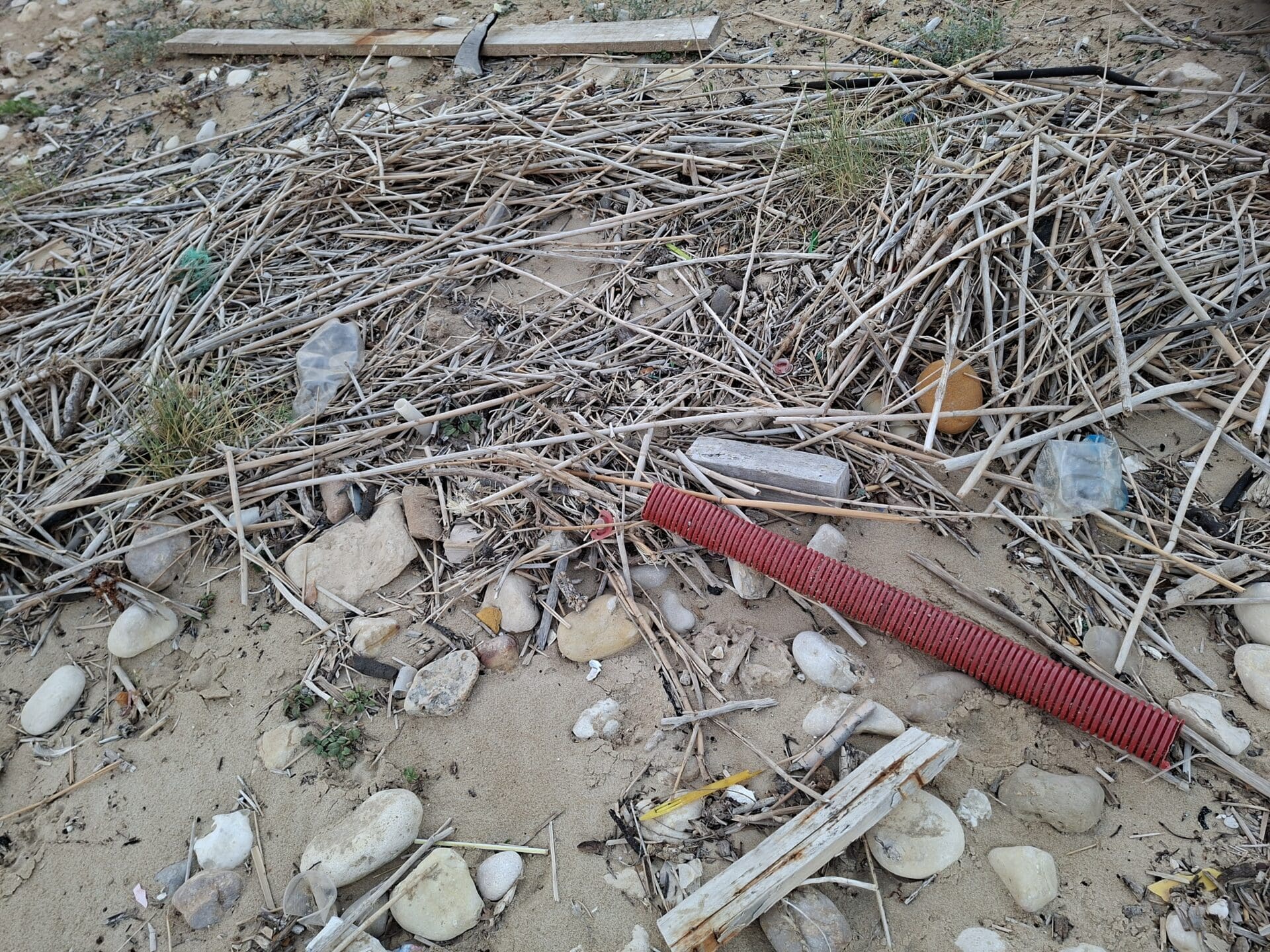
The southern coastal strip of Haifa, which falls under the responsibility of the Tirat Carmel Municipality, has recently become a particularly worrying pollution hotspot. Along the coast, you can see plastic waste scattered around - drink bottles, bags, food packaging, and more.
It is important to emphasize that the source of the waste is, for the most part, at sea and not on the beach.The sea emits pollution onto the shore, which is dumped into the sea, sometimes by ships dumping waste, and sometimes the waste is carried with the current from Gaza by southwesterly winds. In some cases, this is waste that was left on the shore and reaches the sea with an easterly wind blowing from the coast to the sea, carrying with it plastic bags, bottles, and more.
Plastic pollution on beaches
Eden Arnkranz Oren, student in the Faculty of Biology at the Technion, Who often runs in the area several times a week, tells Live that the situation on the ground is difficult and painful to watch. “There is a serious situation of plastic pollution on the beaches here,” he says. “The beach is full of plastic bottles, bags, packaging and boxes everywhere. A large part of the pollution comes from beachgoers who simply leave the garbage and walk away.”
According to him, beyond the aesthetic hazard, this is a direct harm to the living world.
“I saw dead animals on the beach, and you could even see a giant sea turtle with plastic coming out of its digestive system. It’s a sight that’s hard to remain indifferent to.” Eden adds: “We are polluting ourselves, the sea, and the animals that live in it. In effect, we are exterminating them.”
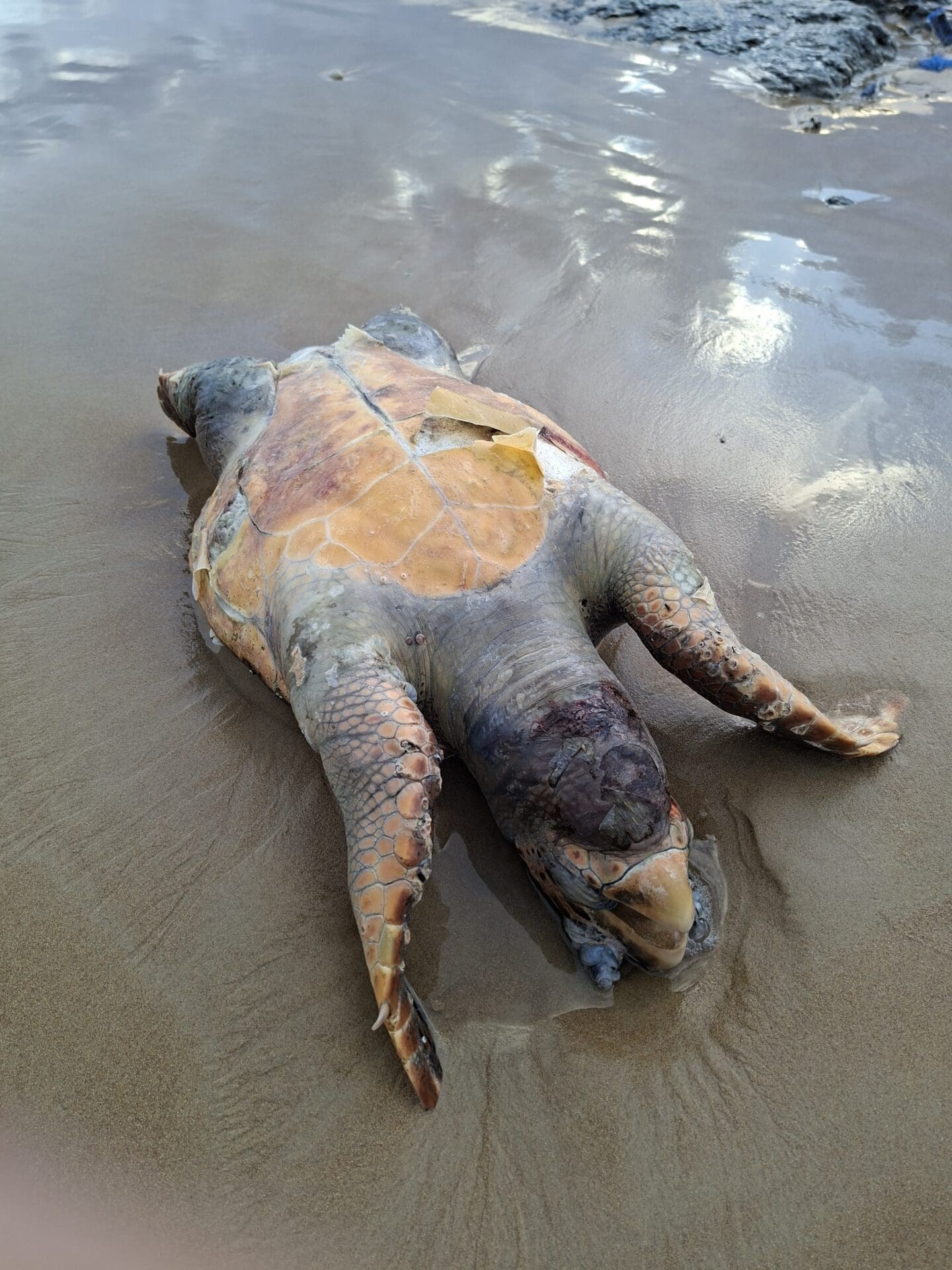
The plastic crisis that pollutes the sea and harms animals
Plastic pollution in the sea and on beaches has become one of the world's most serious environmental problems in recent years. According to data from the United Nations Environment Program, between 9 and 23 million tons of plastic waste are dumped into the seas and oceans every year, with estimates indicating a dramatic increase to about 53 million tons by 2030. About 84% of marine waste in Israel consists of non-biodegradable plastic.
Much of the pollution originates on land, from visitors who spend time on the beaches and leave behind drink bottles, bags, disposable dishes, straws, cigarette butts and food scraps. The waste drifts into the sea, harms marine animals and breaks down over time into “microplastic” particles that penetrate the ecosystem and even the human food chain.
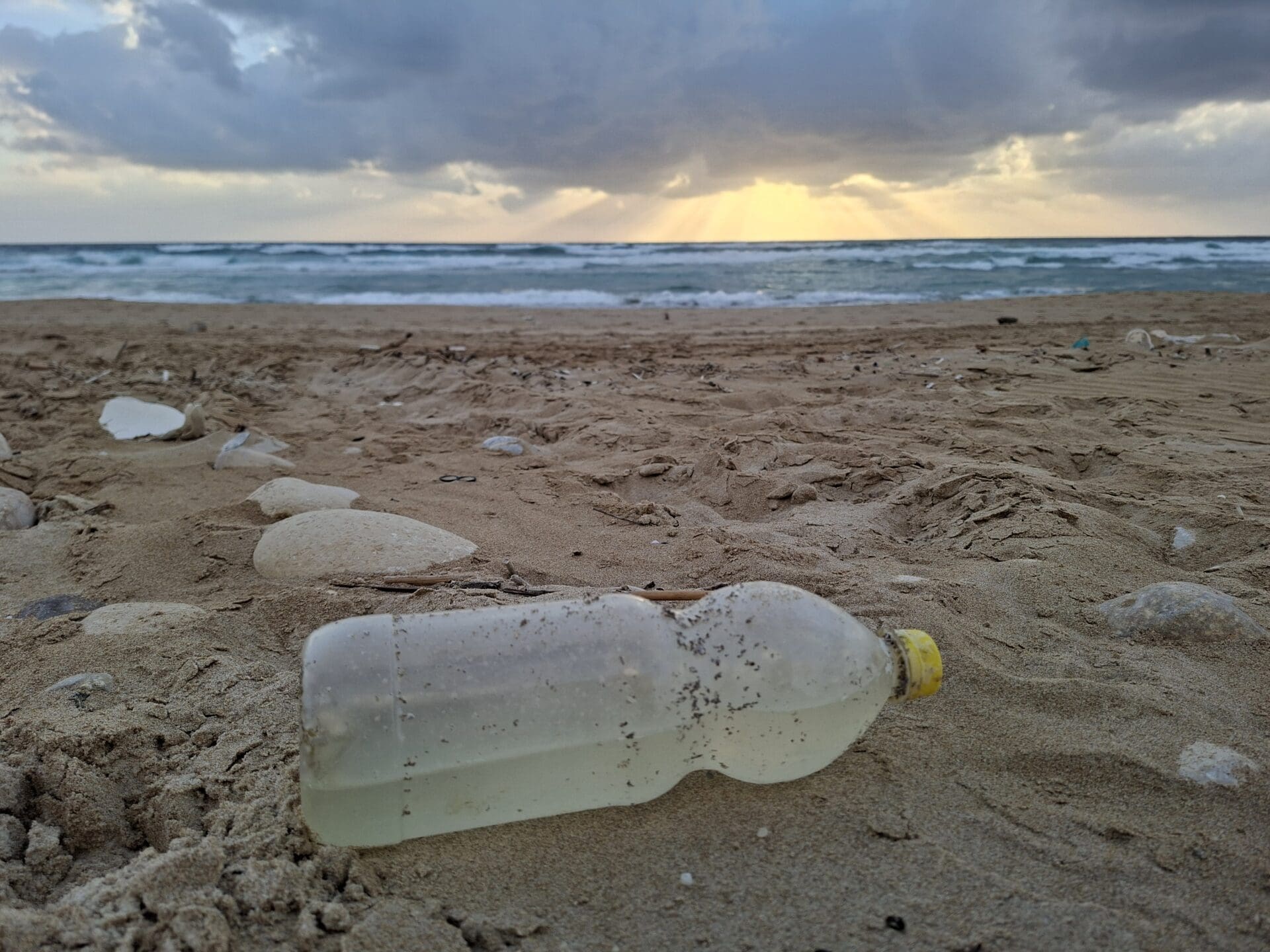
Plastic in the sea: a threat to the environment, animals and humans
Plastic waste in the oceans and on beaches is one of the world’s most serious environmental problems. Plastic does not decompose quickly and can remain in nature for decades or even centuries. Over time, it breaks down into tiny particles, microplastics, that are smaller than 5 millimeters in size.
These particles are ingested by fish, sea turtles, birds and other marine animals, and can cause digestive tract blockages, nutritional deficiencies and even death. Microplastics are also found in various food systems, including fish and seafood, but their direct impact on human health is still being studied.
In addition to harming animals and the ecosystem, plastic waste pollutes beaches and the sea and may also cause damage to desalination plants and systems that pump seawater.
“The sea is choking on plastic”
Moti Mendelsohn, a marine researcher, underwater photographer, and expert in marine and environmental ecology, and a writer for Haifa, has been warning for years about the dire consequences of plastic pollution in the Mediterranean Sea.
According to him, this is a "silent, persistent and suffocating pollution"“The sea is not just a beautiful landscape, it is home to living creatures,” says Mendelson. “Fish, shellfish and marine animals are suffocating and dying after ingesting plastic bags and debris.” Mendelson adds that the situation is also dire below the surface: “Divers are encountering more and more debris, and plastic particles are now almost everywhere in the sea.”
The harsh scenes from the southern coast illustrate once again the heavy price of neglecting the environment and dumping waste on beaches - a price paid by animals, the sea, and ultimately humans.
In a conversation with Haifa, Mendelsohn explained Because plastic waste in the sea causes serious damage to marine animals, since it is a material that does not decompose and accumulates over the years in the ecosystem. According to him, fish, sea turtles and other marine creatures swallow plastic pieces, which can cause blockages and serious damage to their digestive systems. Sea turtles, for example, sometimes mistake plastic bags for jellyfish, their natural food, and swallow them. He also noted that when opening fish, plastic pieces have often been found in their stomachs.
In addition, tiny plastic particles are ingested by land fish and small marine creatures, and from there continue to pass along the food chain to larger fish. He emphasized that the greatest danger lies precisely in microplastics, tiny particles formed by the chemical breakdown of plastic, and therefore it is important not only to collect large plastic waste from the sea, but also to treat and clean those small and dangerous particles.
The municipality of Tirat Carmel informed Lahi Pa: "The Tirat Carmel Municipality wishes to clarify that this is a beach that is not declared for bathing, and that cleaning work is carried out on a regular basis twice a week by the authority's employees.
The municipality maintains close and fruitful cooperation with the Ministry of Environmental Protection, with the small number of fines issued by the ministry indicating a high level of cleanliness that is maintained over time. It should also be emphasized that a significant portion of the plastic waste on the beach is released from the sea and is not discarded on site.
The beach is regularly inspected and monitored by the Ministry of Environmental Protection, as part of the "Clean Beach" program, and the results of the indicators are adjusted to its definition as an undeclared beach. Accordingly, the municipality does not encourage staying on the beach or bathing there. It should be noted that in the beach cleanliness indicators, which are published on the Ministry of Environmental Protection website, the beach consistently receives high scores.
"The Tirat Carmel Municipality will continue to do everything possible to maintain the cleanliness of the beach, in accordance with the provisions of the law."
The Ministry of Environmental Protection informed Lahi Pa:
Responsibility for cleaning beaches and public spaces lies with local authorities, while the Ministry of Environmental Protection serves as a supervisory and enforcement body under the Cleanliness Maintenance Law. The Ministry works with local authorities to promote cleanup, monitoring, and enforcement activities on beaches, and in cases of hazards or lack of treatment, it also takes enforcement measures and issues cleanup orders.
As part of the "Clean Beach" program, the ministry operates a national system to measure the level of cleanliness on open beaches in the Mediterranean and Red Seas using the "Clean Beach Index." The measurements are carried out on an ongoing basis, and their results are transmitted to local authorities for the purpose of continuously treating and improving the cleanliness of the beaches. In addition, the ministry provides budgetary support to coastal authorities, promotes awareness-raising activities, and operates dedicated enforcement programs during the summer months.
The "Clean Beach" program marks 21 years of operation this year, and during 2025, approximately 87.5% of beaches were designated "clean" or "very clean" at least 70% of the time, compared to only 19.7% at the beginning of the program. These figures reflect a significant and ongoing trend of improvement in the cleanliness of beaches in Israel.
An inspection conducted by inspectors from the National Marine Environmental Protection Unit in April found that the level of cleanliness in the area was "clean", while in February the beach was classified as "dirty". As mentioned, the findings are regularly forwarded to the local authority for corrective cleaning operations.
Let us recall that the phenomenon of marine and coastal waste is a global environmental problem that harms beaches, marine animals and ecosystems. In Israel, it was found that up to 84% of marine waste is non-biodegradable plastic, with a significant portion of it originating from waste discarded on beaches and in public spaces. The Ministry of Environmental Protection continues to work to reduce the phenomenon through the "Clean Beach" program, enforcement, outreach and cooperation with local authorities and the public.
We must stop this whole holiday. It's true that it's convenient and easy, but at this rate we're swimming in a sea of plastic, and all the ships that come to the area are simply throwing crazy amounts of waste into the sea, and it all ends up on the beaches, and the sea is getting polluted in Haifa, and the Ministry of Health doesn't know where the problem comes from, and it doesn't talk about the sewage flowing throughout Haifa, Haifa, and the neighborhoods.
Tirat Carmel Municipality - A lack of fines does not mean that the beach is clean, it more means that the Ministry of Environmental Protection is not doing its job properly because it is headed by an incompetent woman.
Huge amounts of plastic bags are found in every home! Even more so since the bags were given away for free!
Surely they are from the ships parked along our maritime border. And they throw all their garbage into the sea. No, we are not sure…we must fine all the ships. They park every day. Where they throw the garbage is clear on our shores.
Absolutely not.. Check in your home how many types of bags you have at home? Some of them come with the streams and winds into the sea!
The beach in Acre is no less polluted! Many animals die in Acre, including turtles! Hedgehogs, birds… There are strange phenomena in Acre around the beach of Mazor Hospital