


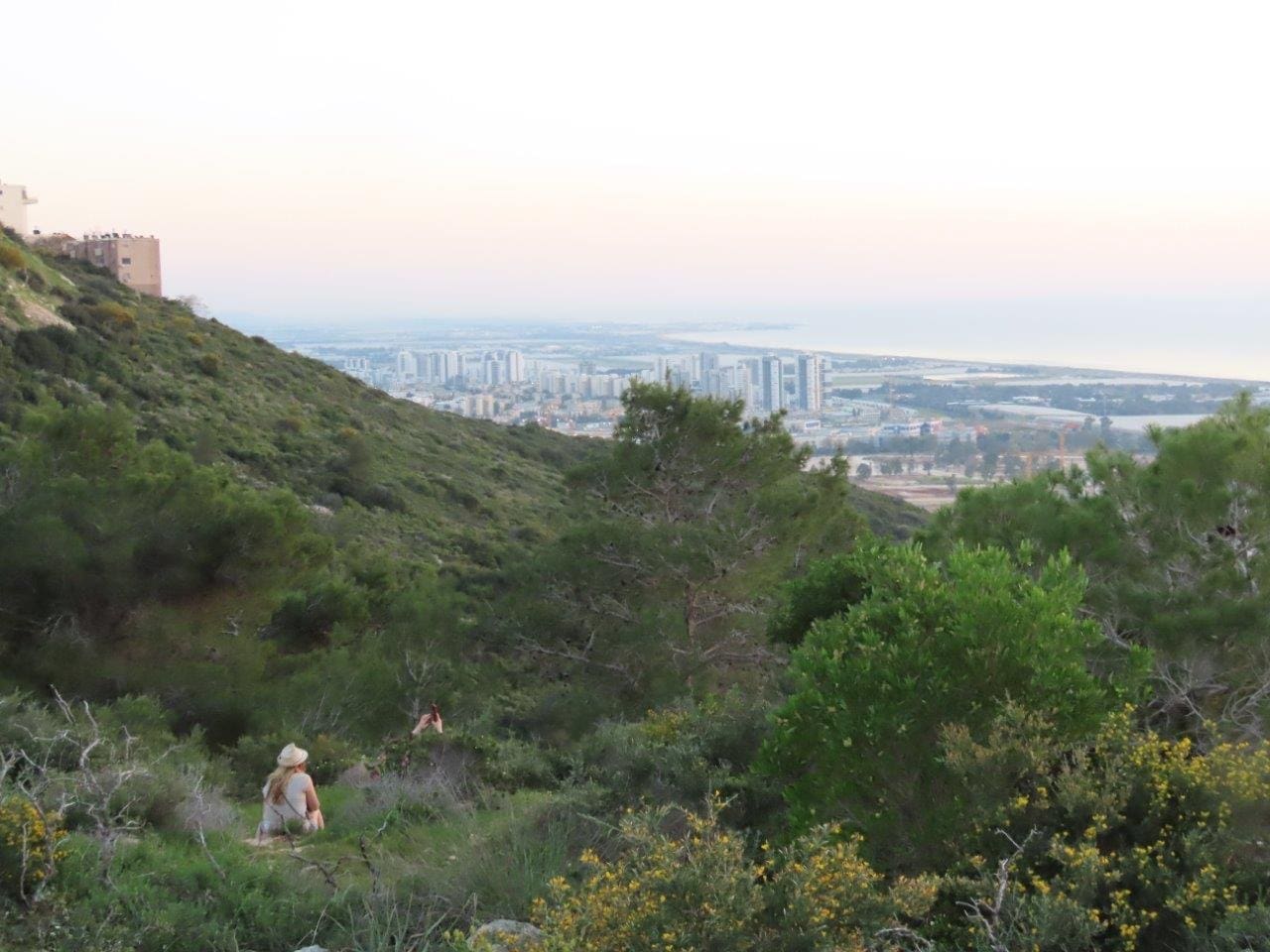
A few weeks ago, in the midst of the war, I attended a nesting workshop organized by the "Bird Language" organization in Tivon. The birds, aware only of the abundant spring and not of the danger of missile exchanges, were nesting vigorously in the oak grove.
In order to witness this exhilarating spectacle, I braved the heat between one missile barrage and another, and crossed the Haifa Bay on the road leading up to Tivon.
There is much in common between Tivon and Haifa in the general and human atmosphere and the direct connection between the city and the forest that borders it. I scanned the faces of the participants – like me, the majority were women, in their forties and older, wearing loose, earth-colored clothes, graying hair.
The conversation in the small circle revolves around the stages of nesting. Some birds, like the starling, for example, build their nests in thickets, while others, like the wagtail, nest deep in cracks and hidden holes. However, what they all have in common is the degree of camouflage and concealment of the nests deep in the forest thickets. In this way, the birds protect their chicks from any danger.
Under the guidance of the guide, we went looking for nests in the woods, and it became clear to me how difficult it was: the nests were hidden deep within the thicket, almost invisible to the human eye.

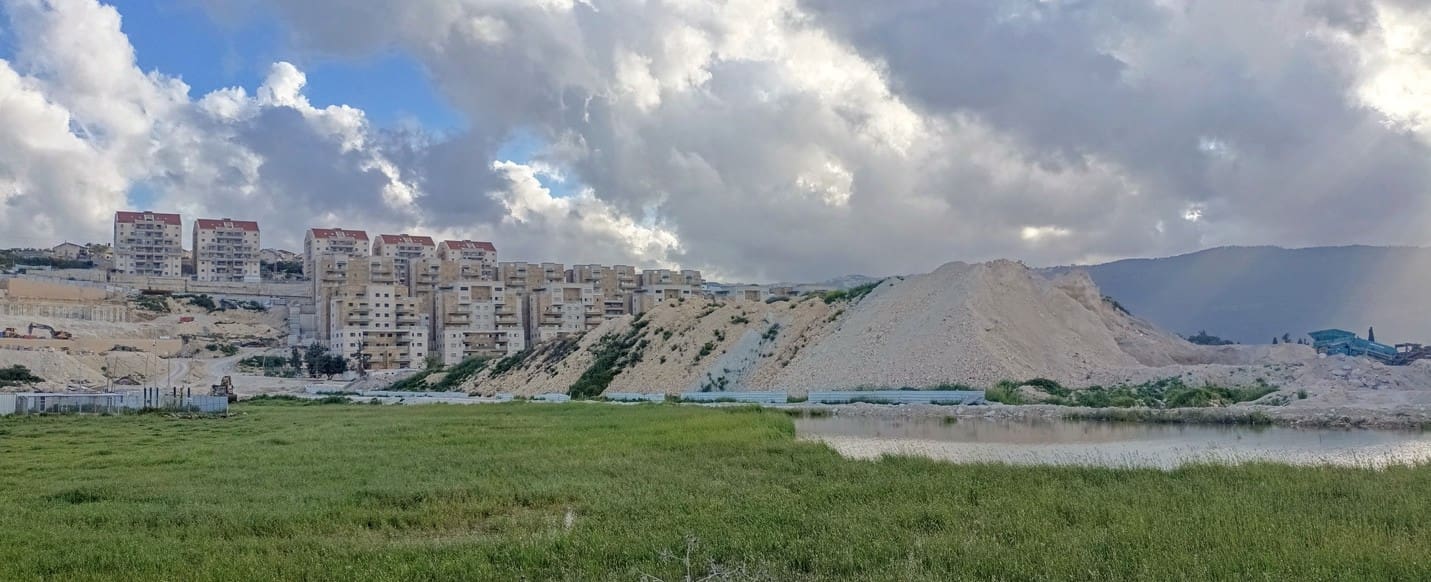
On the way back home, I passed by the progressing construction on the southern slopes of Tel Rechsim – the one known as the “Rechsim-Rasco neighborhood.” Vast hives of exposed concrete and piles of dirt now stretch along the northern side of the Zippori River basin, exposed to all eyes, and without a single tree among them for healing.
With the danger of missiles landing from above hovering in the background, the enormous contrast between the bird nests hidden in the thicket and the human nests sticking out exposed in the field stood out to me.
Something basic in human nature has gone wrong for us.
Why do we actually need so much space for human nesting?
Perhaps one answer has to do with consumer culture. Since disposables invaded our lives, the disposable approach has permeated all areas of our lives: from washing machines and IKEA furniture to cars, people prefer to "buy new" every three years, and companies, for their part, want to keep selling.
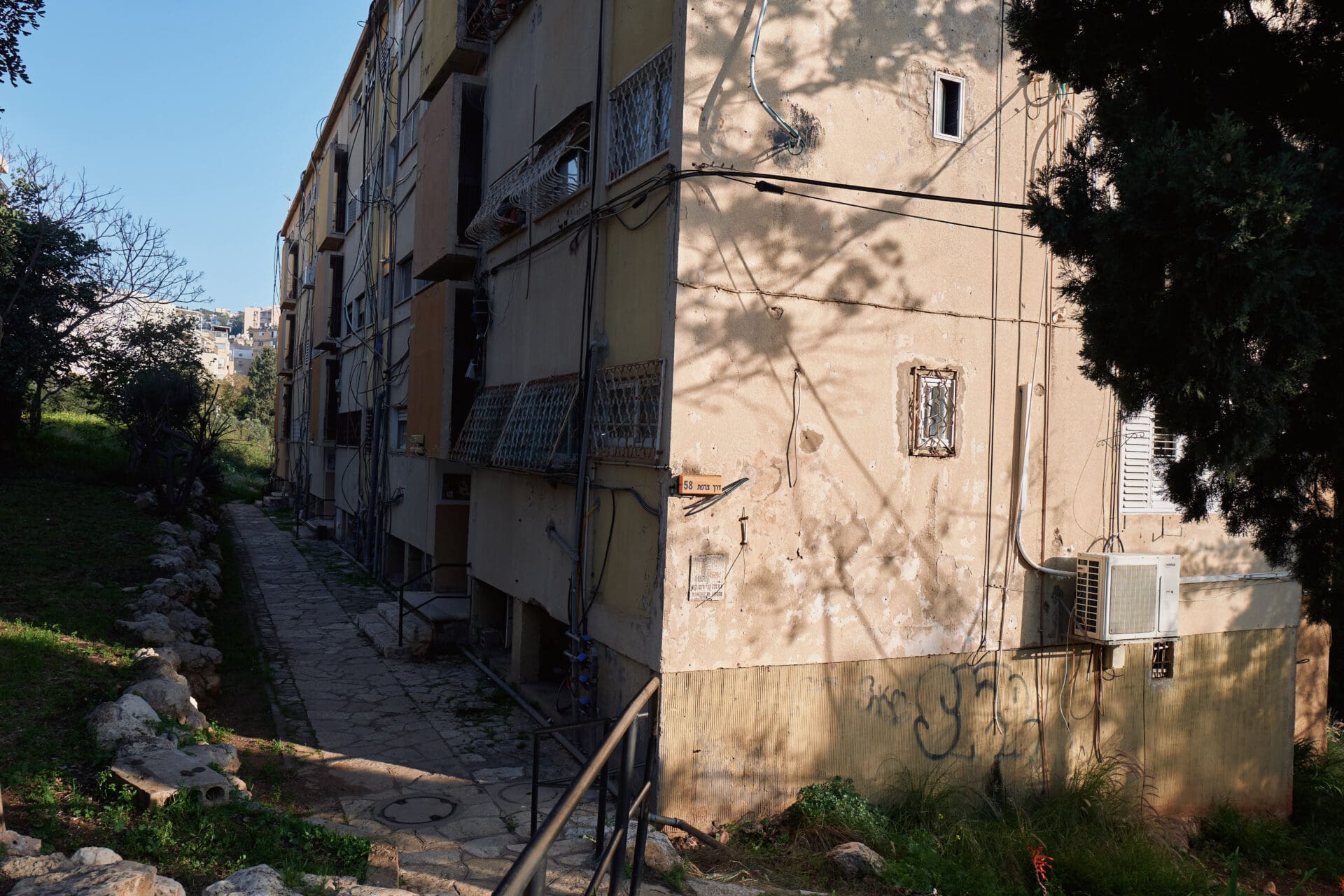
And now it's the turn of the apartments: Who has the strength to renovate and maintain old apartments, when you can purchase a new one directly from the contractor?
The priorities of planning institutions
The problem begins when decision-makers and planning authorities also choose to accept the marketing position, encouraging new construction and not dictating priorities that direct development to older neighborhoods.
Since the social protest of 2011, when Daphne Leaf and her friends went out to sleep in tents on Rothschild Boulevard in protest of the high cost of housing in Israel, the national and regional planning system has been attacked with an anxious obsession.


Destruction of natural woodland areas instead of urban renewal
More and more projects of thousands of housing units are approved by the planning institutions, more and more numbers are added to the Excel spreadsheets. It seems that the starting point of the system is that there is always a shortage, and therefore plans are approved continuously and without comparison to the real need in practice.
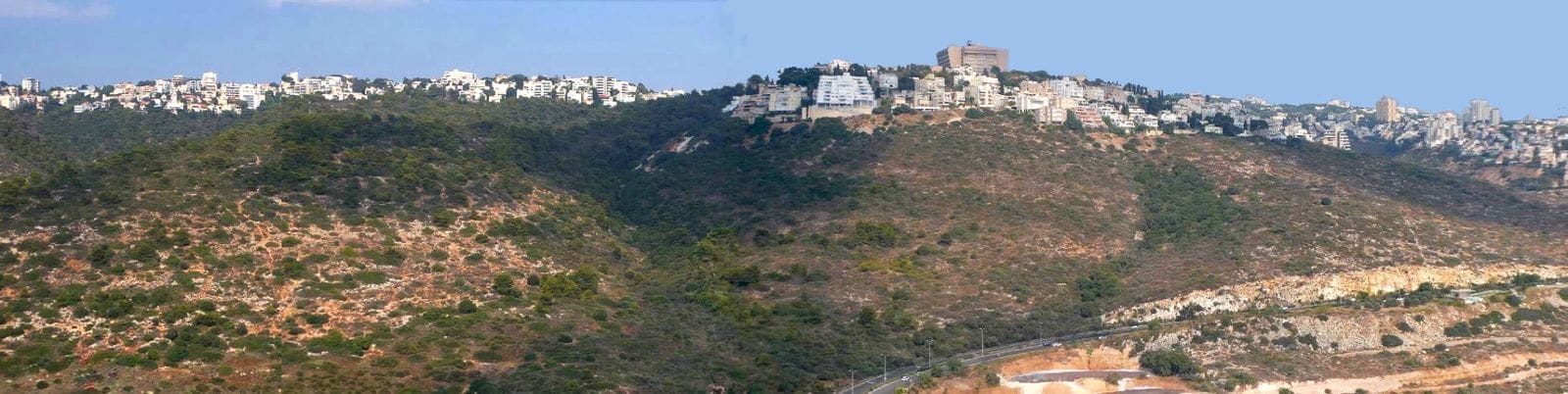
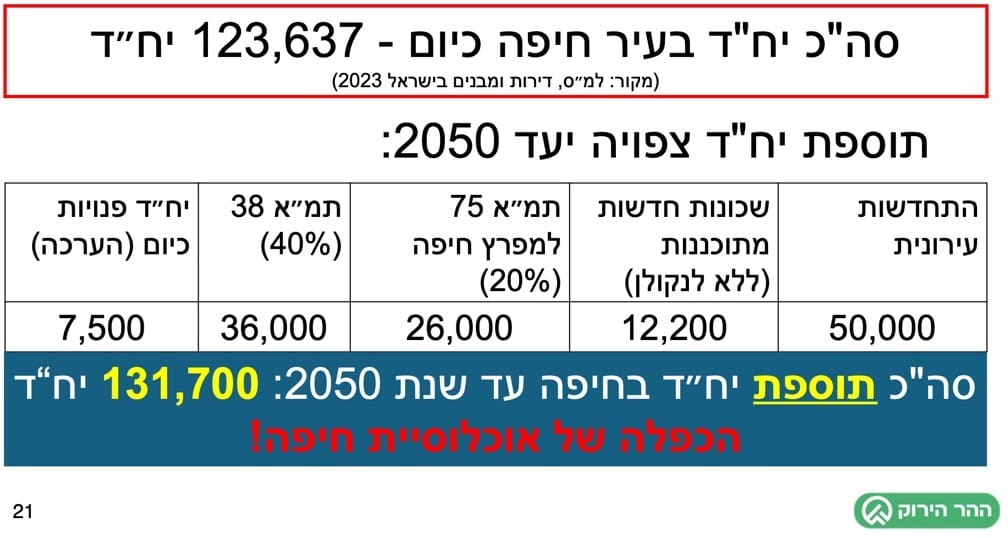
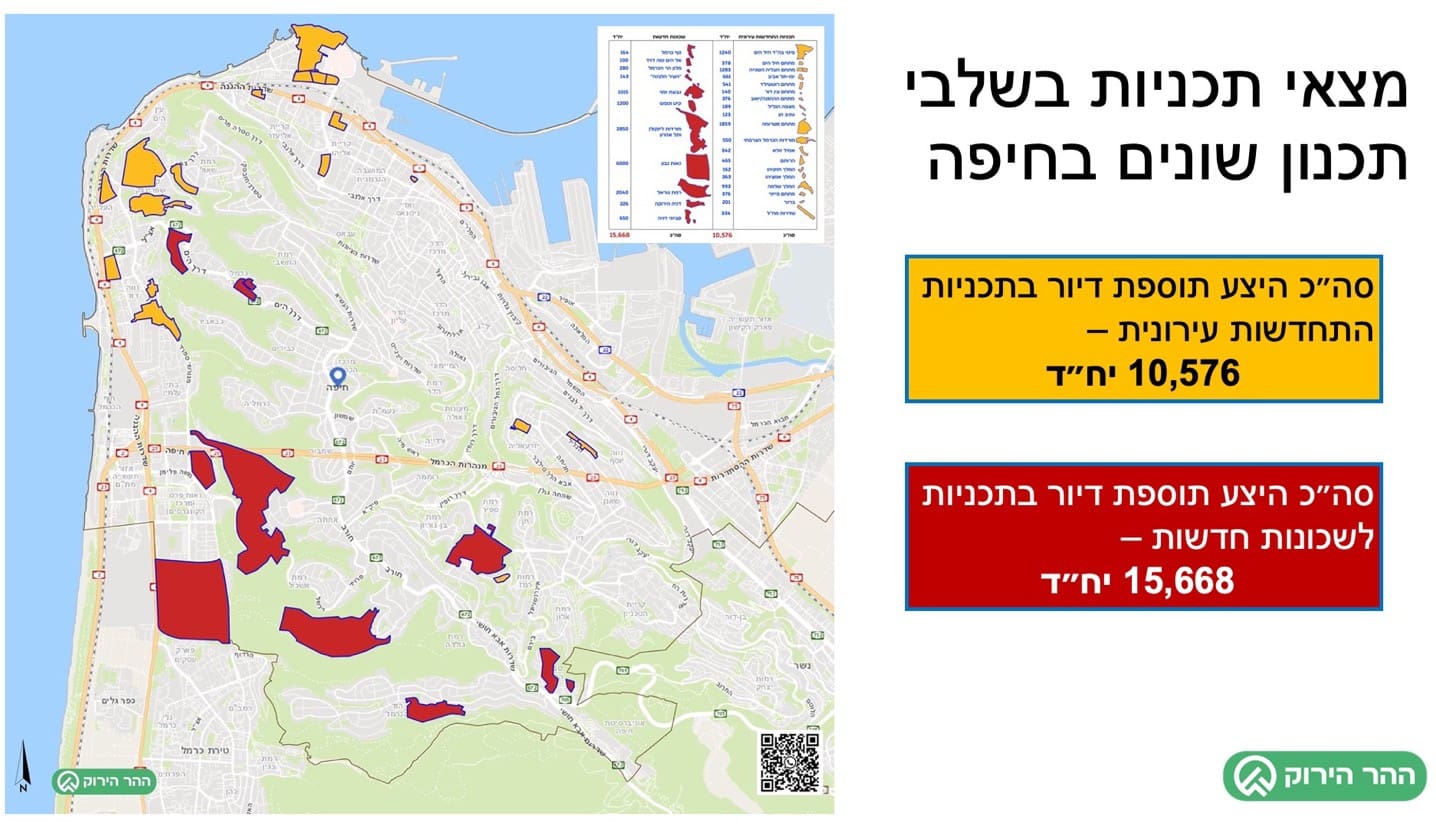
In an investigation I conducted with my members of the "Green Mountain" organization, it appears that plans for approximately 26,000 additional housing units are currently on the table of the Haifa District Committee. Almost two-thirds of these are planned in natural woodland areas and valuable open spaces that are not currently being built on. These areas constitute a green lung for all Haifa residents. They are the important urban heart that protects us from diseases and infections, regulates radiation and the climate, and maintains the well-being of life and soul of all Haifa residents even in times of war and distress.

The dramatic damage to forest areas
Our green Mount Carmel is Haifa's unique fingerprint and what makes it so special.
The actual population growth in Haifa does not justify the dramatic damage to its forest areas:
"Haifa/2000", Haifa's descriptive plan, set development goals for a projected population of approximately 330 residents for the target year 2025.
According to the Unemployment Insurance Agency, as of January 1, 2026, Haifa has about 280,000 residents. Very far from that target.
Moreover: According to municipality data, there are already about 7,500 old, empty apartments in Haifa. According to CBS data from September 2025, there are about 2,500 new housing units in Haifa that are failing to sell.
In other words: there is already a stock of about 10,000 vacant apartments that are not being filled. In addition, the "Neot Navon" neighborhoods are currently being built, with about 6,000 more units and about 500 more in "Neot Peres D." In addition, dozens of TAMA 38 projects are popping up day and night in Haifa, also increasing the stock of apartments within the city.
In an interview conducted on the eve of Passover with Ms. Ruthie Schwartz, chairwoman of the District Committee, she speaks about the necessary balances between open space and built space in the city of Haifa.
The District Committee, under its leadership, is required to consistently uphold the principles of responsible and balanced planning in the city of Haifa, and in particular, a policy that promotes urban renewal as a central engine for the restoration of old neighborhoods and the strengthening of the existing urban fabric.
Plans currently being promoted for large natural areas in the city, such as the Lincoln and Tel Aharon slopes, Savyoni Danya, or Ramat Golda, directly harm these efforts by diverting resources and incentives from the built-up city to open and pristine space, and weakening the economic and planning viability of urban renewal projects.
"Planning" according to the definition of the Aveneon Dictionary - is the process of determining in advance the factors necessary to achieve a series of goals, with the aim of reaching them in the most efficient way, by optimally allocating limited resources: A special task requires advance planning and precise timing.
The role of the planning authorities, including the Haifa Municipality and the local and district committees, is to act responsibly for the future of urban nature and for the sake of future generations of Haifa's children and youth, and to set clear priorities for development in the space, and not to yield to national dictates that are foreign to regional considerations, especially in light of the data I presented above. When there is no guiding hand and no regulating planning factor, a situation of overuse of shared resources, chaos, and collapse of the system may arise.
It took Mount Carmel hundreds of thousands of years to stratify the fertile soil layer that allows the forest to exist and become the "evergreen mountain." In the steep areas, the soil depth does not exceed a few centimeters above the limestone. Every construction project carved into the rock destroys in less than a week a natural area where the soil has no chance of recovering in the next million years. Our role as humans is to protect our only habitat, so that it can protect us in return.
Did the article interest you?
I haven't enjoyed reading an article this much in a long time!
It started out interesting from a different direction, the writing flowed, I imagined the forest and the chirping of birds.
And in a fluid and natural way, I was led to the burning issues, which are also bothering me, and not just in Haifa.
I wish decision-makers and the public would start paying attention and being responsible for our environment.
Waiting for more articles!! on this topic –
This is one of the most critical things in Israel, with birth rates among the highest in a small country (already without a mustache) – and especially because I enjoyed writing it.
Thank you for your important words.
I hope this reaches the right people and the unnecessary construction boom stops!
Excellent article, Noa.
Well done.
You started soft, you continued with the numbers, the picture is sharp.
Speaking of the Sprinzak neighborhood, approving a 6-fold increase in housing units like they did in 'Europe Exit 4' is an unparalleled disgrace and a disrespect for the quality of life of the residents. It may also change the character of the neighborhood because in the high-rise buildings we see a mixed population moving in, unlike the character of the neighborhoods that were built for the local population and new immigrants, and the neighborhood's vitality is being undermined. Not to mention, as you mentioned, that some of the apartments are empty altogether.
The renewal in Haifa and in general should be done either as part of a construction intensification or Tama38 and a small addition of apartments to the buildings, or if the tenants are smart and have financial capacity on their own and at their own expense, and in this way they will leave small, high-quality buildings with few neighbors, which is a commodity that will disappear over the years and, as a result, also be sought after and expensive.
Thank you, dear Noa. There is indeed great value in living for many years and it would not be wise to waste it.
A valuable, important and eloquent article.
How important it is to continue to instill the insight into the necessity of nature around us.
Israel
Noa, my dear, you are so naive. Do you really believe that the developers/contractors will give up the cash that is supposed to go into their pockets after the construction permits are issued and the construction itself, or that the municipality will really give up the property taxes that are expected to flow into its pockets? You are exaggerating………..
Hello Edith
thank you for your response.
From acquaintances with the representatives on the planning committees and decision-makers, most of them are serious professionals and have the public's best interests at heart.
Sometimes a perception becomes fixed out of inertia, and our role is to reflect and reflect on what is happening on the ground.
Aim for the article.
Which enlightens our eyes.
I hope it has even a little influence on decision-makers.
Indeed, one of Haifa's most important and unique assets is the landscape and the integration of nature in the city.
What created Haifa's attractiveness for me as someone who moved here from another city covered in concrete and asphalt.
It is a shame that a trend of takeover by wealthy and interested parties continues, setting a public agenda that works to benefit the pockets of a few and not the well-being and quality of life of the many.
I hope that the various courts will manage to conduct themselves with public responsibility and withstand the onslaught of real estate agents, who, as the numbers show, have no need for their wares.
Noa, you wrote an excellent article and presented the fact that both the city of Haifa and Nesher Iri have difficulty understanding the real need for green areas in the face of the construction of unnecessary additional apartments. I serve as a member of the planning committee for construction on the slopes of the Carmel and see with great sadness the demolition of Mount Carmel to build more and more high-rise buildings while in the background everyone is aware of the negative migration in Nesher from 28000 residents to today there are only 22000 residents. And every struggle of the nature reserves is swallowed up by the respectable real estate agents, the apartment marketers, those wealthy people who manage to influence and create the incomprehensible surpluses of empty old apartments. The green bodies are weaker today than ever!!! Noa, the article is excellent and we hope that many will read and delve into your ideas‼️Good luck👏🏼👍🏼