


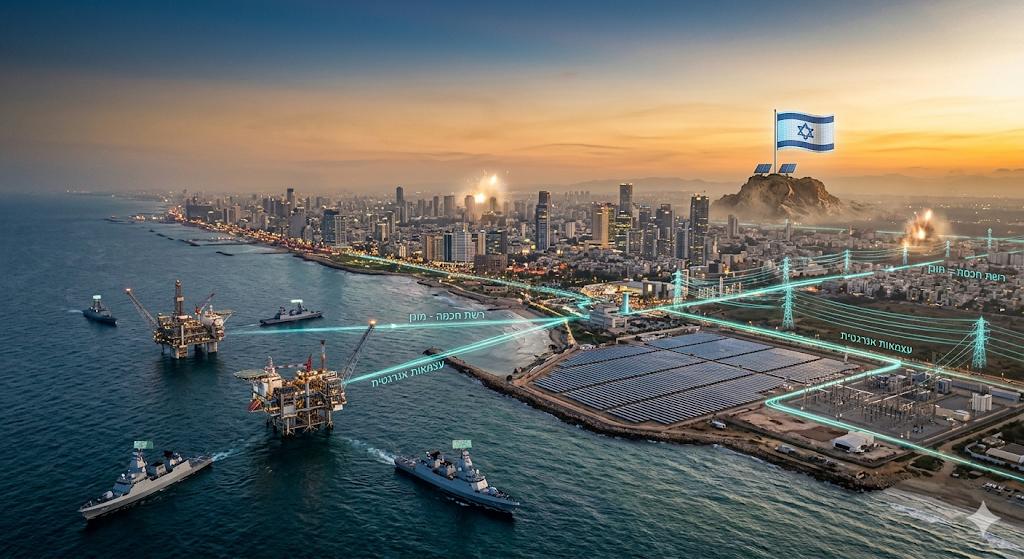
In 2030, Israel becomes a resilient "energy island" thanks to a transition to a decentralized and smart system. Instead of relying solely on large power plants, electricity is produced at thousands of points, from solar rooftops to blue-and-white gas reservoirs.
The main innovation is "island mode": the ability of communities, IDF bases, and essential facilities to disconnect from the national grid in the event of a malfunction or war, and continue to function independently with the help of huge storage batteries. Artificial intelligence-based management regulates loads and protects the grid from cyberattacks. This is a critical transition to national resilience: from a centralized and vulnerable grid, to a flexible system that cannot be brought down.
The forecast (probability: 80% for infrastructure paralysis attempts): By 2030, Israel is set to transition to widespread use of renewable energy and electric vehicles. It sounds green, but it's a security nightmare.
The image shows a combination of critical energy infrastructure: offshore natural gas rigs and onshore solar panel fields, protected by military forces (missile ships). It illustrates the need to protect the national "Shelter" as part of strategic resilience towards 2030.
The factor that is not talked about:
The concentration of energy in Leviathan and Tamar, along with a vulnerable electrical grid, makes Israel hostage to precision missiles. A single hit on three strategic points is enough to plunge the country into darkness for weeks.
Why is it national security?
A country without electricity is a country without water desalination, without communications, and without the ability to manage an emergency economy.
Did the article interest you?