


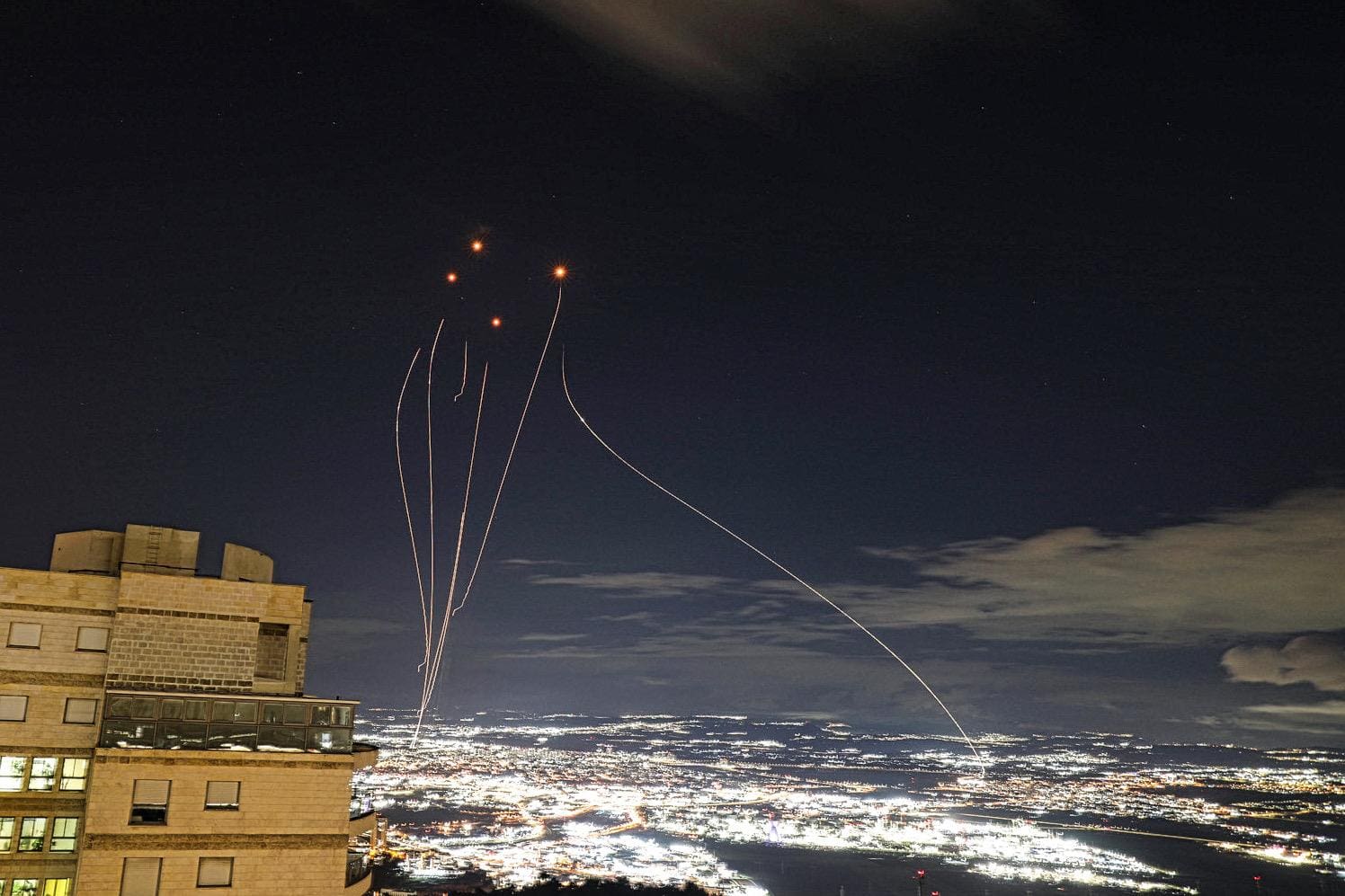
The war that began exactly a month ago is another endpoint in the existential war of the last two and a half years, but it is already clear that preparedness for threats needs to undergo adjustments and improvements.
The sound of the alarm almost always catches us off guard (is it possible to even get used to it?), but our readiness depends mainly on the question, where does it catch us? Over the past two and a half years, Haifa and the north have repeatedly entered and exited the firing circles. However, the last two rounds are different and include firing from Iran, which intensifies the differences in how civilians experience the war. Stairwells are no longer always sufficient for defense against the heavy missiles, and therefore, the last month has looked and felt completely different, whether you live in an apartment in a new building in Neot Peres or in an old railway building in Kiryat Eliezer or Hadar.
Digging trenches for pajamas in the MMD
The history of civil defense in Israel contains the process of our inward convergence. By 1965, the state had built shared public shelters in every neighborhood. Every block or street had a shared protected space that was appropriate for the threat of bombing by Arab air forces.
Between 1965 and 1980, we moved to shelters inside buildings and in the 80s we upgraded to shelters (storey-level protected spaces), and since the 90s we have been at the peak of individual dissonance, peak accessibility to protection – shelters (apartment-level protected spaces). The room is our last fortress, but also a children's bedroom, a study, a corner for the dog or a room for any other need.

The MAMD is undoubtedly a brilliant and life-saving engineering solution. It is available, it is convenient, it allows us to continue to stay in our pajamas, while the sky above us trembles. But within this convenience, there is a heavy social price that we are already beginning to understand, the price of loneliness that has been carved into us for two and a half years, like water in rock.
The old neighborhoods as a weak point
As can be understood, the type of protection available in neighborhoods is a reflection of the period in which they were established. Haifa is a city that is hundreds of years old, and as such, there are old and even ancient neighborhoods whose starting point is problematic.
In neighborhoods like Hadar, Wadi Nisnas, Wadi Salib, or the lower city, the reality is grim. These are old buildings that are many decades old (sometimes over 100 years old!), where there is no emergency medical service, no shelter in the building, and usually no public shelter. In these buildings, families with small children or the elderly find themselves at a dead end: Should they turn the remote public shelter into a second home and spend entire days there in difficult conditions, or stay at home and risk their lives? Or even leave to become refugees with their parents? Although the municipality is doing a lot to prepare as many shelters as possible, it is not enough! The short warning time or the prolonged stay in the protected space does not allow for maintaining a routine of life.
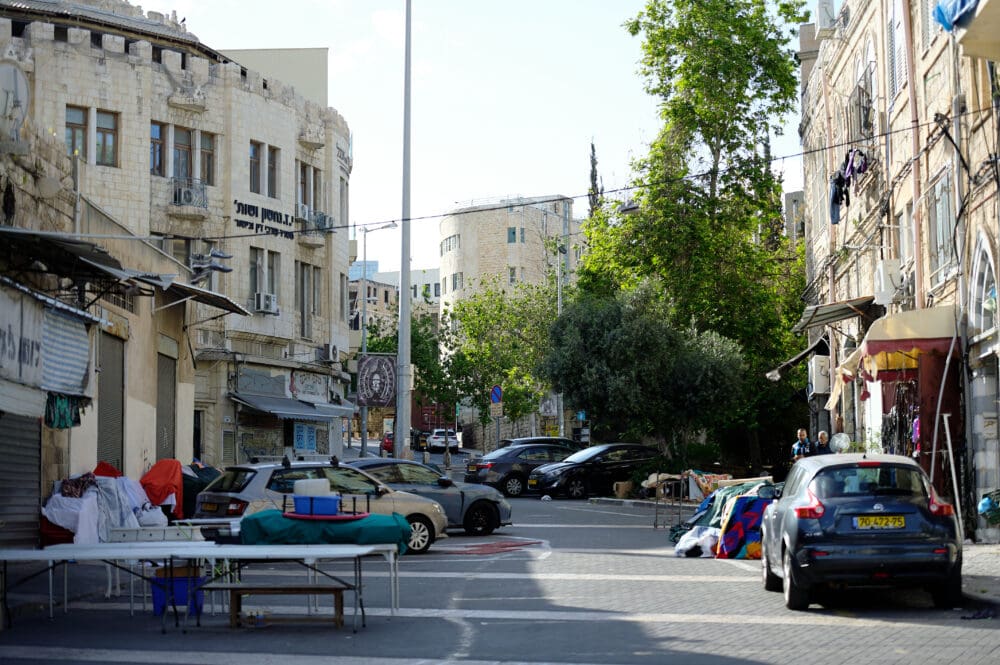
The hidden difficulty in the new neighborhoods
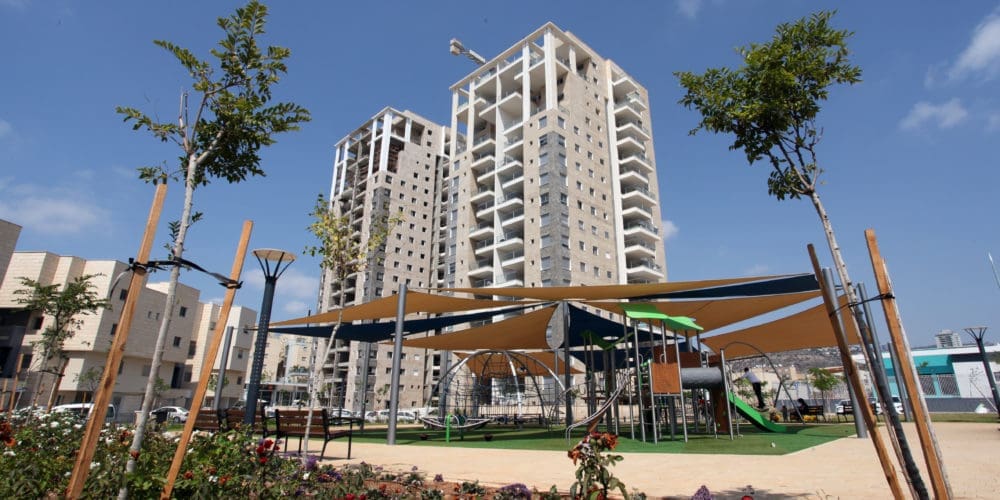
In the new neighborhoods, war is a family experience, and not always on its positive side. You enter the police station, close the steel door (try to lift the handle, please be careful) and that's it, the parents, the children, the dog or cat and our anxieties, sealed in 9 square meters of concrete. In other cases we are alone, there is no interaction, no eye contact, no jokes to break the tension and no talking about whether it is allowed to go out. In practice, for many people, these conversations relieve tension and translate into "Are you okay?" Do you need anything?". Although we are physically protected, socially we are isolated, and even if the family is large, the children lack the educational frameworks and a month at home with their parents puts everyone on edge 24/7. On the other hand, in the old neighborhoods of Haifa, the run to the shelter, however difficult and exhausting it may be, produces something different. It forces us to leave the house, to meet more people, precisely when our human interaction is minimal, to see the children playing together or the adults sharing a cigarette on the way out. There, in the old shared shelter, social resilience is also built.
The paradox becomes more painful when you look at the option of ventilating outside the home. In new neighborhoods, protection is inside the home; the newer the neighborhood, the less accessible it is; there are no public shelters available in the open space or even the entrance is closed by intercom, which turns the street into a "no-go" zone. In older neighborhoods, it is precisely the existence of public shelters and shared protected spaces that allows people to go out, breathe air, let the children run around outside a bit, knowing that there is somewhere to escape to in a minute.
Urban Renewal – From Community to Individualism
The MMAD is a good solution, perhaps the best we have right now, but we must not forget that our national resilience is not measured only by the thickness of the concrete, it is measured by our ability to continue to return and function in the future.
145 years of Zionism have already taught us that this is not the last war, and therefore, as we plan the "Haifa of tomorrow," we must ask ourselves: How do we build a city that allows us to grasp the rope from both ends? A city that not only protects our bodies, but also protects our community, so that it does not fall apart inside isolated security rooms.
It's true, the convenience of the shelters is amazing and necessary, certainly for those who don't have an available protection solution. But it has a psychological and social price that we have been exposed to repeatedly over the past two and a half years. This is where urban renewal comes into play, the evacuation-construction that is sweeping Haifa and is set to intensify. Demolition of the old buildings and with them the shared courtyards, the stairs and all the places where we meet, including the shelters, the public shelters that are accessible to those outside, constitute an opportunity in this field. We are building towers with luxurious shelters, promising security to the tenants.
Parking lots and public protection
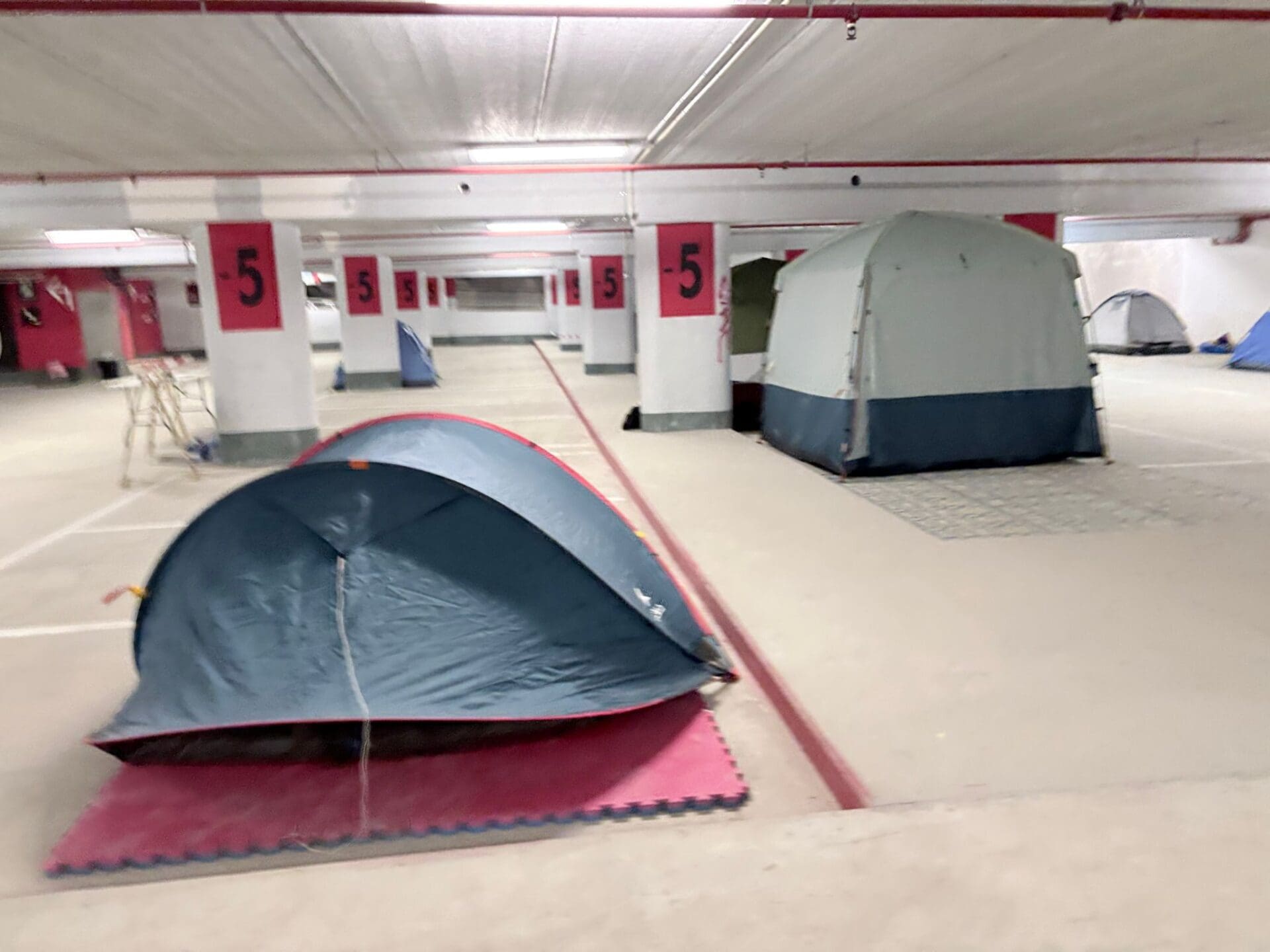
As someone who believes in a long-term vision and work, the solution must include a clear strategy. Despite the restrictions, we need to restore and provide protection solutions in the public space as well. This solution is possible to implement especially in the older neighborhoods where protection is still in the public space and not in the apartments, which are specifically designated for massive evacuation and construction. In addition to building underground parking garages in every new apartment, a clear policy must be promoted that utilizes the potential of underground parking garages in large projects. The Urban Renewal Authority and the local authority must require developers to prepare parts of the parking garages in advance as standard public protected spaces (with the approval of the Home Front Command, of course, not every parking garage is a standard protected space!), which include air filtration systems, direct entrances and exits from the street and nearby parks. Such a protected space can only be open to the public in times of emergency, thus maintaining a balance between the private space of the building and the protected space, available to residents of the nearby streets that have not yet been renovated, and creating the flexibility we need in times of emergency. Despite the financial burden on the developer, this is a strategic asset in the long term that may save lives and enable true community resilience.
In the end, the only way to ensure that all of Haifa, including all of its neighborhoods, can withstand future threats to personal and mental security is by combining the MAMD with infrastructure solutions in new construction.
Beautiful, you are right!
Parking as an effective protected space in new neighborhoods saturated with construction (unlike Bat Galim, for example, which is being renovated in a qualitative manner with few unit multipliers, mainly in Tama).
In future technology, it is also possible that the danger from missiles will gradually decrease and various developments will enable the interception of missiles in their countries of origin.
But the problems will not go away, and the next silent danger facing Israel, in my opinion, especially in the cities of the north and south, is mixed populations moving to live in cities that were previously homogeneous, such as Nof Galil and Acre, and now also in Haifa, quietly changing the population structure there, not necessarily in terms of security, but demographically. And not only that, the problem is not stopped in one way or another by legislation. What is more frustrating is that it is not even recognized by governments and the media largely ignores it.
The apartment dimension is the right solution, although it is only guaranteed that we will understand the new old building. If the cost falls on the apartments, which not everyone can do, then there could be a problem.
I am calling for the umpteenth time to pass legislation that would require every building to establish a shelter in addition to the emergency services, a shelter that would be open to the public and to surrounding residents in old buildings without a shelter who would at least benefit from a new shelter.
About years of suffering from the construction around them.
The time has come after the war to immediately stop approving plans to include the shelter in all new buildings as a standard, both in public buildings and in new construction or Tema 38 in all of them, not to be satisfied with a MMAD or MMAK to add a shelter – 2 square meters for each apartment in the building.
It is also completely clear that the Haifa Municipality does not have the space to absorb evacuees in a war, fire, or earthquake. It is necessary to budget for the excavation of a huge hangar like the Carmel Tunnels dug into the mountain, completely protected from all types of missiles and air attacks, which will be able to absorb up to 1000 families (the size of an entire neighborhood) with equipment, beds, partitions, and a logistics center for storing and distributing food and medicine in an emergency, in a location that will also be close to a protected hospital. The ideal place
It is on the side of the mountain in Kiryat Eliezer on Allenby Street, close to the Rambam and the Linn Center. This project is essential and must be promoted as quickly as possible so that there is an urban alternative to evacuating hotels or a situation where the hotels are closed or damaged.
😍WHERE IS MY COMMENT?????
I recognized you as “Morag” – the real estate agent???😘
😍Where is my "response" Mr. "Shahar Morag"???
As a "columnist - "opinion", you need to understand the "right" to "independent-free opinion"... Just like: "The Jewish State" - independent & free!!@😭
The old public "shelters" - should be "renovated" and maintained all year round and not at the last minute "in times of emergency", as all "citizens of the state" have experienced and are experiencing... "Beautiful Haifa" - for the sake of "experience" since 2006 = "The 2nd Lebanon War"!
"The community shelter" = always needed... and therefore, no matter if "urban renewal" with shelters takes place in this or that neighborhood, the "municipality/"state" must continue to maintain and sustain the "use" of them as a "protected space" in the "public space"...!!!@
* "Haifa" has its "uniqueness" in the "view" that can be seen from almost every house... Therefore, the whole matter of "urban renewal" requires: "supervision and control", in order to preserve this special "characteristic", which defines the "quality of life" in the city: between the "Carmel" and the "sea"/"port"...!!!@
* No "resident" - a long-time apartment owner in this or that neighborhood, is interested in the "economic interest" - "pig" of this or that "entrepreneur"...! If he does not have a higher "own" "finance", is not suitable for "entrepreneurship"..., if all he wants is to get rich on the backs of the "apartment owners" through the "dream of the tower"😘 - "in Aspamiya" (as in Tel Aviv! as in "New York"! as in "Toronto"!) @😭😭😭
🙏Good luck to all of us - "Haifa residents" in preserving, protecting, supervising and controlling the special "character" of ✨️"Beautiful Haifa"!!!@