


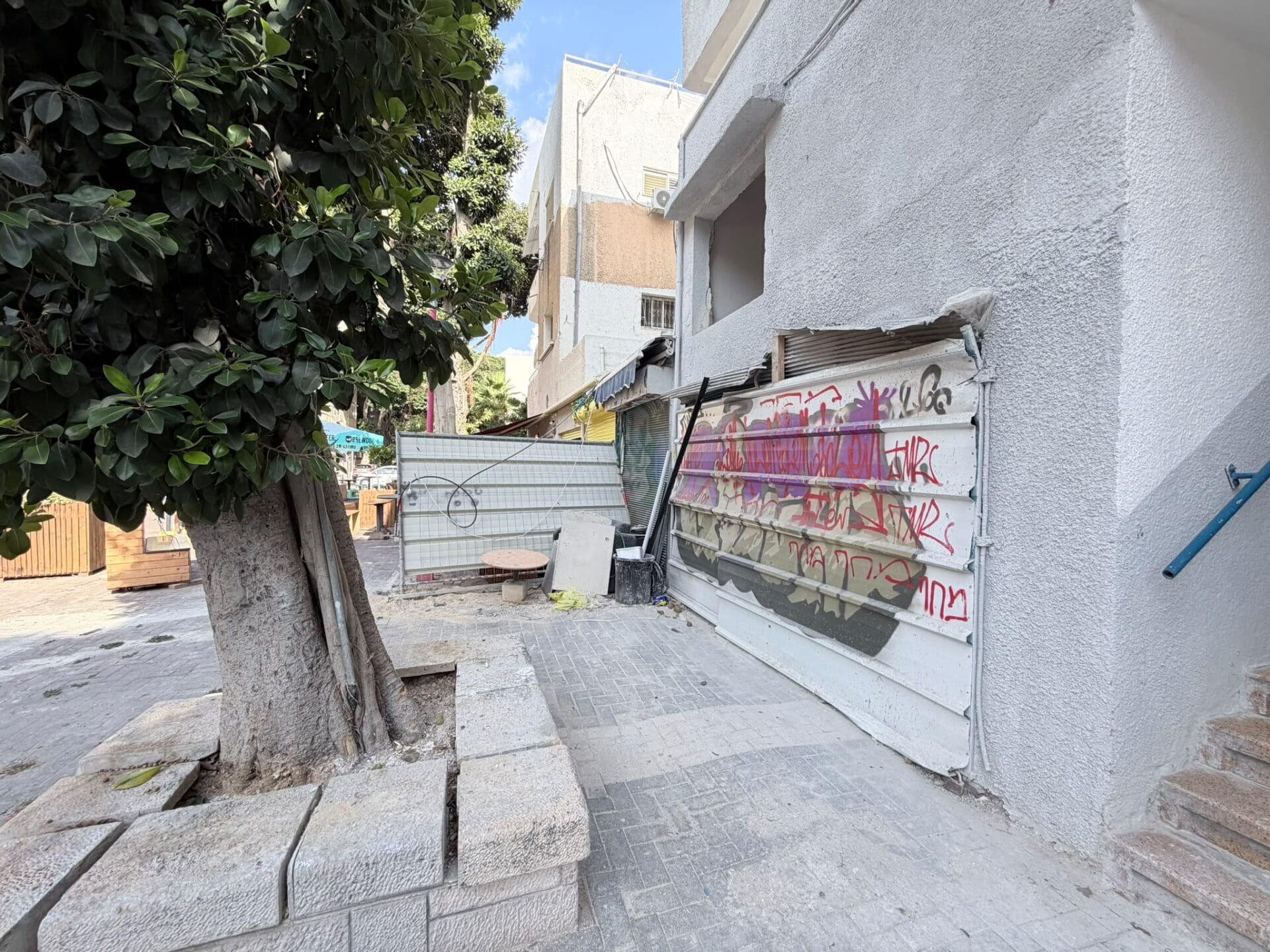
(haipo) A year has passed since the missile hit a building on Nordau Street, a few meters from Benjamin Park in the Hadar neighborhood. The building has been restored, the apartments have been repaired, and the work is complete, but the public space around it has been left behind. Graffiti-covered walls, a fenced, unsafe, and neglected area, and open questions about the future of one of the city’s main parks continue to haunt the neighborhood’s residents. Despite the municipality’s declarations of an investment of approximately 17 million shekels in the restoration of the park and the adjacent square, there is a sense of uncertainty in the area: the previously presented plan has been rejected, residents report ongoing neglect, and many wonder when the promised restoration will actually begin.
A year of restoration in the building — and neglect outside
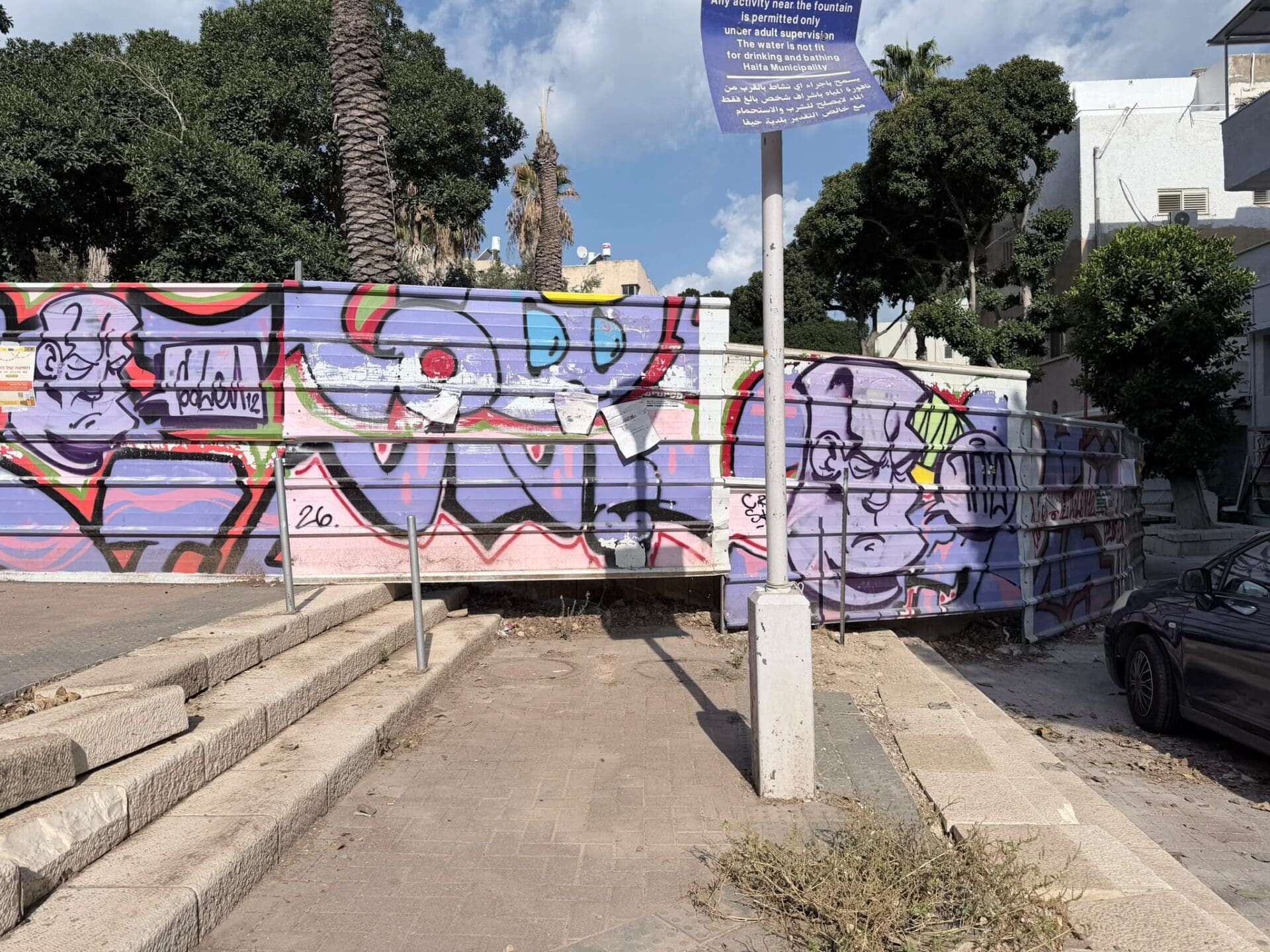
In June 2025, a ballistic missile warhead from Iran fell without an alarm and directly hit a building on Nordau Street, near Gan Binyamin. For months, intensive restoration work was carried out on the damaged building and apartments. Contractors, workers, heavy equipment and trucks filled the street until the building returned to its normal condition. But by the time the building came back to life, the public space around it had become a fenced-off area filled with construction debris, leftover construction materials and graffiti on nearby walls.
Much of the debris has been cleared in the past week, but residents report that the area is still unsafe. Broken paths, stained walls, and a compound that still looks like an abandoned construction site create a sense of ongoing neglect. A resident of the area said, “The building has been restored, but we are left with a site of destruction next to our house. It is hard to understand how such a central area can look like this for an entire year.”
The history of Benjamin Garden
Benjamin Garden, located in the heart of the Lower Carmel Hadar neighborhood, is one of the oldest and most beloved gardens in the city. It was established in the early 20th century as part of Haifa's public space planning during the Mandate period, and served for decades as a natural community center for the area's residents. The garden was known for its wide stone sidewalks, the old trees that provided generous shade, and its proximity to the surrounding commercial streets, which made it a daily meeting point for families, children, and the elderly. Over the years, the garden has hosted community events, cultural performances, and city festivals, and has been an integral part of Hadar's social fabric. For many residents, Benjamin Garden is not just a green space, it is a childhood memory, a meeting place, and a symbol of vibrant urban life. They see the current neglect as a detriment to the local heritage and one of the most significant places in the neighborhood.
The rehabilitation plan has been rejected — and it is unclear when it will be re-approved.
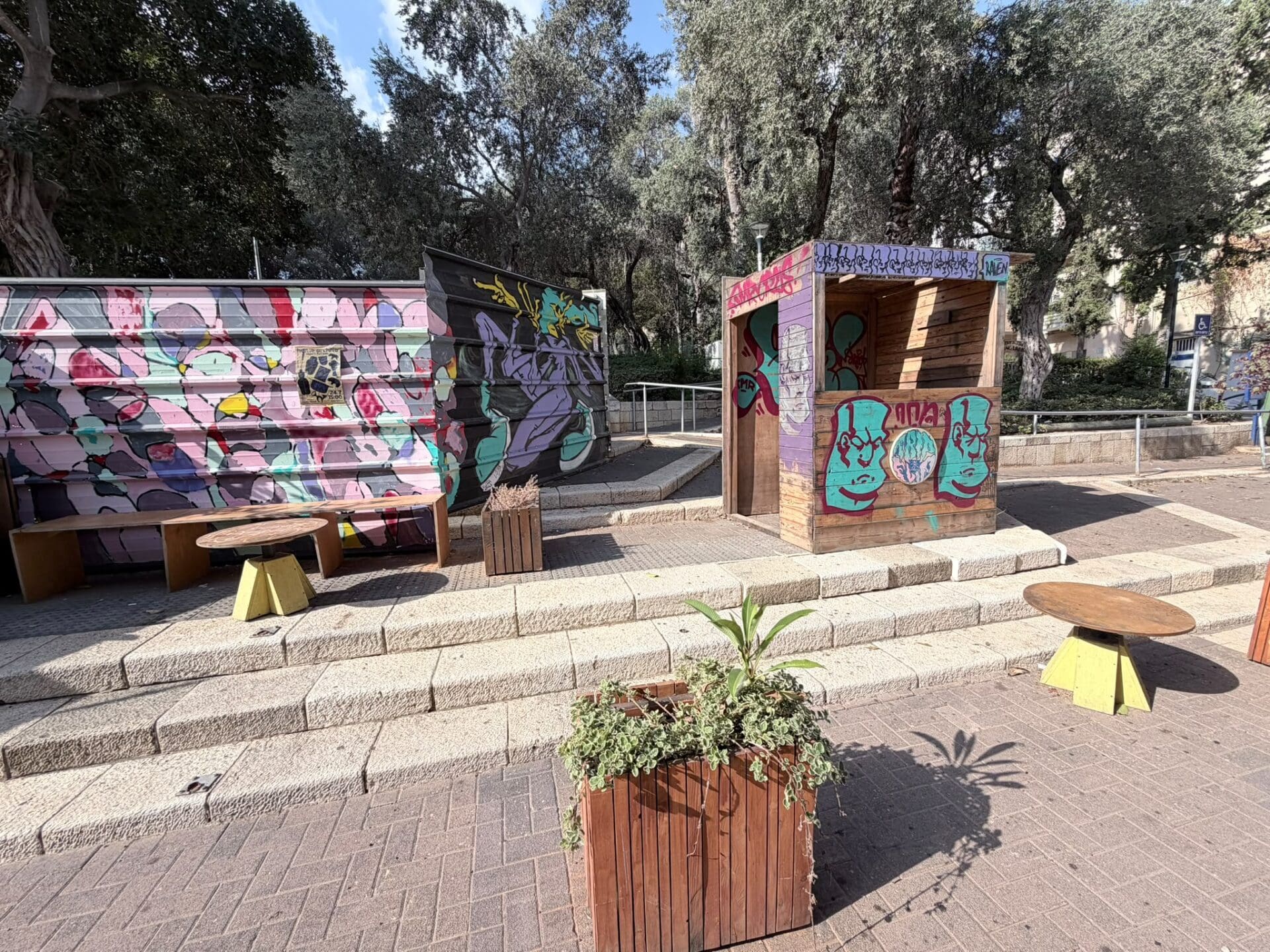
The municipality previously presented a plan to renovate Binyamin Park and the adjacent square, which included a significant investment of approximately 17 million shekels. The plan was supposed to include upgrading infrastructure, renewing paths, developing seating areas and adding community elements. However, the plan was postponed, and it is currently unclear when a new plan will be presented, when it will be approved and when the actual work will begin.
Residents say they were promised public participation, but in reality they saw no progress on the ground. The latest postponement was explained by the fact that the garden hosted the Children's Play Festival, an event that was postponed from Passover due to the war and only recently took place. For many residents, this explanation is not satisfactory, and they express frustration at the repeated delays.
Haifa Municipality's response
The Haifa Municipality said it will invest approximately 17 million shekels in the restoration and renewal of Binyamin Garden and the public space adjacent to it, including the square in question. According to it, the planning is in its final stages and will be presented to residents immediately after the Sukkot holiday, following an in-depth public participation process that took place at the beginning. The municipality noted that comments and suggestions raised as part of the public participation process were incorporated into the planning, and that immediately after the presentation of the planning, the restoration work will begin.
Regarding the construction waste, the municipality said that it was a fenced area where waste was dumped during renovation work on the damaged building. The municipality is working to remove the waste and clean the area, and the work is expected to be completed in the coming days.
Residents: “There are promises — but we want to see actions”
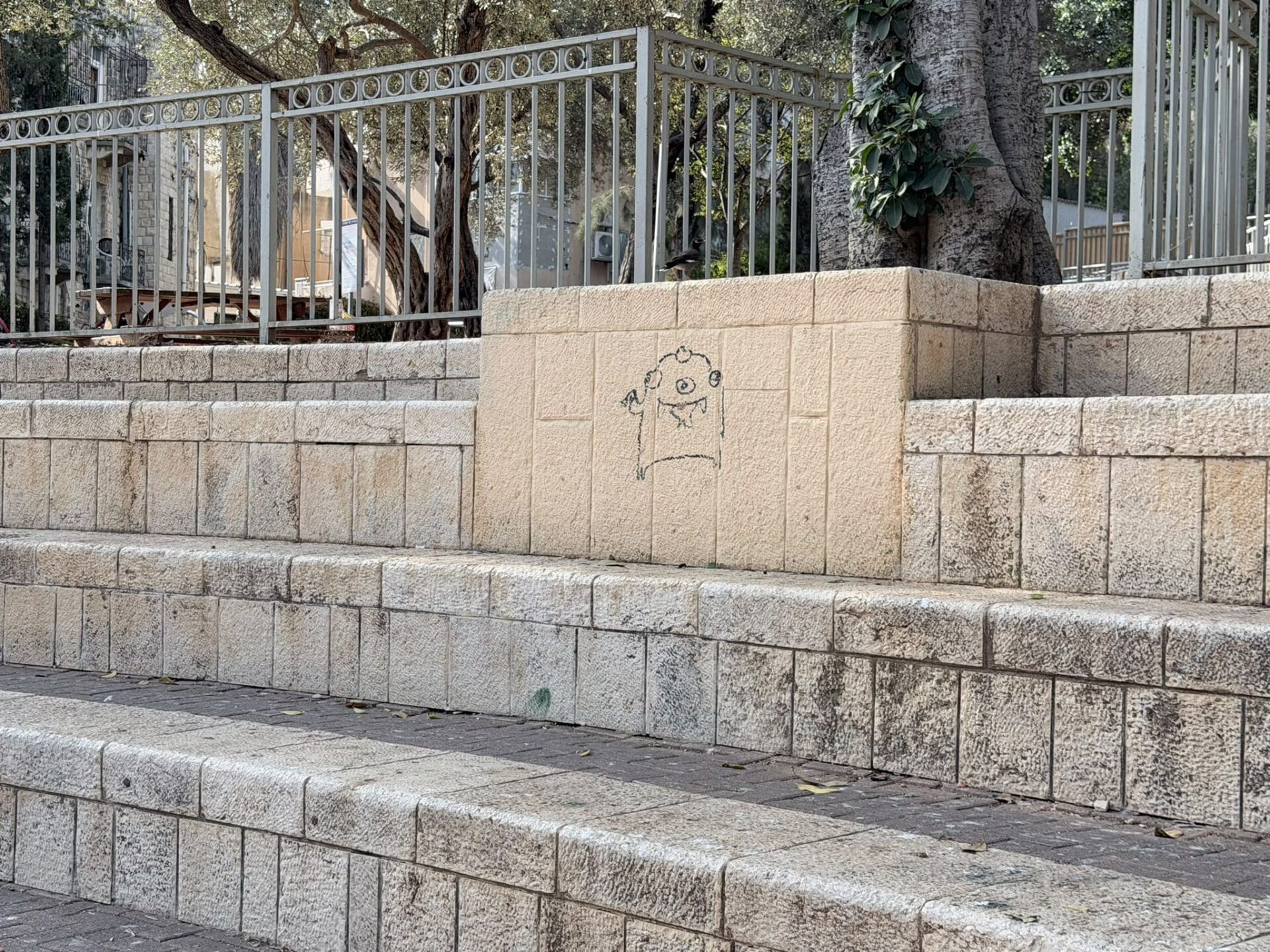
Despite the declarations, many residents find it difficult to believe that the reconstruction will begin soon. They point to a year of neglect, repeated delays, and a gap between official announcements and the reality on the ground. A resident who lives near Gan Binyamin said: “I pass by here several times a day on my way to work and in general. I’m not talking about the months when it was Sodom and Gomorrah, because that was because of the rebuilding of the building. I’m talking about what’s happening here now. On the one hand, the municipality says we cleaned everything and now we’re going to an invested project, you have nothing to complain about. But this only shows the disconnect between the municipality’s administration and the residents of Hadar.”
According to her, the place is still not safe. “There are deficiencies here that endanger us and our children who play here. More than that, it can’t be that anyone who wants to can come here and spray paint slogans or drawings, and that would be okay. When there is elaborate graffiti by an artist, we are in favor, but that’s really not what’s happening here.”
The resident also referred to the initial proposal previously presented for the garden's restoration: “The disconnect is most visible in the proposal we received that destroys Gan Binyamin with some kind of tunnel underneath and an unclear water source. We really think there was a deliberate hand behind this proposal, which it goes without saying that residents cannot agree to. Now we are waiting for another proposal, we don’t know when it will be, and of course there are no timetables. I have read several times in the local media about the restoration of Gan Binyamin worth 17 million shekels, but in the meantime the park is not in good condition and we have not yet seen a single shekel of investment.”
Another resident said that “Gan Binyamin is the heart of the neighborhood. We want to see it clean, safe and well-maintained. It's time for the work to really begin.”
Similar struggles in other neighborhoods in Haifa
The situation in Gan Binyamin is not unique, and residents in other neighborhoods in Haifa describe similar struggles around the restoration of public spaces that have been damaged or neglected:
In the neighborhood Neve DavidFor example, residents fought for months to restore a public park that was damaged by infrastructure work, claiming that the municipality had repeatedly postponed the start of the work despite official promises.
בKiryat Eliezer There was a struggle over upgrading the neighborhood promenade, after residents reported safety hazards, poor lighting, and broken paths that had not been maintained for a long time.
Also in the neighborhood Bat Galim Residents appealed to the municipality to restore the public space around the old train station, after it had become a neglected area filled with graffiti.
In all these cases, residents highlight the gap between the municipality's statements and the actual pace of implementation and the sense of uncertainty about the timetables. The recurring struggles point to a broader urban need: transparent planning, binding timetables, and genuine public participation that ensures that public spaces remain safe, clean, and well-maintained.
What next?
If the plan is presented after Sukkot and work begins immediately afterward, it is possible that Gan Binyamin will finally receive a comprehensive renovation. But until that happens, residents of the area will continue to live next to a neglected complex, waiting to see if the promises will become reality.
Did the article interest you?
At 17,000,000 = I would renovate all the "neighborhood gardens"!
All the excessive "budgets" today, at the city & state levels, which cause delays in "decision-making", delays, postponements, cancellations, etc., stem from the phenomenon of "corruption" of all the parties involved, who reap a large "share" of excessive "profit", when there is usually no logical/decent/honest connection between the real "work" and the "inflated bill" even if it becomes "anchored" in the "garden" 😭😭😭
There are more urgent things.
There is no justification for such a huge sum to be invested in a historic garden that mainly needs refreshment and maintenance.
Just to be precise, an interceptor missile fired from a ship in the Mediterranean Sea fell. It was not an Iranian missile.
We had a pool and a garden and a library in Pevzner and we had a great time. Man is the enjoyment of the landscape of his birth. And there was nothing and there was everything Mazal Cohen Livnat