


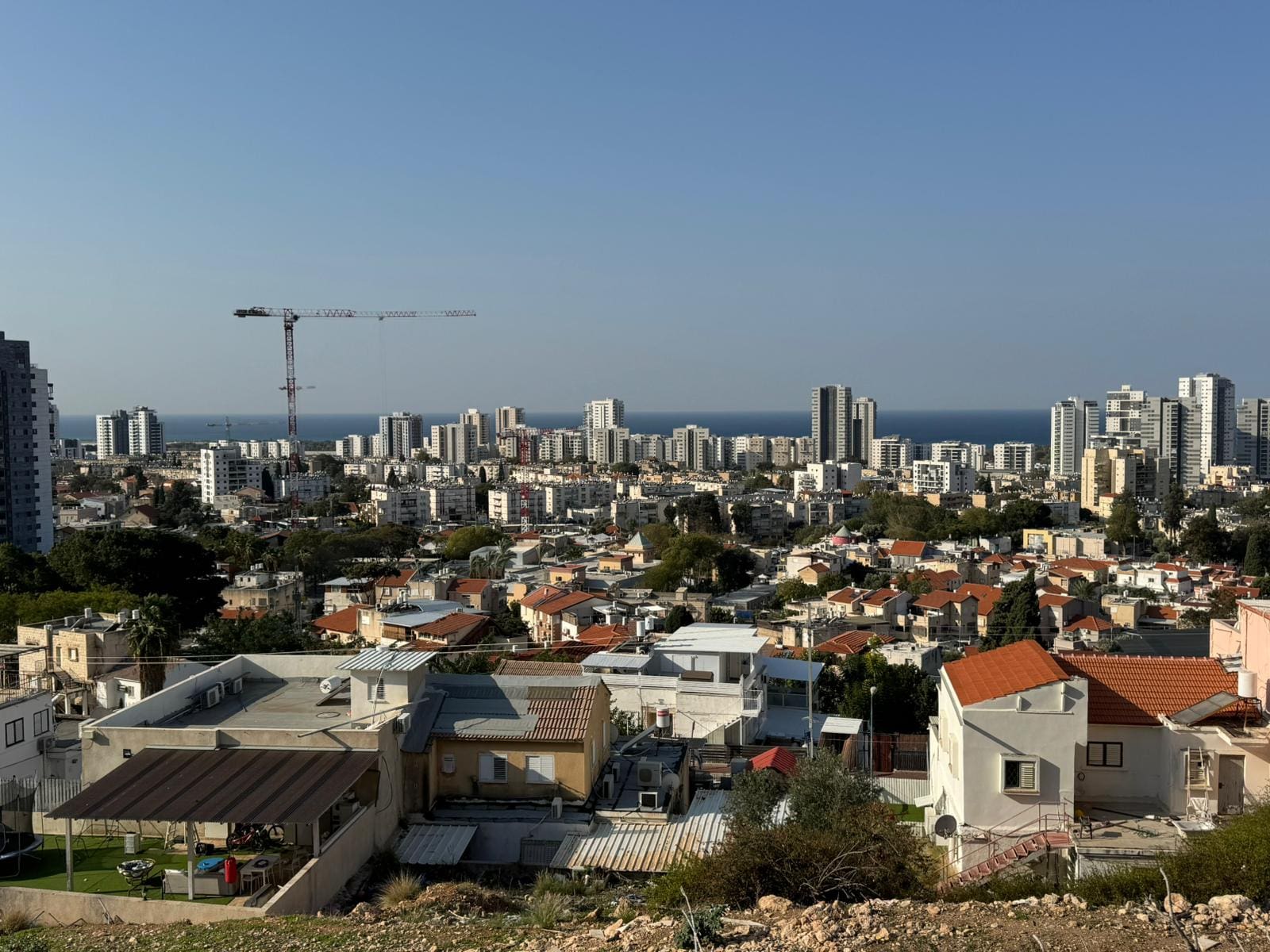
After an in-depth planning process and intensive discussions, Tirat Carmel recorded a significant planning achievement: the Haifa District Planning and Building Committee adopted the policy document for urban renewal in areas 7 and 8 in the city. This is a historic step that provides planning certainty and marks the way for the renewal of the city center, while carefully balancing the needs of development, the economic profitability of the developers, and the city's infrastructural capacity to absorb the renewal in a responsible and sustainable manner.
A clear roadmap for the renewal of the city center
The approved policy document deals with the Shazar-Deker, Amidar, Bialik and Rambam complexes, and constitutes a strategic plan that defines the intensity of construction, the stages of implementation and development limitations. The document is intended to ensure that urban renewal will be carried out in a controlled manner, while maintaining the quality of life of residents and avoiding overloading existing infrastructure.
Main points of the district committee's decision
- Construction capacity: An addition of approximately 5,650 housing units to the existing fabric in Complexes 7 and 8.
- Economic multiplier: Target range of 4–5, based on fair compensation for apartment owners (12–15 square meters).
- Construction height: A combination of textured construction and towers up to 30 stories high.
- Infrastructure conditioning: Any deviation from the carrying capacity will require a complete complementary solution for public areas within the plan area.
The move is intended to ensure massive, but responsible, renewal that will allow for the renewal of old neighborhoods without leading to infrastructure erosion or halting future projects.
Planning certainty and a comprehensive urban vision
Tirat Carmel City Engineer, Angel Lena Oster, welcomed the decision: "This is a dramatic step that provides complete planning certainty. The policy clearly defines the rules of the game, from building heights to multipliers, while paying close attention to urban carrying capacity. This way, we can complete the renewal of the entire city in a responsible manner, without reaching a forced planning halt."
A new prioritization model for developers and residents
Head of the Tirat Carmel Urban Renewal Directorate, Yigal Osipov, noted that adopting the document allows for a combination of rapid advancement and planning responsibility: "The decision proves that it is possible to promote massive urban renewal responsibly. The municipality will now update the urban prioritization model, the 'traffic light' model, which will give every developer certainty about the date when their project will be able to get underway, depending on the pace of infrastructure development."
According to him, the model is intended to ensure intelligent utilization of resources, so that future projects will not be stalled due to a lack of public institutions, transportation infrastructure, or public spaces.
On the way to completing the city-wide renewal
Director of the planning department at the municipality and leader in policy formulation, Attorney Yedidia Kola, emphasized the broad urban significance of the move: "We have created a professional tool that balances the needs of the market with the physical limitations of the city. At the same time, we are advancing the plan for Complex 10, the last complex in the city designated for urban renewal. Approving the policy for it as well will allow us to close the circle and ensure that all the old buildings in Tirat Carmel will be protected and renovated under a single, stable and clear planning envelope."
Architects and urban planners Alona Lipshitz and Yair Ben Gad, editors of the document commissioned by the Planning Administration"We welcome the final adoption of the policy document for urban renewal in complexes 7-8, which provides planning certainty and a high-quality, sustainable urban framework for the entire area of the renewed complexes for many years to come. We thank the entire steering committee team, the Planning Administration, the Tirat Carmel Municipality, the Haifa District Committee and the Mordot Carmel Regional Committee, for the fruitful cooperation and careful guidance that led to the successful final adoption of the document, which is expected to bring a high-quality and informed planning future to the entire city of Tirat Carmel."
The adoption of the policy document marks a turning point in the urban renewal process in Tirat Carmel, a step that places the city in line with leading authorities, and ensures responsible, planned, and sustainable renewal for the benefit of future generations.
They don't see people, just housing units.
You screwed up all planning in Israel with Pinuy Binui and the damned Tama 38.
Make money and live instead of quality of life, nature, beauty and culture. All cities look like a cemetery with tall gray tombstones.
We'll see when this happens at Ramat Begin. Catastrophe what happens to dog owners