


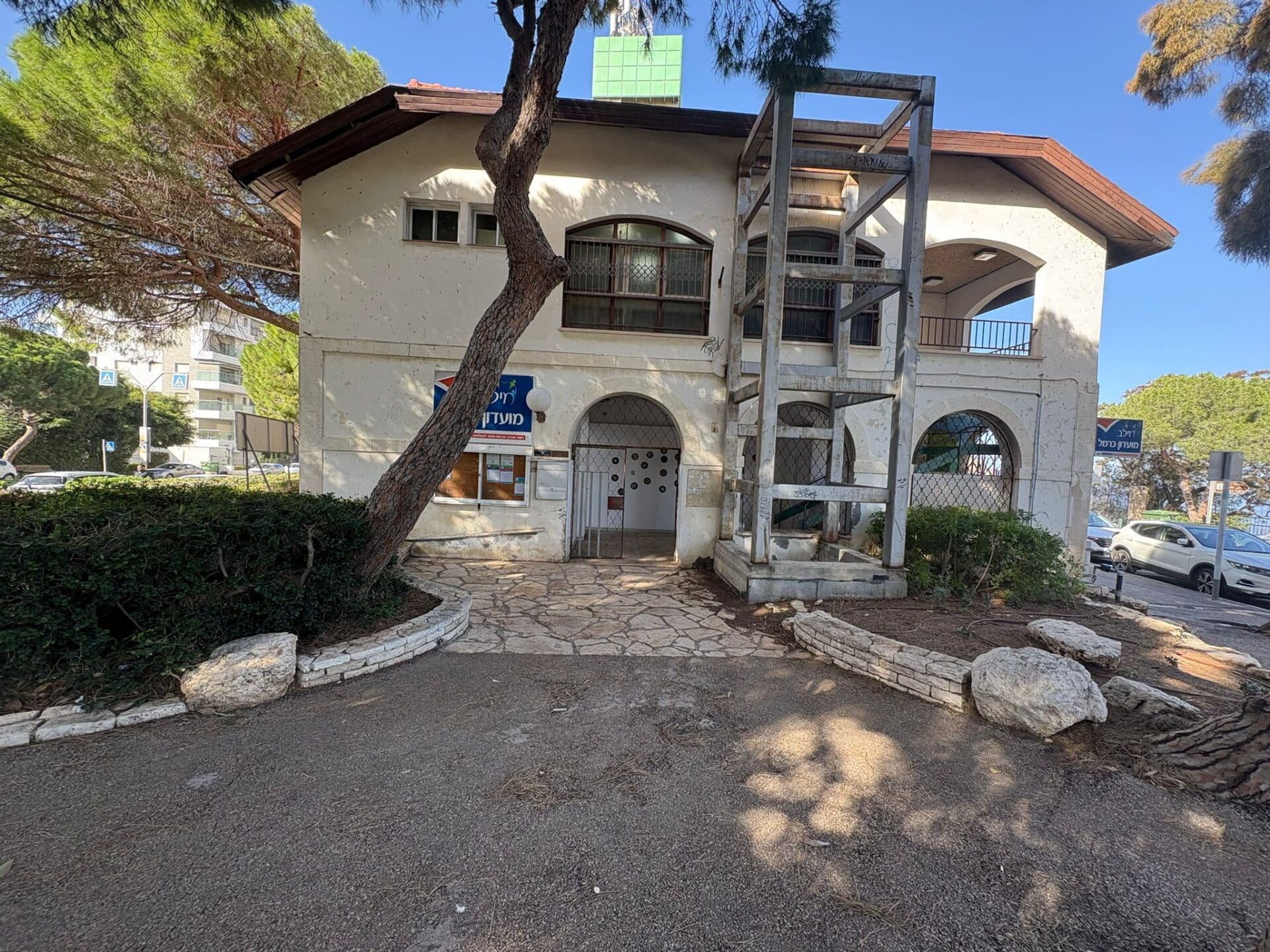
(haipo) The Milab Club, intended for the elderly in the Carmel Center in Haifa, currently operates on the first floor of a building without an elevator. This means that as long as participants are able to climb stairs, they can enjoy the services offered by the club, but as soon as they are less mobile, this option is denied to them. This is a building that is supposed to serve the elderly population, but in reality is not accessible, raising serious questions about the municipality's priorities.
The library that burned and the service that wandered
The club is located on President Boulevard, near the Panorama Center. The building itself is familiar to residents, veterans of the city: about a decade ago, the place where the public library was located burned down, and the library was closed. Since then, many residents have not understood why they are required to go to another library, on Hayarkon Street in the Shambor neighborhood, instead of renovating the library in the center of the Carmel. Elderly people who used to walk to the local library have expressed deep disappointment over the years that the municipality has not been able to restore the service to the original building or find a close alternative.
Difficulties in operating the elevator and lack of accessibility
According to the municipality, the main difficulty was operating the elevator in the building. Today, preparations for a wooden elevator can be seen on site, but in reality there is no active elevator, and the building is not accessible. It is difficult to think of a building that needs more accessibility than a club for the elderly, where some of the participants are wheelchair users. The obvious question is why the municipality did not find a nearby municipal building that could be used by the club, so that disabled seniors could also participate in the activities. This is similar to organizing a concert for the deaf; what is the point of organizing an activity, no matter how high-quality it may be, for the elderly without being able to participate and take part in it.
Neglect of a building in the heart of a well-kept neighborhood
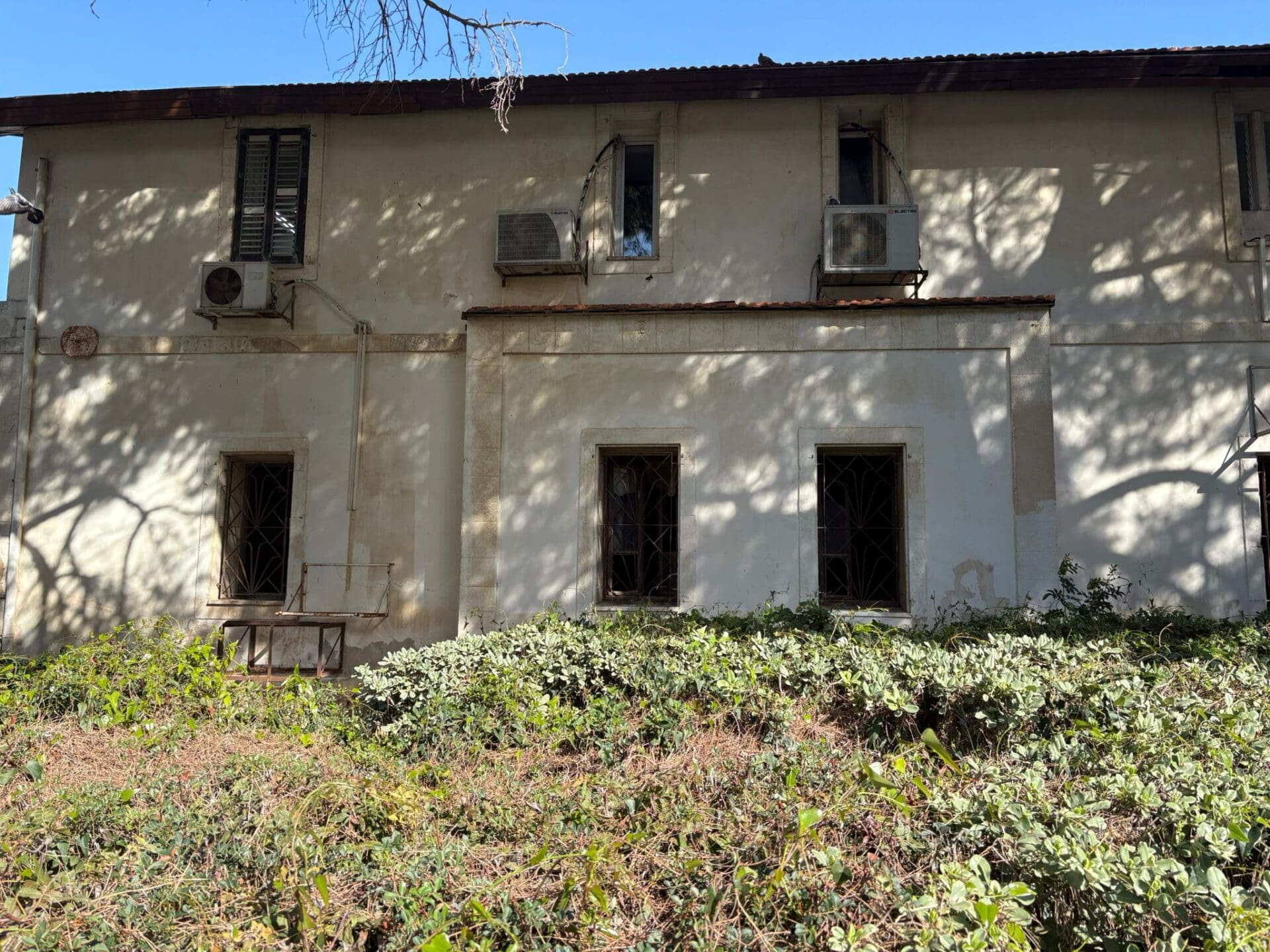
The club is located on one of the most beautiful avenues in the city, just past the Carmel Center and Gan Ham. But when you look at the building itself, it's hard to believe that it's an active structure. Broken windows are visible, an unkempt yard, peeling walls, and a general feeling of neglect. Evidence of this was provided when an elderly man was seen urinating on the grass surrounding the building, as if it were abandoned. This sight stands in stark contrast to the well-kept image of the avenue on which it is located.
Over the past decade, the municipality has succeeded in renovating many neighborhoods in the city and has signed construction and rehabilitation plans. However, the building on President Boulevard remains neglected and inaccessible. This raises questions about why a building intended for such a vulnerable population is not receiving urgent attention.
Another example: Abba Hushi's house in Neve Sha'anan
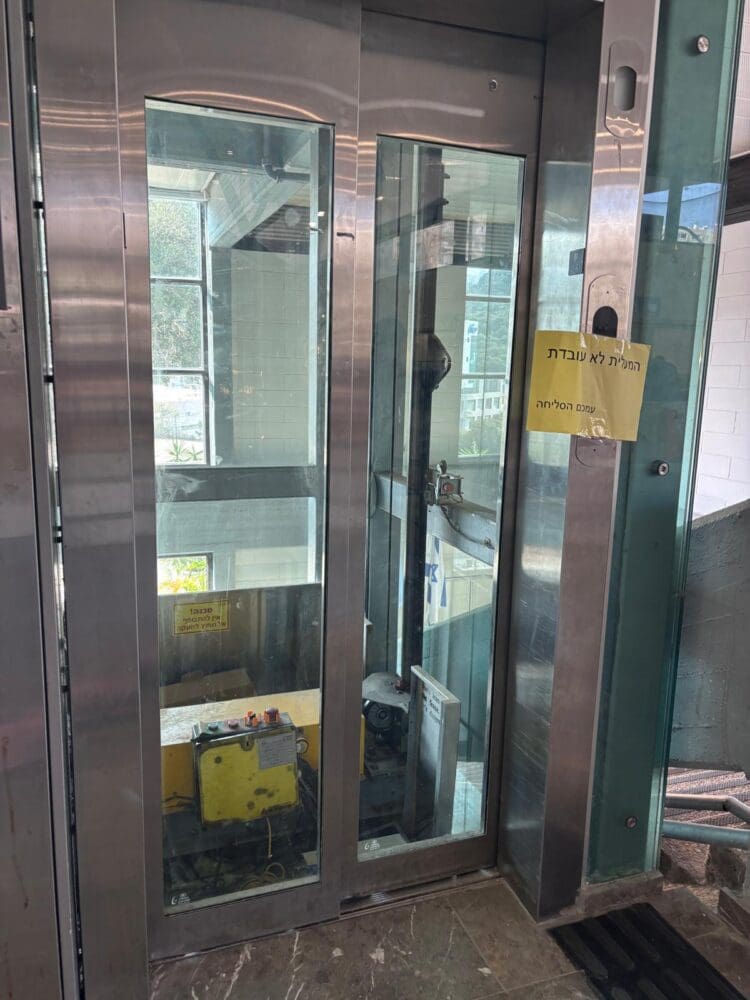
The situation at the Milav club is reminiscent of what is happening at the large community center in Neve Sha'anan, Beit Abba Khushi. Several months ago, the elevator broke down there, and the municipality said that it was necessary to bring spare parts from abroad to repair it. In practice, this means that the building was inaccessible for many months, and only recently, after a Haifa article about the issue, did the elevator return to operation. In a city like Haifa, which is considered one of the oldest cities in Israel in terms of population age, this is a serious omission. Many elderly people want to participate in activities at Beit Abba Khushi, but cannot due to the lack of an elevator and/or access for those with disabilities or difficulty with mobility.
Accessibility is a legal obligation, not a whim.
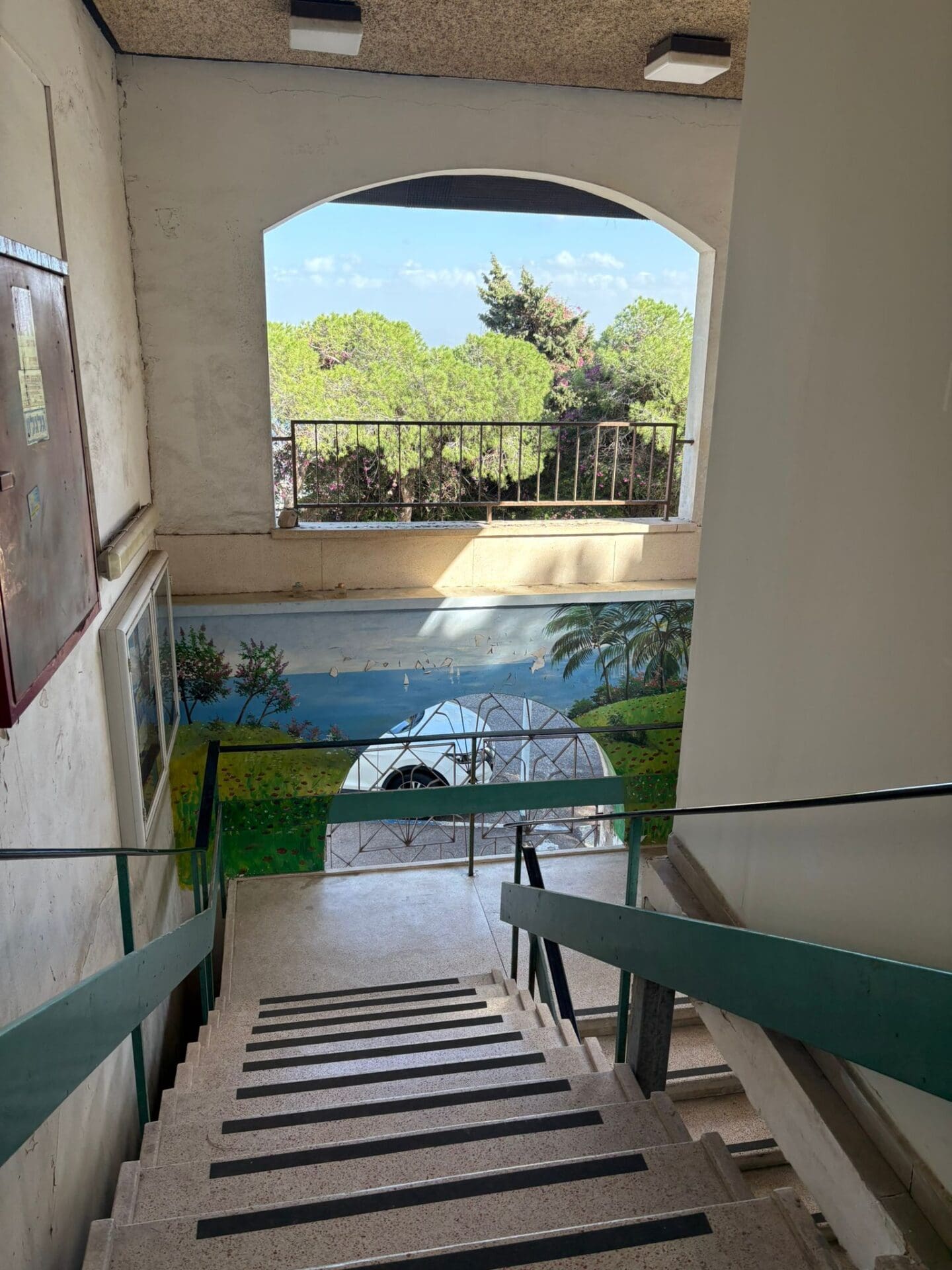
The legislature has determined that accessibility is not a "whim" of people with disabilities, but a legal obligation. Therefore, the municipality cannot afford to maintain inaccessible buildings, regardless of the reason. If the municipality can impose fines on residents who do not comply with the law, it cannot ignore the legal obligation to make its buildings accessible. In practice, it does so and harms the weakest population in the city, the elderly and disabled, who are often unrepresented and their voices are not heard.
The lack of accessibility in public buildings directly affects the elderly and people with disabilities. This is a population that already faces daily difficulties, and now also has to deal with physical barriers that prevent it from participating in social and cultural activities. The feeling among many is one of exclusion and disdain.
The role of local media
In such a situation, the local media is required to play an important role: to bring the voice of the weakest residents and demand their rights. When it comes to the elderly who are limited in their mobility and use wheelchairs, the public responsibility is double and doubled. The media serves here for those who cannot fight for themselves against the municipal system.
The importance of social solidarity
Beyond the legal and municipal aspects, there is also a question of values. Today we fight for others, the elderly and people with disabilities, but tomorrow we may find ourselves or our loved ones in a similar situation. Life is unpredictable, and anyone may need accessibility. Therefore, the struggle today is an investment in a better society, where in the future someone else will fight for us. This is a basic solidarity, without which society cannot exist.
Questions about the municipality's priorities
The situation at the Milav Club and the Abba Khushi House raises difficult questions about the priorities of the Haifa Municipality. How is it possible that a municipality that succeeds in renovating neighborhoods and leading large projects fails to ensure basic accessibility to buildings intended for the elderly? Is it a lack of budget, or is it a lack of will?
The municipality's response
The municipality intends to begin work to renovate and preserve the club's building towards the end of the month, and accessibility issues will also be addressed, including the installation of an elevator.
Did the article interest you?
There are no expectations, no disappointments. In the Haifa municipality, what breaks down is not fixed. But the system for collecting property taxes never breaks down.
The Haifa Municipality does not have 3 million shekels to install elevators in several buildings, but it has an additional 7 million shekels for city administration expenses in the coming year? What are the city administration's expenses for? More catering at every city hall meeting? More new leather sofas for hosting VIPs? Replacing screens in offices with more luxurious and larger ones?
You will find this small budget within 3 billion shekels to install a few elevators. You are fed up.
Sorry for the topic, but the women's restroom in the auditorium has toilets suitable for small children. Who owns this building and why aren't they replacing it with normal toilets?
I volunteer at the senior citizens' club in question in the Carmel Center, and indeed the problem is very serious. The population is aging and sometimes sick, and on the other hand, they are thirsty to get to
Meet people and participate in various activities
And it's hard for them. There are many who are deterred by the lack of an elevator, not to mention the neglect inside the building.
Why don't they renovate the downstairs and move us there???
This mayor has been using the same trick for 20 years.
Constantly announcing new projects, simulations and promises, but very little actually happens.
But in the meantime, the city is crumbling because the municipality is unable to maintain what exists.
Lol.
And what about the escalators at the Carmel Center station?? Until when? Why does repair take so many months? What a disappointment, Yona Yahav.
These are places that are supposedly "for the sake of" and one could really think that these managements are run by people who care. But what they really care about is just filling out some content to fill their day so they can get paid.
If Yona Yahav wants to position Haifa as a city with a cultural offering, he should also renovate and reopen the public library, adapting it to the needs of the entire population, including story time, lectures, and book launch events. All of this will contribute to the neighborhood's residents' sense of well-being and belonging, and will also be an advantage for him in the future, at the ballot box.
Also across the street is the Mena Katz Museum, which has been closed for 4 years because they aren't building an elevator.
The municipality has a rather strange order of priorities. Small things like this can't be financed, but 17 million shekels is being spent on restoring Benjamin Garden with a stream and strange facilities instead of restoring the garden to its historical beauty and investing the surplus in elevators and renovating public buildings that burned down and were closed.
Really, what will happen to you in Hassan Shukri??
So, what happened?😘
Strive to be "young" like the "clerk" in the office...
Option 2: Go up a step…
Ep. 3: Bring a "personal newsletter"...
Episode 4: For the rich of "The Carmel" - donate an "elevator"...
Ep. 5: "There's no place like home" with the "Tumble-Vision"...
Ep. 6: "Mothers' House"…
Episode 7: Spend time with the kids & play with the grandkids…
Episode 8: "The Promenade by the Sea" + "The Auditorium" are accessible to Life CONCERT❤️
Ep. 9-10 = Free-free choice🙏
New to the city and already knows that everything that goes into renovation is permanently closed... the library, the Mena Gat Museum, the prehistoric museum at the zoo... What a shame, these are really interesting places and, above all, they are budgeted and supposed to be operational.