


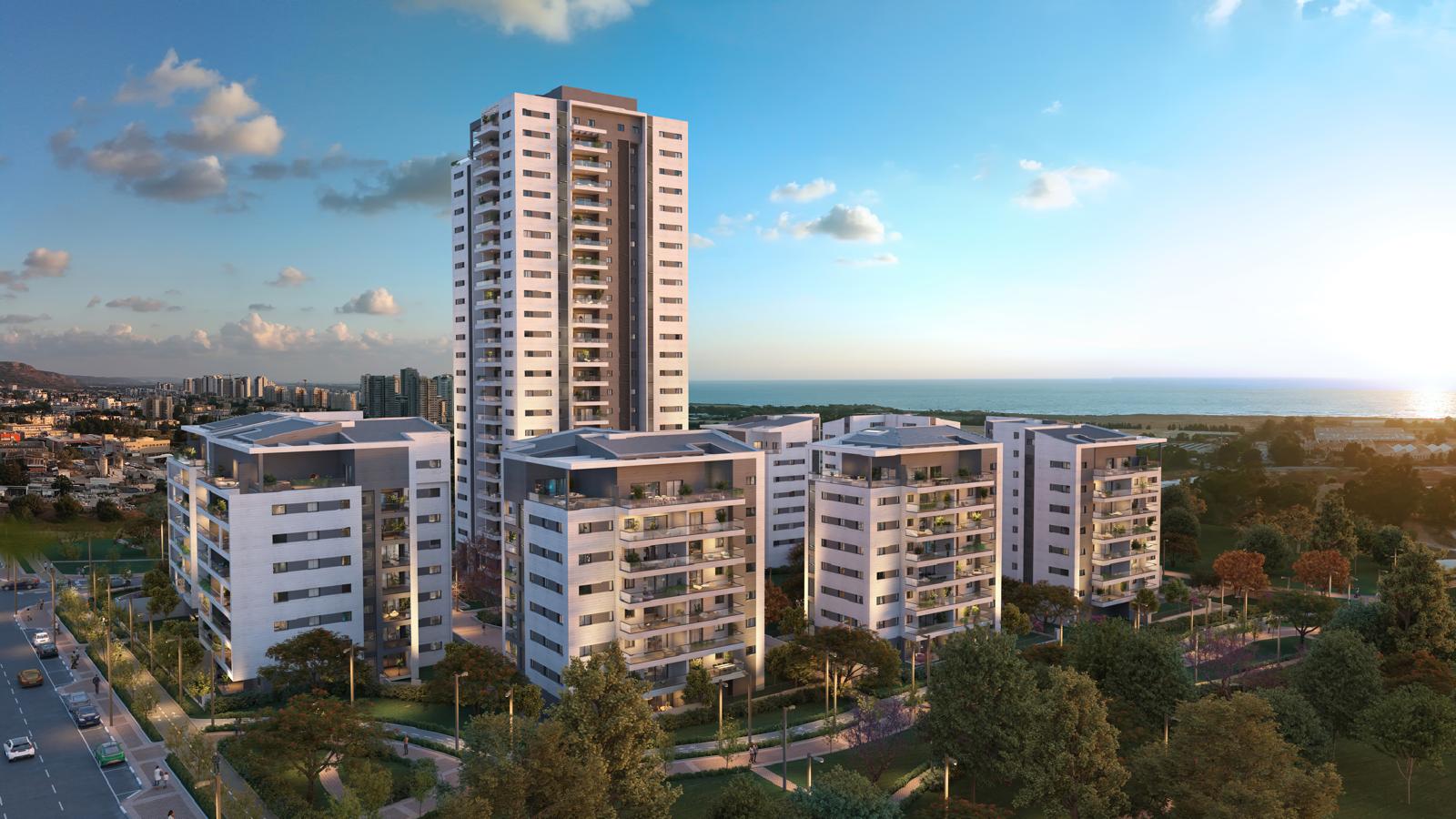
(haipo) A new report by the Central Bureau of Statistics presents a worrying picture of the new apartment market in Haifa: a dramatic 51% drop in the number of transactions in the period between February and April 2025 compared to November 2024 - January 2025. On the other hand, in the second-hand apartment market, Haifa manages to hold second place, and the suburbs continue to demonstrate relative stability in sales. The data reveals gaps between neighborhoods within the city and nearby cities, and raises questions about the future of the Haifa housing market.
More than 50% decrease in the number of new apartments sold in Haifa
The Central Bureau of Statistics recently published up-to-date data for the housing market for the months of February to April 2025. According to the data, only 172 new apartments were sold in Haifa during this period – a sharp decrease of 51% compared to 353 apartments sold in the city in the previous three months, November 2024 to January 2025. Haifa finds itself in 16th and last place among the cities examined, a figure that illustrates the depth of the crisis in the field of new construction in the city.

Tel Aviv, Jerusalem and Ofakim top the list of new apartments
While Haifa falters at the bottom, Tel Aviv-Yafo leads the new apartment sales chart with 553 transactions in the February-April period. It is followed by Jerusalem (517 apartments), Ofakim (488), Lod (438) and Ashdod (426). While most of the cities on the list experienced declines in sales, Ashdod stands out with an impressive 250% increase in the number of new apartments sold – a rare phenomenon indicating high demand and probably also an effective pricing or marketing policy.
Haifa leads in second-hand apartment sales, but figures are declining
Alongside the significant decline in the new apartment market, Haifa continues to maintain its position at the top of the second-hand apartment market. According to the data, 866 second-hand apartments were sold in the city between February and April 2025 – a 12% decrease compared to 985 apartments sold in the previous three months. Despite this decline, Haifa ranks second in the country in terms of the number of second-hand apartments sold, after Jerusalem, which continues to lead in this category as well.

The districts remain stable, some even show an increase.
The data from the districts paints a different picture than that of Haifa. Kiryat Ata recorded a 3.4% increase with 184 second-hand apartments sold, compared to 178 in the previous months. Kiryat Yam recorded a more noticeable increase of 13%, from 139 to 158 apartments. Kiryat Motzkin maintained an almost identical number of transactions – 165 apartments – while Kiryat Bialik saw a 7.4% decrease (150 apartments compared to 162 in the previous period). These figures highlight the relative stability of the districts in the housing sector compared to the sharp volatility in Haifa itself.
Ido Morag: "It is the supply that is causing the slowdown – there are not enough attractive apartments"

According to Ido Morag, CEO and owner of Morag Properties Haifa, the data published by the Central Bureau of Statistics reinforces the feeling that the local market is still alive and kicking, at least when it comes to second-hand apartments. "Haifa's high position in the second-hand apartment sales table indicates that the city is indeed succeeding in attracting buyers - mainly thanks to the relatively affordable prices and the attractiveness of old neighborhoods in good locations," he explains.
However, the sharp decline in the number of transactions in new apartments reflects a completely different trend. According to Morag, the reason for this is primarily supply: "In the market for new apartments, the question is what the city has to offer in terms of cost-benefit to the final buyer. Those who buy a new apartment are usually young couples or families who are improving their housing - not investors. Therefore, when there are no attractive offers on the market - there are no transactions."
Morag also refers to specific neighborhoods in the city: "Last year, Givat Zemer was the beating heart of the new apartment market - there was a construction boom there, and the apartments were snapped up. But this year, the supply there has decreased, as has the number of transactions. The neighborhood that was supposed to take its place is Neot Navon (Neot Peres B), but the price levels there are discouraging to many. Quite a few residents are simply not willing to pay the prices of Rechs Carmel there."
Referring to the broader regional picture, Morag emphasizes that "the Kiryat and Tirat Carmel are an inseparable part of Haifa in the discourse on real estate - one cannot be analyzed without the other." According to him, one of the reasons why neighborhoods like Kiryat Bialik maintain stability in the number of transactions is the price level: "When a young couple can purchase an apartment in the Neot Afek neighborhood in Kiryat Bialik for half a million shekels less than in Neot Peres in Haifa, it is clear that demand will be concentrated there. Haifa is losing its younger generation because it is simply too expensive to live there."
Did the article interest you?
In Haifa and Tirat Carmel, they have begun to build buildings in gray-black. I wouldn't want to live in a neighborhood that resembles a concentration camp.
Haifa has long since become a city of old people, disgruntled people, and anarchists. The large influx of drug addicts and members of minorities is also not helping the city.
In my opinion, tying the hands of the police and the government by the legal system only adds fuel to the fire.
The issue is clear, because Haifa is a much more expensive city than the suburbs and everything is getting more expensive, property taxes, insurance, food. People have less free money, people are looking for cheaper apartments.