


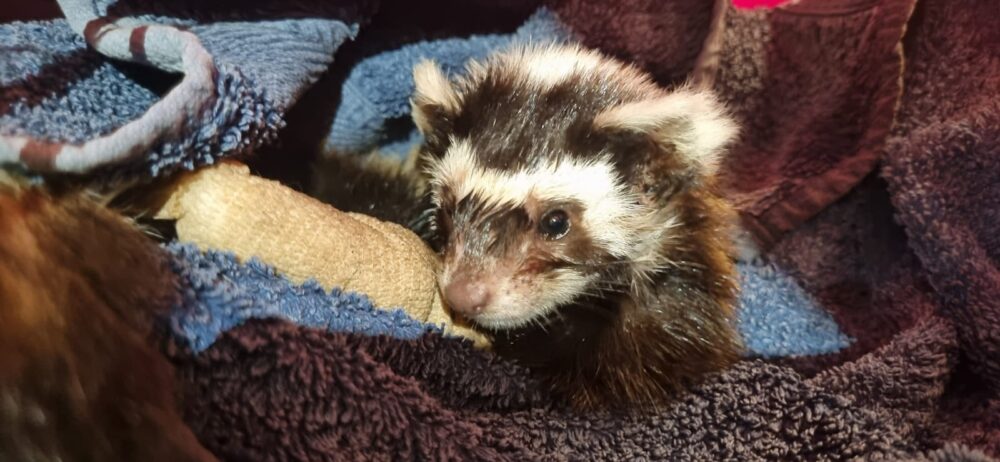
What would you do if you found one of the rare animals in Israel in your garden? This is exactly what happened to Raz Dafni, a nature lover from the Golan Heights, who found a marbled weasel in his horse yard. The weasel is in poor condition, very weak, apathetic and dragging one of its legs. Raz, who understood the magnitude of the event, was able to capture it skillfully and contacted the volunteers of the Hibulens. From there, a messenger race began for the rescue of the rare Beah.
The weasel was quickly transferred to the clinic in Agmon Hula, where he received preventive and stabilizing medical treatment from veterinarian Dr. Rona Nadler. After he stabilized a bit, he was transferred to Kibbutz Afikim and from there he was picked up by anti-violence volunteer Tsukit Raviv, who traveled all the way from Beit Shean Valley. Tsukit continued with him to the Harish area where she met two other anti-violence volunteers who were in the area at the event, Dima Weisberg and Carmel Drori.
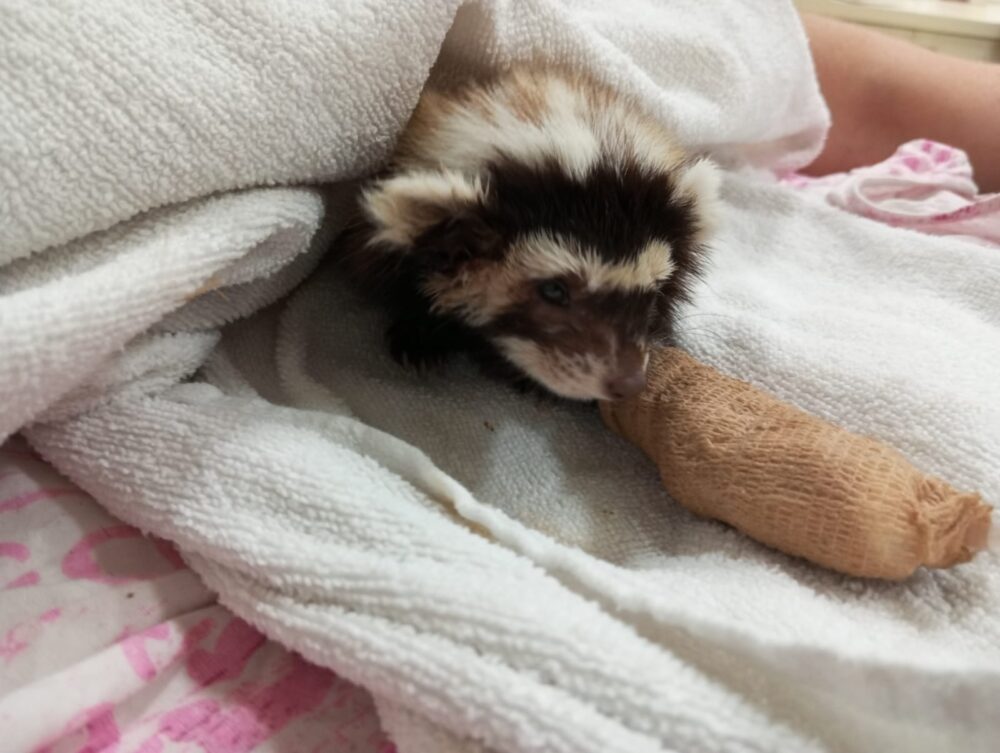
They collected the weasel from her and took it late in the evening all the way to the Safari Wildlife Hospital. There he waited for the medical staff to receive him.
The weasel arrived at the hospital in a weak but stable condition and received dedicated care from local employees and volunteers. He is still hospitalized in the Safari hospital but is showing a slow recovery, and we all hope that he will be able to recover and successfully return to the wild.
Dotan Rotem, open areas ecologist at the Nature and Parks Authority explains:
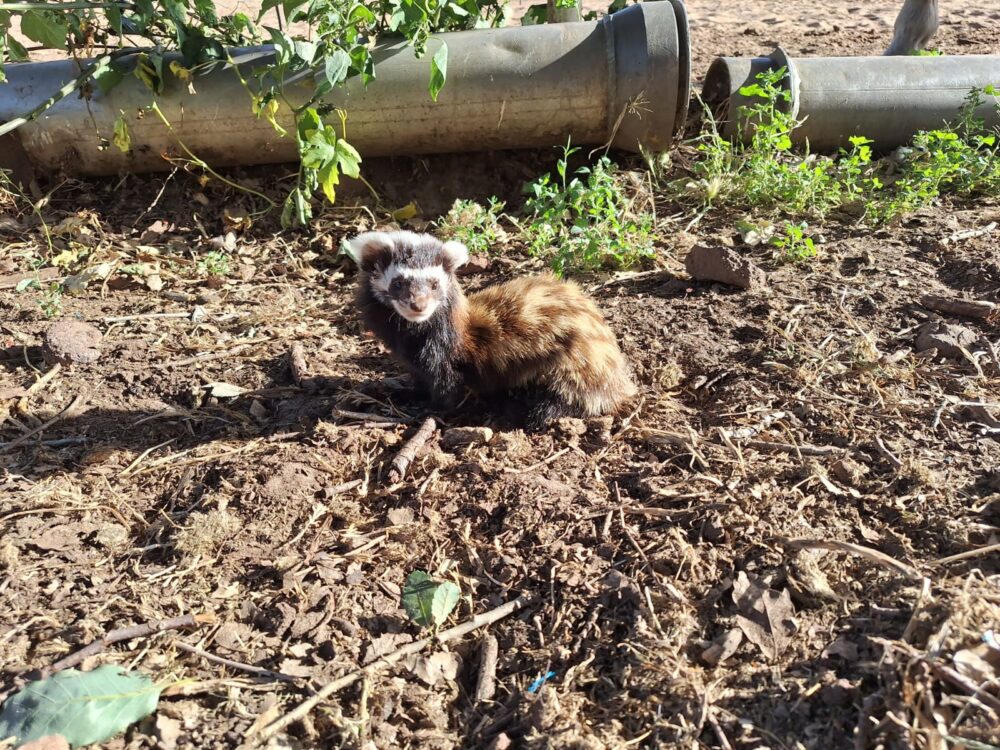
A weasel is a small predator from the weasel family. His name was given to him because of his back hair when defending himself. It can also spray a pungent odor from glands located near the anus, on its attackers which is considered particularly repulsive. In addition, as you can see in the picture, it has a characteristic bark that is also used to deter the attacker but also to alert other weasels that are within hearing range. Its habitats are quite diverse and in Israel it has been observed in groves, forest parks and mainly in grassy areas.
The marbled weasel lives in the temperate zone of Europe and Asia and as such is exposed to a cold and long winter which it spends in burrows. The breeding season is in the late spring and in some areas calving in the autumn season can be disastrous because the winter in these areas is cold and icy. During evolution, the weasel developed a feature in which it can suspend the pregnancy (the female, of course). The fertilized egg remains in the uterus for up to two months before the intended calving and only during the winter towards the next spring will the pregnancy develop and after the calving there will be plenty of food around.
The weasels prey on various rodents and thus can help farmers who suffer from the uncontrolled culture of rodents.
Recommendations for fencing orchards
The Ministry of Agriculture together with the Nature and Parks Authority published recommendations for fencing plantations in which farmers are suggested to leave holes that allow the passage of animals such as weasels and mongooses that can help reduce damage from rodents and thus reduce the use of poisons.
Unfortunately weasels have become rare in Israel and the observation before us is very volatile. The loss of habitats as a result of development, the proliferation of roads that cause the fragmentation of habitats as well as the use of various spraying materials have resulted in a significant decrease in the weasel population in Israel and it is classified as an endangered species.
The addition of nature reserves of herbaceous forests, as well as the maintenance of a succession of open areas - ecological corridors - can help a lot to preserve the populations of this species.