


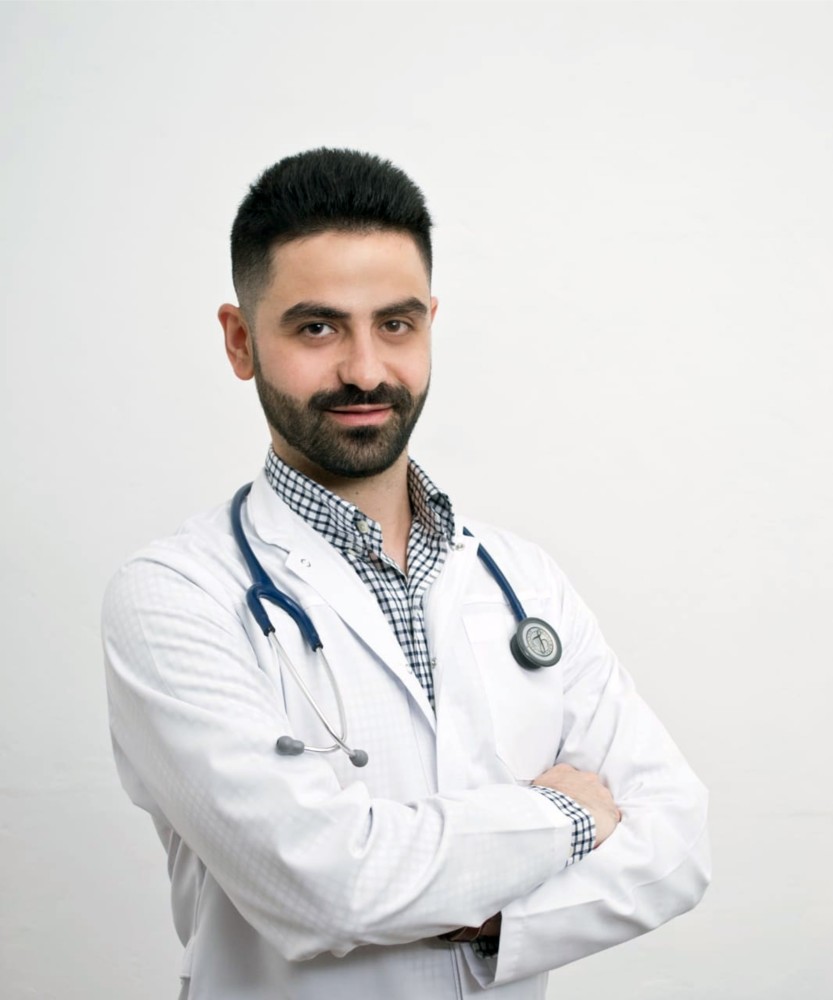
Dr. Rabia Shakur, 31 years old from Sakhnin, dreamed all his life of becoming a doctor and saving lives. At the end of nine years of studies in Germany and Ukraine, which he graduated with honors, he was closer than ever to realizing his dream. Tragically, it was his unexpected death that led to saving the lives of two Israeli women who received his kidneys.
The story began when, about a week and a half ago, Dr. Shakur began to feel severe pains in his stomach and chest, and asked his parents to help him. His family members quickly put him in the car and took him to a hospital in the city, but on the way the pains increased and by the time they reached their destination, the young doctor lost consciousness. Upon their arrival at the clinic The family members called the staff members who understood the seriousness of the situation and began CPR in a short time. At the same time an ambulance was called and for many minutes the clinic staff and the ambulance staff performed CPR alternately, combining electric shocks with the treatment. When a pulse was finally obtained, Dr. Shakur headed to the nearest hospital , but during the trip the crew had to revive him again and his life was still in danger.
At the hospital, there was concern that due to a lack of oxygen flow to Dr. Shakur's brain, he suffered brain damage. In consultation with the staff at the hospital, it was decided to call Rambam's ECM team and try to improve his chances of surviving the incident.
The "acmo" device is a type of heart-lung machine, which can be operated for an extended period of time. The device is used in specific, mostly extreme cases, when it is necessary to give the patient's heart, or lungs, time to recover. In Israel there are several individual Acmo devices, which can be transferred from one medical center to another, as needed. The heart surgery department at Rambam works in cooperation with various hospitals in Israel, and helps through a dedicated medical team to patients who need treatment with the device. The device is operated by a skilled team that treats a wide range of patients, including performing challenging operations that require specific skills and abilities.
Dr. Zvi Adler, senior heart surgeon and head of the hospital's ECM team explains:
"After we connected the patient to the device and stabilized his condition, we transferred him to continue treatment at Rambam. The patient was connected to the device for a few days, but over time we realized that the damage caused to the brain is severe and the device that is actually keeping him alive will not be able to help him beyond that."
With the realization that Dr. Shakur is actually suffering from brain death, Rambam's team turned to tell his family the bitter news.
Zaki, Dr. Shakur's father, recounts what happened:
"They explained to us what had happened from a medical point of view and that Sharabia would not actually be able to recover from it. At the same time they told us that the machine was able to preserve his organs well and asked us if we would agree to consider organ donation. I consulted with the family members and the decision was made unanimously - yes. It was clear to us that What Rabia would have wanted. He dreamed of saving lives and now he is dead. So we wanted him to be able to do what he wanted to do in his life."
He also added: "I am a believing Christian. God gives and God takes and he is the one who does the ordering and the calculation. We are all brothers in humanity and if it is possible to give life, then why not. I donate and believe that everyone should contribute to those who need it. To contribute to a person. Today I am very happy thinking that my son helped others And he lives in them. It comforts me."
Dr. Shakur's organs were donated to two women, including a kidney transplanted in Rambam and another kidney transplanted in Billinson, as well as heart valves that were also transferred to Billinson.
Did the article interest you?