


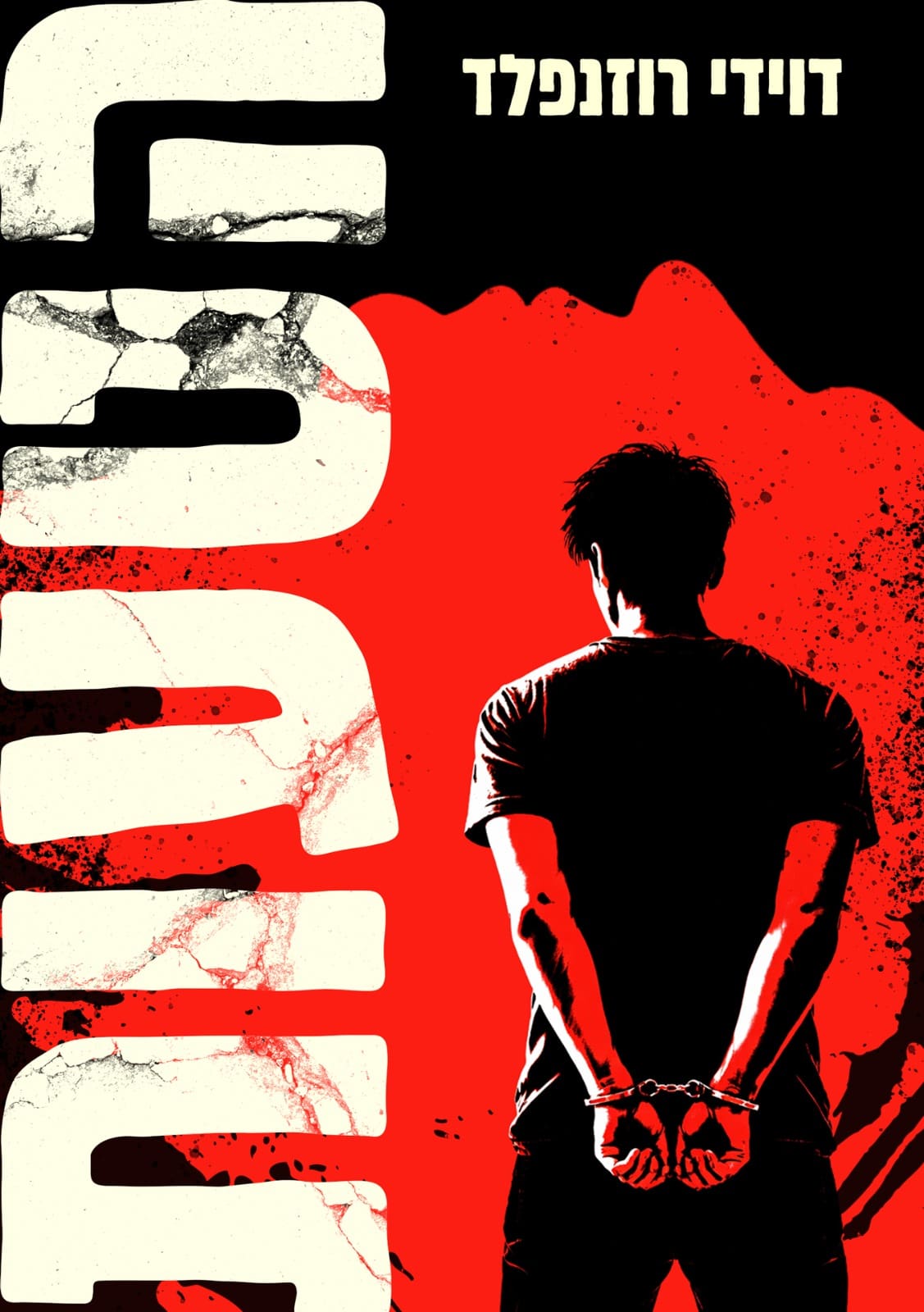
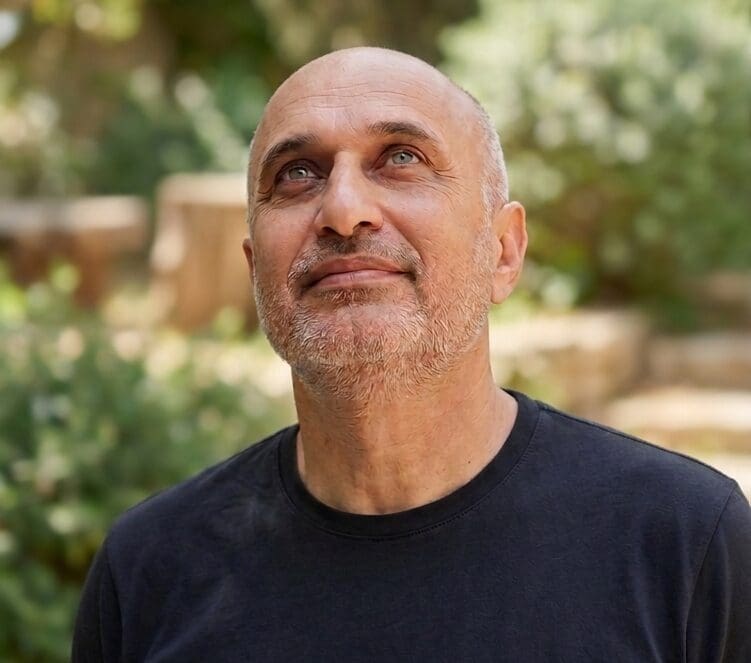
(haipo) Davidi Rosenfeld, a teacher for at-risk youth from Ra'anana, is currently publishing a new and shocking book, "The mistake"", which deals with one of the most painful and complex cases in the history of the Israeli legal system: the murder of the child Israel Nolman in 1980 and the murder of the teenager Danny Katz in 1983. According to him, the two murders, which occurred in Haifa three years apart, were committed using the same method, in the same pattern and under similar circumstances, to the point that he believes that it may be the same murderer, who has not been caught to this day. The book, which combines in-depth research with literary elements, presents a disturbing thesis: the conviction of innocent people in both cases may have allowed the real murderer to continue to roam free.
The idea for the book: False confessions and the double wrong
Rosenfeld, married and a father of three, says he came to the subject after reading a book about innocent people who confess to a crime they didn't commit. He says he was exposed to cases in which people confessed to murder under pressure, confusion or manipulation, and were sent to prison even though they had no real connection to the case. "The book I wrote combines imagination and reality," he says. "I examined one case of a guy who, when you look at him and listen to him, it's absolutely clear that he couldn't have been a murderer. It made me very curious, what happens when a person who had nothing to do with the murder confesses. He is of course convicted, and it doesn't matter what he says afterwards."
According to him, the injustice is twofold: an innocent man sits in prison for many years, while the real murderer continues to live his life without punishment. “The book asks whether the murder of Danny Katz was possible, mainly because the first murder ended in an incorrect solution,” he says.
The Murder of Israel Nolman: The Child Who Disappeared from Hadar
In 1980, Israel Nolman, a 12-year-old boy from the Hadar neighborhood in Haifa, disappeared. After an extensive search, his body was found in an abandoned building in the city, bearing signs of severe violence and strangulation. The murder shocked the public, and the police put heavy pressure on the investigation teams.
Moshe Azaria, a mentally ill local young man, was accused of committing the murder. He was arrested, confessed, and reenacted the murder. Based on the confession and reenactment, he was convicted and sentenced to life in prison. However, over the years, serious doubts arose about his guilt. Lawyers and experts claimed that due to his mental state, Azaria was particularly vulnerable to interrogation pressures, and that he may have confessed to an act he did not commit. Despite many efforts to prove his innocence, he served his sentence, was released in 1997, and died shortly thereafter.
The murder of Danny Katz: An affair that shook the country
Three years later, in December 1983, Danny Katz, a 15-year-old boy from the Danya neighborhood in Haifa, disappeared. His body was found in a cave in the Atlit area, bearing signs of severe abuse. Five Israeli Arabs were arrested and confessed to the murder. In this case, too, the conviction was based primarily on confessions and reconstructions.
The convicted have claimed for years that the confessions were extracted from them under torture. Lawyers and private investigators have claimed that there are too many similarities between the Katz murder and the Nolman murder, a similarity that is incompatible with the fact that the two cases were committed by completely different people. Some have raised the possibility that an uncaught serial killer was operating in the Haifa area at the time.
Four decades after the shocking murder of the late teenager Danny Katz in 1983, the five convicts in the case, who waged a long legal battle and claimed that their confessions were extracted through torture, are no longer behind bars together. Three of them, Samir Janama, Fathi Janama, and Ali Janaim, were released from prison in January 2017 after serving more than 30 years in prison, without expressing remorse or admitting to the act. The fourth convict, Atef Sabikhi, who remained in prison due to his concurrent conviction in the murder of soldier Dafna Carmon, passed away in the hospital in September 2026 at the age of 68. The last convict in the case, Ahmed Kozli, who was also convicted of both murders, is the only one currently behind bars and continues to serve the cumulative prison sentence he was sentenced to.
Rosenfeld: “The similarity between the two murders is too disturbing”
Rosenfeld says that he spent years examining the investigation materials, testimonies and legal documents. He says the similarities between the two murders are no coincidence: both children were 12–15 years old, both were kidnapped and murdered by strangulation, and both were found in isolated locations after extensive searches.
“I’m not saying for sure,” he says, “but I’m asking whether it’s possible that Nolman’s killer is also Katz’s killer. If an innocent person was convicted of the first murder, it opened the door for the real killer to continue.”
Meeting with Prof. Boaz Sangero: Expert in False Convictions
Rosenfeld says he met Prof. Boaz Sangero, one of Israel's leading jurists in the field of wrongful convictions. Sangero claims that at least 5% of those convicted in Israel are innocent. A figure that points to thousands of prisoners who are in prison for no wrongdoing.
Sangero emphasizes that the justice system does not investigate its own mistakes and that confessions from suspects are mistakenly considered strong evidence, even though they may be the product of pressure, fear, or manipulation. He calls for the establishment of an independent body to investigate failures in the justice system, similar to the investigation of plane crashes.
Rosenfeld says that meeting Sangero strengthened his decision to write the book. “I realized that there was a much broader phenomenon here than just one case,” he says.
The new book: Between research and novel
Rosenfeld's book combines fact with literary elements. Part of it is based on in-depth research into the murder cases, and part is fiction. It examines the possibility that an innocent man was convicted of the Nolman murder, and the possible implications of this wrongful conviction for the Katz murder.
“This is a book that raises questions,” he says. “Could the system have been wrong twice? Could a serial killer have been operating in Haifa and not been caught? And what does false confessions mean for the justice system and for human life?”
Criticism of the legal system: “A confession is not perfect evidence”
Rosenfeld joins a broad criticism of the criminal justice system in Israel. He argues that overreliance on suspect confessions can lead to false convictions. He says that in cases where there is no conclusive forensic evidence, a confession cannot be the sole evidence.
He notes that in both cases, Nolman and Katz, the convictions were based primarily on confessions and reenactments, with no other conclusive evidence. “That should set off a red light,” he says.
Open questions: Is the real killer still free?
Rosenfeld does not claim with certainty that this is a serial killer, but he presents a disturbing thesis: if an innocent man was convicted of the Nolman murder, and if the conviction for the Katz murder was based on questionable confessions, the real killer may never have been caught.
He asks whether it is possible that the killer acted repeatedly, without interruption, because the police and the legal system were certain that the killer had already been caught.
The book is expected to spark public debate.
Rosenfeld's book is expected to spark broad public and legal debate. It touches on sensitive issues: public trust in the justice system, the performance of the police in murder investigations, and the disturbing possibility of wrongful convictions.
Rosenfeld hopes the book will lead to a reexamination of the cases and a deeper discussion about failures in the justice system. “I’m not looking for blame,” he says. “I’m looking for truth.”
Sorry: Israel Nolman does not live in Hadar, but up the Neve Sha'anan road. Danny Katz's body was not discovered in Atlit, but in a cave next to the road leading to Moshav Ya'ad in Gush Segev.