


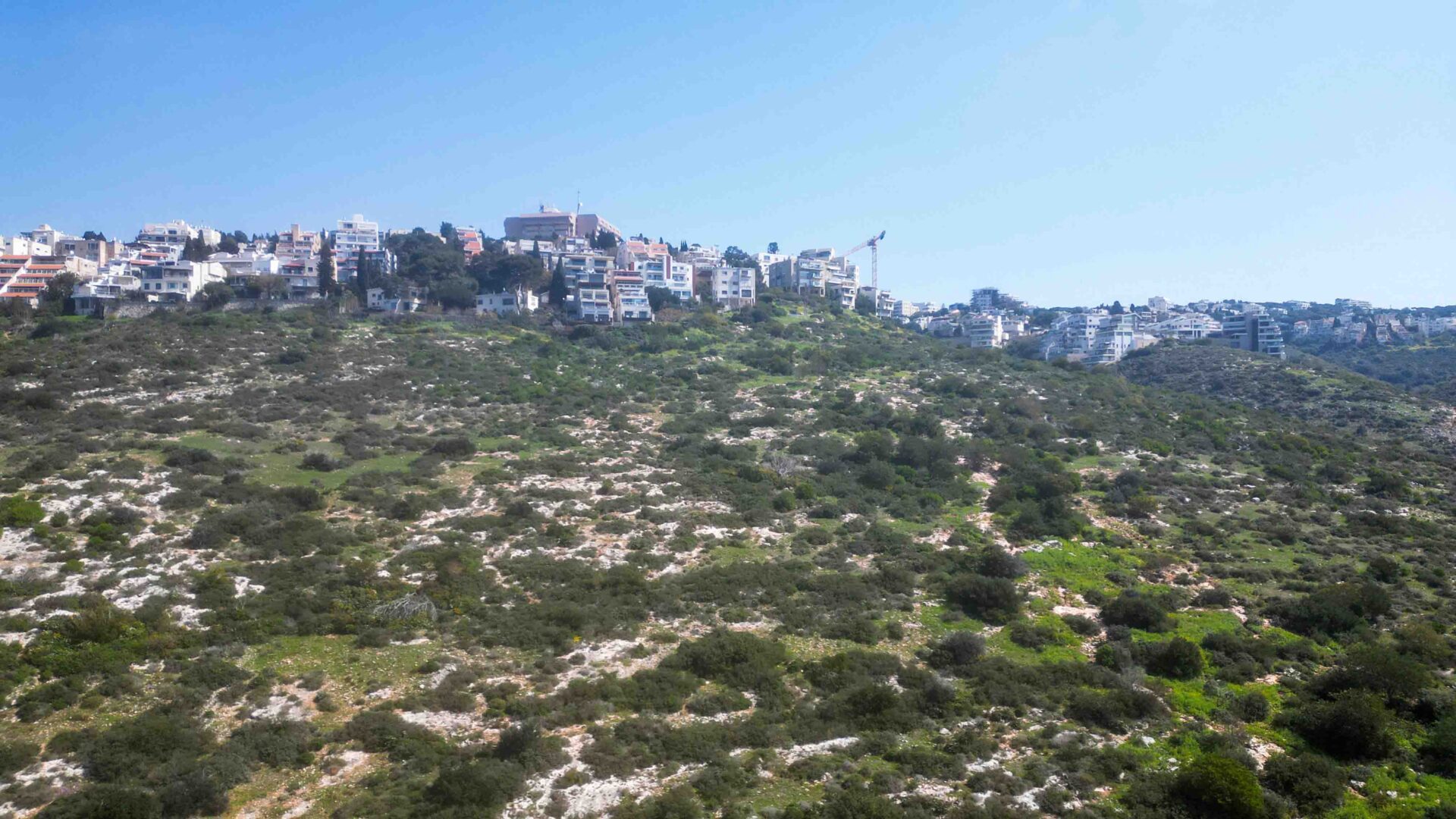
(haipo) This morning, Monday, October 26, 2026, the District Committee convened for a crucial discussion regarding the submission of the construction plan on the Lincoln-Tel Aharon slopes. After more than 15 years of public, legal and planning struggle, environmental activists, residents and landowners came together for a discussion that lasted hours and was full of emotions, strong claims and cries from both sides. While the landowners claim an ongoing violation of their right to enjoy their properties, environmental activists warn of the destruction of Haifa's southern green lung and irreversible damage to the landscape and urban fabric. The decision is expected to be made in the coming days, and it may determine the future of one of the most controversial areas in the city.
A heated debate in the district committee
The discussion held this morning was full of emotions. Dozens of participants were present in the hall, along with dozens more who connected via Zoom and followed every word. The landowners expressed deep frustration with the ongoing delays, claiming that for years they had been denied the opportunity to develop the land or derive any profit from it. On the other hand, environmental activists claimed that it was impossible for a few landowners to determine the appearance of the entire city, and that the decision to submit the plan must take into account the wider Haifa public, not just the landowners.
According to the activists, the mere fact that the discussion was held without the plan materials being forwarded in advance constitutes a fundamental flaw in the process. They claimed that the notice of the meeting was received only a few days before the discussion date and even a day before the elections, which led some of them to call the move a “hijacking.” At the same time, the activists had about 400 residents sign a petition against the plan being submitted.

Lincoln's Rebellion Plan: A History of 15 Years of Controversy
The Lincoln Hills-Tel Aharon plan has been in the works for more than 15 years. It dates back to the British Mandate period, and today, grandchildren of the original landowners own the plots and are demanding that the planning committees advance construction. The plan involves establishing a new neighborhood on the southern slope of Haifa, in a sensitive area from a scenic, ecological, and transportation perspective.
Over the years, there have been dozens of discussions in planning committees, demonstrations with the engineering director, and repeated appeals to elected officials. Residents claim that the plan includes particularly tall construction that will impose heavy traffic loads on the narrow streets, damage existing infrastructure, and darken nearby homes. They emphasize that the neighborhood is not prepared to absorb hundreds of new housing units, and that any significant change must be made with a thorough examination of the environmental, transportation, and social impacts.
Activists' claims: “The Green Mountain is not a desert”

Hila Asia of the Green Mountain organization said that the discussion was confused and that the materials were only given to the participants during the meeting. According to her, “Initially there was a lot of confusion. It seemed like everyone understood that there was no reason for this plan to be implemented. I came to the discussion because I believe that the open spaces in the city should be preserved. Without the open spaces, it will be impossible to live in Haifa in a few years.”
Asia emphasized that this is significant ecological damage: dust, noise, harm to animals, destruction of the natural landscape and the transformation of Haifa's southern entrance into "one big concrete block." According to her, "We expect the committee members to make a decision responsibly towards the Haifa public, regardless of the wishes of the landowners."
Landowners: “Investment has been stuck for a decade”
During the discussion, harsh voices were also heard from the landowners. One of the landowners asked in frustration: "What about my money?", expressing the anger that many landowners feel.
Landowners in the Lincoln Slope neighborhood have been talking for years about a deep sense of frustration stemming from the ongoing delays in advancing the plan. Some of them purchased land about a decade ago in the belief that it was a promising investment in a central area of the city, after developers marketed the land to the public. Today, many years after the purchase, they claim that no real progress has been made and that the investment is sitting in place without the ability to realize it or generate a profit from it.
They say they find themselves holding a property that yields nothing, while the planning process continues without a clear decision. Other landowners note that the ongoing delay is causing them significant financial harm, and that they have difficulty understanding why a plan intended for construction according to urban planning documents is not progressing despite the considerable time that has passed.
Environmental activists: “It is impossible for the developers’ profits to determine the future of the city”
Environmental activists from the Green Mountain Association argued that it is impossible for the profits of developers and landowners to determine the future of Israel's third largest city. They emphasized that building on a steep slope like Lincoln Slopes would cause significant environmental damage, harm the natural drainage system, and create unbearable traffic congestion.
According to them, "You can see in Haifa and throughout the country solutions that were made to prevent construction that harms the city. It is not possible to build a neighborhood on such a slope and destroy the green lung."
The court's decision in September 2023: a turning point in the struggle
In September 2023, the court ruled that the landowners were entitled to continue to advance the plan, after years of delays and objections. The ruling noted that the municipality had not presented sufficient planning reasons for rejecting the plan, and that there was no legal impediment to continuing the planning process in accordance with existing policy documents.
The decision was seen by residents as a turning point, because it gave the developers a clear legal advantage and brought the plan back to the table despite widespread public opposition. For residents, the decision signaled that the struggle was moving into a more complex arena, not only against municipal committees, but also against legal rulings that gave the developers a tailwind.
The landowners' position: "The delay is unbearable"

Attorney Assaf Irony of the firm of S. Friedman, Abramson & Co., who represents some of the landowners, said after the hearing: “It is unbelievable that we are talking about the construction of approximately 1,700 approved housing units, the redevelopment of which began in the late 90s. The plan was submitted after 15 years, and then, at the request of the municipality, redevelopment of the neighborhood began, which takes another 10 years. In September 2023, the court ruled that the authorities are dragging their feet. We see that the court’s ruling did not bring about any change either.”
According to him, “In the 2000 plan, the Lincoln Hills area is designated for construction. If a plan is issued and the plan designates the area for construction and does not specify that it is a park or conservation area, then why are the landowners repeatedly delayed in violation of the court’s decision?”
“The plan is complex and requires balance”

Deputy Mayor Sarit Golan Steinberg and Chairwoman of the Planning and Building Subcommittee She participated in the discussion and said afterwards: “The local committee respects judicial decisions that determined that a plan must be promoted. But without this judicial decision, in my priorities there is no justification for promoting a plan for two thousand new housing units when 7,000 units are currently being built in a new neighborhood and when there are tens of thousands of housing units in urban renewal plans.”
According to her, “The plan is complex as it is located in a space between two valleys. The topography is complex and therefore countless factors must be balanced with the necessary care.”
The state (not the municipality) will buy the land at a fair price from the landowners and declare the slopes a national park. Nature will smile, the landowners will smile, the public will enjoy, and the municipality will ensure a well-maintained and clean national park.
This is really a worthy offer.
Let's check how much money is needed?
An average plan would place 4,000 apartments in the neighborhood. The land value per apartment is 1 NIS.
Multiplying that gives 4 billion NIS. Not bad…
That's exactly the price of a re-election campaign for the Knesset. It's doubtful whether the state will find such a sum, and it's even more doubtful whether they'll want it for Haifa.
Gentlemen, the Messiah has arrived.
Haifa Municipality has found a source of funding worth billions of shekels that it will have to pay in full
And if we look closely, we'll find that the landowners are connected (say) to some minister who is miraculously involved in the field. How does it always work out like this? An amazing coincidence.
It is not explained what final settlement they reached and how they will compensate the landowners for their losses.