


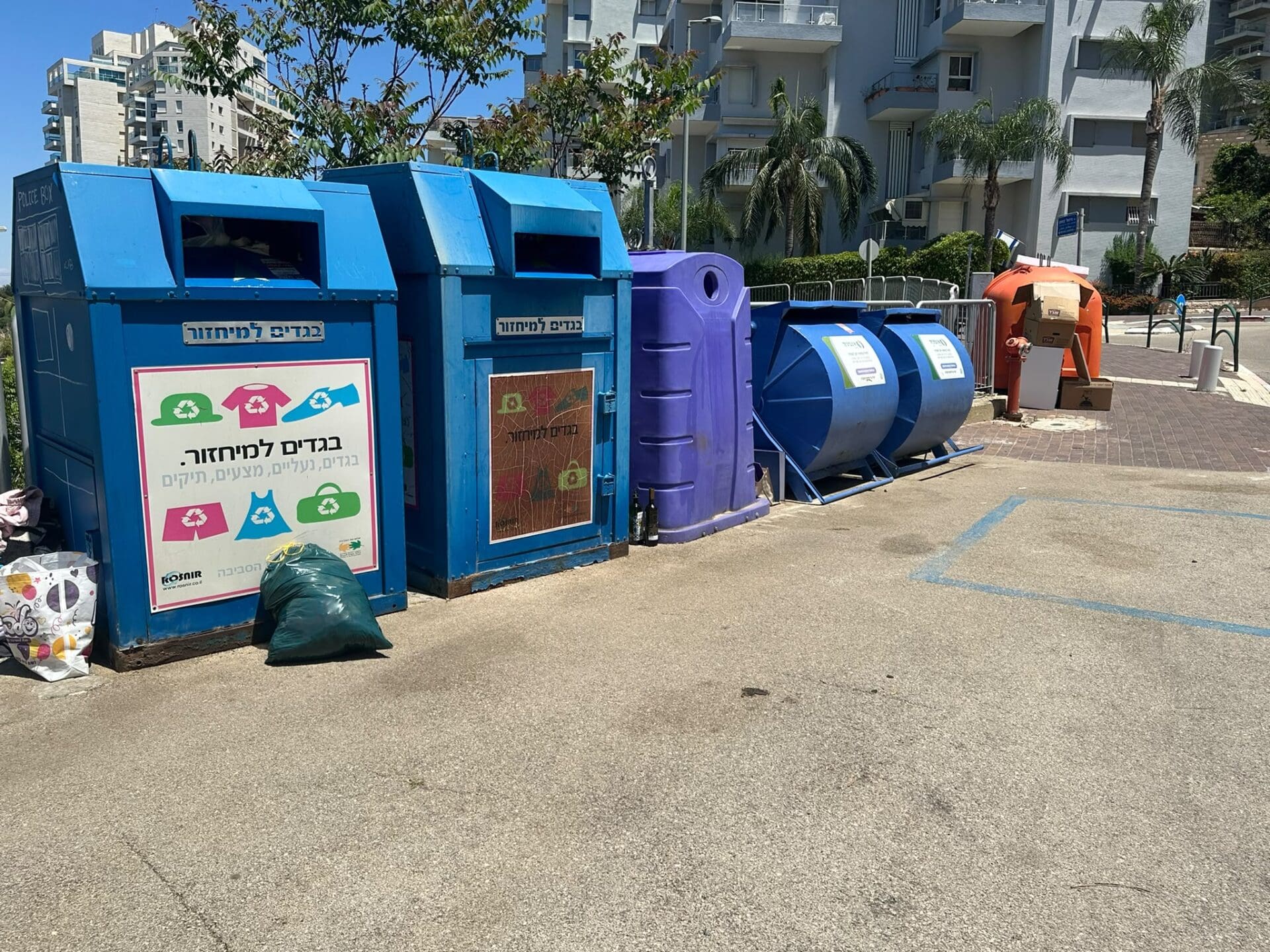
A colorful, free, and moving permanent exhibition is being held at the corner of Michael Kashtan and Mendel Singer Streets. It is a collection station with seven different collection devices, and visitors are asked not to touch the works, especially since they tend to slide onto the sidewalk.
Think again. This is one of the most beautiful corners in the city, which is why the municipality placed benches there, on both sidewalks, so that residents can enjoy the beauty and quiet. But there are those who have decided to upgrade the landscape.
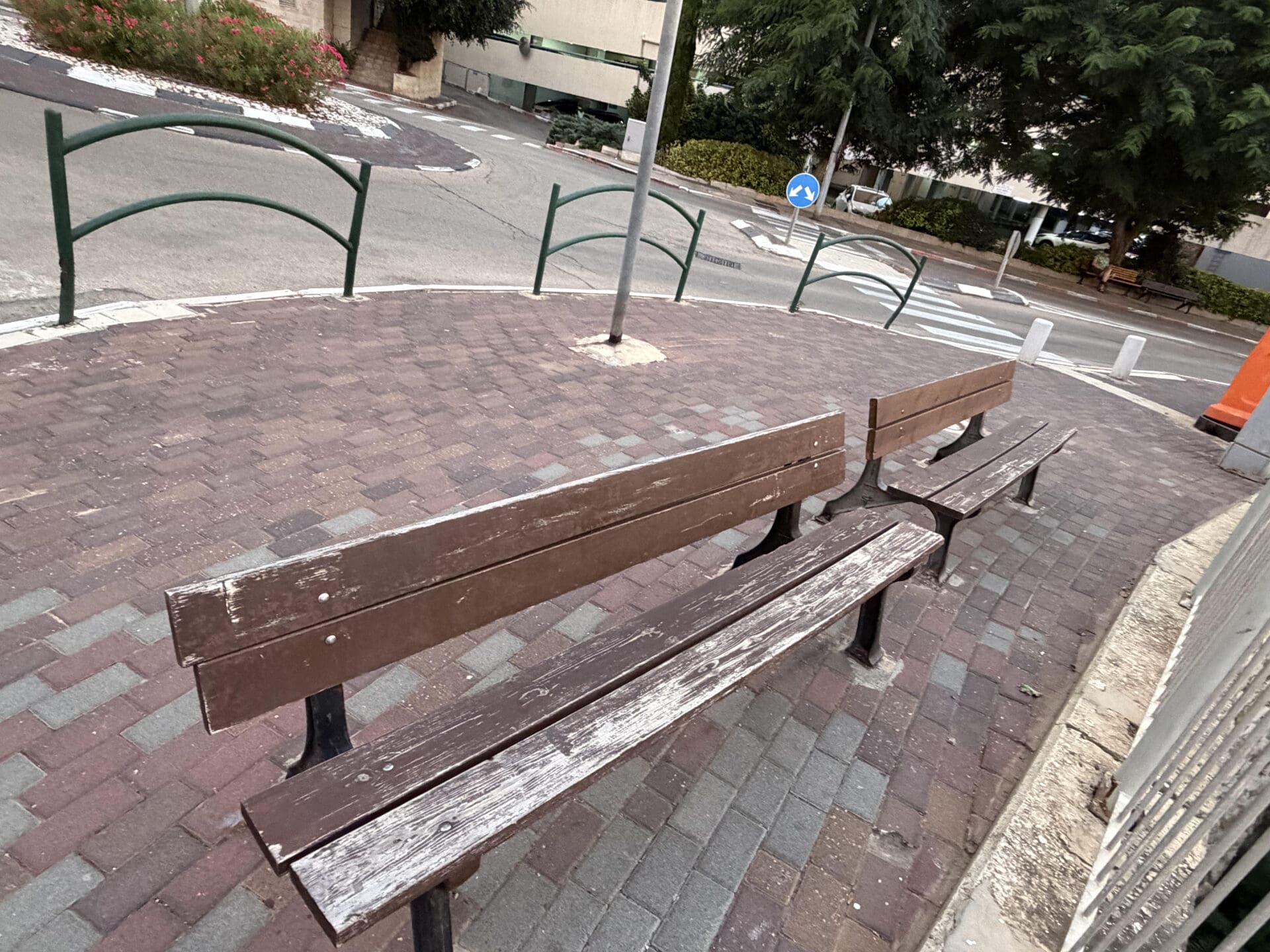
Those looking for a cozy, pastoral corner to sit in can sit on one of the old, worn benches and gaze at the aesthetic cluster that would make the Louvre turn pale with envy: orange bins, wearily filled with plastic and metal packaging, blue bins overflowing with newspapers, a mysterious purple bin for glass, and a bonus in the form of two bins overflowing with clothes. Plus, an iron box, probably from the electric company.
In short, who needs galleries when you can set up an environmental exhibition in the heart of a magical corner? However, the sight can also arouse astonishment, since the colorful result, the shades of orange, blue and purple, blend in wonderful harmony with the asphalt and the worn benches, some of which are apparently waiting to be recycled. So why are the residents outraged?
This colorfulness also has a vivid and surprising performative side. Sometimes these generous containers decide that they love the neighborhood and out of love they overflow and celebrate a wild street party that floats right on the sidewalk. A multi-sensory experience for every passerby, especially for those who arrive without boots.
The big question of the million dollar, or at least of the evacuation fee, is asked: Why there? Is it possible that this is a conceptual art installation designed to test the residents' resilience in the face of crushed milk cartons and fashion remnants changing in the face of the beautiful city landscape? Is the hidden intention to satisfy the desires of the neighborhood's residents, most of whom are elderly, who often walk the street and want to sit for a moment of rest, breathe air and win a free celebration of plastic and cardboard?
The residents of the neighborhood have already contacted the municipality and complained, both about the bins that are damaging the landscape, the filth around them, and the condition of the benches. The long-awaited municipal response has arrived: by the end of the year, three benches will be replaced. Three! Not one, not two, three! One can only hope that the municipality will succeed in the expensive and complex task of replacing three benches. In the meantime, residents can continue to enjoy the view from the collection containers and the failed benches, even though there are places in the city where recycling containers have been placed within a fenced and tidy compound. Admittedly, these are not scenic corners in the city of Haifa, like the corner of Kashtan-Singer, but the neat and clean appearance, which is above all respectful of the street and the residents, inspires hope. It turns out that it is possible. For example, near the Einstein School and on Disraeli Street.
So there are solutions when there is goodwill. The hedge is possible. The right arrangement is possible. The move is also possible. Apparently the ability to execute also exists.
The question still remains: not only how are the seven containers arranged, but why were they placed in a place with a great view, and then the view was hidden? In Haifa, a city that is rightly proud of its landscape, it was decided that instead of enjoying the sea and the horizon, the ships and the harbor, it is possible to place bins and installations in front of the residents' eyes and create an ugly barrier between the resident and the landscape.
Even the city's mayors are allowed to make mistakes.
And the other question is: Why should we denigrate what Haifa received for free, the wonderful view?
The city, as is well known, boasts of its excellent film festival and sees it as a distinct expression of its culture. The city should remember that culture does not begin and end in movie theaters. It is also found in the way the streets, benches, public spaces, and the view afforded to residents look.
The good news: Unlike the film festival, such a culture does not require a budget for marketing and public relations, transportation, artist salaries, prizes, hosting participants from Israel and abroad, receptions, security, stewarding, and so on and so forth. I think it's over two million shekels.
The culture in question here requires only a little attention.
Our view at Kashtan and Singer Corner also deserves a leading role.
And the smell of urine……
The sidewalks stink terribly from dog pee.
It became the smell of Carmel.
In Tel Aviv, the sidewalks are constantly washed with soap and water.
Why don't we deserve it?
Municipalities in Israel have no sense or desire to create an aesthetic environment.
The trash cans that block sidewalks, block views, and create a stench for pedestrians along the sidewalks – they are just part of a whole complex of urban ugliness by the Shafa branch – improving the appearance of the city, which does not employ architects or planners, but is rather the good taste of logistics managers and former Sgts at bases, whose understanding of urban design is zero.
What they know how to do is "place" things: bins, signs, traffic signs, painting sidewalks, lots of unnecessary fences, lawns and unnecessary gardening in traffic circles, and scattering rocks in playgrounds so that some wayward father won't play soccer there with his son. They are especially effective at turning comfortable sidewalks into barriers: blocking trash cans, blocking recycling bins, blocking traffic signs and power poles, offensive surveillance cameras, felling trees and leaving the stumps to encourage pedestrians to fall, and other such "improvements."
We saw the great successes in design in the black asphalt and crazy fencing at the Peace Observatory – Sculpture Garden, and recently black asphalt was also poured in Mania Garden. They didn't bother to update the ugly fountain – in their eyes it's beautiful, just paint the bottom blue to look like a "pool."
Another demonstration of a basic lack of understanding by various departments in the municipality that the role of open spaces is not to host these containers... instead, to ensure that they function as a public space. Another notable example is that shortly after a plan was prepared for a neighborhood garden at the Moria Ma'abarot intersection and a food truck was placed there, which was officially submitted to the municipality and received a positive response, containers of various colors appeared right there.
Enough is enough for us. We need an underground solution that has existed even in Brazil for 40 years.
A witty and sarcastic article. Cheers, Aliza! This morning I was just complaining about the overflowing recycling bins. Probably part of the show!