


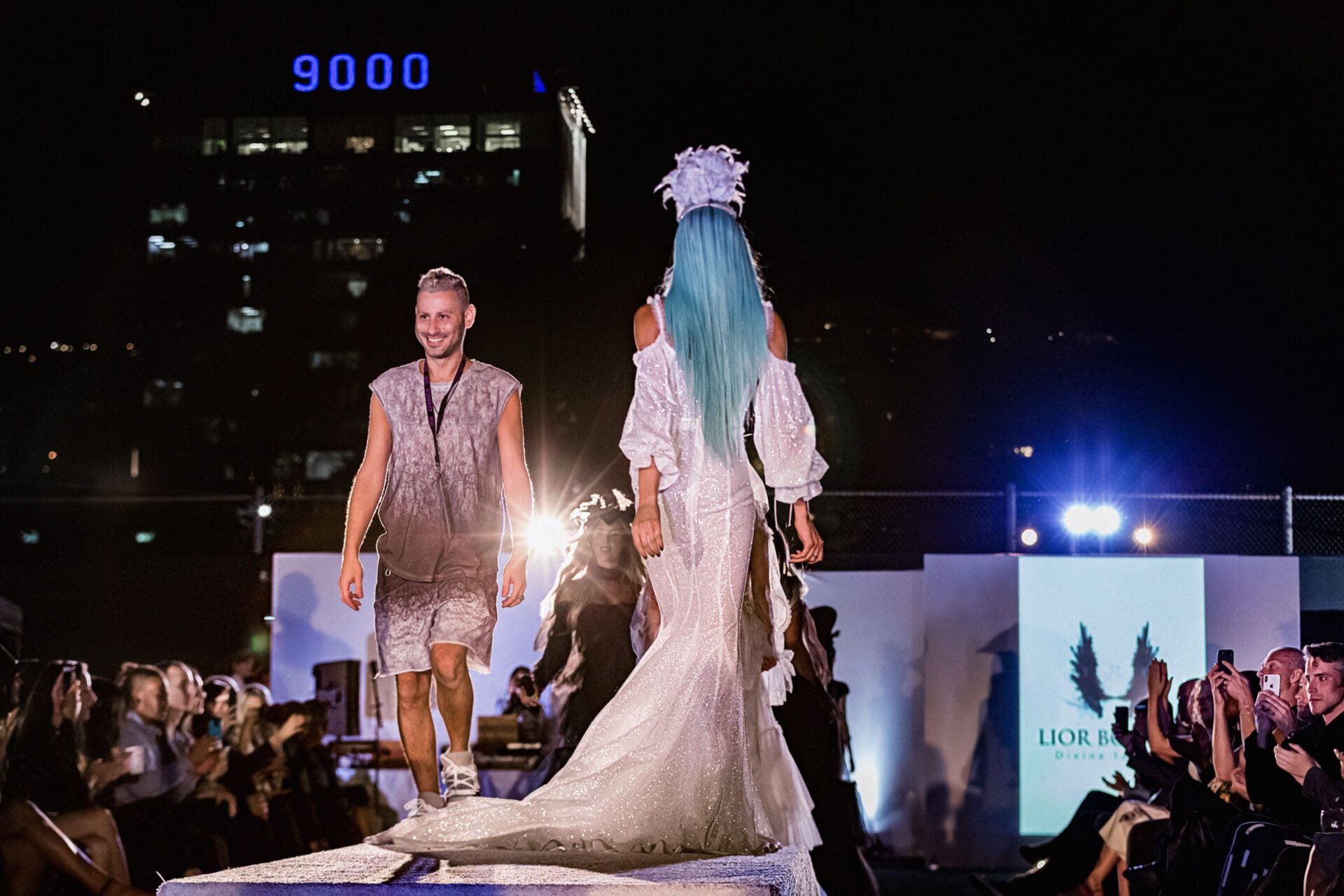
I didn't know Lior Boruda. I came across his story through the memorial evening and fashion show held in his memory at Roof 21 in Haifa, as part of the Colliart Festival, which I filmed together with Benjamin Lidsky. Working on the film was also a process for me of getting to know his world, through the clothes he designed and the people who loved him.
The film brings together moments from the evening alongside stories told by Lior's mother and friends. Through their encounter and the return of his designs to the track, one can see the place he continues to occupy in their lives, as well as the void he left.
Fashion show in memory of Lior Boruda at Roof 21 in Haifa ◄ Watch
Alongside the film, here is an article by Orit Peres, Lior's best friend. Her memoirs paint a personal portrait of the designer and friend: his imagination, attention to detail, and ability to see beauty in the people around him.
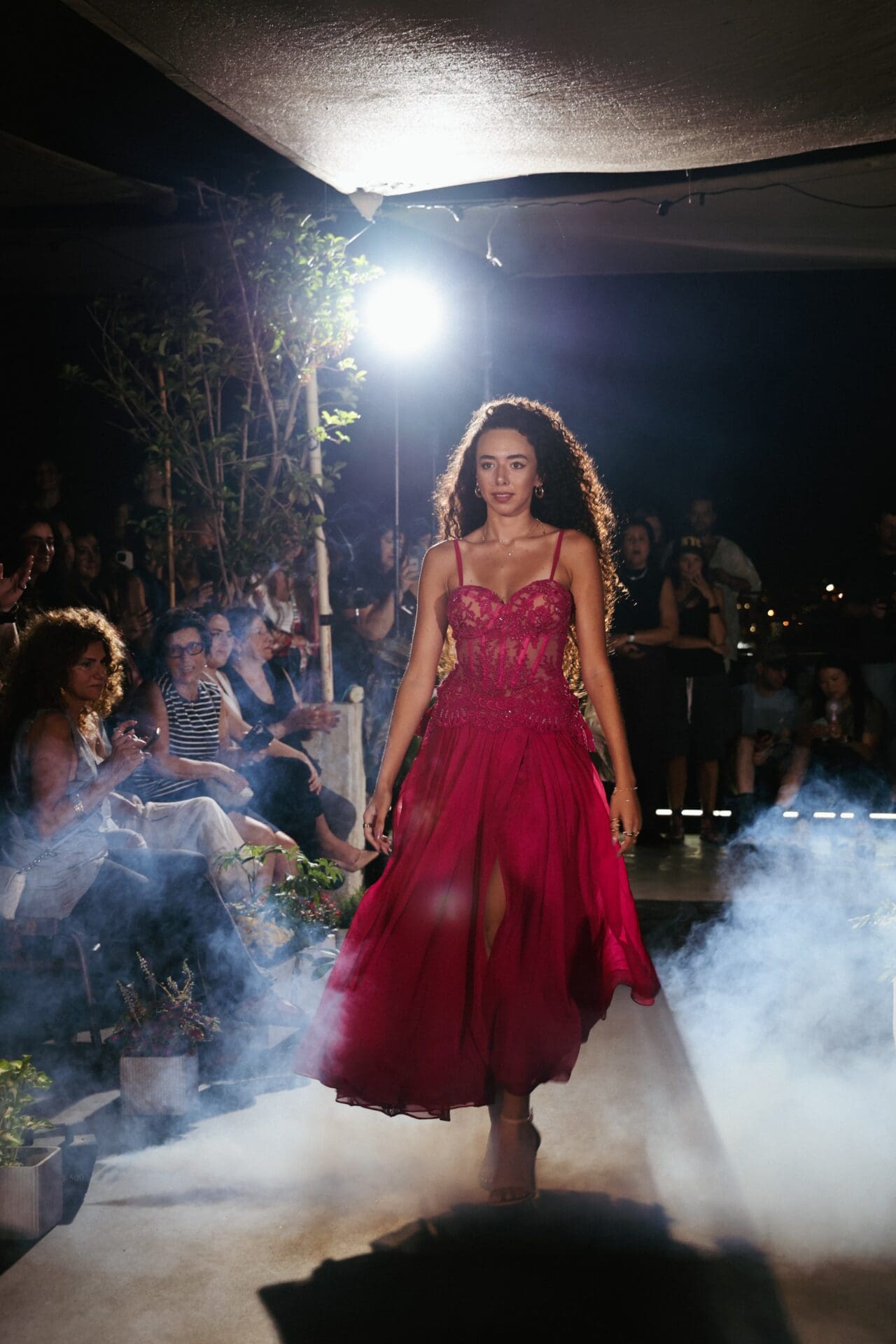
From Kiryat Motzkin to Milan, Hollywood and Tel Aviv, Lior Boruda paved a personal and imaginative design path. After his death, his childhood friend, Shiran Geraisi, brought his works back to life in a special exhibition in Haifa, also held in honor of the birthday of his mother and great inspiration, Pnina.
There are people we know for years, and only in retrospect do we realize how extraordinary the world they carried within them was. Lior Boruda was one of them.
Lior was part of the group of good friends I grew up with. Even in our childhood, there was something very special about him, the way he looked at people, clothes, and the world around him was full of magic, imagination, perfect beauty, and attention to detail.
Lior saw beauty.
Not just beauty in the simple sense of the word, but potential, a character, a story. He could look at a blank page, a person, a piece of cloth, a garment, or a small detail and see in his mind something that seemed not to exist yet.
One of my strongest memories of him is actually a very simple one: spending time together at home, dressing up, wearing crazy wigs, wearing beautiful things, and playing with appearances and identity. Things that today may seem like child's play, but when I think back on them, I realize that even back then there was something of the magic dust that Lior sprinkled into the world.
He always saw our beauty.
Even in moments when we ourselves didn't necessarily see it.
He had the ability to take someone, fit them with an outfit, an accessory, or an idea, and suddenly make them feel like they were a completely different person. As if for a moment she had entered the world he saw in his head.
And that is perhaps what most characterizes his designs in my opinion. From a young age, Lior drew figures that looked as if they had come out of a fairy tale. Almost unrealistic women, wrapped in thin layers, lace, transparencies and fabrics full of movement. There was something fairy-like about these works, romantic, fantastical and sometimes a little dark.
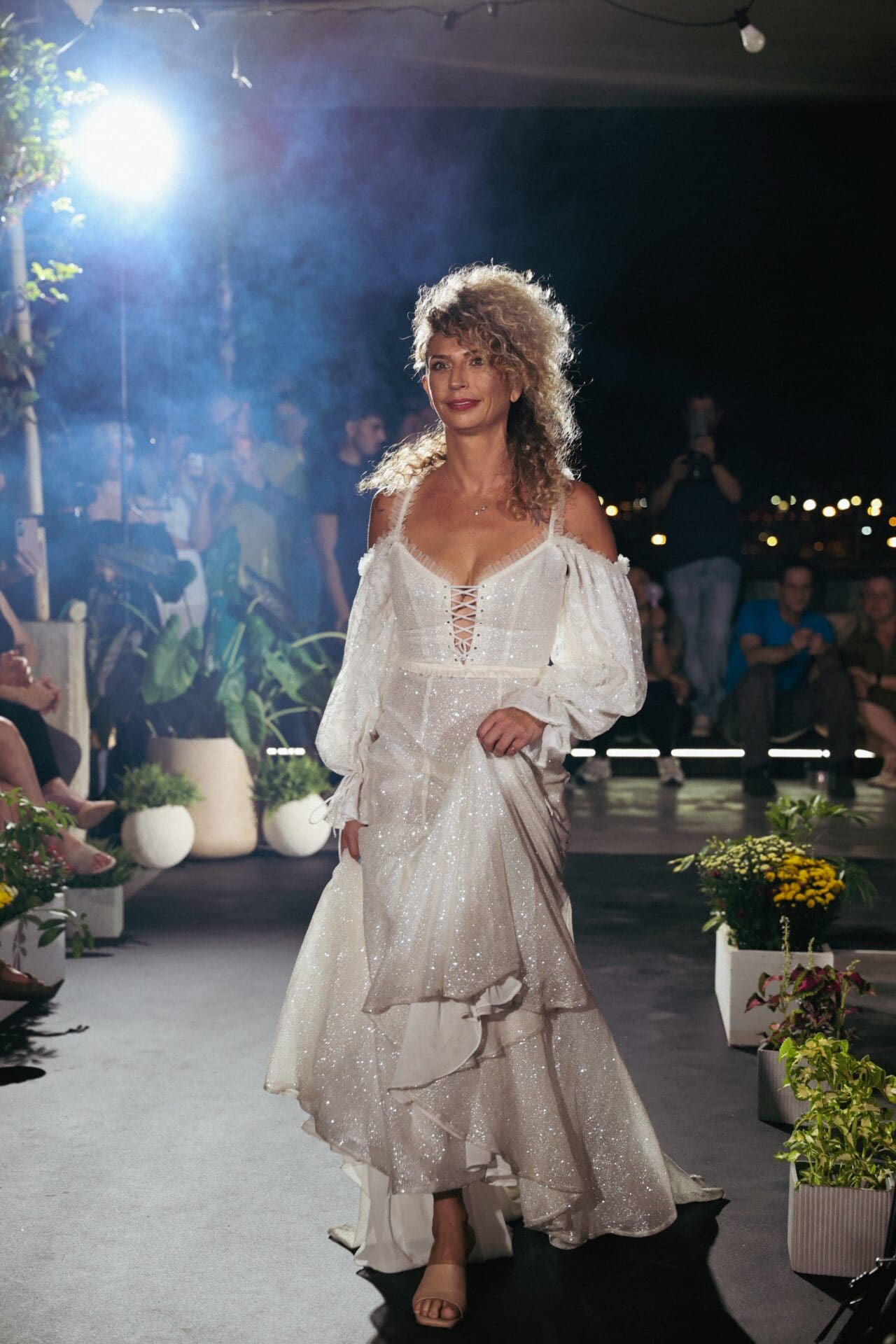
His designs reveal elements of romantic fantasy, alongside influences from Victorian-inspired fashion and dark romanticism. High collars, unique sleeves, fleece, transparencies, lacework, and a combination of bare and covered bodies create a visually rich world.
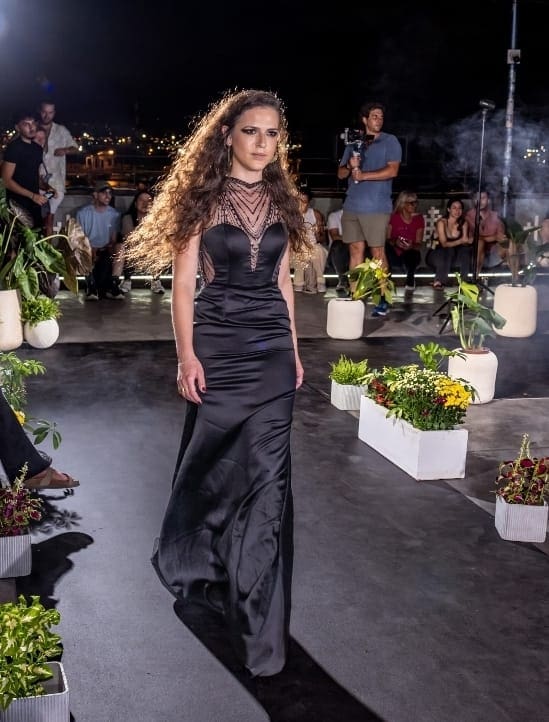
But Lior wasn't satisfied with just looking good.
He was looking for accuracy.
He could immerse himself for hours working on a single garment, returning again and again to the same detail, the same fold, the same connection, until the creation looked exactly as he imagined it. When the fashion world talks about craftsmanship, the handiwork and skill behind the garment, for Lior there was something almost intuitive about it.
He wanted to turn an image that existed in his head into a real thing. This transition from a sketch of a dress to a finished garment is one of the most complex parts of fashion design. It involves countless decisions about proportions, volume, material, movement, cut, weight, and the fall of the fabric on the body. With Lior, it seemed like he saw all of this before the garment even existed.
Lior left Kiryat Motzkin and moved to Milan, where he studied fashion design at the Istituto Marangoni. For those who knew him, this transition felt almost natural. As if the world that had lived for years in his sketchbooks had suddenly found a home in one of the world's most important fashion capitals.
Even in an environment full of talented students, his talent stood out. He had an exceptionally strong drawing ability, but beyond that, he had the ability to build an entire endless collection of new ideas full of magical details. His talent also led him outside of Italy and Israel, and along the way he presented his work at Hollywood Fashion Week. The transition from personal sketches and the world he created for himself to an international fashion runway was another expression of his ability to transform his private imagination into a language that is also present in front of an audience.
After Milan, he lived in Tel Aviv, where he opened a studio for spectacular wedding dresses, and you could really see his love for femininity, details, lace, layers, and building a dramatic and precise silhouette. The wedding dresses he created were part of his archive, and some were even later displayed in an exhibition in his memory in Haifa. But his connection to the north, to the villages, to Haifa, and to the friends he grew up with remained an inseparable part of his story.
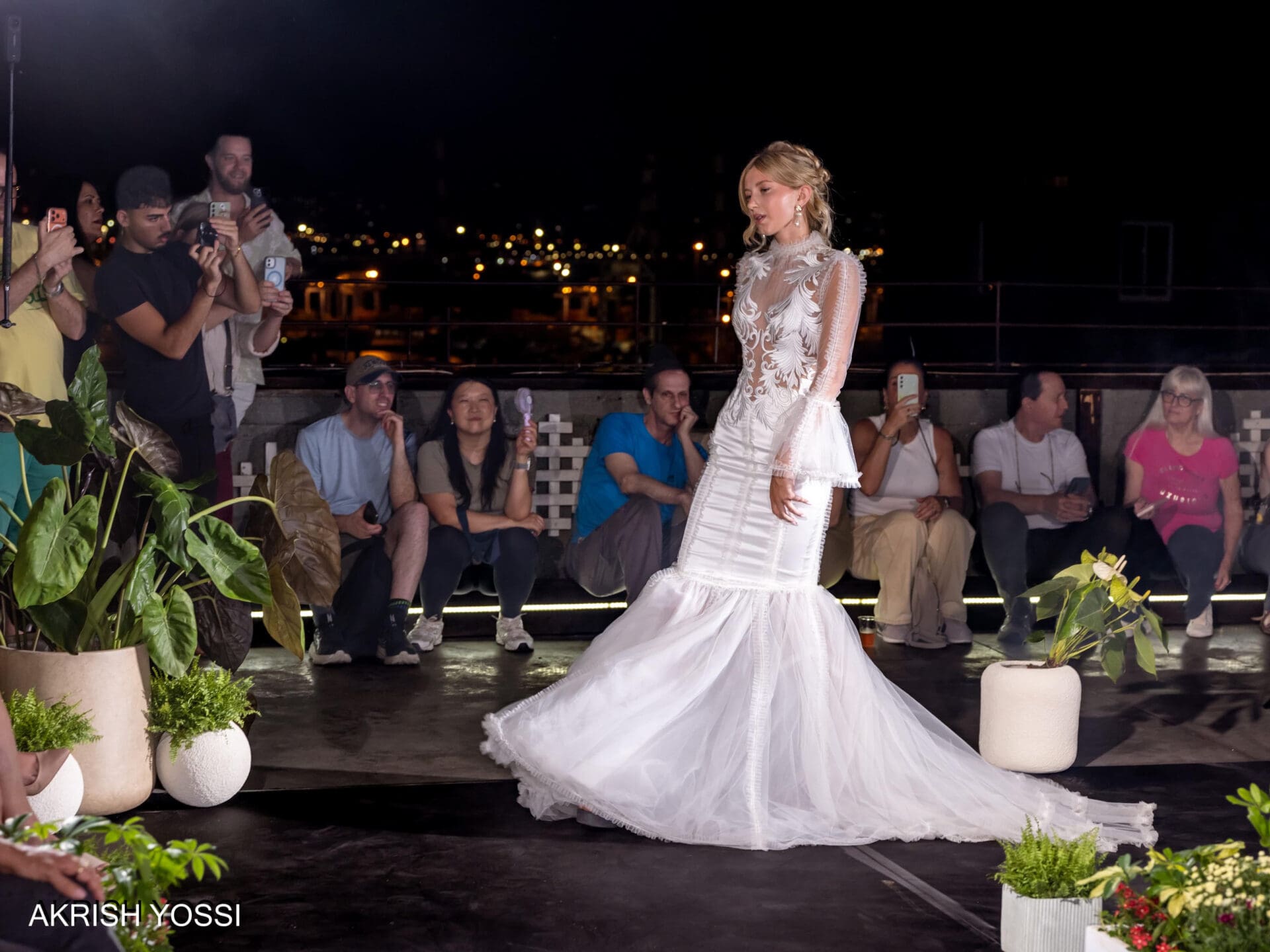
One of the most significant figures in his life was his mother, Pnina.
Anyone who knew Lior knew how deep and extraordinary his love for her was. Pnina was much more than a mother to him. She was a source of inspiration, a model of femininity, beauty and presence, and a very central figure in his personal and creative world. When we look at Lior's designs today, it's hard not to think about the place femininity occupied in them: a woman who is strong and delicate at the same time, dramatic yet fragile, rich in details and with a presence that cannot be ignored.
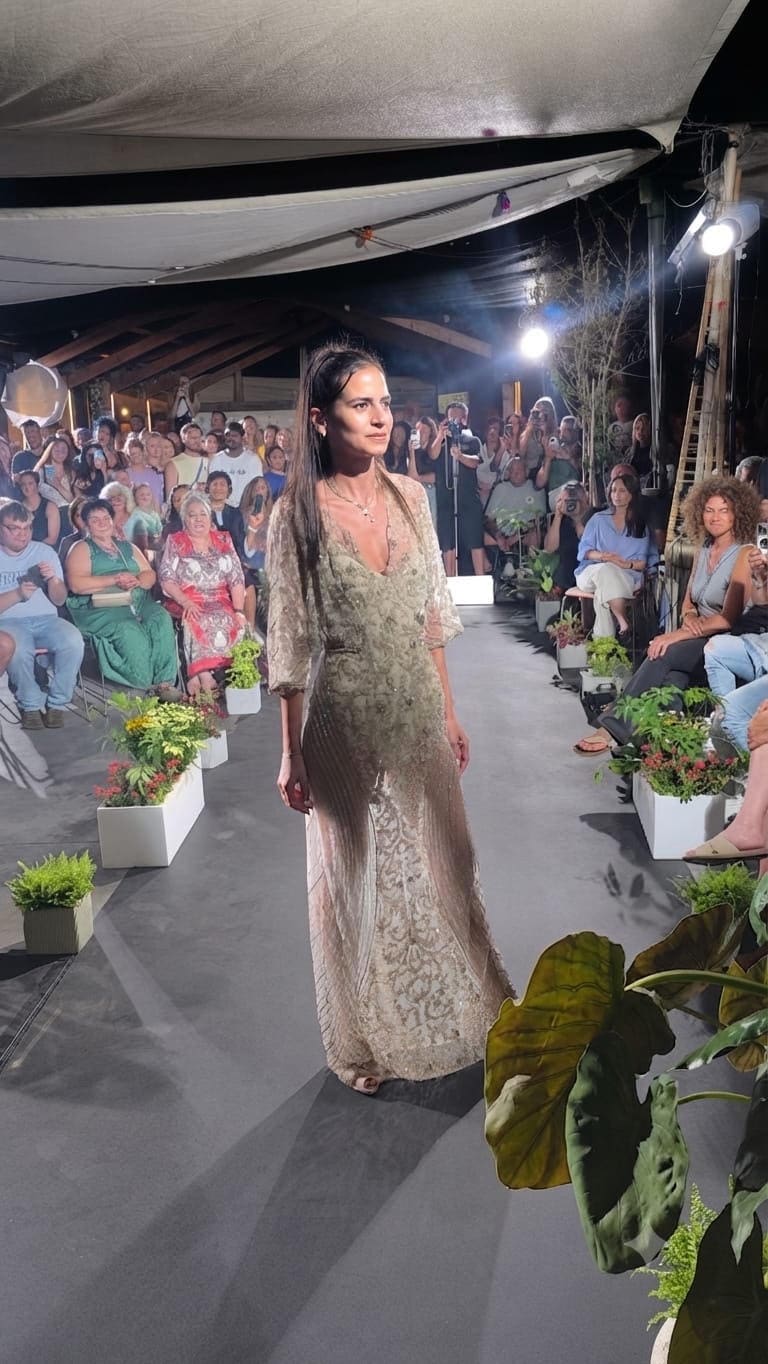
After Lior's death, his best friend since childhood, Shiran Jaraisi, produced a fashion show in his memory at Roof 21 in Haifa.
Before the show, Shiran says: "It all started when I came to visit Lior's mother and asked where all his amazing designs were and she told me they were packed in a warehouse. Something in my heart started to itch and I thought about how these treasures are hidden and must come out into the world. I recruited two of Lior's childhood friends, Noa and Hila Deutsch, we loaded the things up to my house and the project of producing the show began. My goal was to recruit as many models as there were items, and what was amazing was that everyone who came to me chose the garment that fit them like a glove, especially for him or her. It was truly magical with Lior's standards that strive for perfection. I felt that he was with me at every moment and on the other hand I felt how much he was missing to give the special touch that was only his. I chose the date of Pnina's birthday because he always celebrated with her and this year it happened in his absence too, with the full moon. We celebrated the beauty he left with her.
"It was an amazing and exaggerated display, just like Lior loved. Those who knew him felt like he was with us, and those who didn't simply felt like they were in another galaxy."
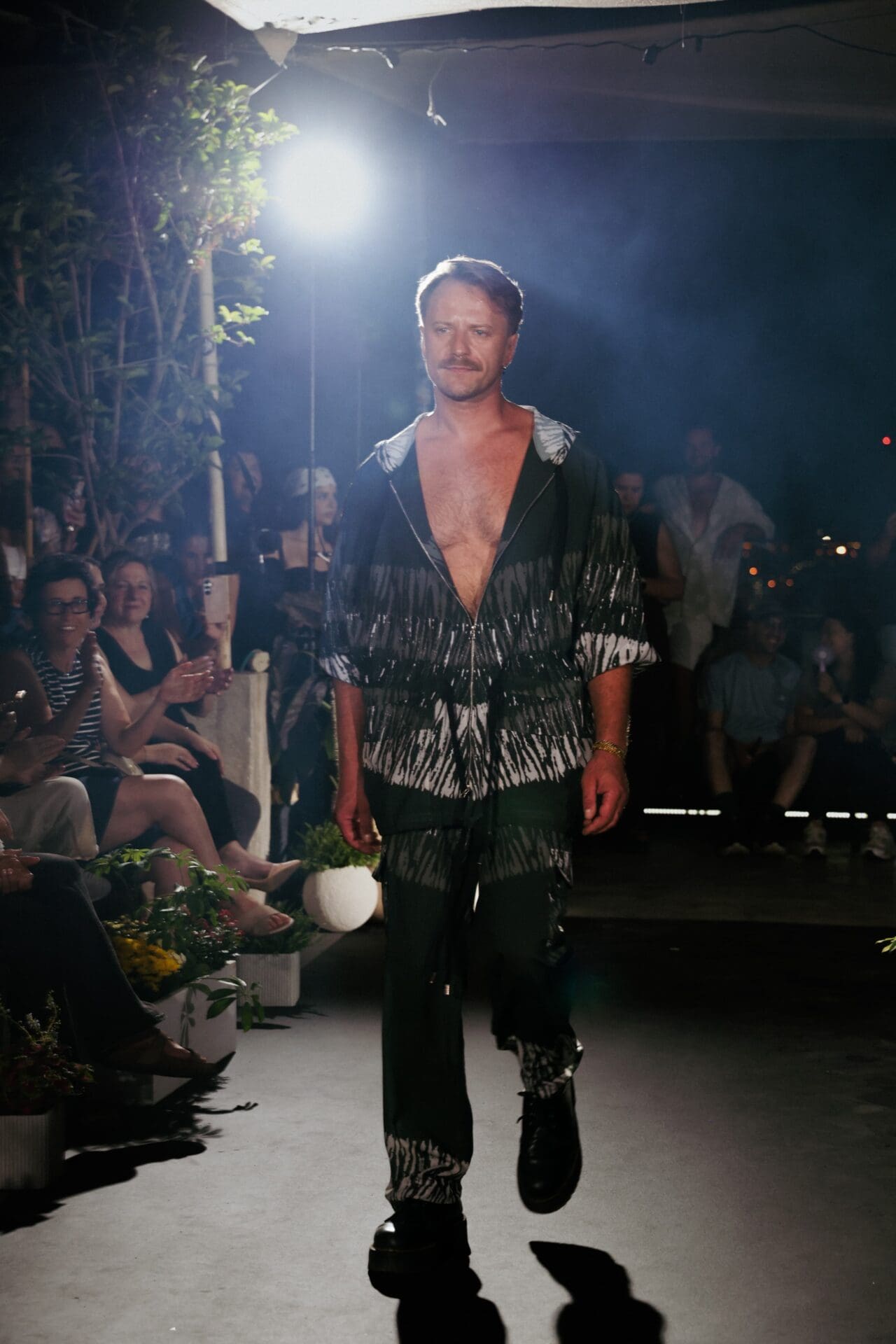
The exhibition featured clothes that Lior himself created. The pieces were chosen to reflect different periods in his career and the different styles he developed along the way.
In a way, it was like walking through his living archive.
You could see Lior's evolution as a designer: changes in silhouette, choice of materials, level of drama, proportions and richness of detail. Alongside the changes, there was also a clear thread that connected all the works. His inner world. The love for art and sculpting the perfect body, for beauty, for fantasy, for drama, for fabrics with movement, for combining tenderness with strength.
When a model wears a garment on a runway, you suddenly see things you don't see when it's hanging on a hanger. You see its movement, the way layers open and close, the relationship between volume and body, and the silhouette and complete shape that the garment and body create together.
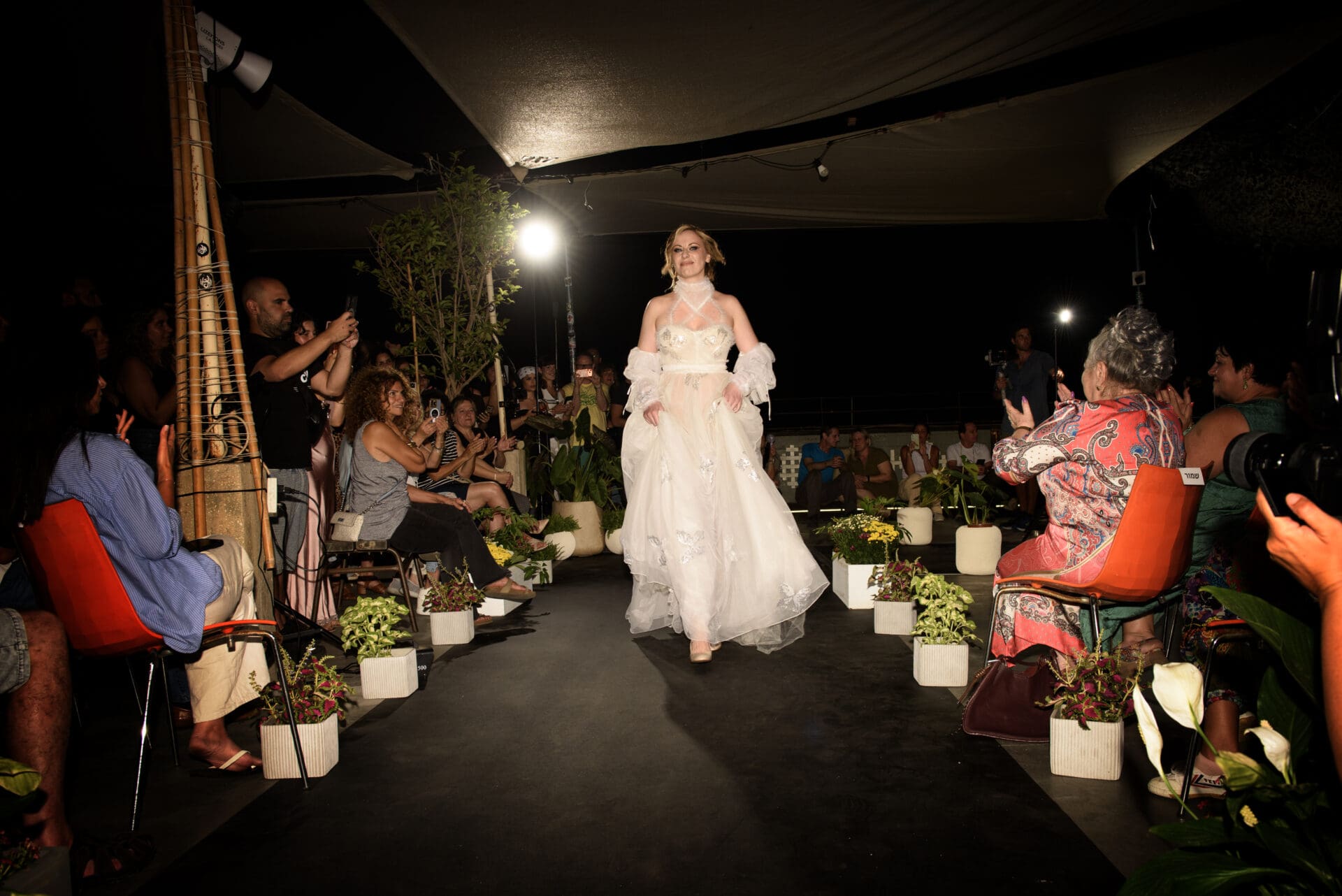
In Lior's show, the clothes were given life again.
The event was attended by fashion and style people, along with his good friends and family. For those who didn't know Lior, it was an opportunity to meet his work. For those who did know him, it was a completely different experience. We felt and saw him with us.
We saw our friend, all the private jokes. The laughs that came back again and again over the years. Because Lior, alongside his immense talent, was also a friend who was fun to be around. He knew how to make people laugh. We had a language with words that were only ours, as if they had been spoken only yesterday. He had a lightness in him, alongside a deep and imaginative inner world. And that is perhaps one of the things that is difficult to explain when talking about a talented person who is no longer there. It is easy to talk about his amazing designs non-stop. But for us, he was Lior.
Our friend.
The one who saw beauty in us.
The one who was able to immerse himself for hours in a small detail that another person might not even notice.
And the one who loved his mother, Pnina, in a deep and rare way.
Today, when I look at his works, the thing that's most important to me for people to understand is how great his talent was, and how special his inner world was.
Lior knew how to find beauty.
But more than that, he knew how to create it.
Today, the clothes, the sketches, and the pictures remain. The exhibition that momentarily put his works back on track remains. His great love for the pearl remains. And what remains with us, the friends and acquaintances who grew up with him, are all those little memories that cannot be presented on stage.
And amidst all of this, Lior's world remains.
A fantasy world that was all his and one that we will always and forever miss.