


My grandmother Rina is the heroine of my life. She arrived in Israel as an orphan from Libya on an illegal immigrant ship, bringing with her sublime insights from distant cities and ancient cultures. Before she even turned sixteen, we married her off in the transit camp to a man twenty-two years her senior, my grandfather, Rafael. I never got to know him, but from family stories I understood that he was no less wise than her, and loved the land and home.
Grandma was always dressed up, wearing floral dresses, and adorned in such a way that her every movement was accompanied by the sound of the many bracelets on her hands, which she handed out to each of her grandchildren at a bat mitzvah, wedding, or any joy that came her way. Her hands were always full of cooking, cookies, stories, and sweets. My grandmother had a place for everyone in her heart, and everyone felt unique and special to her. I am honored to be named after her.
In seventh grade, when I had to write my roots paper, I went straight to Grandma Rina. I arrived on Saturday morning, she made me a cup of tea with amazing cookies, her own handiwork to brag about, and I stood in front of her with a notebook and a sharpened pencil. She didn't have an easy life, but she didn't talk about it sadly.
But with longing. Longing for people who have passed away, for the times when her children were with her, for the neighbors who were like sisters to her, for simple days, for ordinary days when she was a seamstress and had eyes to put the thread through the eye of the needle.
She told about everything out of gratitude.
Then she came to the story of my uncle's captivity, Shalom. The Yom Kippur War broke out, continued, and seemingly ended, and she heard nothing from her son, the beloved of her heart, Shalom, the crown of her head. The city officer came to her house and told her that her son was missing. She didn't know the word and didn't understand what he meant. "What does that mean?" she asks innocently, "Where is my child?"
That was exactly the problem, they didn't know how to say. Someone saw him shot and fall, but there was no body, so we had to wait for the Red Cross to arrive to check if he had been captured. From that moment on, my grandmother decided to sleep on the floor. "My son is alive, but he doesn't sleep well. Until he comes back, I'll sleep on the floor myself." She couldn't stand the thought of them saying "body" or the thought that he was in foreign hands that weren't good for him.
Imagine for yourself, dear parents, how would you feel if for five minutes you didn't know where your child was, and then for five hours, five days, five weeks, five months? I once lost my Naomi at sea, for a little over half an hour. I think I died and got up a million times during that time, and after she was found, I fell physically and emotionally for a few days just from thinking about what could have been if… (This story was written before 10/7/23)
The mind is unable to tolerate such uncertainty. Fear permeates and terror takes over sanity, and longing, what about them?
Grandma told of difficult days, when she would go every day to her sponge job and from there to the city officer, asking over and over again: "Maybe you heard something today?"
"Mrs. Lavie, we promise you that as soon as we have news, we will come to you," they would answer her.
"Don't come, I'm out here on the sidewalk. Waiting."
Just the thought of my dear grandmother sitting on the sidewalk waiting for good news brings tears to my eyes to this day. Days and months passed like this, wild nights full of nightmares, endless inner weeping, mixed with prayer and great hope for his arrival.
One evening, she returned from another busy day, exhausted, on the last bus to the village, and at the stop where she was supposed to get off, she saw soldiers waiting for her with her husband, Rafael.
"Drive, don't stop. Keep going, don't stop," she shouted at the driver. My grandmother also ran away from the news.
"But Rina, don't get excited, maybe this is good news?"
"No, no, drive, don't stop," she shouted, afraid of the news about Job. But the soldiers stopped the bus and Grandpa, Rafael got on and said to her: "Rina, they found him, he's alive. Come, don't cry, the boy is alive."
She told me about the Red Cross finding him there, behind Syrian enemy lines, after five months. He sent a postcard and she was asked to send him something back, a hundred grams. What is a hundred grams? What do you send at such a featherweight?
My mother told her: "Make him some kaak (my grandmother's best tripolata cookies)," and she did. She easily made them and put them in a vacuum bag, so that when they arrived he could smell the house, the fingers that made them, the tears that salted them, the kitchen full of pots waiting for him (you can read the full story in the book "Noisy Nights" written by my mother, a breathtaking book).
After nine months, my dear uncle returned. Thin, weak, wounded and broken… but alive.
Grandma told and told and I cried and cried, and suddenly she stopped.
"What's wrong with you, my dear? Why are you crying?"
"And when did you cry, Grandma, about your hard life? When did you get sad?"
"I was sad? Why did I have time to be sad? I had six children and already several grandchildren to take care of, and one son to bring home alive from hell, I didn't have time to be sad. If you see someone sad, be happy for them, why do they have time," she continued.
"And a hard life? For whom? For me? What a hard life? I had and have a wonderful life. I was blessed with six good children, each of whom brings me joy, I was blessed with grandchildren, may God protect you, how much you are my happiness. My child returned from a place from which there is no return. Almost three thousand mothers did not get to meet their child after this damned war, and I got to hug him, marry him off, redeem his eldest son. What a wonderful life. When I die, I will go and kiss God's fingertips for this wonderful life I received."
And so she raised her hands up, then kissed her fingertips and arranged the scarf on her head, and of course the sounds of her bracelets accompanied all her movements. This is my grandmother Rina, the heroine of my life, who chose not to be a victim. Not of life, not of herself, not of any situation, but content and happy with her lot. A hero, without knowing she was a hero.
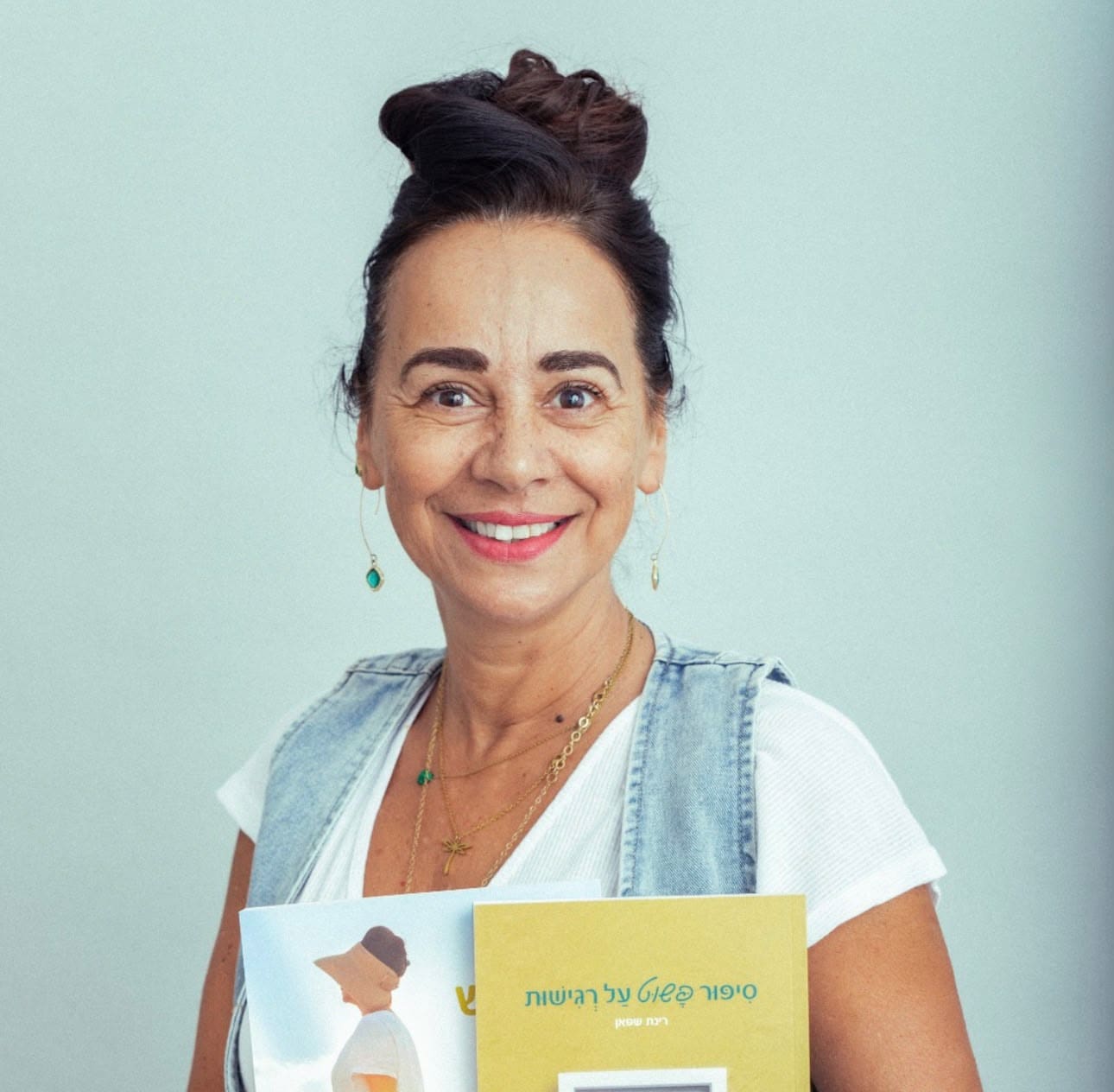
The writer: Rinat Shafan – An educator, lecturer, and author of the books: "Sun," "A Simple Story About Sensitivity," and "Barefoot," and I came to a pretty simple conclusion: The best stories are written from life itself..