


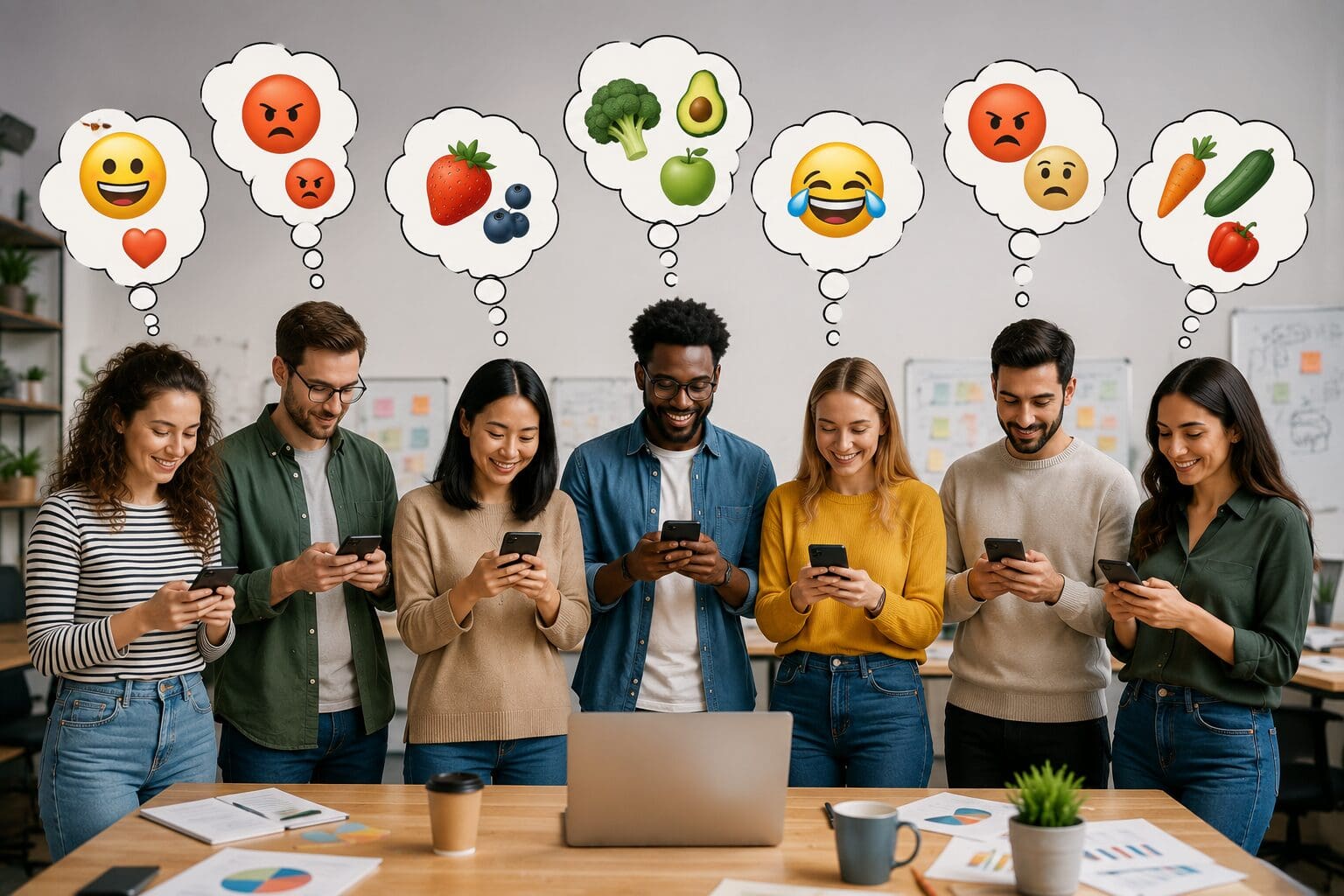
Emojis used to be just text decoration. Today, they can decide divorce cases, prove sexual harassment, be considered consent to a contract, and even send someone to prison. A thumbs up has been accepted in court as a signature on a deal, a winking smiley has led to compensation, and a red heart has become evidence. In a world where we communicate more with pictures than words, even the smallest emoji can have major legal significance.
This revolution was born from life itself. We hardly ever write "I agree" anymore. Instead, we send a thumbs up. Instead of saying "Well done," we add a picture of a medal or a round of applause, and instead of explaining that we are angry, we send an angry face. Digital language has become fast, economical, and above all, universal. But when a dispute arises, the court has to decide what the sender really meant to say, and the answer, it turns out, is not always simple.
Legally, it is not the emoji alone that is decisive, but the context in which it was sent. Courts examine what was said before the emoji, what was said after it, how the parties have behaved in the past, and how an ordinary person would understand the message they received.
Small emoji, big fine
To convict a person based on emojis, the prosecution in Israel uses three tools:
The context of the conversation (Context): What preceded the announcement? If there was a bitter financial argument, a knife emoji wouldn't be interpreted as an invitation to dinner.
The second tool is The balance of power: Does the victim have a real reason to fear the sender (for example, if the sender has a known criminal record).
And the third is Victim response in real time: Did the victim laugh at the joke or get upset, block the number, or immediately contact the police? This response reinforces the claim that the emoji was indeed perceived as a real threat.
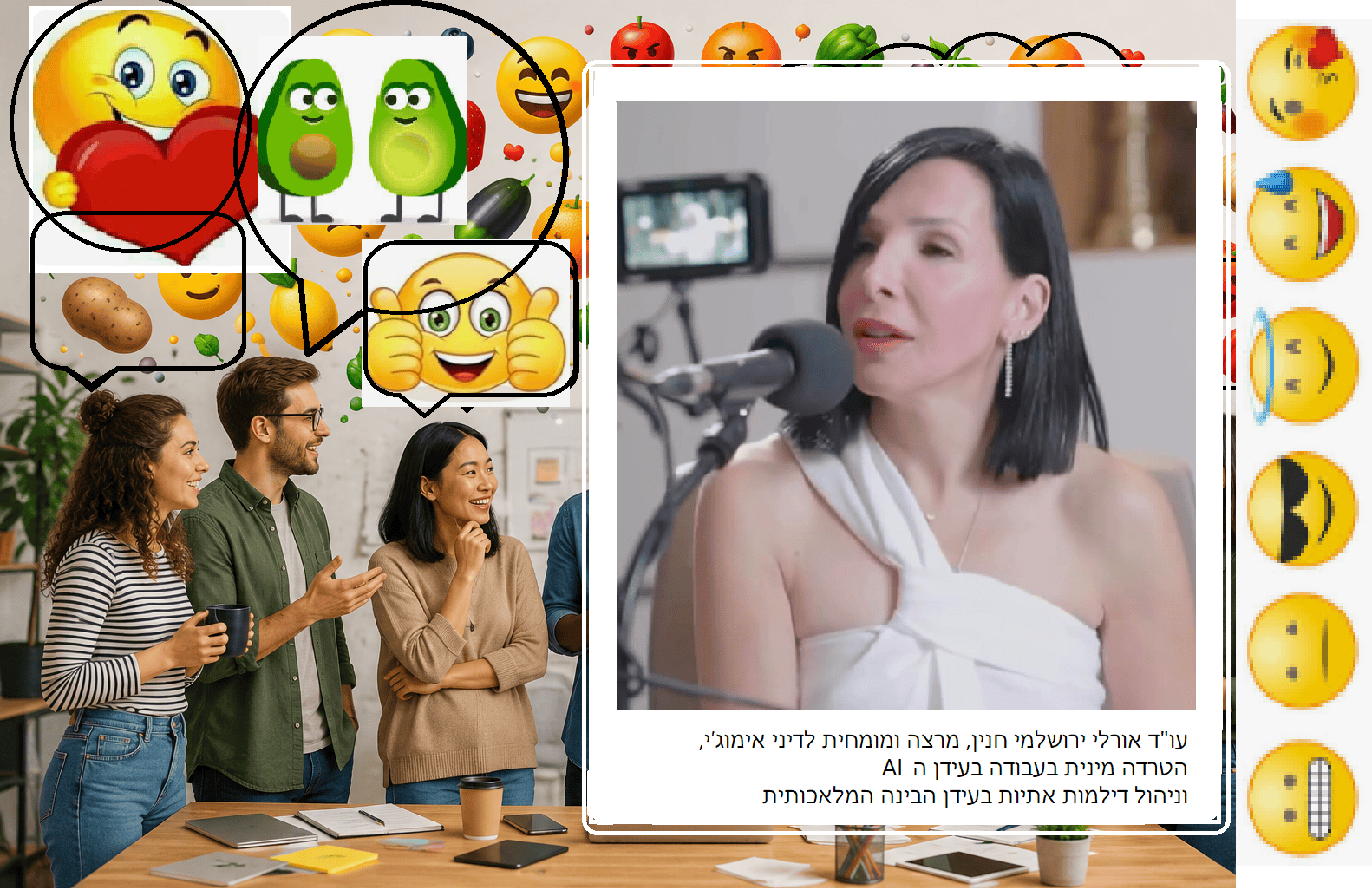
Attorney Orly Yerushalmi Hanin A lecturer and expert on emoji law, sexual harassment at work in the age of AI, and managing ethical dilemmas in the age of artificial intelligence, explains the legal implications of emoji language: "There are no emoji laws yet, but emojis are the new language that is already spoken all over the world, and they reach the courthouse every day and are accepted as visual evidence. It's not a simple thing, because you have to understand the meaning, and that means interpretation. Once you have to interpret, it depends on the age, the sector, who sent it, and in what context."
Attorney Yerushalmi Hanin is the only one in the country who deals with this and even lectures in academia and various organizations on the subject. In the lectures she gives in the IDF, high-tech companies, and other companies, she emphasizes that one must be careful, because the new language of emojis can imply content that is not always received as an innocent message. "People have a hard time understanding, there is resistance, but there are already a lot of rulings in Israel and around the world that prove the legal implications of emojis," she says, adding: "There are about ten lawyers in the world who specialize in and research the issue. You have to understand that when the emoji is simple, like a gun, there is no hidden meaning. But when the emoji is a flame, sometimes the intention is not a fire but a drug deal. The same goes for everything related to relationships. If the manager wants to tell his secretary that he loves her work, he shouldn't send her a red heart emoji, because it could be perceived as sexual harassment. If he invites her to dinner, he shouldn't send her a drawing of eggplant, even if he likes eggplant salad. The emoji replaces written language and is open to interpretation, and what you see is not always what it means. The meaning can have legal implications and the message will not be received as an innocent message, even if it was sent as such."
One of the most talked-about cases occurred in Canada. A grain buyer sent a farmer a contract via text message and asked him to approve the deal. The farmer did not write “I approve,” did not sign, and did not respond verbally. He sent only a single emoji of a thumbs up. When the deal did not go through, the buyer filed a lawsuit. The farmer claimed that the thumbs up was just a sign of “I received the message,” and the buyer claimed that for him it was full consent to the contract. The court agreed with the buyer. The judge ruled that in the digital age, there is no reason to insist on a traditional signature when it is clear that both parties had an acceptable way to communicate. The result was particularly costly: the farmer was ordered to pay more than 82 Canadian dollars for breach of contract.
Kissing smiley or sexual harassment
If we thought for a moment that this was an American or Canadian phenomenon only, then it is worth knowing that in Israel quite a few cases have already reached the courts in which emojis played a central role. In a WhatsApp group of neighbors in a condominium building, a heated argument broke out regarding the management of the house committee. One of the residents sent a message criticizing another resident, and at the end added the familiar emoji of a smiling poop. The aggrieved resident filed a defamation lawsuit, and the judge ruled that an emoji is no different from a written word or a cartoon in a newspaper. The use of this specific emoji in the context in question was intended to humiliate, denigrate, and mock the resident in the eyes of the neighbors, and therefore it was recognized as an element that establishes a cause of action under the Defamation Law.
In another case, a couple was interested in an apartment for rent and while corresponding with the landlord, the couple sent an enthusiastic message that included optimistic sentences and emojis of dancing, a bottle of champagne, and a celebration. The landlord was convinced that the deal was closed, took the ad down from the advertising sites, and waited. But then he discovered that the couple did not intend to rent the property. The matter went to court, and the judge ruled that the emojis created a clear representation and the landlord was entitled to rely on them. The couple was ordered to pay compensation for the damage he suffered.
The same is true in employment relationships. An employee who received a smiley face emoji with hearts from another employee complained about sexual harassment. When the matter came to light, the employee claimed that he did indeed like her and that the smiley face was just a sign of appreciation. The employee was reprimanded and the company sent a memo to all employees explaining the legal dangers of emojis. Incidentally, in Saudi Arabia, they say that when a man sends a married woman an emoji of a flower, not to mention hearts and the like, he may find himself in prison.
In the business world, an emoji can decide whether a contract is signed, and in family law, it can affect the fate of entire families. Family court judges and rabbinical court judges are no longer satisfied with just reading the words. They examine all correspondence, including the hearts, winks, flames, kisses, and smiling faces, to understand what really happened between the parties. Often, couples claim that it was all “just in jest.” But the court examines the full picture: Was this a one-time event, or a series of intimate messages? Are emojis integrated into romantic correspondence? Are they accompanied by late-night and personal messages? In some cases, a sequence of hearts, kisses, winks, and flames has become evidence that supports a claim of an intimate relationship outside of marriage.
One of the most painful areas is parental alienation. A divorced parent who regularly responded to his children's messages about the other parent with a vomiting, clown, or smiling poop emoji was sued in court when the emoji was interpreted as an expression of incitement against one of the parents and an attempt to damage the parent-child relationship. The attempt to damage the status of the other parent affected decisions regarding residence arrangements and even financial judgments.
The secret language of the criminal world
In criminal law, emojis have long ceased to be perceived as innocent drawings.
In France, a man sent his ex-girlfriend harsh text messages that ended with a gun emoji. The defense claimed that it was a fight between spouses. The court rejected the claim and sentenced the young man to several months in prison. The judge ruled that sending the gun emoji in the context in question constituted a real threat of murder, as it clearly depicted an attempt on her life.
If a person writes "I know where you live" and adds a gun, knife, or bomb, the court will not be quick to accept the claim that it is "humor." On the contrary. The emoji gives the sentence its threatening meaning. Therefore, it is precisely the small drawing that may prove the criminal intent of the sender. An hourglass emoji can also become a threat when sent along with a demand for payment. A skull or coffin sent during a financial dispute may be interpreted as an implied threat. The courts do not examine only the drawing, but the context in which it was sent and the feeling it created in the recipient.
In criminal investigations around the world, researchers have found that drug dealers, pimps, and members of organized crime use emojis as an internal code. A snowflake may represent cocaine, a green leaf or palm tree may represent marijuana, an electrical plug may represent "supplier," and a crown next to high heels and bags of money may serve as a hint to the world of prostitution. In burglary or robbery cases, sending an eye emoji immediately after committing a crime has been interpreted by judges as "observation" or as a message meaning "see if the police are coming" or "keep a low profile."
In the case that reached court, a defendant wrote a post against a police officer who wrote him a report, and added an emoji of a fire and a police car. The prosecution interpreted this as a wish or threat to burn down the police car or the police station. The court accepted the interpretation and ruled that the context turned the symbols into a threatening and inflammatory message.
In 2023, there was a lawsuit in the United States called the "Tail" case. A company that sold digital products posted tweets on Twitter that included emojis of a missile, a rising graph, and money bags. Buyers of the products sued the company, claiming that this was illegal marketing of securities, while the company claimed that these were just graphic symbols with no legal meaning. A federal judge in New York rejected the company's request to dismiss the lawsuit, ruling that even though the word "return" was not written, these emojis symbolized "financial return on investment" and met the definition of promoting securities.
And what about the eggplant?
You can't talk about emojis without mentioning the eggplant. It was created to represent a vegetable, but within a few years it took on a completely different meaning and became one of the most sexually-identified symbols on the Internet. Alongside it are other emojis, whose double meaning almost every young user knows.
There is no legal prohibition on their use, but when they are sent without consent, they may be considered sexual harassment or unwanted messages and become significant evidence. Even if no explicit words are written, a sequence of sexually suggestive emojis may indicate the content of the message and the sender's intent.
Many emojis represent body parts. The eggplant is the undisputed king of the online representation of the male genitalia. It first appeared in 2010. In 2014, the American Dialect Society declared the eggplant emoji the "most representative emoji of the year" due to its new sexual use. In 2015, Instagram blocked the ability to search for images using the eggplant emoji hashtag, claiming it was used to distribute pornographic content. The blocking caused a stir and led to protests under the slogan "FreeTheEggplant#".
Avocado is sometimes used as slang for testicles (the word avocado comes from the Aztec language and means testicle). Peach represents buttocks due to its round shape and the groove in its center and is one of the most popular emojis in this use.
Like the eggplant, banana, baguette, carrot, corn and sausage also represent the male genitalia. Corn, which also represents the porn industry (in English, the word corn rhymes with the word Porn, short for pornography).
Taco, donut, conch, represent female genitalia. Cherries, melon, represent female breasts. Water drops represent sexual arousal or wetness (not just rain or sweat). Ice cream, lollipop, tongue represent oral sex or licking. A pointing finger and a hand in the shape of an "OK" sign, a combination that graphically represents the act of penetration.
Animal emojis also symbolize things beyond the animal itself. A cat represents the female genitalia (coming from the English word Pussy). A snake represents the male genitalia, or seductive and treacherous behavior. A camel represents, in slang, "camel toe," a condition in which pants are too tight in the female crotch area. Fire symbolizes someone or something that is "hot," sexy, or very attractive.
Studies, findings and misunderstandings
In recent years, emojis have become a fertile ground for academic research in the fields of psychology, linguistics, communication, and computer science. An Israeli study by the Kohler Faculty of Management at Tel Aviv University examined the impact of emojis in professional communication and found that employees who use emojis or images in work emails are perceived as less authoritative, less powerful, and more weak compared to employees who use only verbal language. Another study conducted in the US found that people who incorporate emojis into their text messages are perceived as more attentive, warmer, and more responsive to the needs of the other party.
A study conducted in the US examined the electrical activity in the brain using EEG devices, comparing people's reactions to real human faces with their reactions to human emojis. It turned out that our brains show very similar neural response patterns when we look at a happy or sad emoji and when we look at a real person's facial expression.
Studies have found that there is a huge gap in the interpretation of emojis between different generations. It turned out that young people of Generation Z perceive the thumbs-up emoji or the usual smiling smiley as aggressive, cynical or passive-aggressive, while the older generation sees them as nothing more than a positive and innocent affirmation that says "everything is fine."
Most of us send dozens, sometimes hundreds, of emojis every week. They make conversations warmer, funnier, and sometimes shorter. People who are used to receiving a cute emoji in correspondence will feel distanced if you stop sending them the smile or the thank you. But there is another side to emojis, a small drawing sent in a moment of anger, enthusiasm, or thoughtlessness may come back years later as evidence in court.
My suggestion is that the next time you're about to send a thumbs up, a heart, a wink, or even a laughing face, it's worth stopping for a moment and asking yourself a simple question: In two years, in front of a judge, would I still want to explain that "it was just an emoji"? Because in the legal world of 2026, the answer is often: absolutely not.
Is there a difference if it's eggplant in mayonnaise, eggplant in tahini, or antipasti?
You ate the head!
"Fuck you" you say... hahahahaha...
* Apart from "emojis", which mean to disgust, to humiliate, and especially - the emojis intended to "threaten" & "intimidate" by a "criminal entity"... and only they have those, apparently & heard & written... - they also need to be "stopped" & "banned"...😭
And By the Way… As part of the “LGBT Festival” at Beautiful HAIFA 2026, I was amazed to see the “eggplant” in the basket, I thought it was for sale with the “banana”; in the end – I understood the “LGBT head”…!?!?!? 😘
When the hand is light on the keyboard, it is easy to slander. I am sure that if you read the article, you learned something interesting about the new language that is happening in the world. And no, the world does not belong only to the young, but it is easier when you remain open to changes. Greetings of awakening
Interesting. This is the exact opposite of Musk, who is identified with frequent use of smileys and emojis.
Yes, that's true, but he's probably out of the statistics.
The human race has gone off the rails.
Yes…do you remember when everyone spoke Klingon? (I mean Star Trek fans), so now they speak emoji. The main thing is that they speak….
Fascinating article. I didn't know about the eggplant...
Thanks! I only discovered this after I started exploring this new language too.