


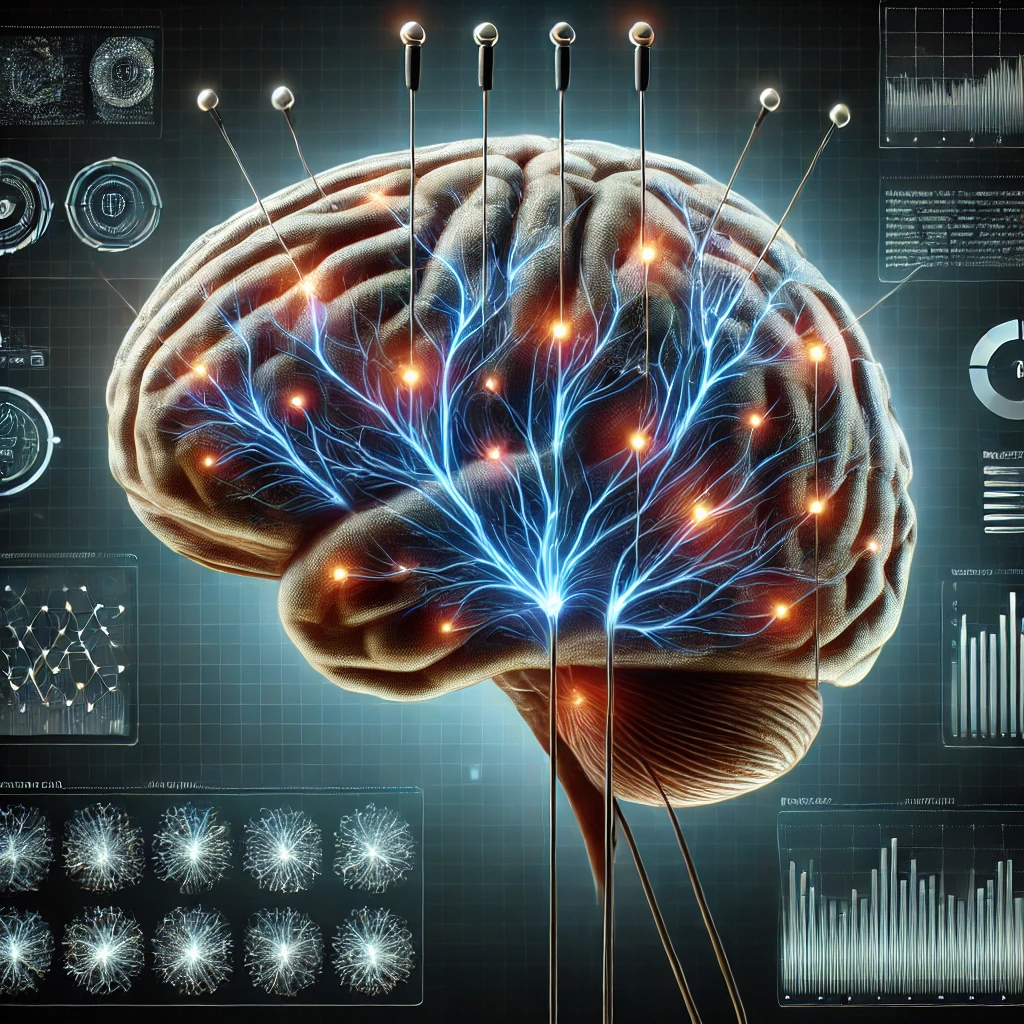
In parallel with the 'Shavuot Night Repair' where spiritual/preparatory repair is performed, our brain performs its own physiological 'repair' every night during sleep. In a fascinating process called "Pruning synapses"The brain clears unnecessary neuronal connections, organizes and renews information, and prepares the cognitive infrastructure for tomorrow. This process is the key to maintaining mental sharpness, brain flexibility, and longevity.
Neuroplasticity – the brain’s daily renewal engine
Until about 4 decades ago, the prevailing scientific opinion was that the brain is fixed after puberty and becomes a rigid structure that does not change. On the surface, this sounds logical, because if this were not the case, and the brain changes its structure, how would our emotions, memories, learning, and computational ability be preserved? They could disappear.
But in the 80s, the picture changed completely. At the center of this revolution stands an American neuroscientist, Michael Merzenich, considered one of the fathers of neuroplasticity research – Brain flexibility.
His research has shown that the brain is not fixed and rigid, but is capable of “rewiring” itself following practice, experience, movement, learning, and even changes in life habits.
How do you even know that the brain is really changing??
Each organ has its own "part" in the brain.One of Merzenich and his colleagues' famous studies involved monkeys. The researchers found that when the monkeys repeatedly practiced using a particular finger, the area of the brain responsible for that finger "grew" and became more active.
That is, the brain allocated more “brain space” to what was being practiced, similar to the brains of musicians, which have a larger auditory cortex that helps process sounds and identify subtleties of tone and intonation. Conversely, areas that were used less became less dominant.
This was one of the first proofs that brain maps are not fixed, but change depending on experience and practice.
"London Taxi Drivers" StudyStudies on healthy people have also shown that the brain changes throughout life. A famous study in London from 2000 found that taxi drivers, who were required to remember thousands of streets and routes, had Hippocampus (The trust is based on, among other things, spatial memory) more developed compared to other people. The more years of experience they gained, the more pronounced the change was.
The study illustrated that the brain is flexible and is affected not only by age or genetics, but also by what we do on a daily basis.
The brain can recover after injury.
The basis of any successful rehabilitation process lies in neuroplasticity, the brain's ability to rewire itself and develop alternative neural pathways that allow the patient to regain lost motor and cognitive functions.
For example, in people who have lost a sense or ability, areas of the brain have changed their role. For example, in blind people, areas that normally process visual information can begin to participate in processing sounds or touch.
Even after the loss of a limb, the brain begins to reorganize its sensory and motor maps, which forms the basis for adaptation to prosthetics and motor rehabilitation. Similarly, after a stroke, there is a bypass of the damaged area and the recruitment of healthy cells that can restore, either fully or partially, the lost function.
"Every person can, if they so desire, be the sculpture of their own mind."
This sentence, written at the end of the 19th century by Santiago Ramon y Cajal (father of modern neurobiology and Nobel Prize winner), emphasizes that the brain is not a rigid and finite structure, but a dynamic "sculpture" that the person himself shapes through his actions and thoughts.
The human brain carries within it the wonder of brain plasticity throughout the entire life cycle. Science proves that the thoughts, actions, learning, and experiences we choose to pour into our daily lives are what sculpt and rewire the neural networks in our heads, thereby giving us the power to determine what our lives will look like.
😍"Brain power" is extremely important to every "person" on earth…; after all, this is the main difference between humans and animals in nature…!!!@😭