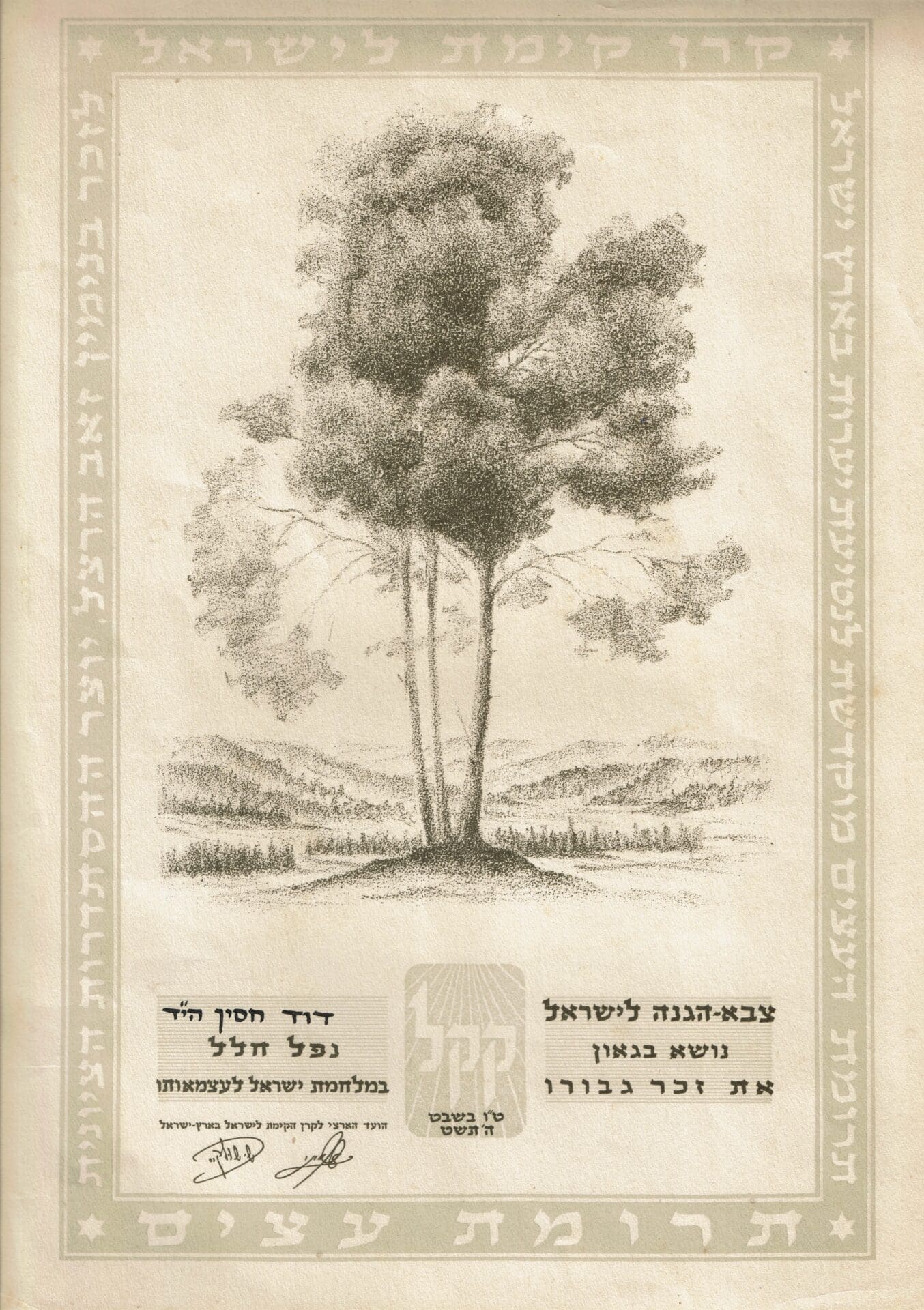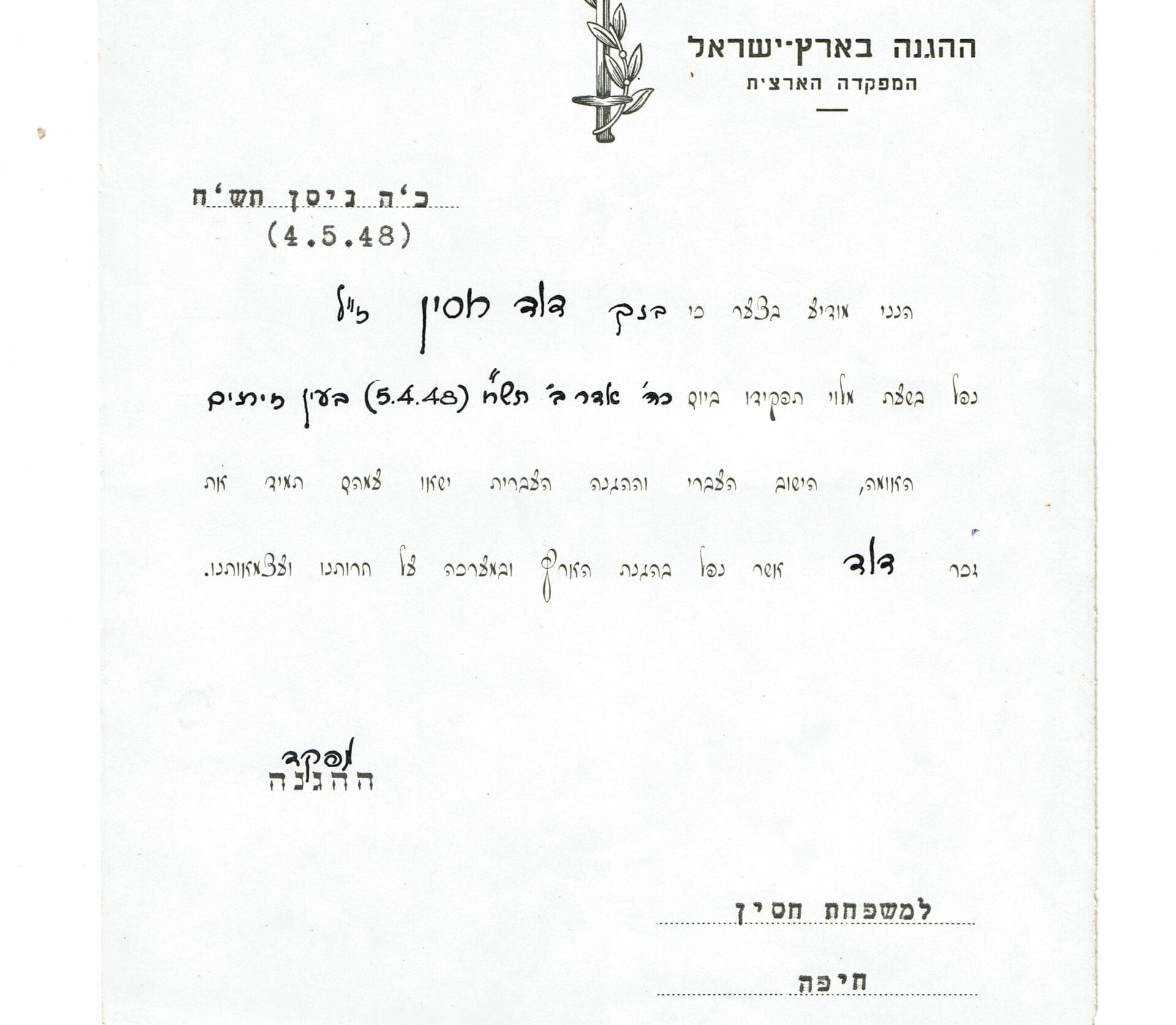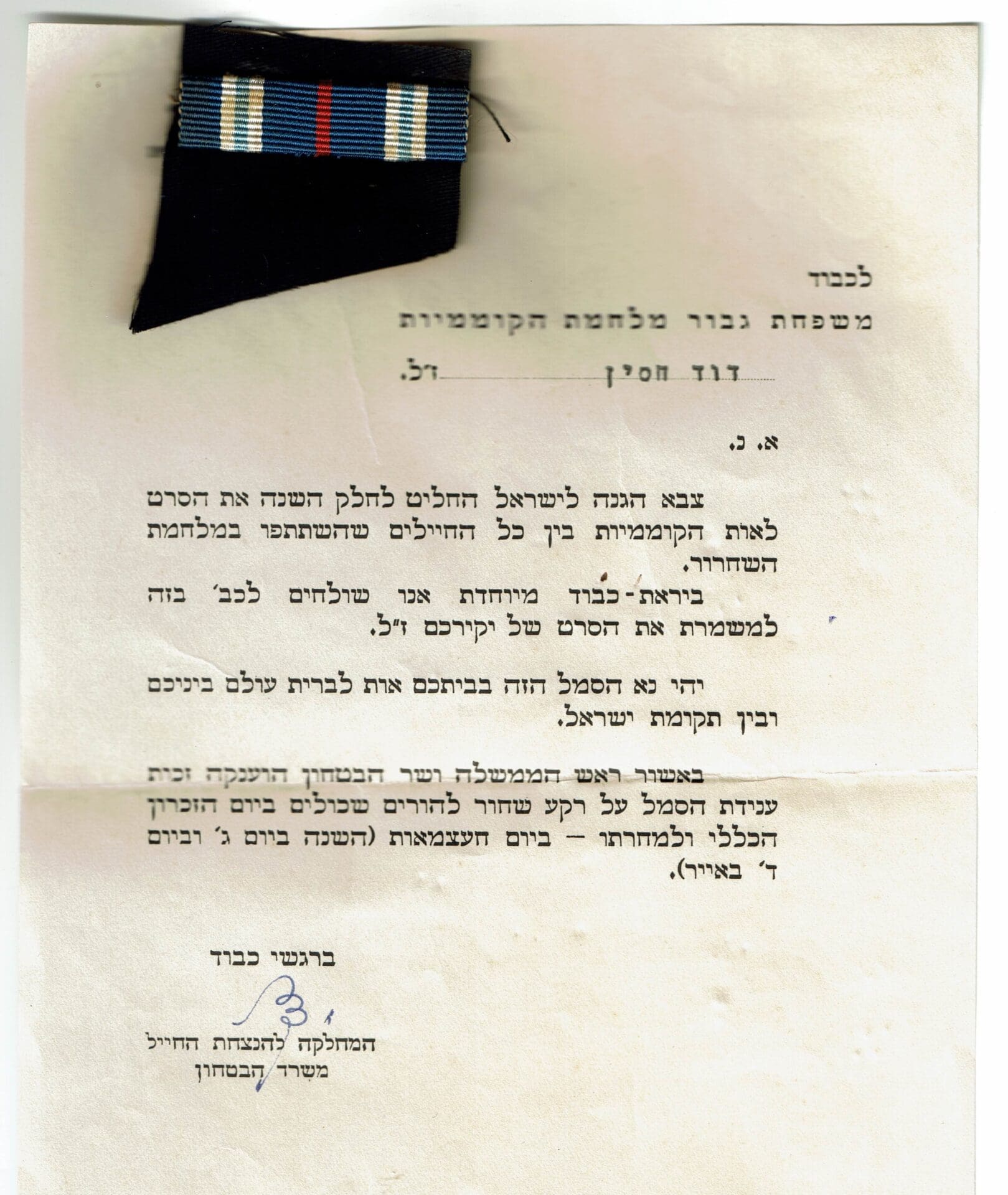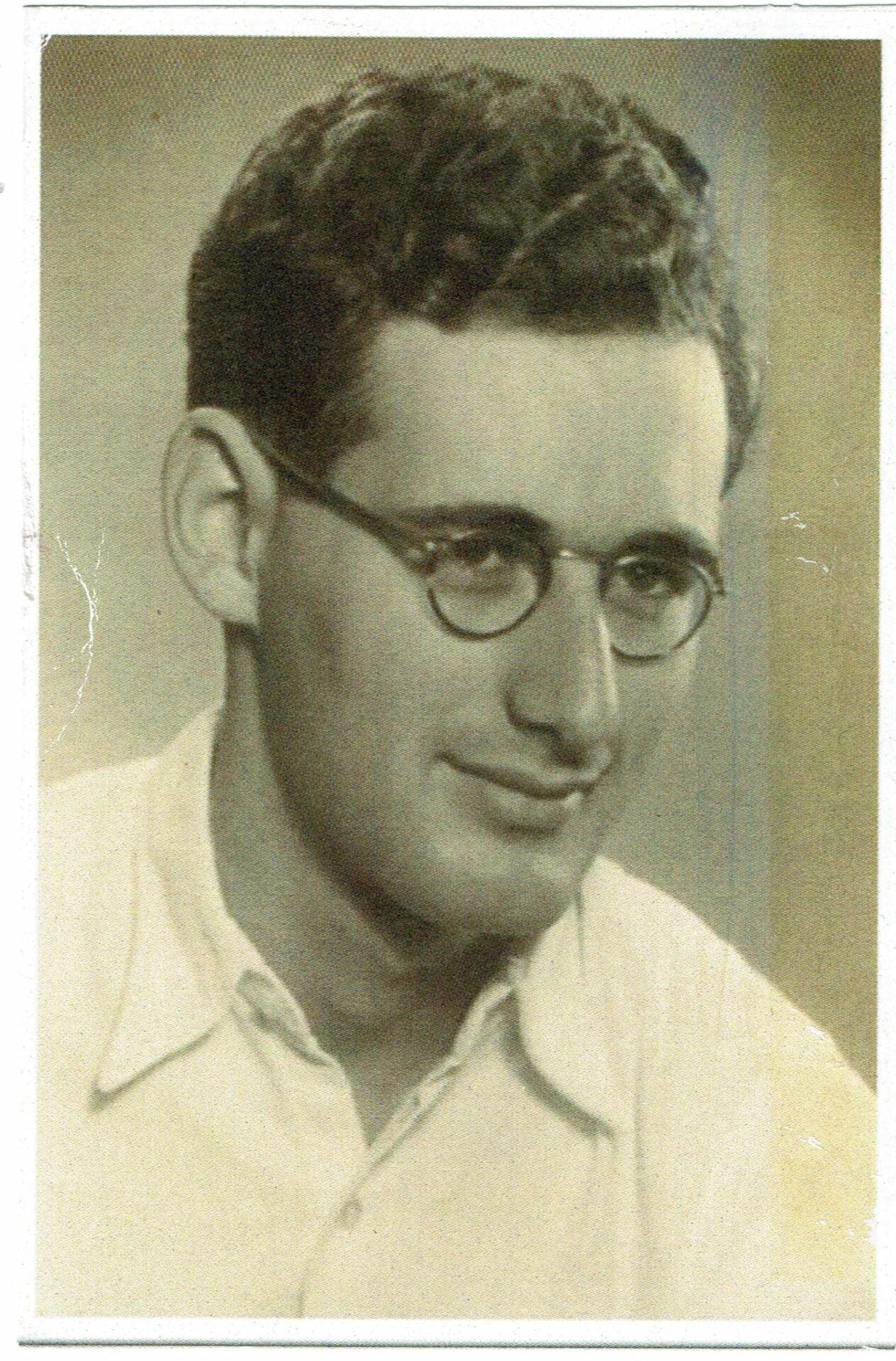
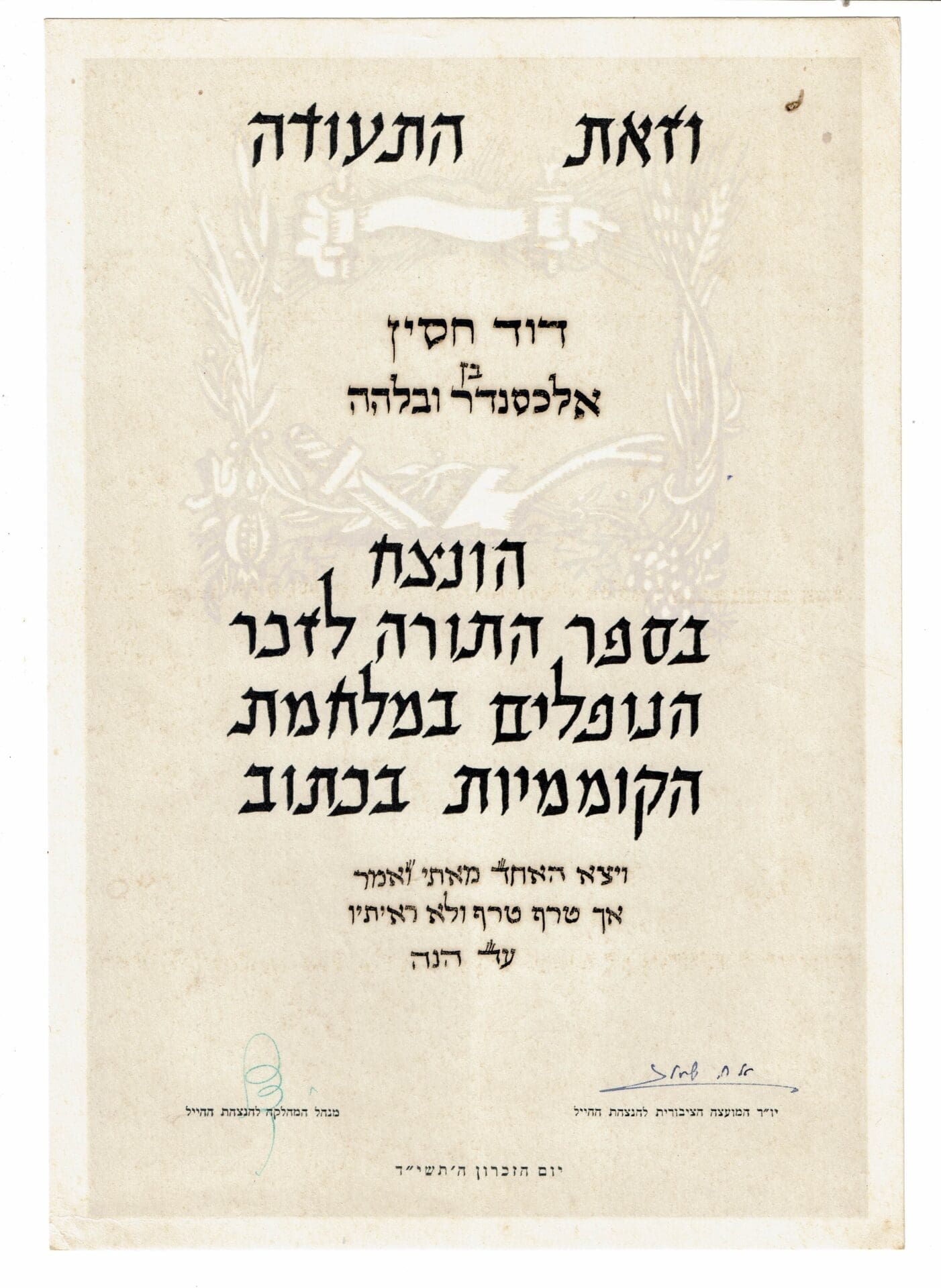
On Sunday, April 4, 1948, in the battles to defend the city of Safed during the War of Independence, my uncle Hassin fell at Ein Zeitim, aged 20. My uncle did not get to see his aspirations come true, which he had been waiting for with all his heart, and he also did not get to participate with his group in the establishment of the Yiftach farm, in the shaping of whose image he took an active part.
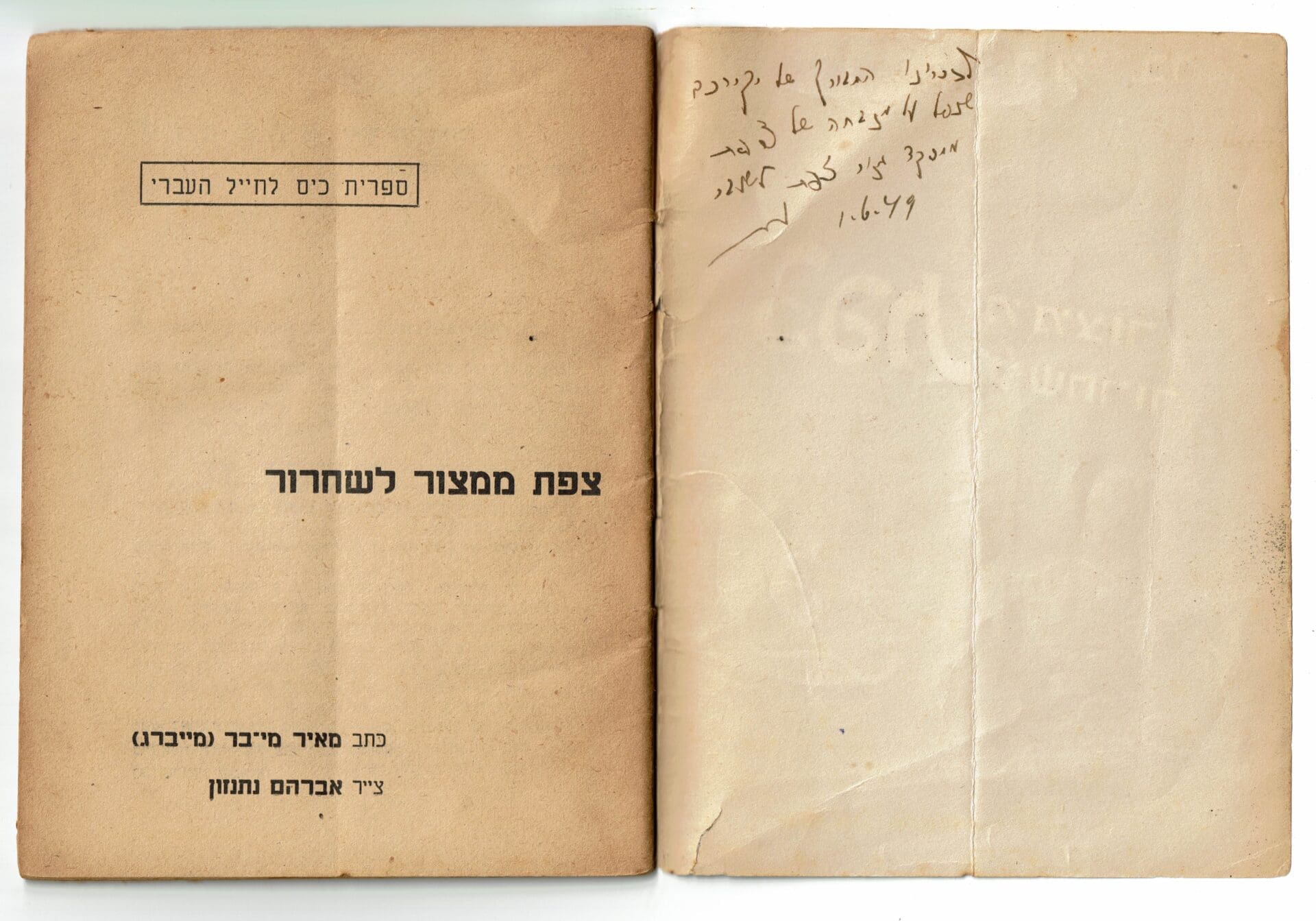
I documented the story of my late uncle in the book "A Life Like This - The Story of Dalia and Israel Hassin," which I recently produced. My late uncle was the eldest brother of Israel, and the book has a chapter dedicated to his memory. May his memory be blessed!
Pioneers on the farm in Bethany
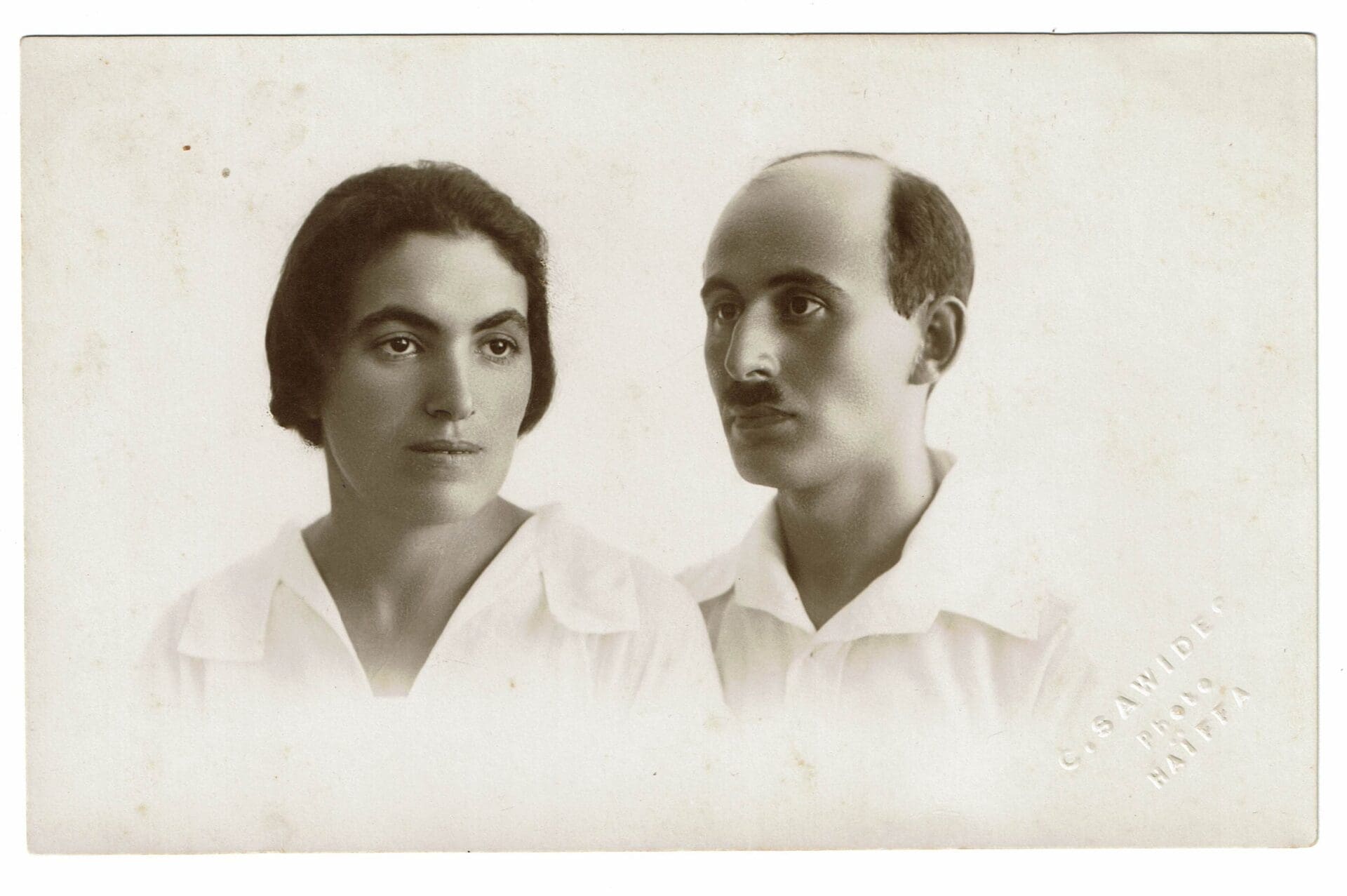
Uncle (My uncle) was born in Haifa on March 29, 1928, the eldest son of Bertha (confused)(nee Stand) andAlexander (Sasha) immuneShortly after immigrating to Israel, his pioneering parents met on the farm in Beitinya. Love blossomed between the two, and after their marriage on the farm, they moved to the lower city of Haifa in 1925, where they rented a small room in an Arab neighborhood. Three years later, their firstborn son, Uncle (My uncleDue to the difficult economic situation at the time, they lived a life of hardship and were unable to afford a crib for the baby. An orange export crate lined with blankets served as a makeshift bed for the newborn.
Around the patio, the shared courtyard, were rooms that were mostly used by Arab families, with one kitchen serving the needs of the entire complex. This is how Berta learned the secrets of Arab cuisine and the wonder of its cooking. Alexander, meanwhile, graduated with honors from the Technion as a civil engineer. His final project was the design of the "Big Mills" complex, which stands on Thilan and operates to this day.
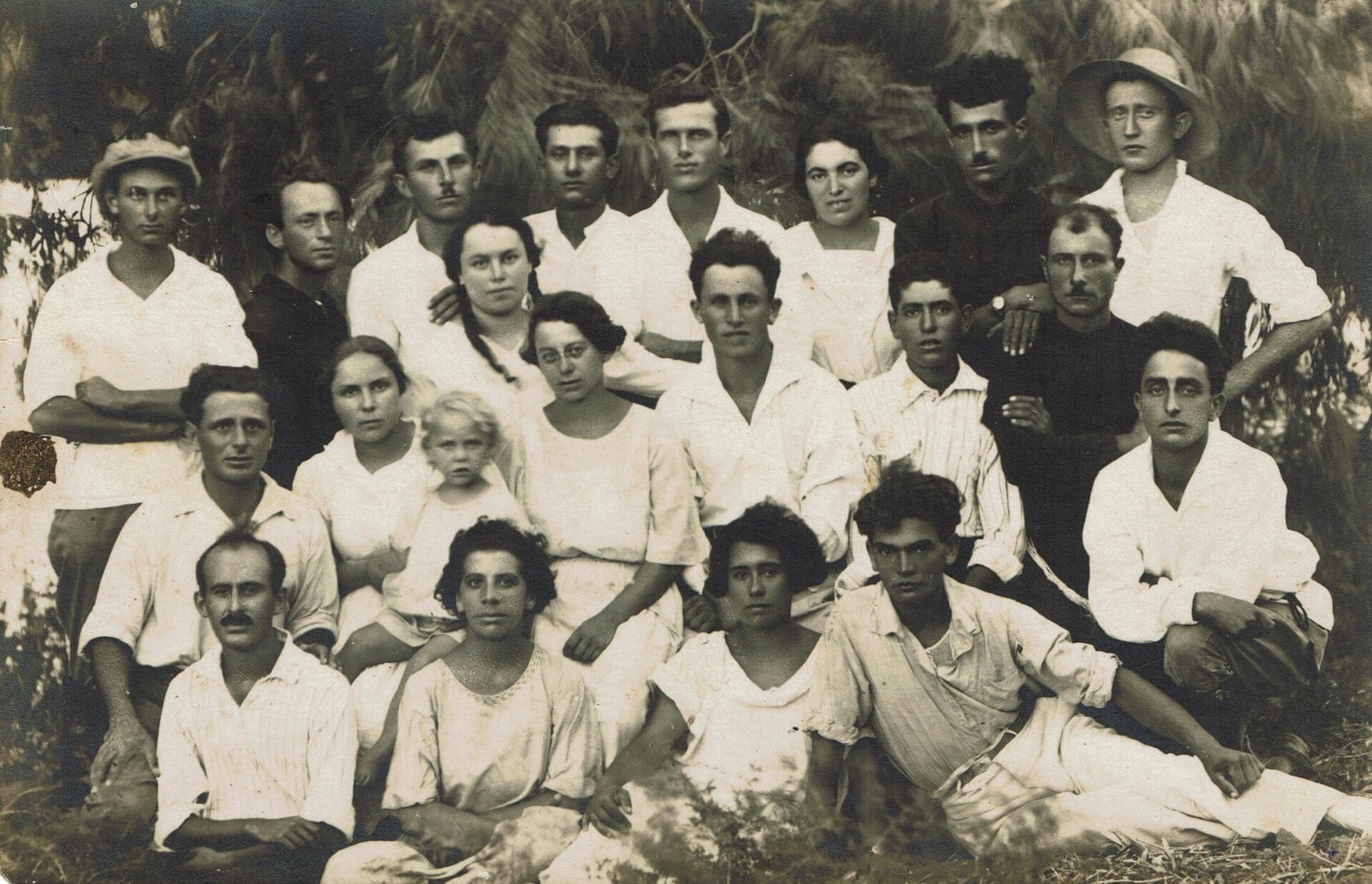
Following the events of 1949
Following the violent events of 1939 throughout the country, during which many were murdered, including six residents of Haifa, the young family moved to a larger apartment on Castle Street, in Hadar Carmel. In 1937, he was born Israel, my uncle's younger brother.
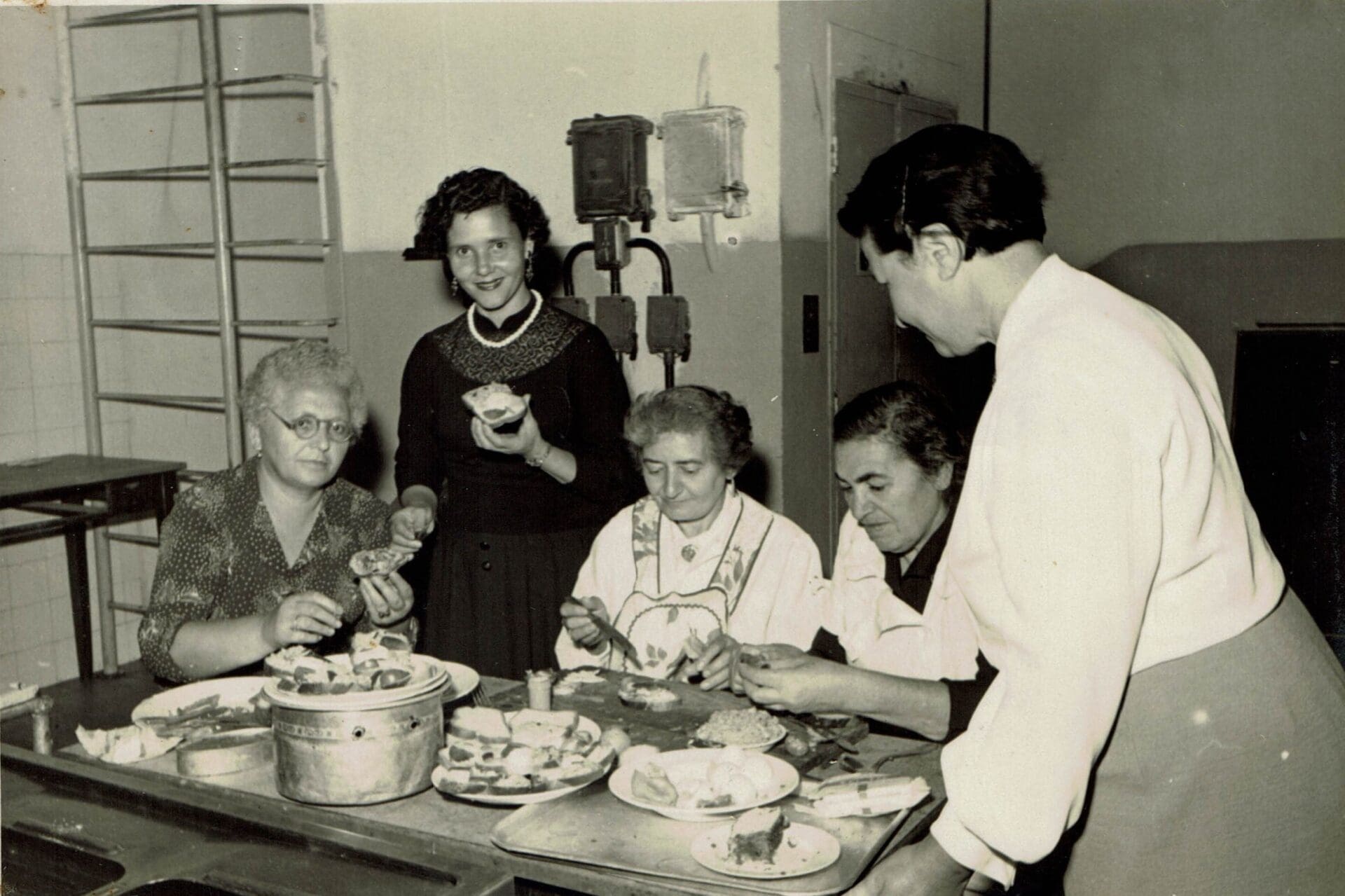
Bertha was involved in public activities and volunteered to teach sewing and embroidery classes at the "Working Mothers' Organization," which was established in 1932 by the "Workers' Council" to operate daycare centers and manage volunteer women's activities in the community. Over the years, the working women's organizations were united under the Na'mat organization.
Throughout those years, Alexander continued his extensive work and, as part of his activities as chairman of the Engineers' Association in Haifa, he even had the privilege of meeting Abba Hushi, Golda Meir, David Ben-Gurion, Moshe Dayan, Yaakov Dori and more.
A talented, humble and curious student
My uncle received his education at the "Reali" school in Haifa, in elementary and high school. Already in the lower grades he showed a great interest in the natural sciences and in the upper grades he chose to specialize in the biology major. "I pinned a lot of hopes on the future of this student, who was humble, quiet and richly talented," Dr. later eulogized him. Arthur Byram, founder of the "Reali" school and its first principal.
At the age of 10, my uncle joined the "Scouts" movement. In his early youth, he enlisted in the "Hagana" organization, participating in demonstrations and actions against the British Mandate government, which closed the gates of the country to the remnants of trampled and exterminated Judaism, for which he was deeply saddened. At that time, he decided to leave the "Scouts" movement and joined the "Noar HaOved" youth organization, where he became a guide, devoted himself to cultural and organizational activities, and soon became one of the pillars of the movement.
My uncle volunteers for the "Hagana" and the Palmach
In 1946, after completing his matriculation exams, he went for conscript training by the Palmach, and with the "Amal" group, of which he was one of the founders, he went to Kibbutz Ashdot Yaakov, to work on the farm, settle, and perform defense missions.
"As part of the training, my uncle prepared himself for group life, for the life of a farmer-soldier, whose duty it is to protect his people and country and free them from the yoke of foreigners," they paid tribute to him. His parents"At the same time, he never ceased to be interested in questions of biology and chemistry, especially the theory of heredity. He dreamed of furthering his studies in this science and of using it as an educated farmer for the benefit of his society and his people."
In September 1947, my uncle was called up with his comrades in the Palmach to defend the Upper Galilee from the invaders, participating in the raid on Saasa (Sasa) and other military operations. He participated in the defense of Safed and Ein Zeitim. In his last days, he dreamed of settlement, peace, further education, and a creative life.
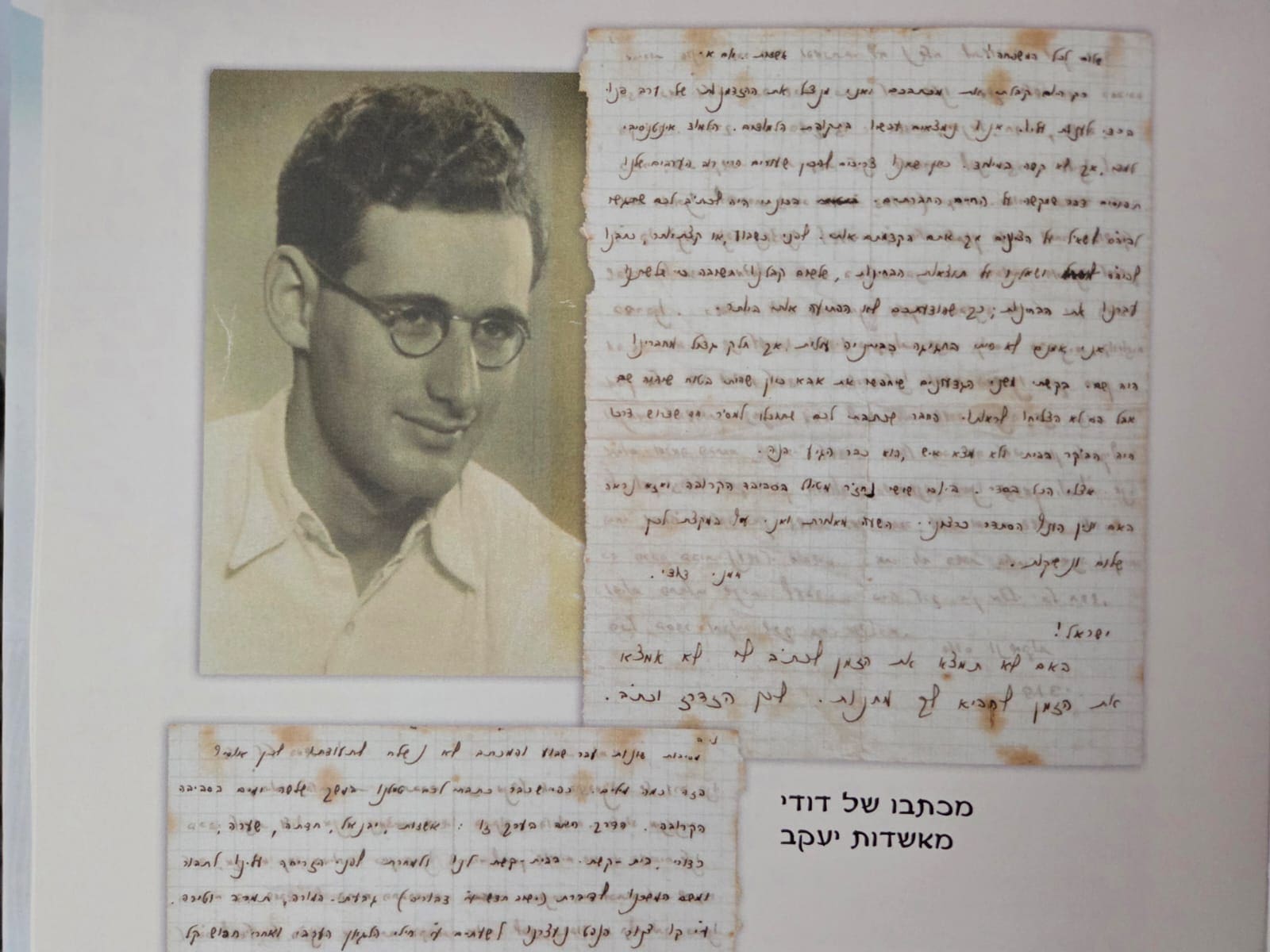
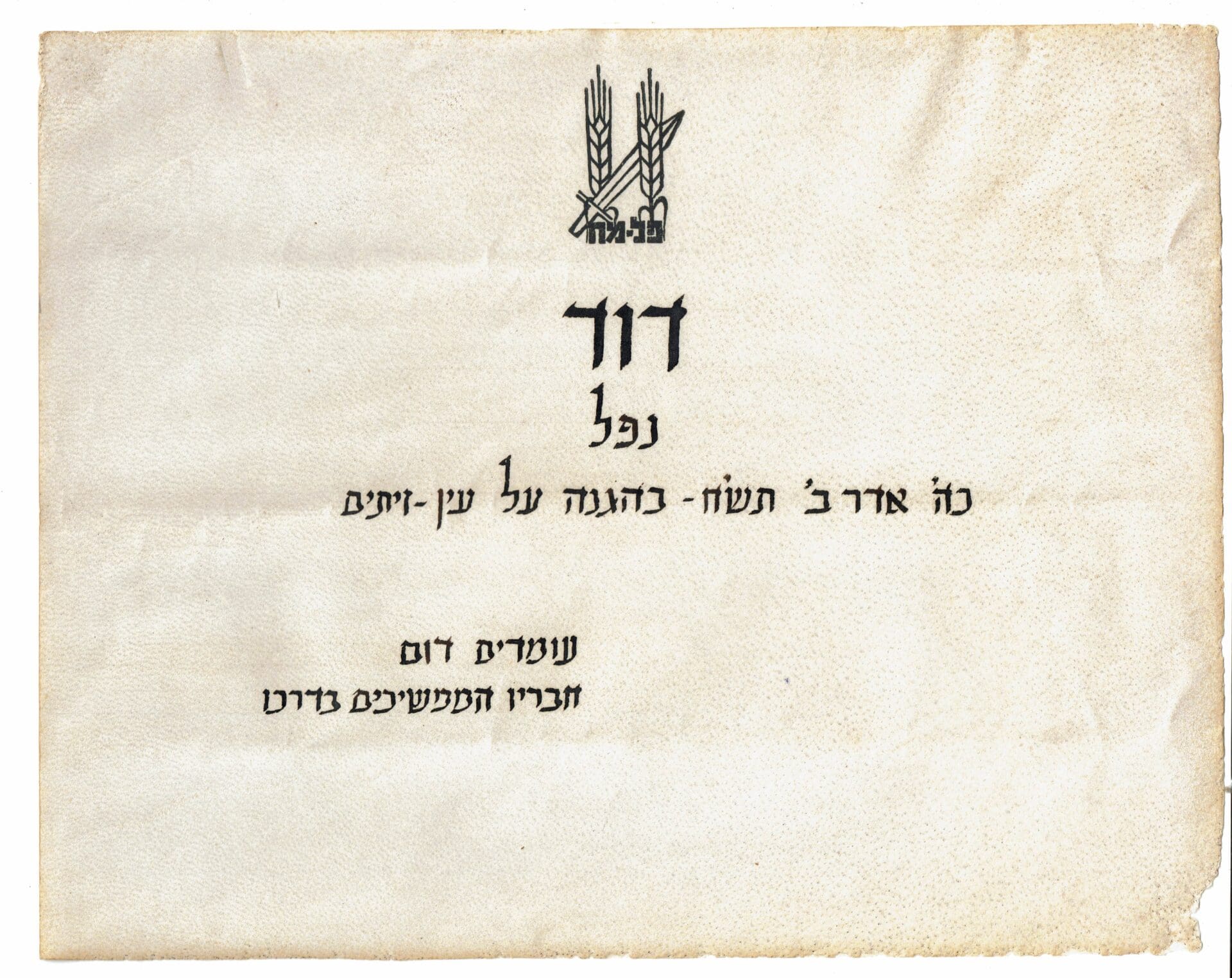
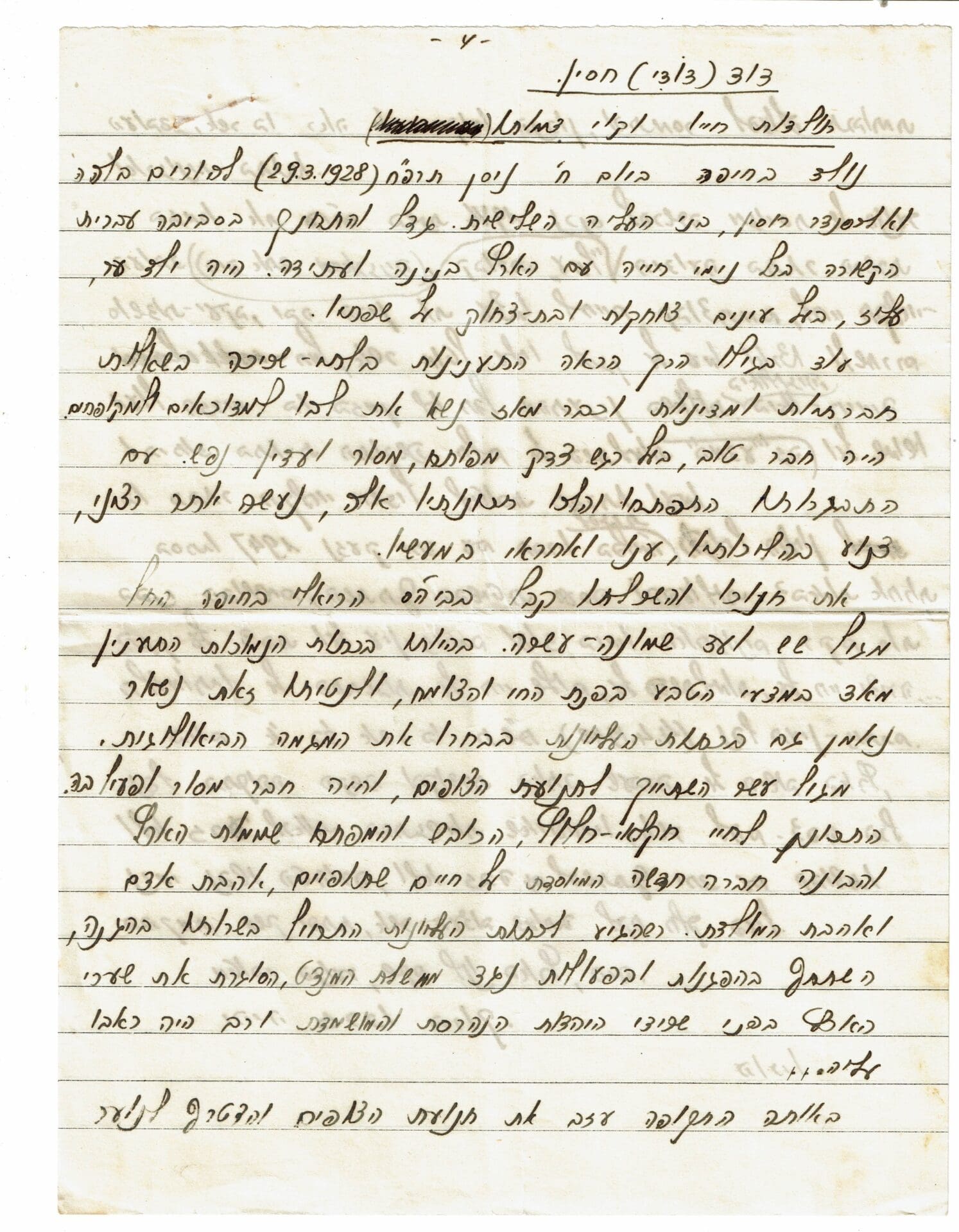
Fierce fighting at Ein Zeitim in defense of the city of Safed
"We are entering the war, leaving the farm and going to the Galilee," he wrote. Ori, one of my comrades in combat and conscript training. "At first, a war of nerves and ambushes in Safed and Dafna, and then again in Safed, and here we taste the taste of hot war. Dodik finds no rest, yearns for Moshe, asks to be accepted into a more dangerous, more responsible position.
Jewish Safed is almost besieged, Ein Zeitim is subject to constant attacks and shelling. Maintaining transportation to it is an effort that we can barely overcome, and then we are sent there, to the most distant points of the triangle, Canaan-Safed-Ein Zeitim.
The struggle around Ein Zeitim is relentless. The surrounding areas were in the hands of the enemy, who were sitting on them with confidence and trying to bring down the point with constant sniping, having learned from experience that in assault attacks they would achieve nothing. We only go out into the field at night, in the dark. We reach Sasa, we strike the enemy in the back of the head, and the experience encourages us to continue this method. During the day the enemy is in control, no one leaves the farm fence, although the casualties are increasing inside it too: in the barracks, in the yard, everywhere.
Here strength was needed. Strength to will, to suffer, to stand. And Dodik is the symbol of this strength, always cheerful, happy, not allowing himself and others to show any sign of depression. When it was necessary to get up after a night of guard duty and work in the fortifications, Dodik is the first. He works as he always does, with dedication, energizing us, not thinking and not allowing us to think about the lack of food and water and the bullets whistling without stopping.
It seems that in those days he finds his place, the doubts disappear, the inner restlessness disappears, everything is so clear, one must overcome, persevere until the turning point... I remember one night of vigil, when Dodik enjoyed childish pleasure in the snow, and many nights after, when he was filled with satisfaction, truly happy, to see the comrades sitting together and singing."
The ring tightens.
"And so on his last day, the ring closed in on us completely. The Arabs seized the control called number 1, the last in the ring, and he controls us closely and completely blocks the last passage to Birya. The situation is getting worse, and no one knows what will happen next. And yet he, Dodik, a short time before the bullet from that control hit him, says with a smile: "What a disaster, my friends, we'd better sit down and sing a little." What was in these words, a symbol of his strong personality? And perhaps an order for us, the ones who remain, the order of: Despite and in spite of everything... to sing, to win!"
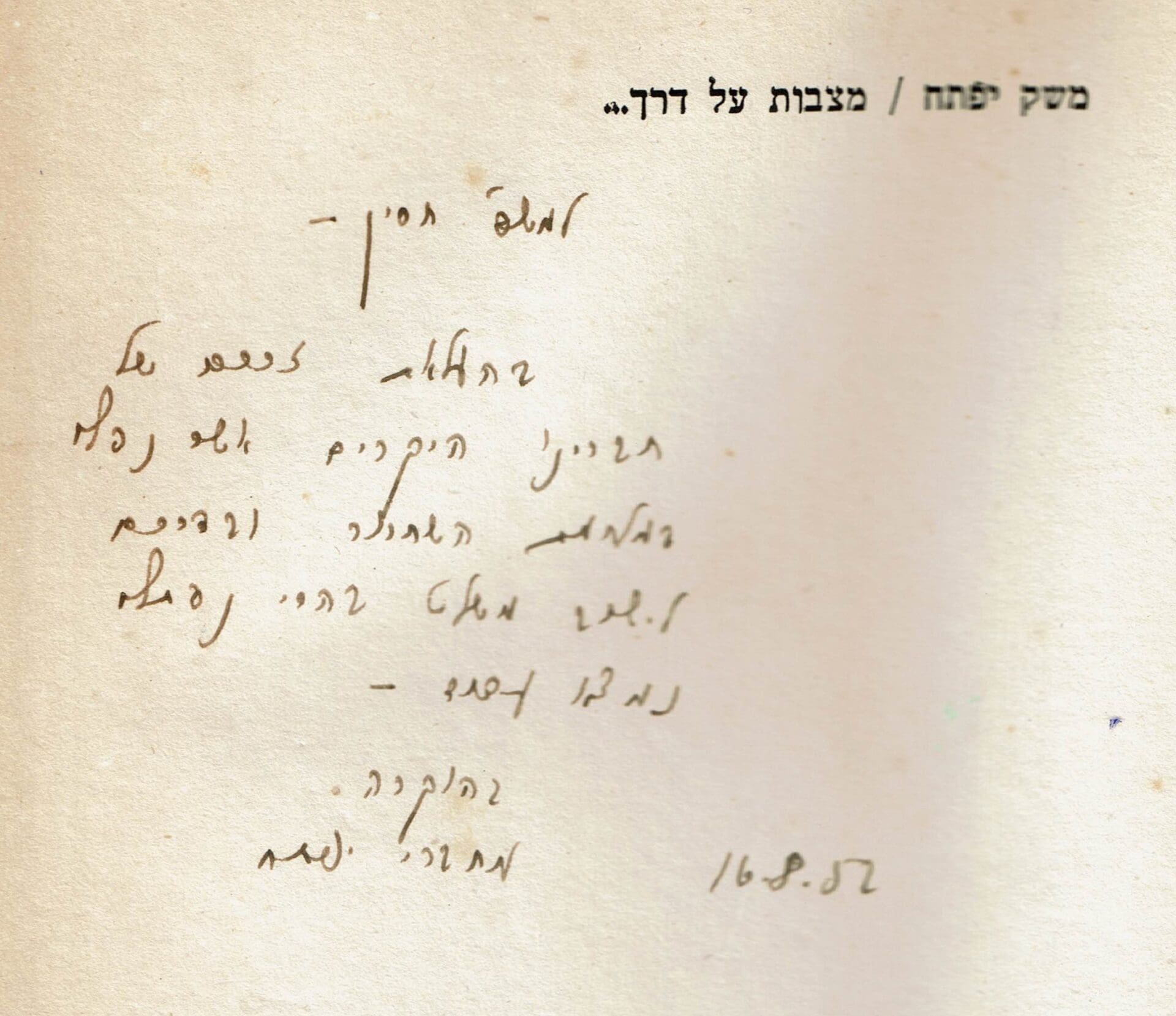
Another friend, S., Wrote:
"Ein Zeitim. Every day a platoon of young men passes along the main road, making their way up the hill from Ein Zeitim to Canaan and back. Carrying food on their shoulders, visible to the enemy, they ascend the Malvina road, bypassing a second hill, north of it, leading to Biriya and then to Canaan, the pine and oak grove.
One day the path was cut off. The enemy dug in at the control post and fired. The bullets punched holes in the barracks of Ein Zeitim, splitting the air with noise and shaking the heart, until you get used to it. My uncle was wounded. English armored vehicles carried his body to Safed. We carried the stretcher upright as the British soldiers crawled around us under the rain of shots. That's how we said goodbye to him before we could even digest the blow.
The situation is serious. We are cut off. We are running stealthily to Canaan. Groups have left Canaan and are sitting on the control tower opposite. It is raining heavily and the feeling is damp.
The next day, the battle for the control was fought. The enemy retreated. We had wounded. Since then, the road to Ein Zeitim has been under fire and the water truck has been passing under cover, until the armored tractor mounted Mukwadesh and drove away.
The decisive battle was drawing near. Front lines were beginning to appear in the country. The British were evacuating the area. The police and key positions in Safed were handed over to the Arabs. The attempts to break into Safed were a very bad sign, one that was measured by hours of resistance. The road to Safed, whose barriers we had occasionally broken through with fire, was completely blocked. The only connection was night convoys of our divisions.
My uncle Hussein was laid to rest in the Safed Military Cemetery.
May his memory be blessed forever.