


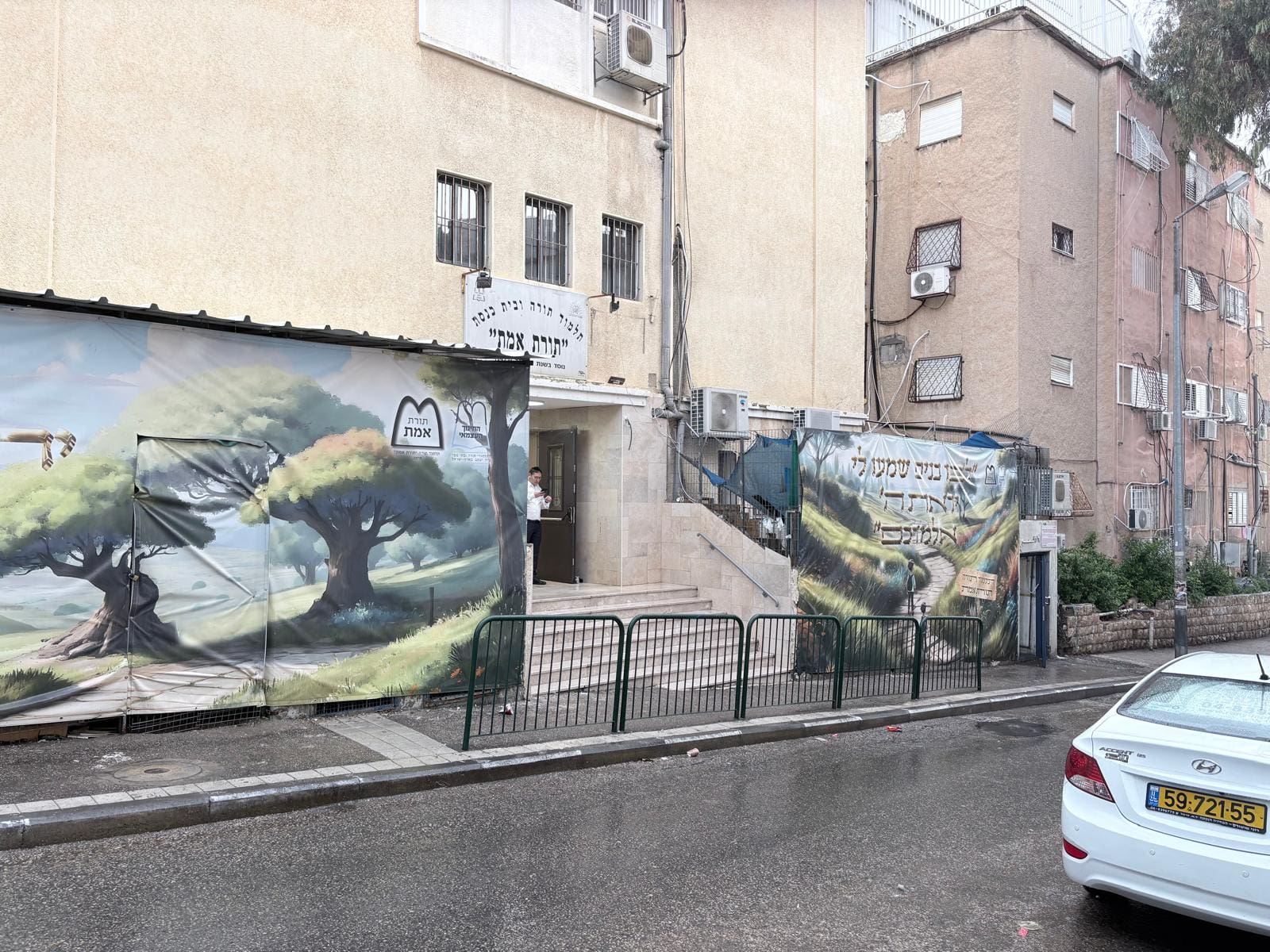
(haipo) This morning, Sunday 05/04/2026, the evacuation of an interceptor fragment that fell in the neighborhood about ten days ago began in Hadar. The process, which was postponed twice, required residents living in the vicinity of the impact area to evacuate their homes for long hours and wait in a nearby Torah synagogue until the operation was completed. Alongside the operational preparations, this day once again revealed the complex reality of Hadar residents: a lack of protected spaces, old buildings, a sense of social isolation and ongoing uncertainty since the beginning of Operation Roar of the Hari.
The delays, the announcements, and the confusion: This is how the evacuation went
About ten days ago, an interceptor fell in the heart of the Hadar neighborhood. The municipality and the Home Front Command informed residents last Wednesday that they would need to be evacuated for several hours to allow the safe removal of the weapons. Residents were asked to arrive at 7:00 AM at a nearby Talmud Torah school and wait there until the operation was over.
At 7:30 that day, it was announced that the process had been postponed. The postponement was repeated once again, and the residents were left without clear information about the evacuation date. It was only at the end of last week that representatives of the municipality called to inform them that the evacuation would take place this morning.
A young municipal employee who arrived at the scene explained that some residents chose to go to relatives, others were not home at all during the weekend, and some arrived at the Torah Talmud in the early morning hours.
Ruth Mahadar: “I arrived at seven in the morning — and there was nothing here”
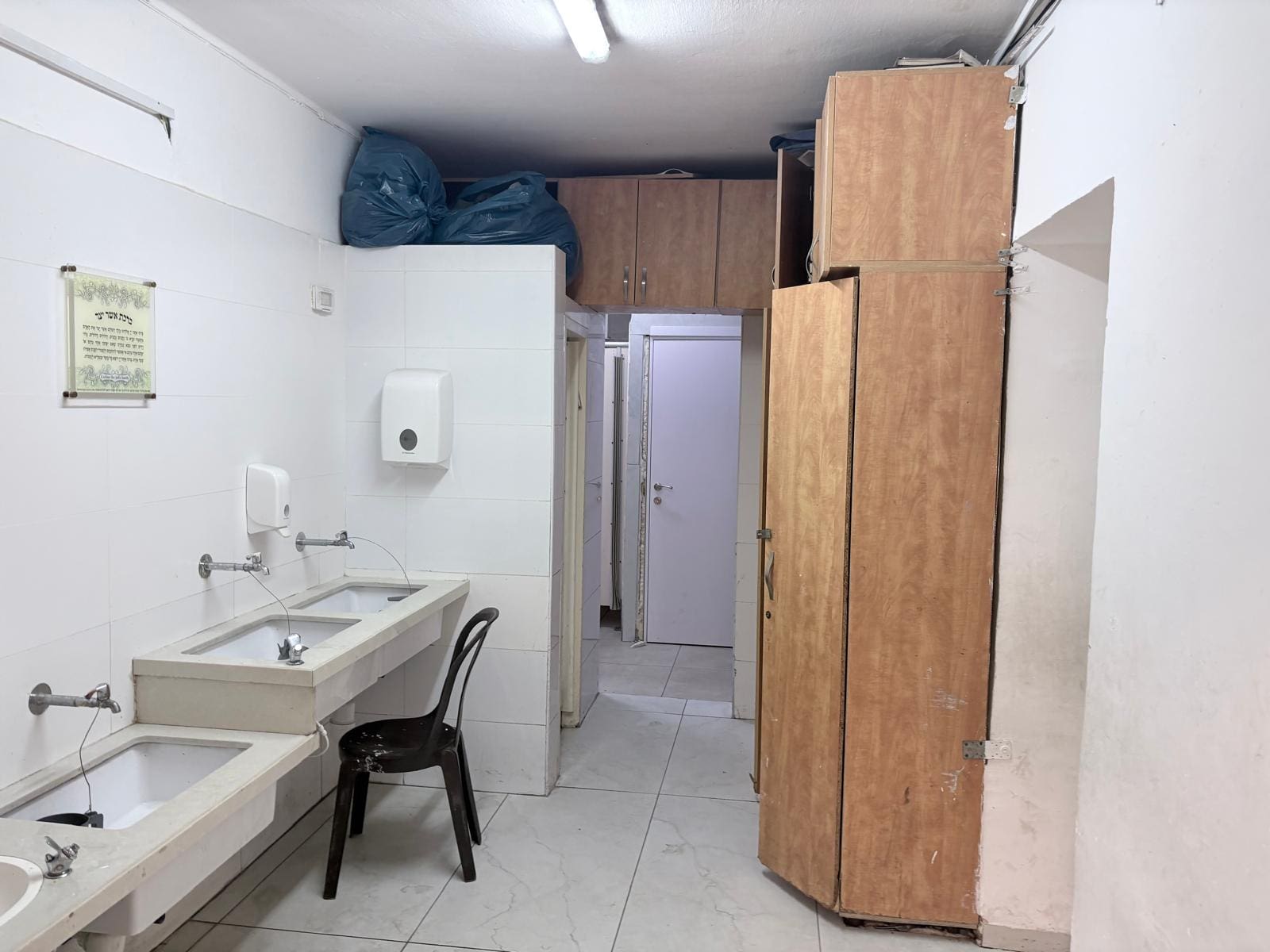
Ruth, a resident of the neighborhood who immigrated to Israel from France 40 years ago, arrived at Talmud Torah at exactly 7:00 a.m., as requested. She arrived with her dog, because she could not leave her alone at home.
“I got here and there was nothing here,” she says. “No hot water, no coffee, not even toilet paper in the bathroom. Only after a while did someone come, put down toilet paper and leave. No one spoke to us or explained what was happening.” Ruth lives in a rented apartment, so her name did not appear on the city’s lists at all. “They only knew the name of the owner of the apartment. I was not even registered.”
Living in Hadar: Among Haredim, Dogs, and a Sense of Alienation
When I ask Ruth about life in Hadar, she tells of a difficult social reality. She lives in a building where all the neighbors are Haredi, and she feels they treat her with disdain because of her dog. “They don’t talk to me,” she says. “The kids curse at me when I pass by. I understand that they don’t like dogs, and neither do women. So I accept this attitude.”
Ruth says her son, who lives in France, was planning to come visit her in August. “I’m really looking forward to seeing him, but I’m afraid the situation in Israel won’t calm down. I don’t have a shelter in a building, only an old public shelter on the street. I hope it will protect me if I fall, but I have no idea if it’s even in working order.”
Background on the protection situation in Hadar: An old neighborhood without basic protection
Hadar is one of the oldest neighborhoods in Haifa, and most of its buildings were built decades ago, long before the protection regulations requiring the construction of shelters. Many of the buildings include old, sometimes neglected, shelters that do not meet standards. Some of the shelters have been converted into warehouses or community spaces, and some are simply inaccessible.
Over the years, plans have been proposed to strengthen buildings and add fire stations, but due to engineering complexity, high costs, and buildings shared with many tenants, very few of them have been implemented. The result is that today, in the midst of Operation Roar of the Hari, thousands of residents in Hadar find themselves without standard protection, forced to run to public shelters or settle for an indoor room.
This reality turns every alarm into a dangerous event, and every fall, like that of the interceptor's fragment, into a real threat to the lives of the residents.
Operation Roar of the Harrier: The security background surrounding Haifa
Operation Roar of the Eagle, which began in the wake of the escalation with Iran and other organizations in the northern arena, led to a wave of large-scale attacks on various areas of Israel, including Haifa. The city, previously considered relatively safe, found itself under constant threat from missiles, interceptions, and interceptor fragments.
Hadar, due to its overcrowding, old buildings and lack of protection, has become one of the most vulnerable neighborhoods in the city. Many residents report anxiety, difficulty sleeping at night and a sense of helplessness. This morning's evacuation was just one in a series of events that illustrate how different this war is from its predecessors and how little protection residents have on the ground.
The interceptor broke on the street: “I was afraid that children would mess with it”
Ruth says that the Home Front Command covered up the wreckage of the interceptor, but the fact that it remained on the street for ten days worried her greatly. “I was afraid that children would touch it. It was right in the middle of the street. We didn’t get an explanation why the evacuation was postponed twice. I’m just glad it’s happening today and that there wasn’t a disaster.”
Municipality preparations: “We did our best”
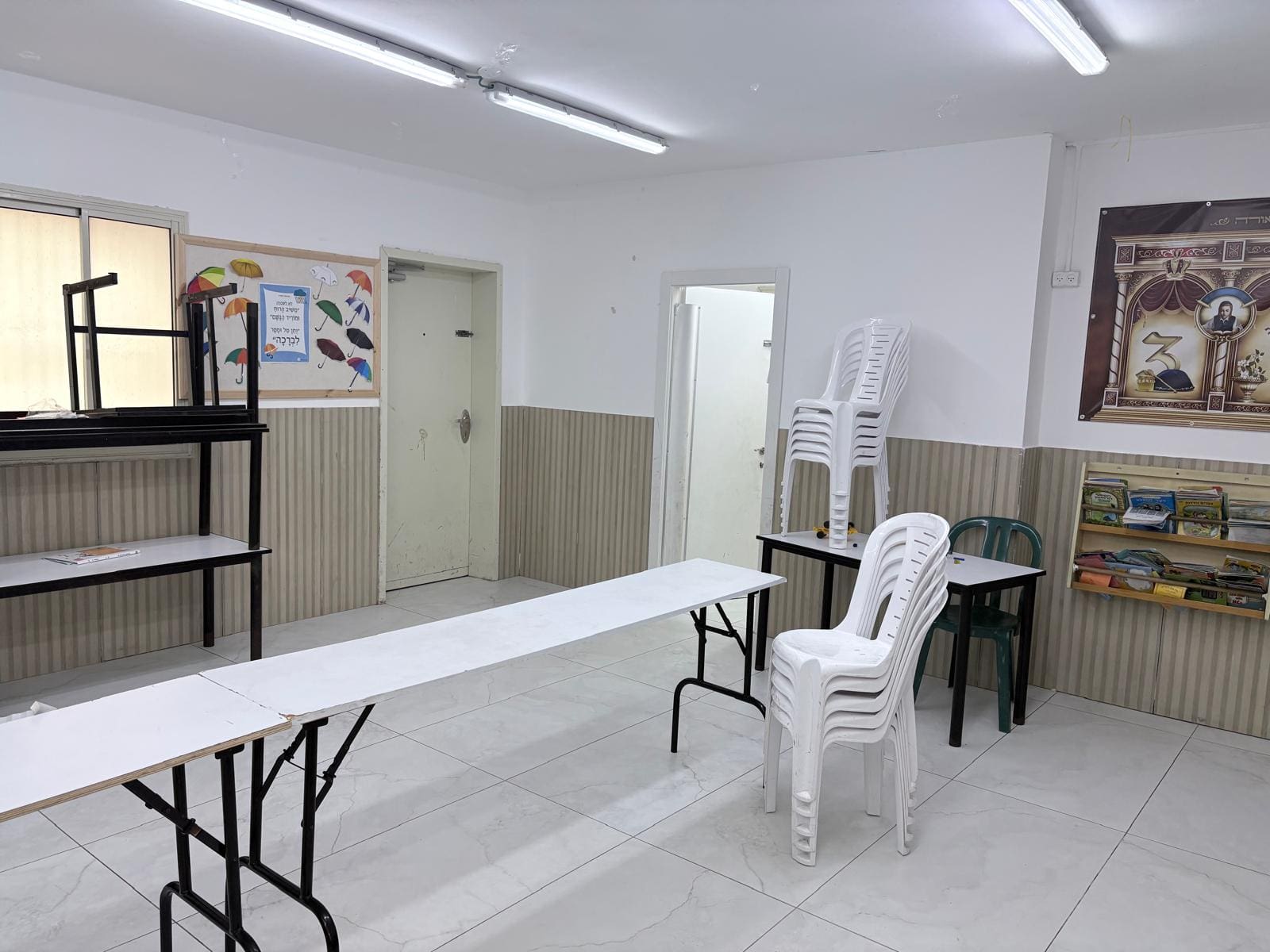
At 8:30 a.m., a city employee from the Education Department arrived at Talmud HaTorah. He brought milk, coffee, and snacks for the children, and explained that because of Passover, it was necessary to find products with appropriate kosher for the Haredim. He noted that over the weekend, city employees contacted each of the residents by phone to make sure they were prepared to evacuate. “We did our best to provide a quick response,” he said.
A Russian couple, rain and one burt
Inside the Talmud Torah, an elderly Russian-speaking couple sat. When it started to rain, the woman came out and said to me in half Hebrew, half Russian: “Rain is good.” When I told her not when it falls on her head, she laughed and pointed to her beret, as if to say: “It will protect me.”
An ultra-Orthodox family with three children: “When can we return?”
Later, a young Haredi couple arrived with three small children. They were looking for services, something to give the children, and most importantly, an answer to the question, when can they return home? The rain that began to fall turned Talmud HaTorah into a double shelter: both from the weapons and from the weather.
Mission accomplished: residents return home
After a short time, it became clear that the mission had been successfully completed. The residents were allowed to return to their homes. Ruth, despite her relief, was left disappointed by the long morning. “I arrived at seven in the morning and there was no one here,” she says. “No hot water, no coffee, no municipal representative. It shouldn’t be like this.” The municipal representative replied that an effort was being made to provide a quick response.
Hadar in War: Between Lack of Protection and Lack of Solidarity
When the activity to clear the interception fragments is over, the residents of Hadar will be able to breathe a sigh of relief and return to their homes, but the complex reality remains. Many of the houses in the neighborhood are old, without fire stations, without standard shelters and sometimes without any protection. Many residents live with a feeling of ongoing insecurity.
Alongside this, Ruth points out another problem: “There is not enough solidarity here. The Torah says, ‘Love your neighbor as yourself,’ but that doesn’t always happen. Every man for himself.”
This morning in Hadar revealed not only the operational challenge of clearing weapons, but also the social, infrastructural, and emotional challenges of an old neighborhood in the heart of Haifa, a neighborhood that is trying to hold on amidst alarms, old buildings, diverse communities, and sometimes great loneliness.
Hadar is located on a busy transportation route that connects Carmel to the downtown area and the central station in the Bay. The biggest problem is the emptying of the commercial area due to the movement of shoppers to the malls built on the outskirts of the city. This also leads to the feeling of neglect and the lack of a supportive sense of community. It should be noted that a hospital and additional services in Western Carmel, "Mercaz Carmel," still preserve the "spirit of the city center."
Mayor for 4 terms, nearly 20 years since the Second Lebanon War, only built a fortified municipal building, did not build a single Siberian shelter in Haifa. They did not care to demand shelters in new buildings. They did not care about evacuee absorption centers.
The Haifa Municipality, with its pants down, is revealed in all its chaos, confusion, and lack of preparedness.
Nobody cares about you because you are poor. In Carmel the reality is completely different and everyone can testify. It is called discrimination.
True, although your words may sound elitist, the truth must be told: we are at the mercy of the universe, residents of Hadar and nothing more.
We need to acknowledge the not-so-considerate reality,
What a lie!
I live in Carmel without a shelter and the nearest shelter is 4 bus stops away and I am not mobile with 2 small children.
The municipality offered me to move to a shelter! If there is no discrimination, I will not discriminate against the residents, neither those in Carmel nor those in Hadar, to the same extent.
Hadar is a pretentious name.
It is time for the municipality to take the initiative and promote construction evacuation. Economic benefits are needed to encourage it and to make it economically feasible.