


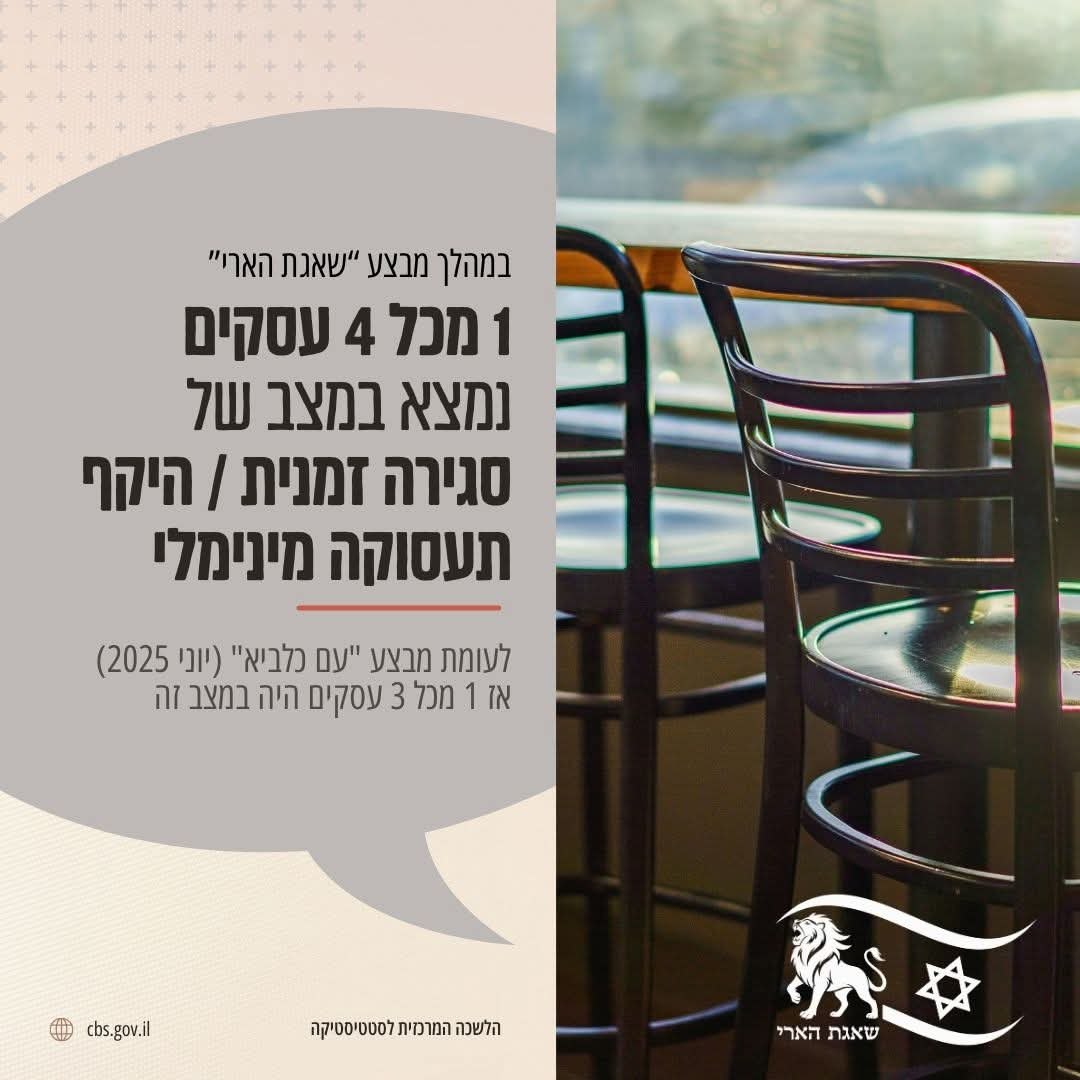
(haipo) – While Operation “Roar of the Lion” is shaking the Israeli economy, the Haifa district presents a complex picture: on the one hand, a high percentage of businesses continue to operate almost as usual; on the other hand, a significant portion of managers still expect a loss in revenue. According to the CBS flash survey data, collected between March 10–12, 2026, Haifa stands out favorably in terms of the volume of active employment, but not necessarily in terms of the extent of the economic damage.
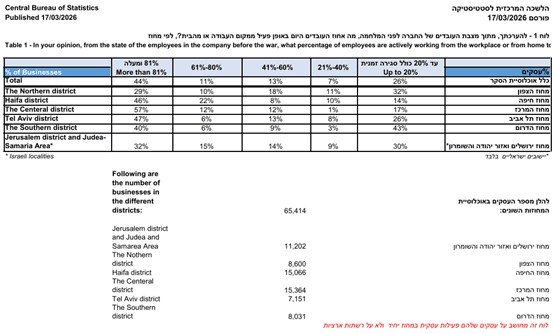
Employment: Haifa leads in high rate of regular activity
The Haifa District presents one of the most impressive figures in the survey:
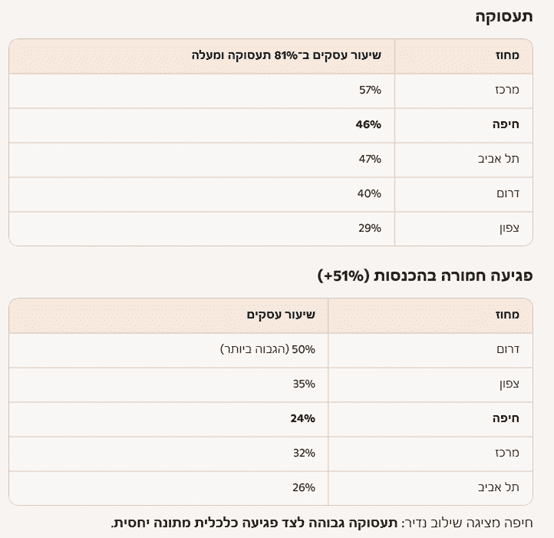
46% of businesses in the district report an employment rate of 81% or higher, higher than the national average of 44%.
The Central Bureau of Statistics notes that: "46% of businesses in the Haifa District have a high level of employment" — a figure that places the district in second place in the country, after the Central District (57%).
Fewer businesses temporarily closed
Only 14% of businesses in Haifa are understaffed or temporarily closed, compared to 26% nationwide.
This is one of the lowest figures in Israel, and indicates the relative resilience of businesses in the region.
Revenues: A less optimistic picture
Despite the encouraging employment data, the CBS survey indicates that the economic damage is still being felt:
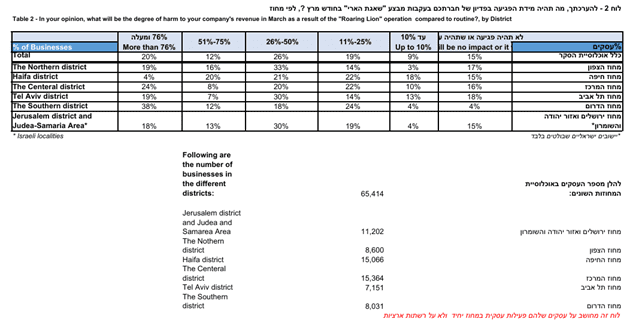
24% of businesses in Haifa expect a severe hit of more than 51% in revenue, a figure similar to the national average (32% severe hit nationwide).
At the same time, only 15% of businesses in the district estimate that there will be no damage at all, or only a slight damage, just like the national average.
The Central Bureau of Statistics notes: "In Haifa, 20% of businesses expect a 51%-75% impact," a relatively high rate compared to other districts.
What explains the gap between employment and income?
The data indicates an interesting phenomenon: businesses in Haifa manage to continue employing workers, but demand, orders, and commercial activity are being harmed.
Possible reasons include:
- High dependence on trade and services, industries that are affected even without a complete closure.
- Damage to national demand, which also affects businesses that continue to operate.
- Supply and transportation difficulties, which according to the survey affect 38% of businesses in the industrial sector, a major sector in Haifa.
Comparison with other districts: Haifa stands out favorably
Summary: Haifa is proving resilient — but challenges still lie ahead
The data paints a picture of a district that manages to maintain impressive employment continuity, even during a period of security uncertainty. However, the damage to income is still significant, and economic recovery depends on the ability of businesses to restore demand to pre-operational levels.
Haifa, it seems, is entering this crisis stronger than most districts, but will need a targeted support policy to emerge from it quickly.