


(haipo) – The future of Haifa's green wadis: The issue of environmental development in Haifa has once again risen to the city agenda, amid harsh criticism from activists and residents about the gap between declarations and actual policy. An initiative submitted as a motion for an order by Zeev Sonenzon and Attorney David Etzioni to the City Council seeks to place the state of the city's wadis and streams at the center of the discussion, and to reexamine the planning policy in the new neighborhoods, while demanding transparency, environmental responsibility, and public involvement.
Watch the discussion on Zeev Sonnensohn's proposal
An environmental initiative that was approved but stalled later on
Last year, a proposal was put forward in the Haifa City Council for an agenda that concerned the high-quality environmental development of the city's new neighborhoods. The proposal, which was approved by the majority of the council members, was intended to deal in principle and comprehensively with the integration of natural values, streams, and wadis in the urban planning processes. However, despite the initial approval, in practice it was decided to transfer the discussion to the local Planning and Building Committee, a move that in practice led to repeated postponements and a lack of real progress on the issue. According to the initiators of the proposal, from the moment the discussion was transferred to the committee, excuses and delays began that prevented a principled, transparent, and accessible discussion for the general public.
Criticism of the lack of a true commitment to green development
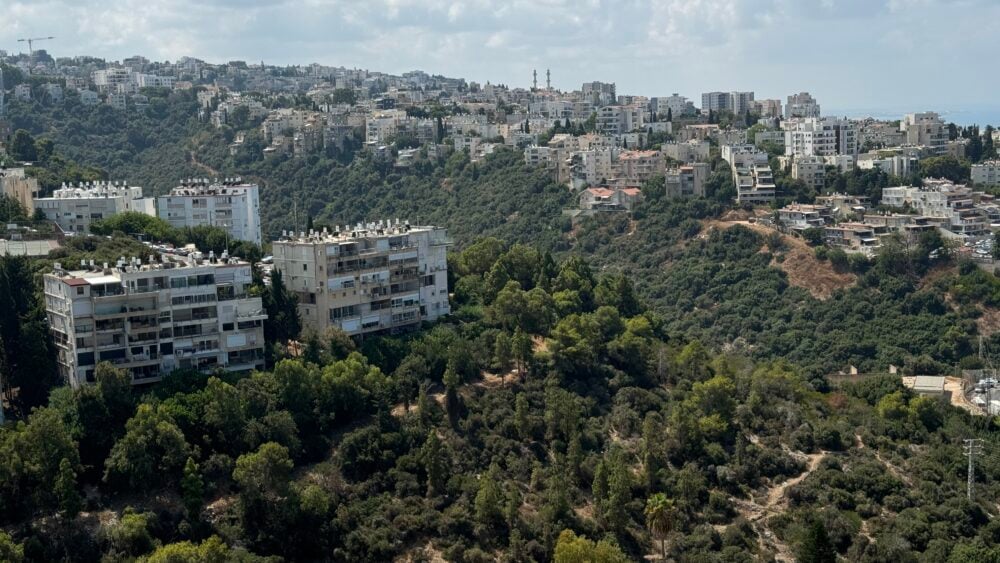
The main criticism directed at the city administration concerns the gap between declarations about the importance of green development and the reality on the ground. Sonenzon points to extensive and, in his opinion, wild construction, especially in the Carmel Ridge areas, while damaging unique natural assets. He claims that, despite the existence of master plans and declarations of environmental commitment, in practice the development of the wadis and streams is at the bottom of the municipal priority list. The issue is hardly ever discussed in the planning committees, and the result is the development of new neighborhoods while ignoring the natural space surrounding them and the environmental and community potential inherent in it.
Examples from the field: new neighborhoods and neglected streams
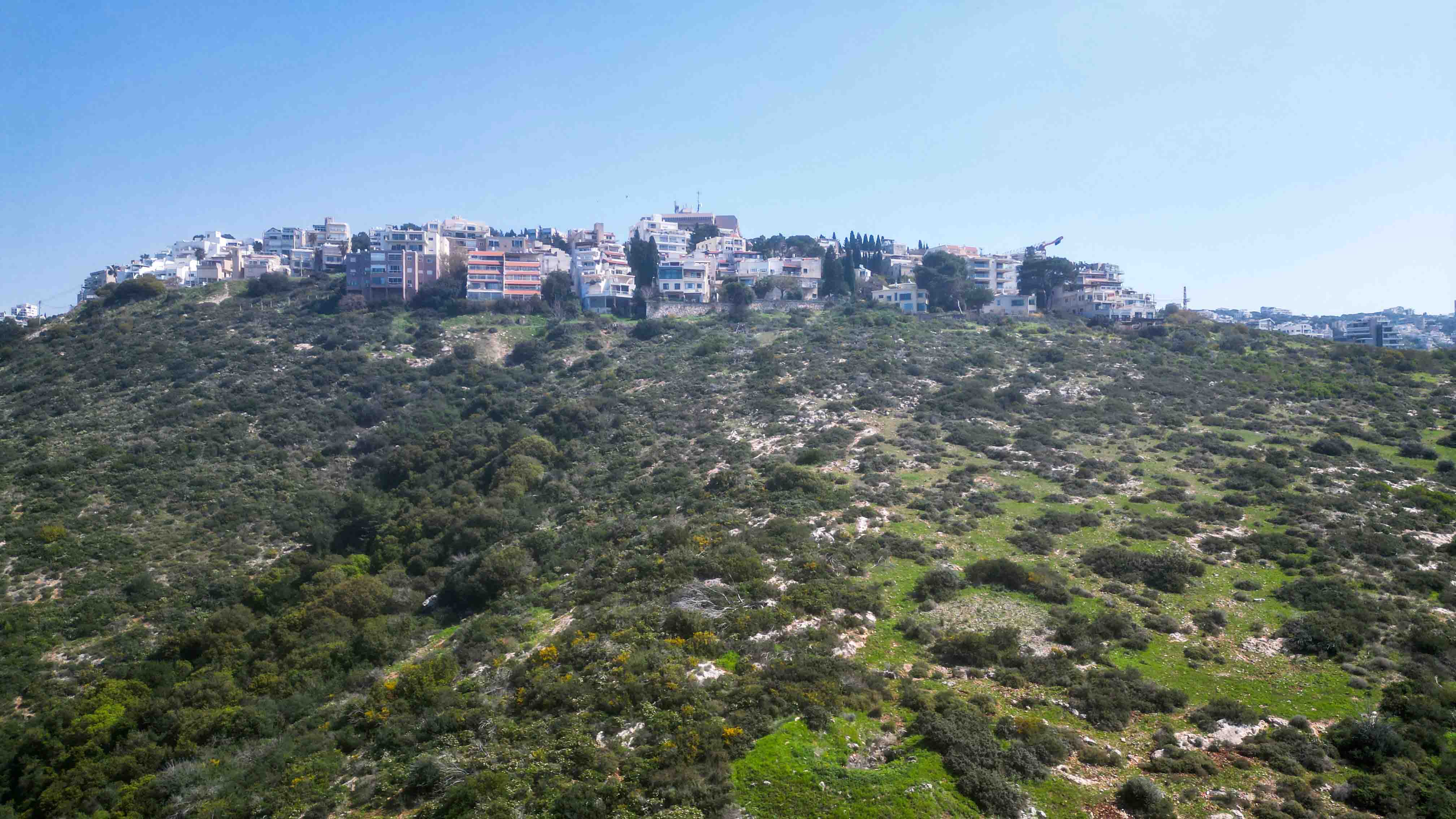
The review presents concrete examples of neighborhoods that are currently in advanced stages of development. Thus, it is claimed that the Lincoln Harofeh neighborhood and the Tel Aharon slopes are being developed while completely ignoring the nearby wadis and the possibility of integrating them as an integral part of the public space. In this area, there was even a competitive off-road bike track in the past, which was abandoned and is not addressed in the current plans. Another example is the Neot Navon neighborhood, where the Ovadia Stream was buried using a drainage pipe, a move that critics perceived as an outdated and offensive solution that does not meet the standards currently accepted in advanced European cities.
Demand for a principled and transparent discussion in the City Council
Given the situation, the initiators of the proposal are once again appealing to the members of the City Council to return the discussion to the Council itself. They claim that this is a principled and sensitive issue, requiring a public, transparent and publicly accessible discussion, and not a limited discussion in professional committees only.
They emphasize that the wadis and streams are among Haifa's most important and sensitive natural assets, and that their neglect over the years requires a change in policy and not more postponements. The demand is to hold a dedicated discussion that will deal with the integration of streams in the development of new neighborhoods and the examination of sustainable planning alternatives.

Concrete proposals for changing planning policy
As part of the appeal to the council, a number of practical demands and proposals were presented. First, a discussion on changing municipal policy regarding the treatment of streams as part of the development of new neighborhoods, while presenting planning alternatives by the city engineer and professionals.
Second, holding a dedicated discussion on the Azov and adjacent streams for future development in the Lincoln Harofeh and Tel Aharon complexes, with the aim of making the area a model for developing a new neighborhood that integrates with a natural wadi. Third, making a decision in principle that no construction will be allowed in the streams in the future, and any stream that passes through the new neighborhood will be kept above ground and integrated into quality development.
The Mayor's Response and the Gap in Perceptions
In the background of the public debate, the response of the mayor, Yona Yahav, was also heard, who expressed a position that things are being done in practice and that there is broad agreement among professional bodies. According to him, if there are areas in which there is a feeling of lack of implementation, they should be pointed out in a concrete manner.
However, Sonenzon claims that this response illustrates the gap between the city administration's perception and the field experience of residents and activists, who believe that without principled decisions and clear policies, environmental development will remain mere slogans.
A city that is floundering, a city without a future. While all the cities in the country have grown and prospered greatly, Haifa is only fading away!
The only thing that will ever restore it is the wadis and the Carmel and the evergreens (provided that the ZEN and the polluting factories leave the city)!
It is imperative to preserve, preserve and nurture them and we started doing this a year ago…
For example, it is sad to see how the descent to Nahal Vardiya (from Yotam Street and Kiryat Sefer) for travelers and residents has been blocked by partisan private construction.
It's sad to see how contractors pollute the cracks of the wadis with construction waste.
It is sad to see how residents are stepping into the wadis, taking over and appropriating natural areas for themselves!
If the municipality does not take immediate action, all of this city's treasure will go down the drain!
Haifa has no future without its natural green spaces. Given construction on them, severe consequences such as pushing wildlife into the city in unprecedented quantities, flooding, air pollution as a result of the struggle that will arise due to quarrying – all of these will be a fait accompli. It is also possible to prevent the grandiose and excessive construction in the city's green spaces, for the benefit of the residents and not for the benefit of various entrepreneurs who are motivated by economic interest rather than the good of the city.
In complete contradiction to the court rulings – the Haifa Municipality and the local committee are working to prevent construction from taking place in the neighborhoods of Unification and Division – 'Golda Slope'; 'Ramat Gural' and 'Tel Aharon Lincoln' and others... - The result - compensation for landowners in billions of NIS at the expense of those responsible for the matter - only in a lawless country where corrupt officials run the city, together with powerless elected officials - do they accept the lawlessness that has prevented the implementation of residential construction and the regulation of important and life-saving transportation projects for decades - this lawlessness will end soon - and it is suggested that an article that does not present all sides of the issue will no longer be published online, this is not right and inappropriate - especially when the interests of various parties receive sympathetic media coverage instead of prioritizing the public interest and presenting a balanced, appropriate discussion that produces solutions - instead of freezing construction, blocking transportation, risking human lives and paying compensation in billions of NIS - well over 10 billion NIS. Since the city's leadership is acting with egregious irresponsibility, the immediate appointment of a committee is required To reduce damage.
The article has no meaning whatsoever when it does not present all sides to the discussion. When actions are taken that severely harm the property and rights of the owners of the plots for residential construction in the Carmel Ridge, those areas that were designated for re-planning – for unification and division – and continue to prevent them from realizing the construction, then there is a heavy price imposed on the plot owners when the Haifa Municipality does not organize for appropriate financial compensation – we are talking about damages of billions of shekels – the meaning is simple, the Haifa Municipality and the city's finances are deeply in financial and moral bankruptcy; moreover, the realization of the construction in the aforementioned complexes creates important transportation solutions – and the city of Haifa is heading for transportation chaos that is expected to cripple the entire city – there is no escape from a committee being called and those responsible for the situation removed from any position of influence and from any public office, and this must be addressed and acted upon, preferably one hour in advance.
Shtack
Cheers!
They say, and they are right – Haifa declares that it is green and neglects the wadis to become neglected drainage channels.
When possible, we also build in them and on them.
What about implementing the master plan for the Haifa Valleys?
It was funded with a million NIS and approved by the city council only to be forgotten in a drawer.
It is possible and necessary to make accessible the interface areas that exist in almost every neighborhood on the Carmel.
Look at the entrances of Nahal Ahuza, Givat Ha'izim, Nahal Ovadia, Nahal Remez, Nahal Even and more.
Instead of being a green facade, it's a backyard, and that's a shame. It's one of the cornerstones of Haifa's uniqueness and quality.