


(haipo) During the month of December, Haifa turned the holiday season into a large-scale environmental-educational event. The Haifa Municipality held dozens of educational activities about the importance of the school year in schools of all religions and sectors, in parallel with extensive community activities throughout the city, as part of a combined celebration of the Christian, Muslim, and Jewish December holidays, under a central message of environmental protection and shared responsibility.
Dozens of outreach activities in schools, an art exhibition made from waste, and a recycling event for families: Haifa Municipality celebrated the holiday with an emphasis on environmental responsibility and electronic waste recycling.
Art from Waste: A Meeting of Religions Through Recycling
The theme of this year's holiday was the importance of recycling waste, and it was presented, among other things, through an inspiring exhibition of sculptures created from waste materials. The exhibition featured artists from three religions, who presented works that demonstrate how waste can be transformed into art and a dialogue of values that connects cultures and communities.
A mobile recycling plant in the heart of the happening
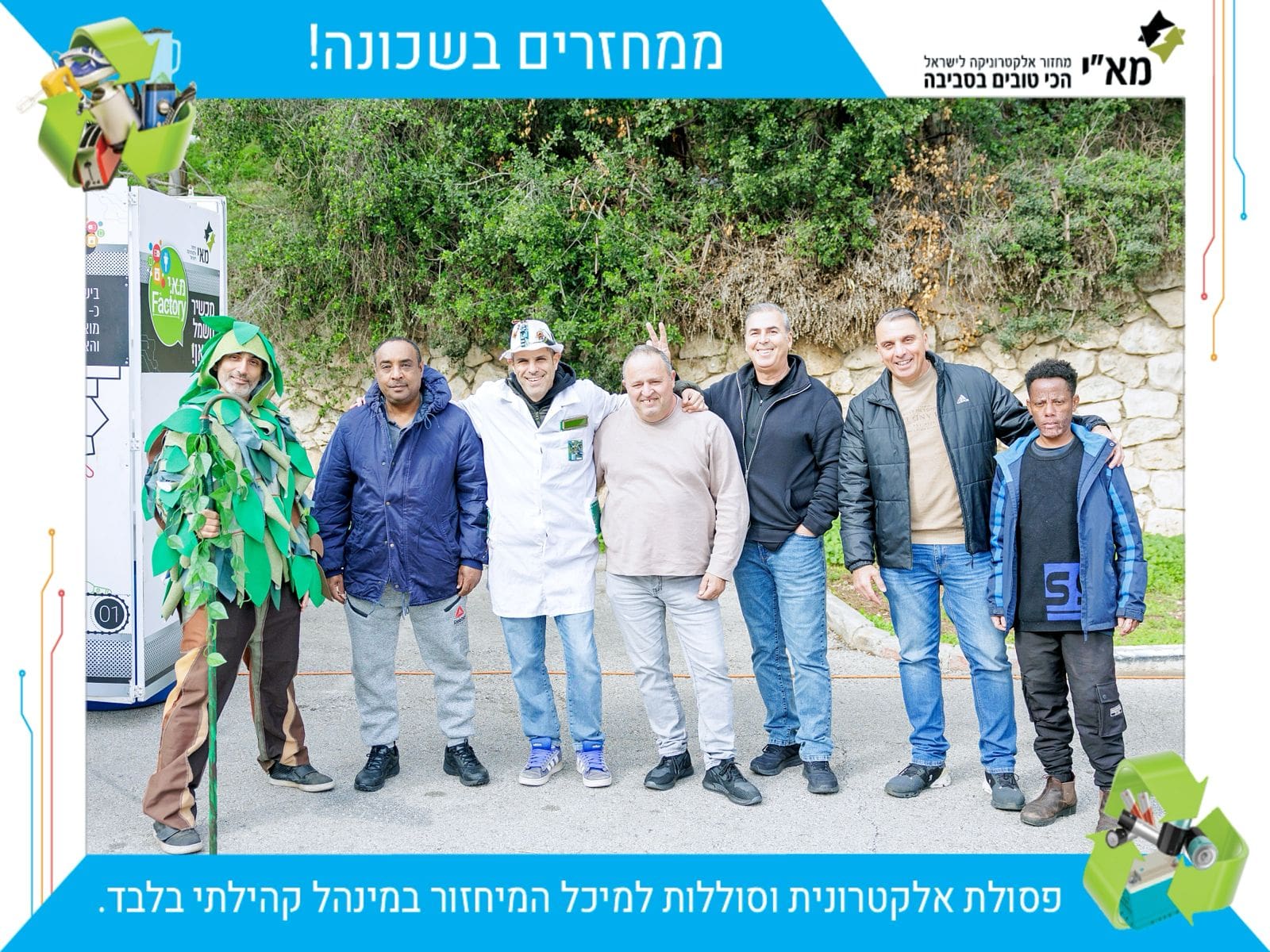
As part of the holiday activities for the environment, the world's most advanced mobile factory for recycling electronic waste - "MAI Factory" - arrived at the Romama Sports Hall. The event included an educational and fun pop-up happening for the whole family, with workshops for children, sustainability booths, ODT recycling games, wooden games, inflatable installations, playing on recycled instruments, and distributing donuts.
Residents were invited to bring electronic waste, electrical equipment, and batteries from home, and recycle them at the mobile factory, while learning experientially about the recycling process and its importance.
An educational experience – in action
Through light, sound, hearing, and touch, the recycling experience was demonstrated to the participants in a tangible and direct way. The children and adults touched, saw, and experienced what the e-waste recycling process actually looks like, and took an active part in the collection and recycling itself, alongside a value and social transformation.
In addition, the families participated in an experiential and challenging ODT activity, which included play stations in nature and a demonstration of types of electronic waste, recycling methods, and the broader meaning of protecting the environment.
Collaboration for environmental change
The Haifa Municipality and the Israel Electronic Waste Recycling Corporation are working together to promote social-environmental change regarding one of the most polluting types of waste. As part of the collaboration, new municipal recycling centers for electronic waste and batteries have been installed throughout the city.
The numbers that illustrate the problem
Every year, Israeli citizens produce approximately 160 million kilograms of electronic waste. Although this represents only about 3% of all waste, this waste constitutes about 70% of the toxic content, and includes hazardous substances such as lead and mercury, which can damage the nervous and respiratory systems. Each resident of Israel produces an average of about 17 kilograms of electronic waste per year, but most of the waste still does not reach recycling and is burned, polluting the soil, water sources, and air.
“Make menstruation a daily routine”
Dotan Kabak, CEO of the Israel Electronic Waste Recycling Corporation"Establishing new recycling infrastructure in Haifa, alongside experiential information activities and integrating the 'Mai Factory' visitors' center, allows residents and children to actively participate in the recycling process and maintain the quality of life and the environment. We call on all Haifa residents to take part and make recycling an integral part of everyday life."
Did the article interest you?