


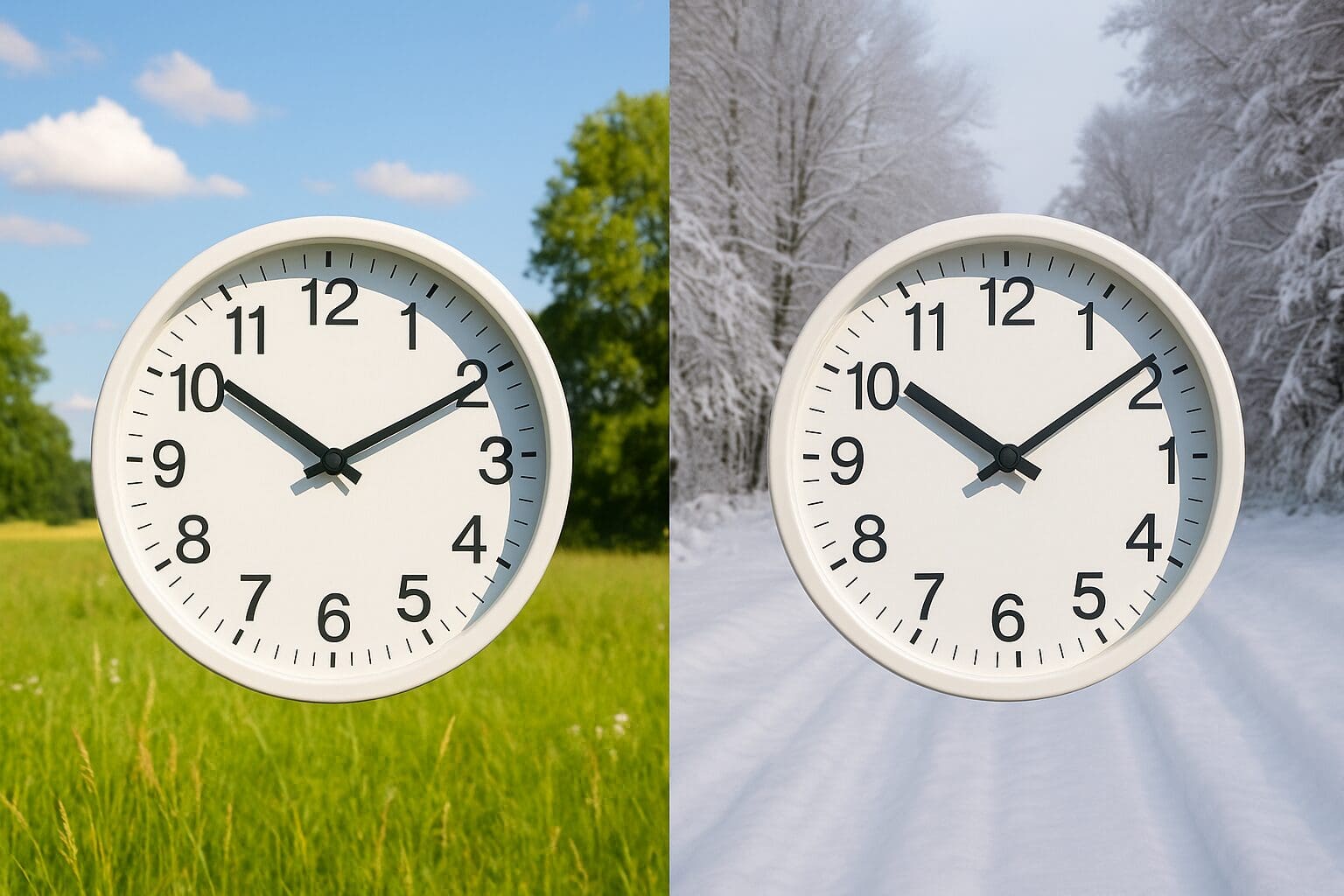
(haipo) The end of daylight saving time will occur during the night between Saturday (10/25/25) and Sunday (10/26/25), at 02:00. The hands of the clock Time will be moved back one hour and winter time will come into effect in Israel. Many will be happy about the extra hour of sleep, but others complain about the dark evenings that will come too early. The clock change has long been not only a technical matter, but also a social, economic and health issue, which continues to provoke debate around the world. Winter time will end on the night between Thursday (26.3.2026) and Friday (27.3.2026).
The origin of the "ritual" of moving the hands
Daylight saving time was first adopted in Germany and Britain during World War I, out of a need to conserve national resources. The rationale behind moving the clocks was first proposed in 1784 by American statesman Benjamin Franklin, who was serving as ambassador to France at the time. Franklin suggested that the French rise early with sunrise to save candle wax.
Centuries later, the same concept of efficient use of daylight lies behind the transition to summer or winter time: to adjust the public's waking hours to the sunrise times, thus saving energy and reducing electricity consumption.

The benefits of winter time
- Road safety: The early sunset allows for an earlier sunrise, which reduces accidents in the morning, especially among students and pedestrians.
- More natural sleep: The winter clock correlates better with the human natural biological cycle, which synchronizes with sunlight.
- Certain energy savings: Earlier daylight reduces the need for morning lighting in homes and institutions.
Disadvantages and criticism
- Darker evenings: Many feel that the transition causes fatigue, a drop in mood, and a disruption to their active evening lifestyle.
- Negative economic impact: Businesses in the leisure, restaurant, and shopping sectors sometimes report a drop in revenue with early darkness.
- "Social jet lag": Our biological clocks don't update immediately, and the transition disrupts the body's internal rhythm. Studies have found that switching between clocks may increase the risk of fatigue, sleep disorders, and even heart problems.
What do the studies say?
A large study from 2018 estimated that the energy savings from switching to daylight saving time amounted to only about 0.34% of annual electricity consumption, a tiny saving, similar to the effect of using energy-saving light bulbs. Moreover, in hot countries or countries close to the equator, the time change may actually increase energy consumption, because people turn on more air conditioners during the long afternoon daylight hours.
Health, sunshine and vitamin D
The positive side of daylight saving time is that it encourages physical activity and exposure to sunlight, which helps produce vitamin D. However, the transition itself, twice a year, disrupts the body's biological clock. The mismatch between the external light cycle and the internal clock causes a phenomenon known as "social jet lag," which is accompanied by fatigue, decreased functioning, and even affects mood and life expectancy.
The controversy surrounding winter time in Israel
In Israel, the debate over whether to keep daylight saving time or switch to winter time recurs every year and is on the public agenda. On the one hand, some argue that daylight saving time should be maintained throughout the year, out of a desire to take advantage of the longer daylight hours, encourage economic and cultural activity in the evening, and reduce the number of traffic accidents that occur after dark. On the other hand, supporters of winter time argue that on dark winter mornings, especially in northern regions and among children going to school, earlier daylight is needed for safety and comfort. In addition, representatives from religious sectors argue that winter time makes it difficult to perform the morning prayer on time, before the start of the work or school day.
Over the years, many bills have been submitted to change the duration of daylight saving time in Israel, and sometimes the transition dates have even been changed according to political, social, and religious considerations. Although the controversy seems small, it reflects the constant tension between the needs of modern life and the desire to maintain a natural rhythm and a comfortable daily routine for the entire population.
And what is happening in the world?
In many countries, there is a growing call to abolish the change between clocks. The European Society for Biological Cycles and the American Society for Sleep Medicine have recommended in recent years the introduction of a uniform clock throughout the year.
The European Union is even promoting legislation that would allow each country to choose whether to remain permanently on summer or winter time. Russia, for example, abolished winter time in 2011 in favor of "eternal summer," but three years later, in 2014, permanent winter time was reinstated following complaints of fatigue and numerous morning accidents.
In conclusion
The transition to winter time was born from the idea of saving energy and efficiently utilizing daylight, but in an era of economical lighting, air conditioning, and around-the-clock activity, the question of whether it is still necessary remains open.
Whether you enjoy the extra hour in bed or miss the light of the long evenings, it's clear that time continues to spark a never-ending debate.
The cover photo of the article shows two clocks with the same time. The clock on the right, photographed against a snowy winter background, must show winter time - one hour back.
It means that the clock should be moved,
Not the display….
Pshhhh… very interesting, thank you.