


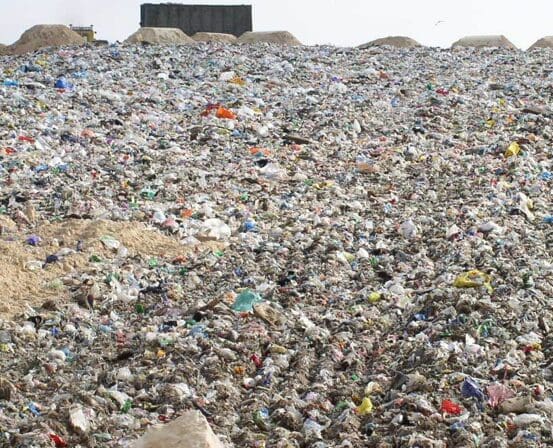
(Hai Fa – Haifa and the surrounding area news corporation) – Almost 188 thousand tons of household and commercial waste were collected in Haifa in 2025, but only about 26% of it was recycled and recovered, while most of the waste was sent for landfill or pre-treatment. This is according to data from the Central Bureau of Statistics (CBSS), which includes tracking the amounts of waste collected in local authorities over the years. The data indicate an increase in the amount of waste collected in the city over the past decade, alongside significant fluctuations in the rate of waste recycled. Even in 2025, despite some improvement compared to recent years, a significant portion of the waste in Haifa is still not reused.
Almost 188 thousand tons of waste per year
According to CBS data, in 2025, 187,870.7 tons of household and commercial waste were collected in Haifa. This is an increase compared to 2024, when about 185,865 tons were collected in the city, and an increase of about 16% compared to 2014, when the amount of waste collected was about 161,829 tons.
The data illustrates the volume of waste generated by the city and the ongoing challenge in managing and treating it. The increase in the total amount of waste does not only mean increasing the volume of collection and disposal, but also requires addressing the question of what happens to the waste after it is collected from homes, businesses, and public spaces.
Only about a quarter of waste is recycled and recovered
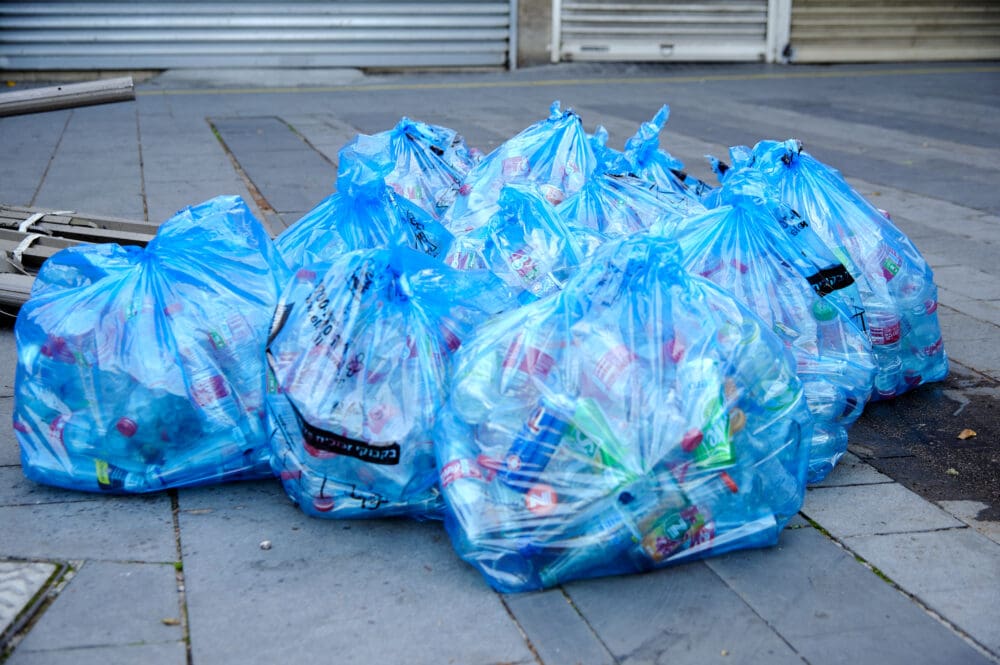
Of all the waste collected in Haifa in 2025, approximately 49,381 tons were recycled and recovered – approximately 26.3% of all waste. On the other hand, approximately 138,490 tons were sent to landfill or pre-treatment, which constitutes approximately 73.7% of the total amount.
This is an improvement over 2024, when the rate of waste recycled and recovered was approximately 23.4%. The amount of waste recycled also increased, from approximately 43,572 tons in 2024 to approximately 49,381 tons in 2025.
However, even after the improvement, almost three-quarters of the city’s collected waste is still not recycled or recovered. This gap illustrates the challenge of increasing recycling rates and reducing reliance on landfill.
How much waste does a Haifa resident produce per day?
Another figure that emerges from the table concerns the average amount of waste per capita. In 2025, the amount of waste collected in Haifa was approximately 1.74 kg per resident per day. This is an increase compared to 1.71 kg per capita per day in 2024, and also compared to approximately 1.61 kg in 2014.
Looking over a decade, this represents an increase of approximately 8% in the average daily amount of waste per capita. This figure illustrates that alongside the increase in the total amount of waste, the amount of waste attributed to each resident is also on the rise.

Haifa vs. big cities: more recycling, but no less waste per capita
A sample comparison between Haifa and other large cities in Israel, according to CBS data for 2025, reveals significant differences in both the amount of waste per capita and the rate of waste transferred for recycling and recovery.
In Haifa, approximately 1.74 kg of waste per person per day was collected, and the recycling and recovery rate was 26.3%. For comparison, in Tel Aviv-Yafo, approximately 2.32 kg per person per day was collected, but the recycling and recovery rate was approximately 19%. In Jerusalem, approximately 1.46 kg per person per day was collected, and the recycling rate was only approximately 11.2%.
Other cities also recorded lower figures than Haifa: in Rishon LeZion the recycling and return rate was about 19.5%, in Ashdod about 9.4%, in Be'er Sheva about 11.8% and in Petah Tikva about 9.9%.
The data indicates that Haifa has a relatively high recycling and return rate compared to the cities examined, but there is still a large majority of waste that is not transferred to these routes.
Comparison between large cities in Israel – 2025 data
| City | Waste per capita per day | Turnover and return rate |
|---|---|---|
| Tel Aviv Jaffa | 2.32 kg | 19.0 % |
| Beer Sheva | 1.96 kg | 11.8 % |
| Rishon Lezion | 1.83 kg | 19.5 % |
| Haifa | 1.74 kg | 26.3 % |
| Petah Tikva | 1.71 kg | 9.9 % |
| Ashdod | 1.65 kg | 9.4 % |
| Jerusalem | 1.46 kg | 11.2 % |
The comparison emphasizes that the amount of waste produced by a resident is not the only indicator for examining a city's handling of waste. The ability to separate, collect, and transport materials for recycling and recovery is also a key component of the environmental picture. Although Haifa has an advantage in the recycling rate compared to the cities examined, the total amount of waste and the volume of waste that does not reach recycling still pose a significant challenge.
Fluctuations in turnover rates over the years
Examining the data over the years reveals that the rate of waste recycled and recovered in Haifa is not on a continuous upward trend. In 2014, the rate was approximately 26.4%, and in 2019 it reached approximately 26.9%. In 2020, there was a decrease to approximately 18.9%, and in 2021, the rate increased to approximately 27.9%.
However, in 2022, there was a further decline, and the rate fell to about 16.8%. In 2023, the turnover rate also remained low, at about 17.2%. In 2024, there was an improvement to about 23.4%, and in 2025, it rose to about 26.3%.
The data shows that although Haifa has managed to improve its turnover rate in the last two years, it has not yet shown a stable improvement trend throughout the entire period under review.
Not just how much is thrown away, but also how much is consumed: the connection between shopping and the amount of waste
The amount of waste per capita is not only an environmental statistic, but also an indicator of our consumption patterns. In Haifa, in 2025, approximately 1.74 kg of waste per resident was collected daily, which is approximately 52 kg per month and approximately 634 kg per year. A significant portion of the waste is created as a result of purchasing products, using packaging, disposable products, and throwing away unused food.
The connection between consumption and waste takes on special significance in November, which has become a month of shopping and discounts, with sales events such as Chinese Singles' Day, Shopping IL and Black Friday. During this period, the public is exposed to increased encouragement of purchases, including online shopping, which sometimes involves cardboard packaging, plastic and other filler materials. Buying unnecessary products, replacing healthy products and buying food in excess can increase the amount of household waste.
This does not mean that every purchase during the sales period necessarily produces unnecessary waste, but it is an opportunity to reexamine consumption habits: do we really need a product, can we choose a more durable product, can we avoid unnecessary packaging, and can we reuse products instead of replacing them.
Reducing waste starts before it even reaches the trash. Purchasing wisely, reusing, repairing products, choosing products with less packaging, and reducing food waste can all help reduce the amount of waste that ends up in municipal waste streams.
The big shopping month is here • When should you open your wallet and how not to fall into the trap?

The environmental cost of non-recycled waste
Waste that is not recycled and recovered has significant environmental consequences. Landfilling waste consumes large areas, a limited resource especially in a densely populated country like Israel, and can cause soil and water pollution due to leachate containing organic and inorganic materials seeping through. In addition, the decomposition of organic waste in landfills causes the emission of methane, a greenhouse gas that has a significant impact on global warming.
Transporting waste to treatment and landfill sites also has an environmental cost, due to fuel consumption and air pollutant emissions from vehicles. Furthermore, when products and raw materials that could have been recycled are thrown into landfills, new raw materials must be produced and additional energy and resources consumed to produce them.
Reducing waste at source and increasing reuse and recycling are therefore not just a matter of urban cleanliness, but part of the effort to reduce greenhouse gas emissions, preserve natural resources, and protect the environment. The Ministry of Environmental Protection emphasizes that the order of priorities in waste management begins with reduction at source, continues with reuse and recycling, and only then with energy recovery and landfilling.
The urban challenge: less waste to landfill, more reuse
The data presents Haifa with a significant environmental challenge: not only to collect and remove waste from the streets, but also to increase the proportion of waste that is recycled and recovered and reduce the amounts sent to landfill.
Increasing the volume of recycling requires an efficient and accessible collection system, a sufficient distribution of recycling facilities, public education, and encouragement of waste separation at the disposal stage. Alongside this, it is also important to treat commercial waste and create solutions that will allow businesses and institutions to reduce the amount of waste they produce.
In Haifa, a large and dense city that includes residential neighborhoods, commercial areas, industry, and public institutions, dealing with waste is an integral part of the quality of urban life and protecting the environment.
The data for 2025 indicate an improvement compared to the previous two years, but also that the road to significantly reducing the amounts of waste sent to landfill is still long.