


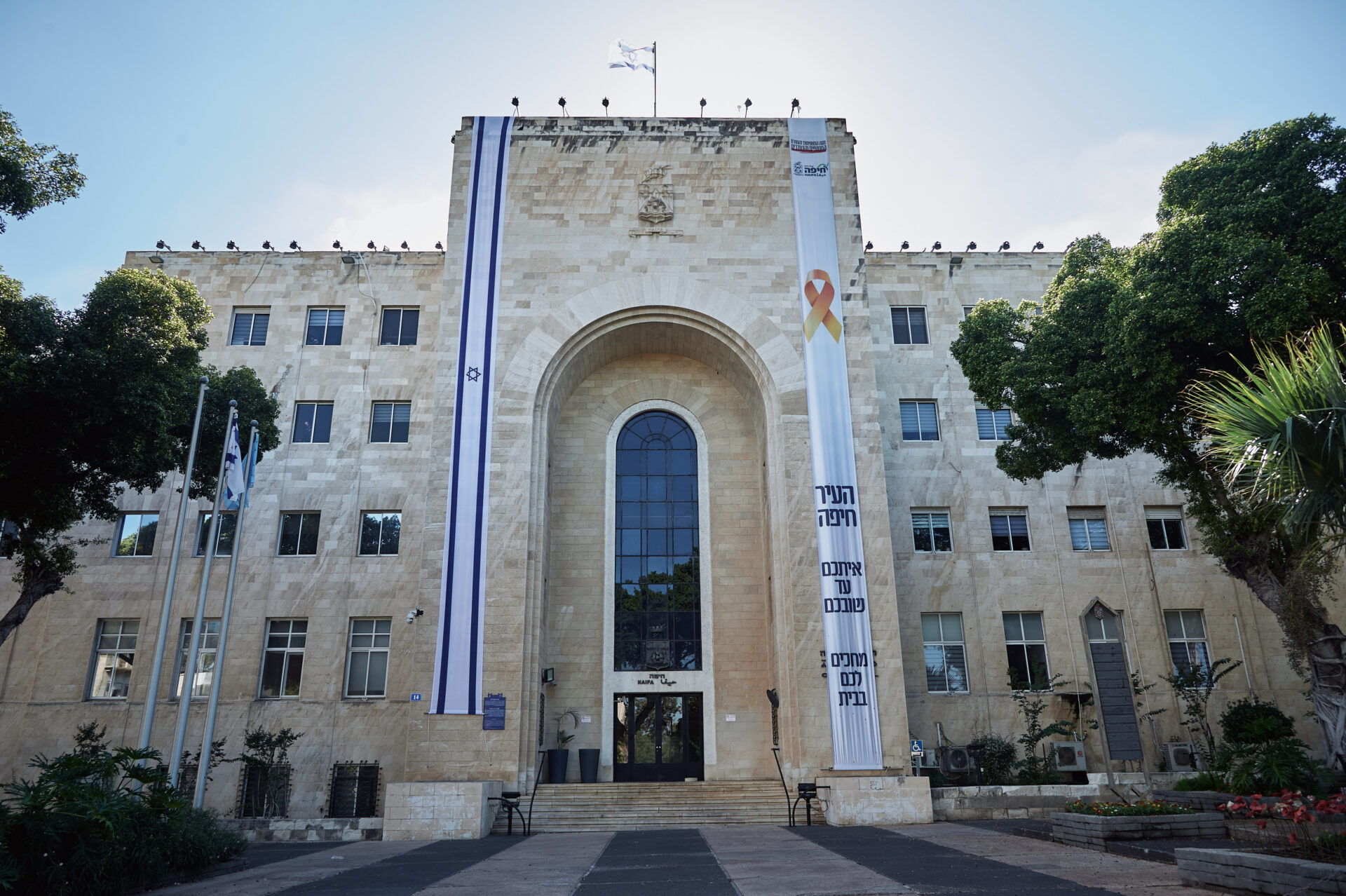
The Haifa Municipality’s 2025 work plan outlines a broad vision for the city: a vibrant northern capital, a leader in education and technology, and advocating pluralism and shared living. It details strategic goals in the areas of economic development, improving the city’s appearance, community-social development, and promoting innovation. However, a critical examination of the document and the data it contains, alongside a comparison with economic and social trends in the city and later security events, raises fundamental questions about its feasibility, degree of detail, and inherent challenges.
The 2025 Work Plan – It’s July and the clock is ticking
Yona Yahav was elected Mayor of Haifa in the local elections held in February 2024, and took office on March 19, 2024. This means that at the end of July 2025, Yona Yahav has approximately 3 years and 8 months left in his term, until the end of February 2029. The 2025 work plan, which was apparently formulated at the beginning of the year, will accompany most of his term, and will constitute a key touchstone for how the city will progress under his leadership.

Goals: Between Ambition and Financial Juggling
The document is rich in impressive quantitative goals: absorbing at least 2,500 new immigrants, raising 60 million NIS for startup companies, planting 4,000 trees. The main question is whether these numbers are realistic considering the existing resources. 3The total development budget is only 690 million NIS, with 151 million NIS of it earmarked for ongoing projects. This portion is intended to finance a long list of infrastructure, construction, and urban renewal projects. 4Project costs in Israel are high, and the document does not specify pricing for each project, which makes it difficult to assess accurate budgetary feasibility.
In addition, some sources of funding, such as development levies (NIS 188 million), depend largely on the pace of project progress and the state of the real estate market, which could affect the realism of the goals. This dependence on external sources, including the Ministry of Tourism, the European Union, and the Bloomberg Foundation, echoes warnings from local government experts about deficit risks for authorities based on variable state grants. The municipality's exact share of the overall financing of projects such as the Hulda Promenade (HaBahad) and the "Port of Lights," as well as the cost of their maintenance starting in 2027, is not sufficiently detailed.

Metrics: Between quantity and quality
The plan uses the term “outcome indicators.” However, most sections do not detail an approved budget, risk reserves, or regular external audits. Some of the indicators are quantitative (e.g., “number of business audits,” “number of drowning deaths”), but do not necessarily reflect quality. For example, “increase in the number of participants in an activity” does not indicate the depth of involvement or the long-term impact of the activity.
There are also no indicators for assessing risks, or indicators that would allow for a thorough examination of benefit versus cost. Thus, it is unclear how the success of “reducing technological gaps” or “strengthening the sense of capability” will be measured. Despite promises of an open information portal and statistical dashboards (“clock boards” that display real-time data), the plan does not set a timetable for going live, a list of sample data, or a policy for maintaining the privacy of our data – a gap that reduces the ability of public control.

Weaknesses in the plan – and the consequences of the war
- "Iron Sword War" and other security implications Mayor Yona Yahav declares that the safety of residents is a top priority “in light of the complex security reality.” He notes “reducing the gaps in urban protection in light of the experience of a sword war” and establishing a municipal policing unit. However, the plan was apparently written in early 2025. The consequences of the war with Iran that occurred in June 2025 could not have been explicitly taken into account when writing the plan. An event of such magnitude would have required a significant budget update, especially in emergencies, protection, and reconstruction, a change in development priorities in favor of emergency needs, and a re-deployment of emergency systems, including shelters and equipment. The plan refers to strengthening urban preparedness in general, but not to such a specific threat.
- Haifa is trapped in a real estate paradox: On the one hand, the city's real estate market shows a sharp increase of 16.5% in apartment prices in the last quarter of 2024. This is reflected mainly in the second-hand apartment market, where Haifa leads national sales, indicating attractiveness and great interest in existing properties. On the other hand, the city is facing an acute demographic challenge of ongoing negative migration. Residents, especially young families, are leaving it. This gap is highlighted by the challenge in the new apartment market, where there is a large inventory of unsold apartments.
This situation reveals the internal contradiction: while property values are rising, the proposed solutions (mainly new, luxurious and expensive apartments) are not affordable for the population that the municipality aims to preserve. In the absence of significant initiatives for affordable housing, a situation has been created in which Haifa becomes more attractive to investors than to residents, pushing out families and long-term residents who cannot keep up with the prices. There is a name for this: Gentrification. of the entire city, not just certain neighborhoods. You can read a full analysis of the real estate data In Michal Gruber's excellent article here. - General wording and lack of detailed mechanisms Important goals such as “promoting gender mainstreaming” or “strengthening the health and quality of life of residents” appear as general goals without sufficient detail of core tasks or specific outcome indicators. This lack of detail raises suspicions about how these goals will be implemented in practice.
- Conservation versus development The document mentions preservation plans in areas such as Carmel and Hadar. Alongside them, there is a goal of “promoting urban renewal” and a construction boom. This issue contains an inherent conflict between preserving historical character and the desire for development. The document does not specify how the balance will actually be maintained, or which side will receive priority in the event of a conflict of interests.
- The War on Pigs The main indicator of "success" is "a 5-15% decrease in public calls to the hotline." This indicator measures calls and not necessarily the actual problem. A decrease in calls may indicate that the hotline is disconnected (for example, in an emergency), or that residents have given up on complaining, and not necessarily a real improvement in the situation. On the other hand, the pigs have become the face of everything and we forget to check other things as well. The pigs, in my opinion, are a symptom of the state of the city and the functioning of the municipality, less of an issue as important as they make it out to be.
- Developing a "blue economy" The city's vision includes being an "international port city" and strengthening it as a "national center for the blue economy." However, there is a lack of detail on concrete operational plans to achieve these goals, beyond general statements about developing existing employment areas.
- Development and preservation of urban human resources The plan goes into great detail about “developing and strengthening human resources,” including training, recognition ceremonies, and developing computerized systems. However, there is no explicit reference to the challenges of retaining employees in a competitive private market or attracting new, high-quality personnel. Are these plans sufficient to address the complex human resources challenges of a large organization like a municipality?
- A blatant response to street dwellers "Increasing the hours of reception in the unit for street dwellers", finding additional solutions to solve immediate housing problems, "increasing the staffing in the unit that treats street dwellers", "receiving inquiries independently or through referrals from community members, and building a customized therapeutic intervention plan."
Strangely enough, according to the Haifa Municipality The references They are the obstacle to dealing with beggars and homeless people who inhabit abandoned buildings, set fires in them, and gather beggars at intersections. Any of the readers here, if they send a location one Anyone who knows where there is a beggar or homeless person will fill out the "contacts" table at the municipality for the next 5 years. The municipality is invited to contact our readers.

Long-term consequences and internal conflicts
The development of Haifa as a tourist and culinary center, alongside the development of employment areas, may affect the cost of living and the character of the neighborhoods. The question is whether there are plans to maintain a balance between this development and the needs of long-term residents and accessibility to housing. The lack of a clear hierarchy or prioritization of weights between the various goals in the plan may lead to a dispersion of resources and an inability to produce deep and measurable change in specific areas.
The Center for Socio-Economic Research: A Key Role and Assurances for Control
The Center for Socio-Economic Research plays a critical role as the strategic planning, analysis, and control arm of the municipality. 6. It is responsible for formulating work plans, promoting data-based processes, managing statistical information, and monitoring implementation. The document states that the center will conduct a "semi-annual audit in July" and a "year-end audit in January 2026." It also discusses "mayor reports to the city council."
However, as of this date (Monday, July 28, 2025), there is no public publication of performance reports against the 2025 plan, and demographic data is only updated retrospectively – without a semi-annual work base open to the public.

Questions we should ask:
As concerned citizens, Haifa's 2025 work plan is a promise for a better future, but there are several critical questions we must ask the municipality and always keep in mind to ensure that the promises become reality:
- Major development costs: Who pays and how much? The exact cost of the new promenade and the Port of Lights, as well as the exact share of the Haifa Municipality in financing them, are not detailed in the Haifa Municipality's work plan. The document indicates general sources of funding, but does not specify the exact distribution of the municipal investment compared to the partners. The ongoing maintenance costs starting in 2027 are also not detailed in the plan. How much will this cost us starting in 2027? Does the project, despite its importance in attracting visitors and tourists, come at the expense of further neglecting pressing needs? After all, not all of us work in tourism.
- The housing crisis: Short question – does the municipality have a real plan?
- Public information: Promises on paper or real transparency? The municipality promised us an open information portal and a digital "resident card" – when exactly will they be launched? What do they actually provide? Will we be able to see the important data there in a simple and easy-to-understand format, so that we can monitor the progress ourselves?
- Defense of the city: Are we dealing with climate risks and war?
- Many projects are planned on the waterfront, but have the risks of rising sea levels and more severe winter storms in the future been taken into account?
- How will the work plan change to deal with unexpected wars, such as the one that occurred in June 2025 against Iran, especially when it was unknown at the time the plan was written?
- Is the city's budget flexible enough to handle such emergencies without compromising other services?
- How will the municipality ensure rapid restoration and continuity of essential services in the event of infrastructure damage in emergency situations?
- Is there a plan for treating special populations (elderly, disabled) in complex emergency situations?
- Quality of life: How will it really be measured? The municipality talks about "improving service to residents," but how will this be reflected in our daily lives? Will they track indicators such as wage gaps between different neighborhoods in the city, to make sure that the quality of life is improving for everyone?
- Urban workforce development: Is there a strategy for retaining talented employees? The municipality invests in employee training and development – is there a clear plan to ensure that these employees remain with the municipality, in the face of the temptations of the private market? How will the municipality attract quality “talent” to critical positions, beyond publishing general tenders?
- Collaboration with academia: Do the students stay in the city? How many of them stay? Is there a plan to connect the students to stay here?

The Haifa Municipality's work plan for 2025 is ambitious and somewhat "slogan-like." It is difficult to find any uniformity in it that is not just a cosmetic and image investment in the city. To ensure its success, not only budgeting and execution are required, but also courageously dealing with the weak points, with the real problems that are sometimes not "sexy," and with resolving potential conflicts and constantly adapting to the changing reality, while maintaining a balance between development and social and environmental challenges.
Look beyond the piano
In the last two weeks of Yona Yahav's previous term, in October 2018, a piano was placed in the "Piano Square" in the center of the Carmel. Years have passed since then. Will the current term be reduced to an abundance of festivals, "bread and entertainment" for Haifa residents, and the placement of more pianos - instead of dealing with the challenges of the depth? Will the current mayor have the courage to deal with these challenges, or will he leave them to the next mayor? With a coalition broader than ever and 6 deputies from all parties in the house, he has no opposition or opponents. Now is the time to move and change! A semi-annual planning versus implementation report is expected to be released at the end of July 2025. We will continue to follow.
Are there any other challenges we forgot? We'd love to hear your thoughts here

Kiryat Haim is annexed to the city of Haifa. . I have not seen any planned project for Kiryat Haim. It always looks neglected. They hardly invested in it and in Kerhat Shmuel. Why do Kiryatites continue to be annexed to Haifa? We have Kiryat Haim's industry. In the past, the city was well-kept and they also invested in it. In the streets and gardens. Since I have been in Kiryat for over 70 years. They have not renewed in the world and vice versa. They have cut back on everything. . Therefore, it seems to me that Kiryat Haim will be elevated to be a city like Kiryat Motzkin in Kiryat Yam. They look well-kept. I am really jealous of how much is invested in these cities. For example, the beach at Brit Haim has no regard for its residents. All foreign residents enter Kiryat Haim beach without parking fees, which are levied wherever possible, and what is left for Kiryat Haim residents is to look for parking a long way from the beach. It is really sad that Ziona Yahav has neglected and neglected. He also decided to cancel a performance by a singer who was not to his taste on Independence Day.
I'm fed up and the new Kiryat Haim council must think about what is best for us.
Thank you Eti. There is an excellent article on the subject. https://haipo.co.il/item/572202
And a response from someone named "Pensioner" who shows a different angle: "Kiryat Haim has a large industrial area up to the checkpoint, there's no chance that Haifa will agree to this separation." Business property taxes are the number one source of income for any municipality. If Haifa agrees to the Gulf being annexed to another city, it will go bankrupt.
The municipality has no concrete plans and the development plan sounds more like wishful thinking than articles for implementation.
Let's take the Carmel Center area, because you mentioned the piano: Across the street is the zoo, which is in bad shape. On the other hand, Carmel is crowded with renewal in a chaotic building pattern. The Ham Garden is pale and outdated. Next to it is a "biological institute" that stands abandoned and empty. The promenade is in ruins. Across from the Ham Garden, stands the Mintz Library, which has been empty and burned down for 8 years (since Yahav's previous term). On the Panorama Towers Promenade, an urban space was promised on its upper level. Under pressure from residents, the upper level was fenced off and the urban space has stood abandoned for 30 years. Across from the Mintz Library, there was a plan to renovate the Mana Katz Museum and make it accessible to the disabled. The museum is closed because the municipality is unwilling to implement the plan it itself created. In the past, there was a plan for the new Mana Katz Museum and the Eliyahu Hall Center – a cultural complex and museum that could incorporate large underground floors for emergencies and build shelters and a municipal emergency center. A few steps from the closed museum stands the neglected Allenby Garden, once one of the most beautiful gardens in Israel. Decades of neglect. Right next to it was an entertainment complex with several restaurants and pubs that was demolished in the Zeevi Towers. The David Yellin School, which left a large young population in the center of the Carmel, was also demolished to make way for the towers and moved to the more distant classroom building.
Here is an example of a complex with 10 empty, neglected, closed cultural centers. Any municipality would recognize this problem and create investment and incentives to revive the Carmel Center as a center for cultural entertainment and tourism. And the Haifa Municipality? It photographs the place from above with a drone and tells tourists how beautiful Haifa is. From above.
So what would a municipality with real plans actually do:
1. Moves the zoo to the wildlife area and expands the area of the main zoo into a large urban park for the Carmel neighborhoods.
2. Raises resources for the establishment of the new Mana Katz Cultural Center – a museum and underground urban emergency center
3. Raises resources for the renovation of the Mintz Library as a technological training center for the elderly population with Milab
4. Building a new amphitheater for events at the bottom of the garden and renovating the commercial avenue within it at the level of President Boulevard with buildings for clubs and youth movements at the level of the garden.
5. Rebuilding Allenby Garden, restoring its original plans
6. Requires projects such as Zeevi Towers to allocate space for kindergartens and early childhood centers.
7. Places a security patrol on regular patrol in the area and prevents noise nuisances, rondo, vandalism and dirt on the promenades and the Mother Garden.
8. The municipality would have required Panorama Center to return the upper promenade level to the public, including renovating and opening the closed public area there for activities.
9. Working with the Rotenberg House to produce fair events and educational conferences on the center's premises instead of renting it to commercial companies, which is being done contrary to Pinchas Rotenberg's will.
10. Plan to develop an internal square between the stone buildings near the Panorama Center on Shaar El-Habanon Street in place of the dirt parking lot.
And the establishment of a restaurant, entertainment and commercial complex with additional floors and preservation of the buildings.
This is an action plan.
Excellent suggestions, Eyal. If only they would consult the public sometimes in some kind of "call for papers."