


Update at 20:45 PM from Haifa Municipality: The incident is over. All passengers were rescued safely.
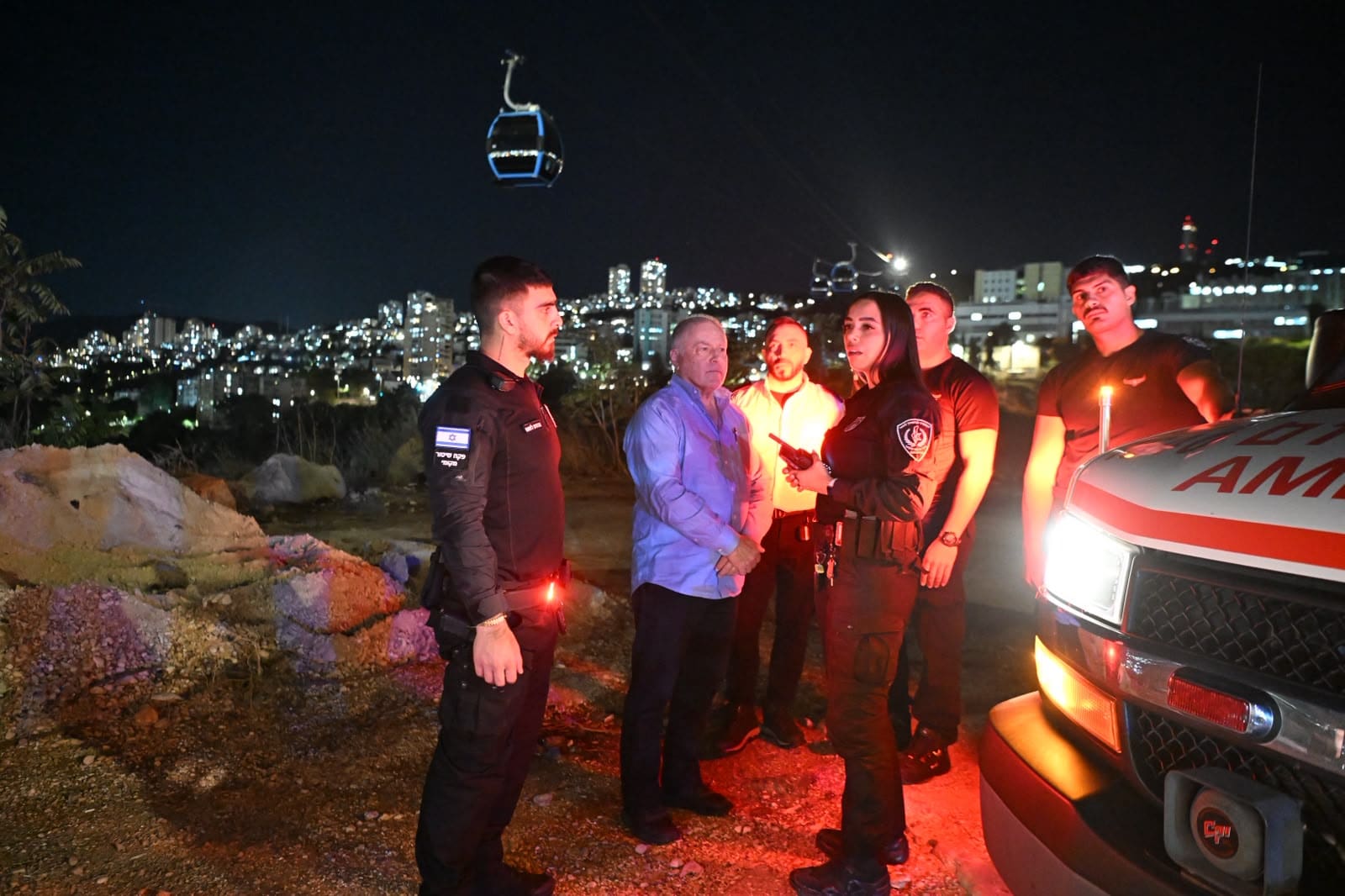
(Haipo) – Passengers were stranded in the air in Haifa's cable car cars on Thursday evening, November 12, 2026, following a technical malfunction. Rescue forces, accompanied by fire and rescue cranes, are currently preparing and working to perform complex rescues of the passengers from the cars.
A technical malfunction shut down the cable car in the evening.
On Thursday evening, a technical malfunction occurred on the Haifa cable car, which led to the suspension of the facility's operations while passengers were inside the cars. The passengers were left stranded in the air, and as soon as the incident was reported, rescue forces were called to the scene. This is an unusual event that requires complex rescue operations due to the height of the cars and their location above the surface. At this stage, this is a preliminary report, and additional details are expected to be published during the evening.
Fire and rescue forces deployed with cranes to rescue the passengers
Fire and rescue forces arrived at the cable car area and deployed cranes to rescue the passengers trapped in the floating cars. The teams are preparing to perform complex rescues, which include reaching the cars at height and safely lowering the passengers. The incident is causing great tension among residents and those involved, with the rescue forces doing everything in their power to complete the rescue operation quickly and safely. Additional details will be provided later this evening as the circumstances and scope of the malfunction become clearer.
The Haifa Municipality informed Haifa:
1. The improvised fire station that was established contains fire and rescue forces, including members of the "Flame" special unit;
MDA teams; and members of the "Oz" municipal police unit of the Haifa Municipality.
2. The company operating the cable car is working to rescue the passengers in the cars.
3. A disaster management team was established at the scene to manage the incident and coordinate all forces operating in the area. Haifa Municipality Director General David Luria arrived at the scene to closely monitor the rescue operations. Haifa Mayor Yona Yahav is being kept up to date with the details of the incident and has instructed all municipal officials to provide the emergency and rescue forces with all necessary assistance.
Response from the cable car management, Cable Express Company
The cable car accident in Haifa: The operator managed the incident independently and professionally, all passengers were safely disembarked and no passenger rescue was required.
On Thursday, November 12, 2026, at approximately 17:15 PM, a technical malfunction occurred at the Check Post station of the cable car in Haifa, which led to a temporary halt in the system's operations.
From the moment the fault was identified, the cable car operator acted immediately, professionally and in a controlled manner to handle the incident, while activating the skilled technical teams and in accordance with the system's operating and safety procedures.
It is important to make it clear: this was a technical malfunction and not an incident that required the rescue of passengers. Throughout the incident, there was no danger to passengers, and the operator maintained full control of the system and the management of the incident.
As soon as it became clear that the problem could take a long time to resolve, the operator took action to update emergency and rescue personnel. The message was sent within just five minutes of the time it became clear that the problem would take longer, in coordination with the fire and rescue services and the Israel Police.
Already at the initial stage, the operator made it clear to emergency officials that the situation was under control, that there was no danger to passengers, and that, according to his professional assessment, there was no need for operational intervention or external rescue operations.
It should be emphasized that the update of emergency factors was done as part of a policy of responsibility, transparency, and early coordination, and not due to loss of control of the system or an operational need to rescue passengers.
At the same time, the cable car control center maintained direct and continuous contact with the passengers in the cars, monitoring their condition and updating them on developments. Throughout the event, the professional teams continued to work systematically to resolve the problem, based on in-depth familiarity with the system and professional ability to handle the incident using the means available to the operator.
One of the significant steps taken during the incident was the operational separation of the lower section of the cable car from the two upper sections. This allowed the two upper sections to be operated independently and all passengers to be disembarked in a safe, orderly and controlled manner, while the technical teams continued to address the malfunction in the lower section.
After completing the troubleshooting, the lower section was also activated, and all passengers were safely taken down using the cable car system itself.
The result is clear: all passengers were safely disembarked, without the need for any passenger rescue, without operational intervention by external rescue agencies, and without the operator losing control of the incident.
This conduct illustrates the cable car operator's professional and operational ability to deal with technical malfunctions, manage complex events independently, make operational decisions in real time, and act while maintaining passenger safety.
Upon completion of the troubleshooting, the cable car returned to full and regular operation and continued to operate normally until the end of service at 02:00 AM.
The cable car operator emphasizes that a distinction must be made between an operational stoppage of a transportation system due to a technical malfunction and a safety incident requiring the rescue of passengers. The mere occurrence of a malfunction does not indicate danger to passengers or a failure in the management of the incident. The professional test is how to deal with the malfunction, maintain passenger safety, properly manage the system, and restore normal operation.
In this case, the operator was up to the task: the malfunction was handled by its professional teams, all passengers were safely disembarked, and the system was restored to full operation, without the need for external rescue.
Passenger safety has been and remains the cable car operator's top priority, as has the commitment to professional, responsible and transparent management of every operational event. CEO of Cable Express - Cable Car Operator
Did the article interest you?
I love the cable car and use it regularly to get to the university.
A wonderful and heavenly experience.
Absolute stupidity. No reason ever comes to mind.
Who even gets over this horror?
If a person falls out of a plane in the middle of the night, only God can pick him up.