


Explosive sounds will be heard from Raphael's David Institute due to a planned and controlled experiment

Raphael was delivered to the mouth - News Corporation: Today (Thursday 11/5/26)...

A giant MSC ship with 15 containers arrived at the Gulf port

The large container ship MSC "Montaigne" arrived at the Gulf Port yesterday...

Yaroslava Levitska of Haifa, the last Righteous Among the Nations living in Israel, passed away • 91 years old at the time of her death 

Yaroslava Levitska from Haifa, the last Righteous Among the Nations in Israel to live...

The Haifa Bauhaus: The beauty that was here all along, and is now being rediscovered

A story about a city, architecture and people who decided to bring back the beauty...

The little second-grade lover  

My 7-year-old bursts into my room with a friend. We have to say...

The dangerous secret of Israel's water reservoirs

As someone who walks around the field every day as part of my work, I encounter...

The assembly train

The assembly process is like that carriage in the Cinderella story. It is forbidden to cross midnight, there will be no...

The bot has replaced human intelligence

Yossi just wanted to find out why he was charged twice for...

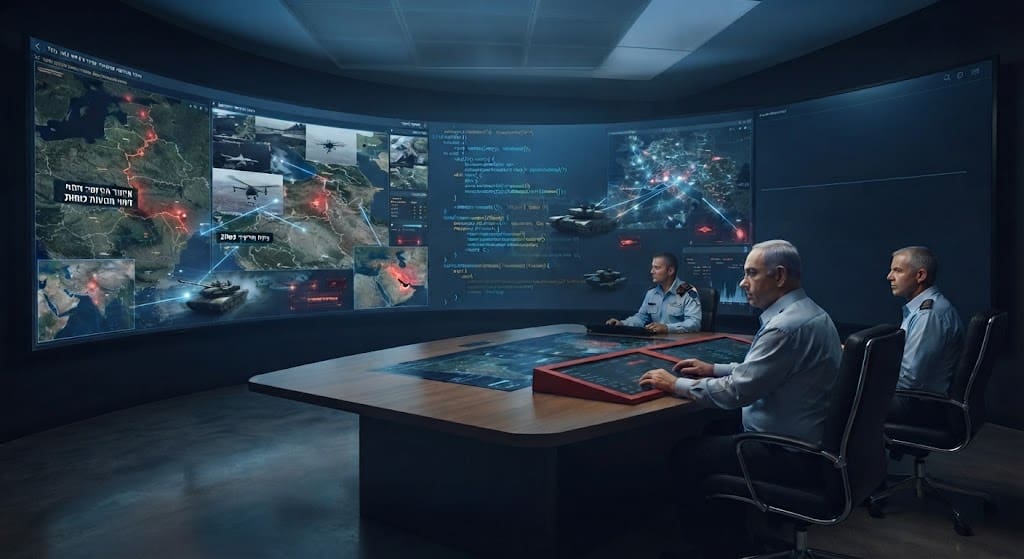
Artificial Intelligence and National Security: Can Algorithms Replace Strategic Judgment? | Opinion Column

Despite the processing speed of AI systems, they lack the contextual understanding and moral responsibility required in a national strategy.

 Unique contribution: Introducing a hybrid model that balances algorithmic speed and political accountability.

This article examines the integration of artificial intelligence systems into decision-making processes at the national strategic level. It analyzes the benefits inherent in early threat identification and optimization of spatial defense plans. At the same time, the study identifies the dangers inherent in over-reliance on automation in military and political extreme situations. Finally, a regulatory and ethical framework is proposed that redefines the boundaries between man and machine. The overarching goal is to ensure that technology serves security without taking control away from decision-makers.

The integration of artificial intelligence into national security systems is creating a real revolution, but also unprecedented challenges that directly relate to the question of the ability of algorithms to replace humans. Machine learning algorithms are capable of scanning countless open and confidential sources of information, identifying hidden patterns and warning of dangers, faster than any human analyst. However, as the research argues, the distance between technical data processing and a deep understanding of the enemy's intentions is still great, since real strategy relies on political intelligence, diplomatic sensitivity and the ability to contain uncertainty. Automated systems provide a vital picture of the situation, but they are unable to bear the moral and public responsibility derived from fateful decisions. Therefore, the answer to the research question is clear: despite their technological power, algorithms cannot replace strategic judgment, and maintaining continuous human involvement is a necessary condition for preventing disasters.

Practical example: In analyzing conflict scenarios on the border, an AI system can predict force movements with great accuracy, but the decision as to whether and when launching a preventive operation serves the broader national interest remains exclusively in the hands of the political echelon.

Did the article interest you?

Contact the newsroom: At watsap • By email

Dr. Jacob Rob
Dr. Jacob Rob
He holds a postdoctoral degree in national security, and is a researcher and writer in the fields of national security, law, international economics, and psychology. His writings are published in a variety of websites and journals, and have been read in 74 countries. He is a member of the Writers' Association, and combines academic research with clear writing for a broad audience.

Articles related to this topic

תגובה 1

Leave a comment

Please enter your comment!
Please enter your name here

All the articles are alive

Turmoil surrounding the establishment of the High School for Arts and Sciences in Tirat Carmel – the cost was doubled and the opening was postponed by four years

The project to build the High School for Arts and Sciences, which was supposed to open in 2023, has become one of the city's most significant infrastructure and education crises. The mayor of Tirat Carmel,...

Transparency under test: Haifa tops the list of denials of freedom of information requests and the number of petitions against it

(Haifa - Haifa and the surrounding area news corporation) - The government unit for freedom of information in the Ministry of Justice and the Ministry of Interior published the report on the implementation of the Freedom of Information Law...

Mona Abu Taros – Chief Pharmacist at Clalit in Haifa, recognized the danger in time

Ahead of Pharmacists' Day on November 11, Mona Abu Taros, a pharmacist in charge at the Clalit pharmacy in Neve David in Haifa, tells how attention to detail and familiarity...

Summer is over – the lifeguards remain: Four lifeguard stations will operate on Haifa's beaches in the winter

(Hai Pa - Haifa and the surrounding area news corporation) – With the end of the summer season, the Haifa Municipality is operating four lifeguard stations on the beaches starting today (Wednesday, 11.11.26)...

The Ministry of Health updates: Swimming on the Mediterranean beaches in the Haifa area and surrounding areas is permitted.

(Hai Pa - Haifa and the surrounding area news corporation) - Removal of bathing warning at the Mediterranean beaches - except for the beaches: Charles Kohler (Tel Aviv), beaches...