


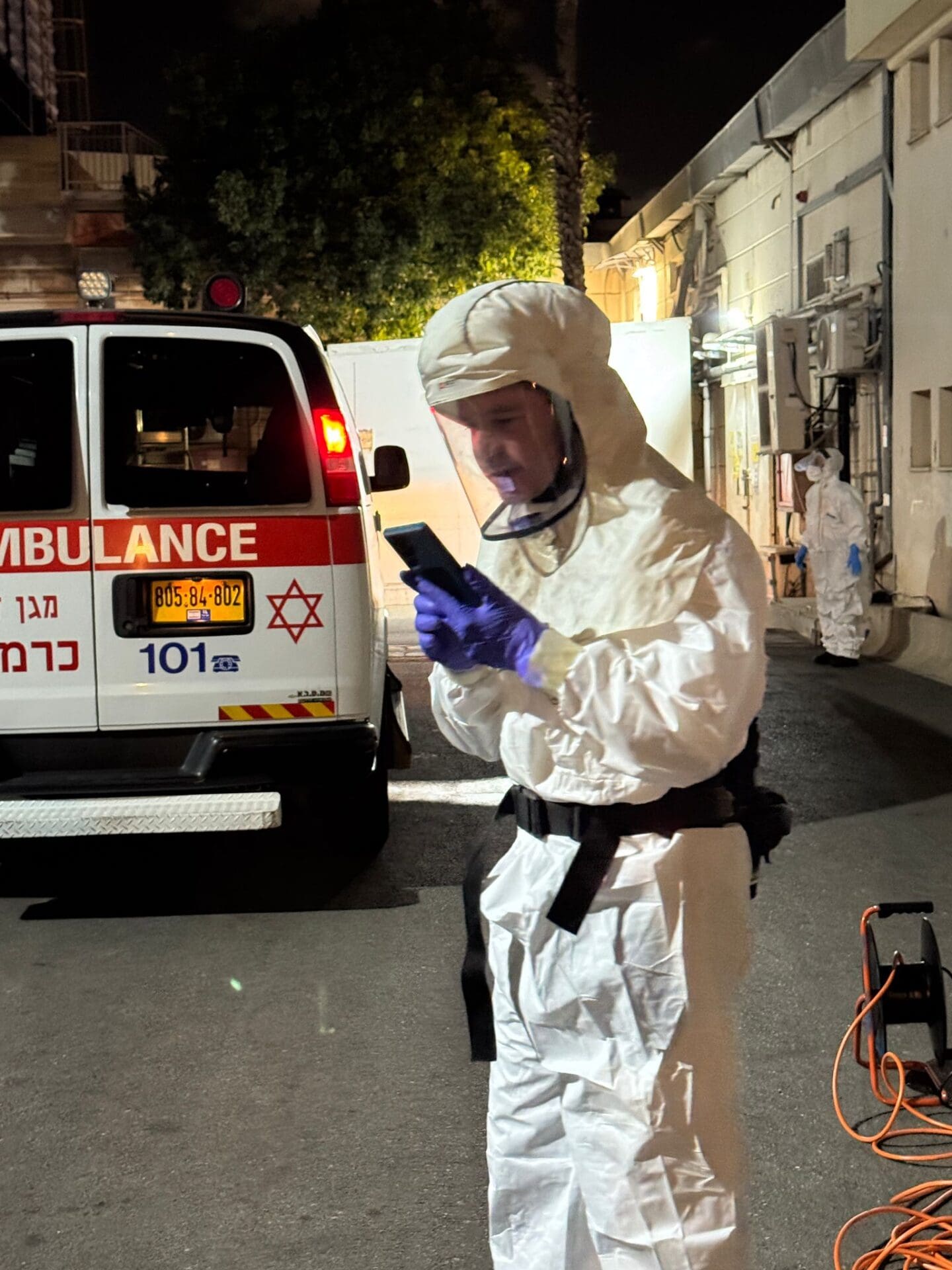
(haipo) – While the medical system is still awaiting the test results of the first case hospitalized at Rambam, the Ministry of Health has updated on another suspected case of a person who returned from the Democratic Republic of Congo and developed symptoms consistent with the disease. The ministry emphasizes that at this stage, no confirmed case of Ebola has been diagnosed in Israel.
The Israeli health system continues to closely monitor two suspected cases of Ebola, after the Ministry of Health announced another person suspected of carrying the virus, shortly after the report of the first case discovered over the weekend.
According to the Ministry of Health, the second person returned to Israel last weekend (19/6/26) from the Democratic Republic of Congo and sought medical treatment after developing a fever, headache and diarrhea. In accordance with procedures for treating high-risk infectious diseases, he was transferred to isolation at Sheba Medical Center in Tel Hashomer, where he is being treated under strict protective measures and supervision.
The current report joins the first case announced by the Ministry of Health on Friday, June 19, 2026. This case involves a person who also returned from the Democratic Republic of Congo, developed a fever and headache and sought medical treatment. He was transferred to the Rambam Medical Center in Haifa, which has been designated as one of the designated centers in the country for receiving suspected Ebola cases.
The Ministry of Health emphasized that both the first and second cases are only suspicions at this stage, and that a final diagnosis has not yet been received. As for the patient hospitalized at Rambam, it was announced at the end of the week that completing the investigation and receiving the final result is expected to take about 48 hours, in accordance with clinical considerations and accepted medical protocols. This means that results are expected to be received that will provide a clearer picture of his condition.
At the same time, the Ministry of Health is conducting epidemiological investigations to identify relevant contacts and examine whether there is any connection between the two cases. The Ministry clarifies that only people who are found to have had possible exposure will receive a proactive contact, and that those who have not received a notification are not required to take any action at this stage.
The ministry also notes that Ebola is not an airborne disease. Transmission occurs through direct contact with a sick person who is experiencing symptoms or through exposure to blood, body fluids, and secretions. Therefore, the risk to the general public is very low when isolation and medical supervision procedures are followed.
The reports come against the backdrop of the Ebola outbreak in the Democratic Republic of Congo and Uganda in recent months. Following the outbreak, the Ministry of Health increased its preparedness and instructed hospitals and medical teams across the country on how to identify and treat suspected cases. In addition, monitoring mechanisms were established for travelers returning from infected areas, the provision of advanced protective equipment was completed, and laboratory diagnostic capabilities in Israel were expanded.
The Ministry of Health reiterates its call on the public to avoid non-essential travel to areas with active Ebola outbreaks, primarily the Democratic Republic of Congo and Uganda. Travelers who have returned from these areas and develop a fever or unusual symptoms within 21 days of their return are asked to stay home, avoid contact with other people, and call the "Voice of Health" hotline (*5400), indicating that they were in an area with active Ebola outbreaks.
Currently, the Ministry of Health emphasizes, not a single confirmed case of Ebola has been diagnosed in Israel, and all cases are still in the investigation and testing stages. The public will be updated on developments as necessary.