


Story about a building: Down Tiberias Street, at the intersection with Masada Street, stands an impressive stone house hidden behind old olive trees. The story of the house at 15 Tiberias is the story of a wealthy Muslim family, but also the story of the residents of Hadar, who, through a determined struggle, managed to save it from demolition and give it a new life.
The house of the Avid family
The house was built in 1932 in the Mafahra neighborhood, an Arab neighborhood that developed on the slopes of Mount Carmel above Hadar Carmel. It was designed for the family Avidya, a well-established Muslim family that was part of the Arab bourgeoisie of Mandatory Haifa.
The building was designed by the Templar architect Karl Roof, one of the architects active in Haifa in the 1930s. Later, Ruff also became famous for his political involvement in the Nazi movement among the Templars in Israel, but at the time of the house's design, he was a sought-after architect who designed residential and public buildings throughout the city.
on the building
The Avideh family home is a prime example of an urban villa built for a wealthy family during the Mandate period. The structure is constructed of stone and concrete in an eclectic style, combining European and local influences.
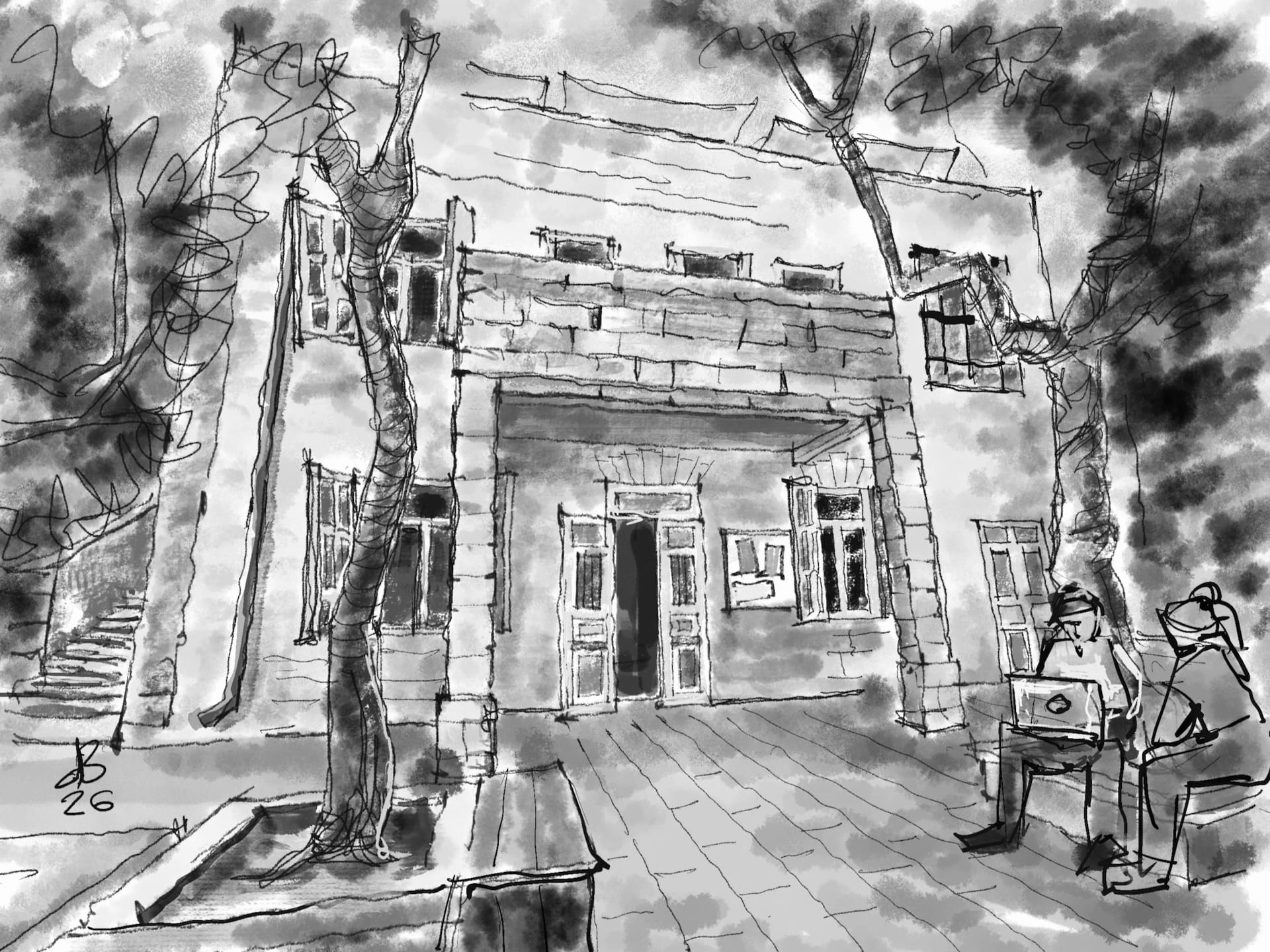
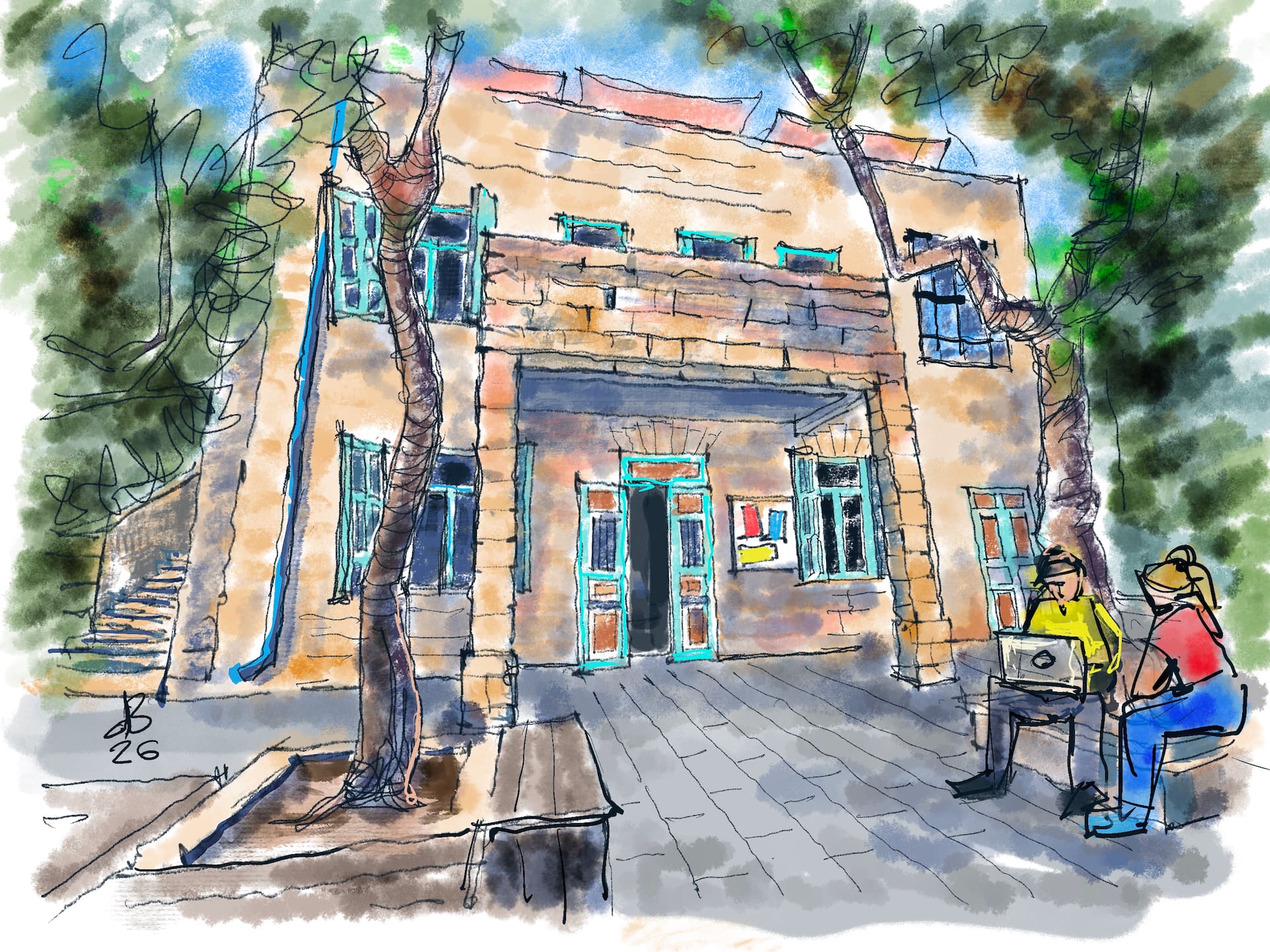
The facade of the house is symmetrical and clad in meticulously carved stone, indicating the quality of the construction and the economic status of its owners. A wide staircase leads to the entrance, which climbs from street level to the garden level and to the main living level. Above the entrance stands a portico - a covered colonnade - supported by two columns and giving the building a representative character. The windows are narrow and tall and protected by traditional wooden shutters.
The interiors are spacious and have high ceilings, as was customary in the wealthy residences of the period. The floors were covered with decorated terrazzo tiles, some of which were preserved or restored during the later renovation. The building consisted of two and a half stories. The roof of the building was flat, spacious and overlooked the bay view, allowing the family to enjoy cool weather.
In front of the building is a stone-paved courtyard shaded by old olive trees. The courtyard served as an open-air recreation area and still gives the place a unique Mediterranean character.
Even today, despite the changes that have occurred in its surroundings, the building manages to preserve something of the atmosphere of a small urban mansion in the heart of the neighborhood.
Abandonment and urban legend
With the outbreak of the War of Independence, the Avidah family left Haifa, apparently for Lebanon. The fate of the building in the following years is not entirely clear, and there are different versions regarding the transfer of ownership.
During the 1960s and 1970s, a mysterious figure named Sophia Bornstein, nicknamed "Princess Sophie" by the neighborhood's residents, lived there. Many stories were woven around her character, including the claim that she was close to the former Cuban ruler, General BatistaTruth or urban legend – her story has become an integral part of the local folklore of the house.
After her death, the building served as a warehouse for Haifa's museums. Later, it was completely abandoned, the yard filled with garbage and scrap metal, and the house became a center of attraction for homeless people and drug addicts.
The house that was almost destroyed
In 1995, the Haifa Municipality decided to demolish the building and build in its place a 19-story tower with approximately 90 assisted living units for the elderly.
The decision sparked fierce opposition among Hadar residents. Members of the Hadar Forum, along with preservation activists, cultural figures and many residents, argued that this is a building of architectural and historical value, and that its demolition would harm the character of the neighborhood.
The struggle included petitions, demonstrations, media coverage, and community events held in the yard of the abandoned house. One of the most memorable events was the Tu B'Shvat celebration in 2000, during which activists cleaned the yard, planted trees, and held cultural activities there.
Ultimately, the struggle bore fruit. The then mayor, Amram Mitzna, decided to cancel the demolition plan and allocate the building for community activities.
The restoration of the building
After the decision to preserve the house, donations were raised for its restoration, which was carried out with the aim of preserving as much of the original character of the building as possible.
During the renovation, the central spaces, stairs, and foyer were preserved. The flooring was replaced with tiles that resembled the original, and the furniture was chosen in the spirit of the period. At the same time, the roof was strengthened and adapted for public use.
The renovation succeeded in preserving the character of the house without turning it into a museum. The house remains alive, active, and connected to its surroundings thanks to the Hadar community.
The community house
In 2005, the building reopened as an extension of the Hadar Community Center, and later developed into a unique institution that earned the name "The Community House Tiberias 15".
Unlike a traditional community center, the house operates on the basis of a concept of community partnership and civic initiative. The residents of the neighborhood are not only consumers of services but also initiators, operators, and partners in designing the content and activities.
The venue hosts lectures, art workshops, yoga and qigong classes, exhibitions, music performances, parent-child meetings, community groups, and various social initiatives. The courtyard and roof are used for cultural events, and the entire building has become a meeting point for Hadar residents.
Among the unique projects currently operating there is "Shula" - a community equipment "library" for lending tools and equipment, alongside social projects and various volunteer activities.
Physical and social rehabilitation
The story of Tiberias 15 is not limited to the preservation of a historic building. It is a story of a double restoration – physical and social – that transformed an abandoned residential building into a focal point of community life in the heart of Hadar Carmel.
There are few buildings in Haifa whose stories so clearly reflect the city's ups and downs. The house at 15 Tiberias Street was born as the residence of a wealthy Muslim family during the Mandate, survived the events of 1948, went through years of neglect and faced the threat of demolition – but was saved thanks to the struggle of the neighborhood's residents.
Today, over ninety years after it was built, the house serves as a center for creativity, meeting, and community activity. Where bulldozers once stood to demolish, the sounds of lectures, music, and conversations between neighbors can now be heard.
The story of the "Tiberias 15 Community House" teaches that true preservation combines physical preservation - saving the building from demolition and restoring it - and social preservation, in which the community adopts the building, pours content into it and gives it new life.
Thanks
My thanks go to Ms. Einat Rodman, The director of the Tiberias 15 community house, for the fascinating tour she gave me of the place and for the extensive information she generously shared, which contributed greatly to the formulation of the current article.
Dear readers,
The articles in this section are based on open information published in sources such as Wikipedia and other websites and may include various historical inaccuracies arising from the aforementioned sources.
We invite our readers to suggest buildings as subjects for articles and if interesting stories are found behind them we will be happy to review them in this section.
Attorney Shaul Pels Filersdorf, son of Bianca, a wicked and evil man. May a curse be placed upon you, that angels of destruction and death may enter your house and harm you and your household for the injustice you have caused to the people of the State of Israel.
That the angels of destruction will be harmed in the Ben Yehudit Valley
May angels of destruction strike Jonathan, son of Judith,
May angels of destruction strike Daphne, daughter of Yehudit,
May the angels of destruction strike Dan Ben Yehudit
And all that they have in our day, and we say, Amen.
BSD
Remembering together
All I understood from the article that Jews took their homes from Arabs was that the TMA "saved a house from demolition"... An exhausting and pretentious article... There is an association for preserving houses... I'm so tired of the nonsense people spout from their feverish minds... There are people, children, babies, animals... souls that need to be saved and you're messing with my still life... masterpieces of nature, not the creations of man.
Response to the bird,
According to your way of thinking, then it doesn't really matter what he said or who said it, nor who built it or why he built it, and basically everything that was, is dead! And irrelevant...
It's just a shame that two thousand years are erased so easily,
And where is your family from?
Two thousand years of Judaism have passed on your family, not to mention the abuse of Gentiles,
But what does it matter….
Kudos to the environmental warriors who managed to protect the building at 15 Tiberias Street and allow for a moment of planning justice in a reality in which the interests of the public have been pushed aside for years.
The time has come to speak the truth clearly: Chapter 38 of the TAMA, which lasted 20 years, must end once and for all. On May 18, 2026, it was buried — but the damage it left behind still stands on the streets, in the urban landscape, and in public trust.
For years, residents, professionals, and environmental activists have warned against a policy that has turned the city into a playground for real estate interests, while harming the fabric of life, infrastructure, landscape, and environmental quality.
The public is no longer willing to accept a reality in which fateful decisions are made above the heads of residents, and is not willing to see the values of planning, transparency, and public responsibility pushed aside by economic considerations.
It is time for planning institutions to stop entrenching themselves in their positions and to do some real soul-searching. Public trust is not something to be taken for granted—and when it is eroded, the responsibility falls on decision-makers.
The era of turning a blind eye is over. Patience is running out.
The city of Haifa, the Carmel and the surrounding area are not commodities. They are an irreplaceable public asset.
Whoever harmed them in the name of "development" must answer.
This is not a fight for one building. This is a fight for the home of all of us. It is in our souls.
A brave and correct response. Finally, a voice is heard, reminding us that urban planning is not just numbers and building rights – but a responsibility towards residents, the environment and the urban fabric. Thank you to everyone who insists on making the public's voice heard to preserve the values that are important to us all.
How right you are, loyal reader.
To the best of my knowledge, this move was led at the time by social activist Yaron Hadar. It is worth noting that
Our land is 5000 years old and every time some clan that built a house is empowered as if they are the Righteous Among the Nations. Enough with the excessive flattery.
You are wrong and misleading. Respecting the history of the place does not mean groveling. Read what Yigal Allon said on this matter.
You're right, my uncle, they often get carried away.
To respect history is to respect our religion and the right to the land from the dawn of creation.
On the other side, does anyone respect our heritage, history, and right to this land?
With all due respect, what is relevant is what Yigal Allon said. Soon they will tell us to maybe read what Olmert and Ofer Kassif say...