


Story about a building: In the heart of the German colony, at 28 Ben-Gurion Boulevard, stands the "Koloni" Hotel. It is doubtful that any of its guests today know that about 90 years ago, people who influenced the course of the history of the Land of Israel and the path that ultimately led to the establishment of the State of Israel stayed in the same building, then called the "Eppinger Hotel."
Brief history of the hotel
The building, known today as"Colony Hotel", was founded in 1905 by the family Eppinger (Appinger), one of the oldest Templar families in the German colony. Alongside a workshop for the manufacture of carts, carriages and passenger carriages, the family operated a small boarding house, which gradually developed intoEppinger Hotel.
In 1929, the building was expanded for the first time, and in 1933, another expansion was completed, giving it its current form. These expansions were designed by the Swiss architect Moeller, a friend of the Eppinger family.
The hotel was run by sisters Helena and Ernestina Eppinger. Under their management, the place became famous for its service, cuisine, and family atmosphere. The Eppinger Hotel soon became one of the best-known accommodations in all of Haifa and was popular with the officers and officials of the British Mandate.
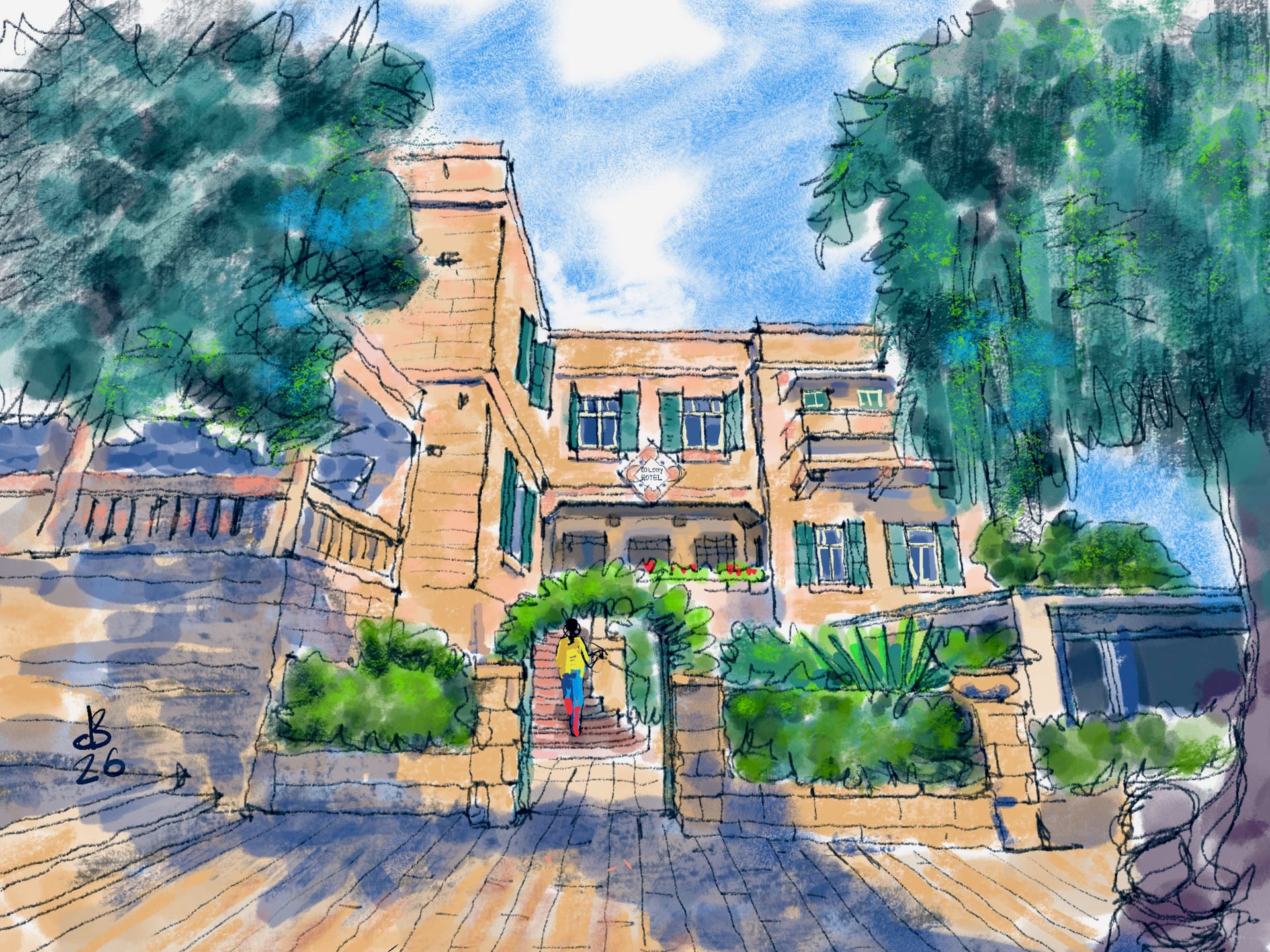
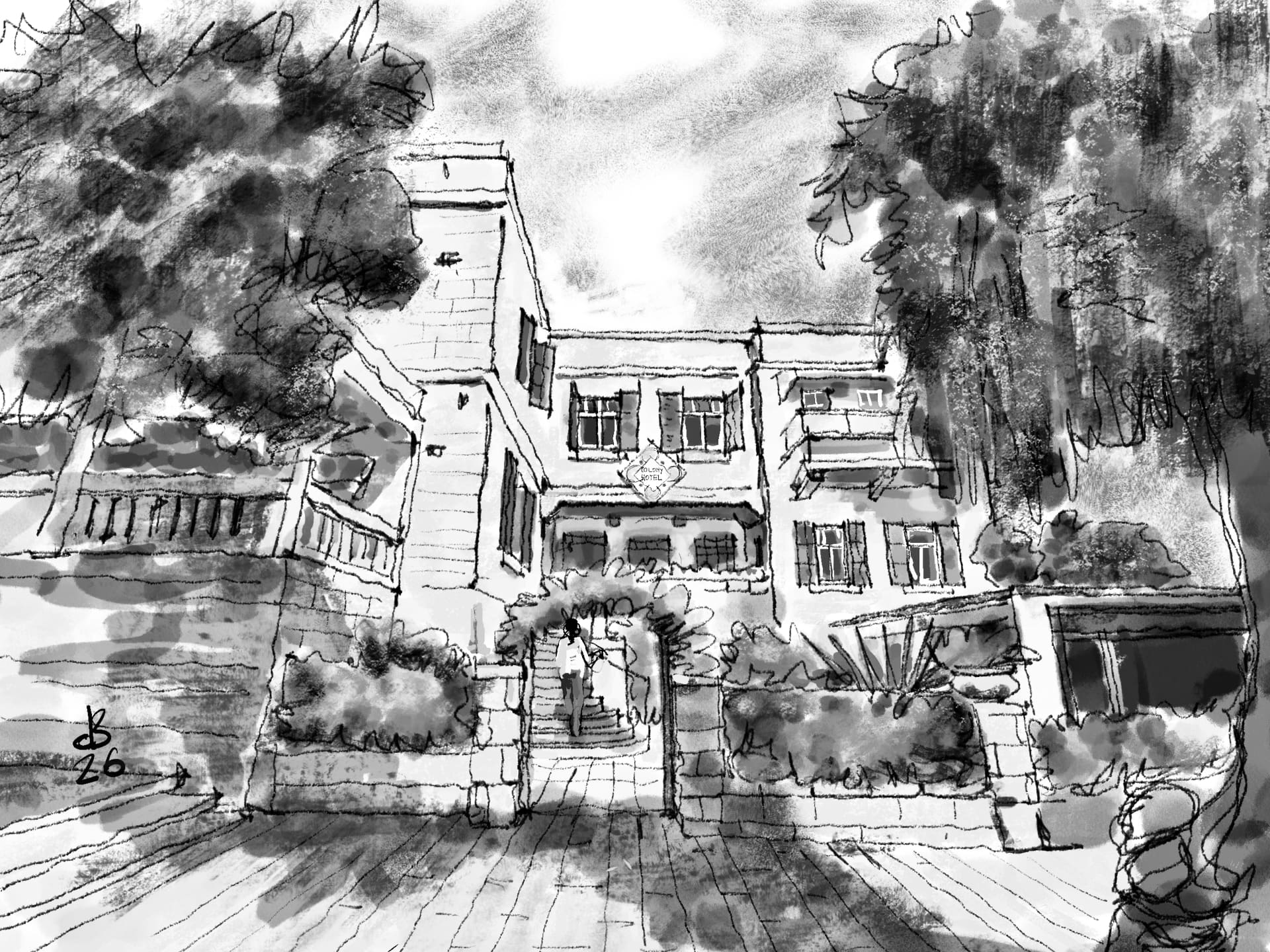
on the building – Colony Hotel
The hotel was one of the most impressive buildings in the German colony. It was built of dressed kurkar stone, with a flat, tiled roof that was used for social events and for viewing the surroundings. At a time when most houses in the colony had sloping tiled roofs, this was an unusual and even innovative feature.
The building has a basement, a ground floor, and two additional floors. At the front is a covered balcony with a central arch, and at the back is a spacious garden.
The floors were covered with painted terrazzo tiles, the furniture was made of high-quality wood, and the meticulous finishing details attested to the hotel's status as one of the most prestigious guesthouses in Mandatory Haifa.
As was customary in the Templar houses, above one of the doorways was carved a verse from "Psalms": "O Lord, your mercy endures forever; do not forsake the works of your hands" (Psalms 118:8), and in another place appeared the German inscription "Immanuel - God with us."
Phil committee
One of the most important chapters in the hotel’s history, with far-reaching implications for the future of the Jewish community in Israel, was written in 1936, when members of the Peel Commission stayed there during their visit to the country as part of Britain’s efforts to find a solution to the Arab-Jewish conflict. A year later, the commission published its historic recommendation to partition the country – a step considered a milestone in the journey to establish the State of Israel.
World War II and the End of the Templar Era
With the outbreak of World War II, the decline of the Templar community in Israel began. In the early 1940s, the Eppinger family left Haifa and the hotel closed. This brought an end to the Templar chapter in the history of the building, which had been associated with the family for about thirty-five years.
From the Eppinger Hotel to the Dresner Hotel
After the establishment of the state, the hotel was purchased by Shmuel Drezner, a Holocaust survivor who continued to operate it as a hotel for decades. At this point, the hotel was known to many as the "Drezner Hotel." In 1978, it ceased to be used as a hotel and was converted into a nursing home. Over the years, the building was neglected and gradually lost its luster.
Restoring the crown to its former glory
The building's revival began in 2006, when it was purchased by Haim Morovati, a Jewish-Kurdish businessman born in Iran who lives in Los Angeles. Morovati invested approximately $5 million in restoring the building and returning it to its original purpose as a hotel, with the assistance of architect Aryeh Dolinsky and under the supervision of the Haifa Municipality's Preservation Unit. In 2009, the hotel reopened under the name "Colony."
The conservation work included the restoration of the original wooden windows and shutters, railings and carpentry, along with the preservation of the painted terrazzo floors and other architectural elements. Thanks to this work, the Colony Hotel is now one of the most impressive preserved buildings in the German colony.
However, some complain that during the conservation work, the historic murals that once adorned the entrance hall were not properly exposed. According to conservation experts, documentation and restoration of these paintings could have added another important layer to the historical story of the building.
The Colony Hotel, formerly the Eppinger Hotel, is much more than a boutique hotel. It is a building that reflects the history of the German colony and the evolution of Haifa over more than a century and twenty years – from the days of the Templars and the Ottoman Empire, through the Mandate period and the Peel Commission visit, to the establishment of the state and the renewal of the German colony as one of the city’s most vibrant and sought-after areas.
Thanks
My thanks go to Ms. A blunt statement From the Haifa History Association for the extensive documentary material it collected as part of mapping the building, which helped reconstruct the history of the Eppinger Hotel.