


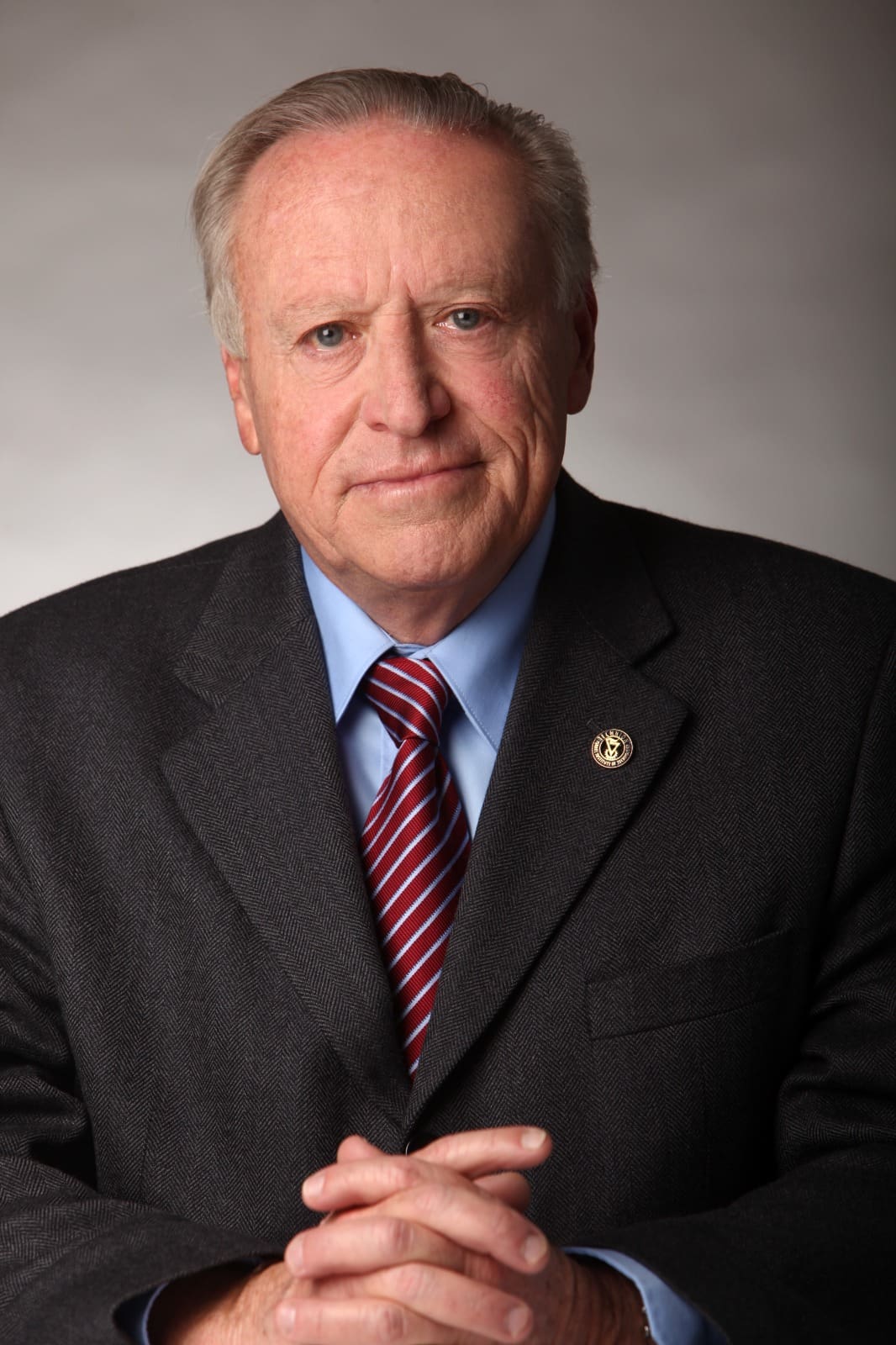
(Haipo) – Research Professor Yitzhak Appluig, President of the Technion from 2001 to 2009 and a faculty member in the Schulich Faculty of Chemistry, passed away at the age of 81. Professor Appluig was a world-renowned chemist who won prestigious awards, international medals and honorary degrees, and was a member of prestigious scientific societies. Technion President Prof. Uri Sivan paid tribute to him.
Technion President Sivan: "He led the Technion to new heights with his quiet and confident leadership"
Technion President Prof. Uri Sivan paid tribute to Prof. Appluig and said: "Research Prof. Appluig led the Technion, with his quiet and confident leadership as president, to new heights in academic research and in the Technion's influence on the State of Israel and beyond. Despite national and global crises, his years of office were characterized by extraordinary academic development, new research centers, recruitment of faculty members, and promotion of international collaborations." The Technion noted that "the Technion was Yitzhak's home and family, and we will miss him greatly."
A scientific pioneer with international achievements
Prof. Appelweg was ahead of his time and was a pioneer in the use of computational tools based on quantum theory to predict the properties of molecules, and a pioneer in the chemistry of organosilicon compounds. He was a member of the American Academy of Arts and Sciences and the European Academy. During his career, he received an honorary medal from the President of Germany and an honorary doctorate from the Technical University of Berlin, and was awarded the Humboldt Prize, the Prize of the Japanese Society for the Advancement of Science, the Kiping Prize of the American Chemical Society, the Schrödinger Medal and the Gold Medal of the Israeli Chemical Society. In 2018, he received the Yakir of the City of Haifa.
From Bukhara to Israel: A Life Story of Dedication to Science and Country
Prof. Appluig was born in 1944 in Bukhara, Uzbekistan, where his parents fled from Poland following the Nazi invasion. He immigrated to Israel at the age of three, grew up in Ramat Gan, served in the Paratroopers, and fought on the Egyptian and Syrian fronts during the Yom Kippur War. During his six months of service in Sinai, he wrote his doctoral dissertation, and after completing his reserve service, he went on to do a postdoctoral research at Princeton University. Prof. Appluig joined the Technion as a faculty member in 1976, was appointed professor in 1983, and in 1995 was appointed dean of the Schulich Faculty of Chemistry. He edited many books, was a member of the editorial boards of scientific journals and international committees, and published hundreds of articles.
A presidency in the shadow of crises – and extraordinary achievements
Prof. Appelweg took office as president of the Technion just weeks after the attack on the Twin Towers in New York, in the midst of a global economic crisis and before a series of dramatic events: the Second Intifada, Operation Defensive Shield, a severe economic crisis in Israel, student and faculty strikes, and the Second Lebanon War. Despite all of this, in his role as president he developed interdisciplinary research, increased investment in research and infrastructure, doubled the scope of funded research and funding for scholarships, worked to absorb new populations at the Technion, including ultra-Orthodox and Ethiopians, strengthened ties with knowledge-intensive industries, and promoted the dialogue between science and technology and the humanities and social sciences. During his tenure, the Russell Berry Center for Nanotechnology and the Laurie Locke Center for the Integration of Engineering and Medicine were established.
The first president of an Israeli university to celebrate winning a Nobel Prize
In 2004, Prof. Appluig became the first president of an Israeli university to travel to Stockholm to celebrate with Research Professor Avraham Hershko and Research Professor Aharon Ciechanover their winning of the Nobel Prize in Chemistry – the first time Israeli scientists had won the Nobel Prize. For him, this win represented not only the excellence of the Technion but also the need to strengthen the connection between medicine and engineering, with the understanding that future discoveries in the life sciences will be based on a combination of these fields. In 2009, on the occasion of his 65th birthday, a special issue of the European journal Chemistry was dedicated to Appluig, in which two Nobel laureates participated, in recognition of his enormous contribution to chemistry and his "Mentsch".
Did the article interest you?