


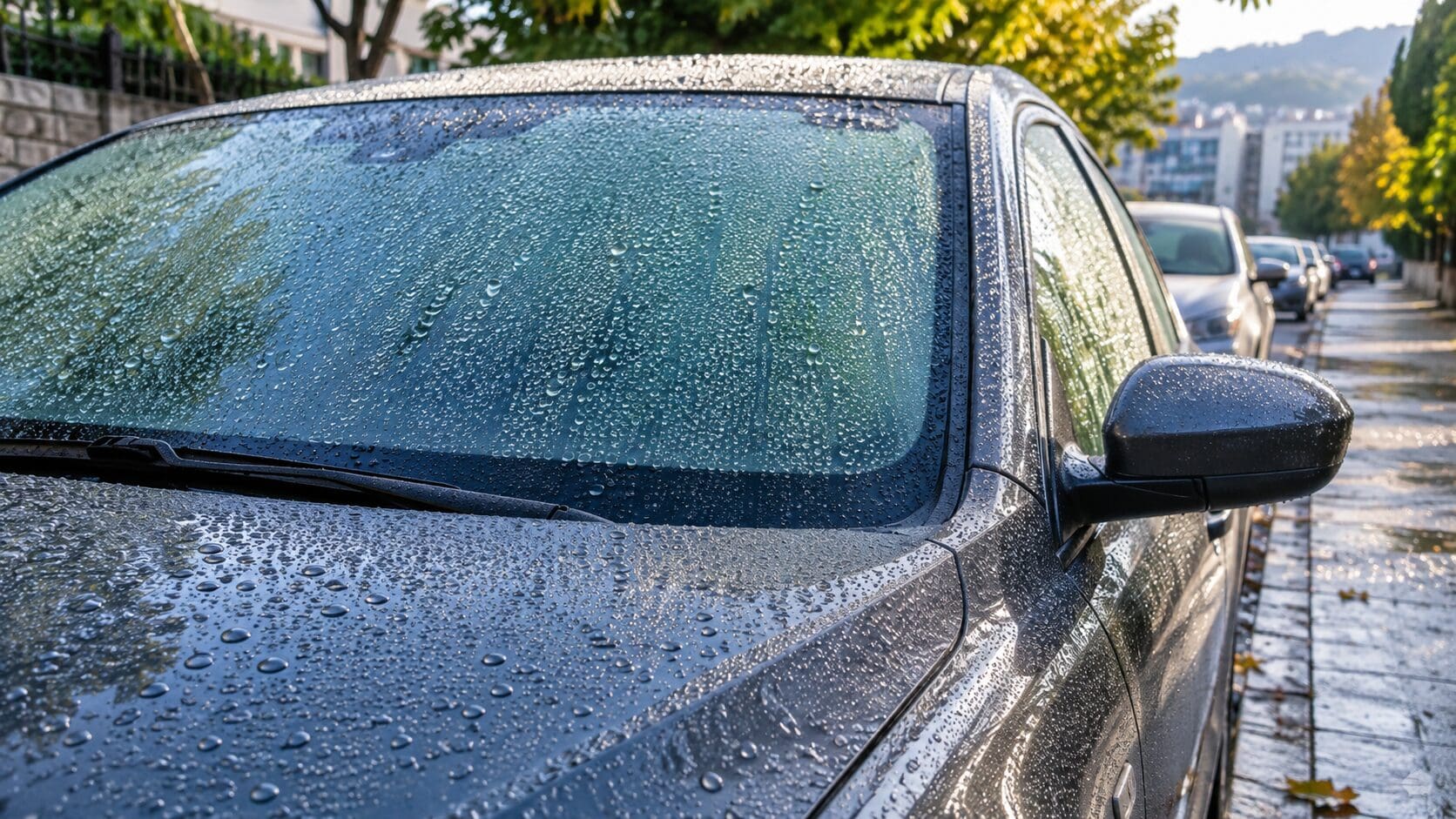
(Live here is the news corporation of Haifa and the surrounding area) Wet cars, damp sidewalks, water droplets on vegetation and sometimes even roads that look as if they were washed away overnight. In the fall, many wake up in the morning convinced that a light rain fell overnight, but it is not always precipitation. Sometimes the culprit is dew, a familiar natural phenomenon that increases in certain weather conditions. So how does dew form, why is it especially common in the fall and how can you tell it apart from rain?
What exactly is dew and how is it formed?
Dew - Water droplets on various surfaces that form as a result of the process of condensation of water vapor (water in a gas state) present in the air. The phenomenon occurs mainly in the early morning hours, when the temperature is low and various surfaces cool down.
During clear nights, the ground and exposed surfaces lose heat through radiation and emit it into the environment. When the temperature of those surfaces drops to the dew point – a point at which water vapor in the air condenses and turns into tiny water droplets.
This creates a layer of droplets on cars, windows, roofs, plants, grass, and other surfaces. In cases where humidity is high and the temperature is significantly cold, the amount of droplets may be so large that they accumulate and run off, creating an appearance reminiscent of light rain.
Why is the phenomenon especially common in the fall?
The fall season is often characterized by a combination of ideal conditions for dew formation: cool nights, relatively clear skies, and high humidity in the air. During the day, temperatures may still be pleasant or even warm, but as the sun sets, the temperature drops. When surfaces cool enough, the water vapor in the air turns into droplets.
The phenomenon is especially noticeable in areas where humidity is high, including coastal plain areas, where the influence of the sea often contributes to high humidity content in the air.
Dew Point – The Key to Understanding the Phenomenon
One of the important concepts in understanding dew formation is the "dew point." This is the temperature to which the air must cool to reach full saturation of its water vapor. When the surface temperature drops below the dew point of the air nearby, the water vapor condenses and turns into liquid water.
It is important to distinguish between dew point and relative humidity. Relative humidity describes the degree of saturation of the air relative to its temperature, while dew point provides a measure of the temperature at which condensation will begin.
How can you distinguish between dew and rain?
Although the appearance is often similar, there are some signs that can help identify it: Under trees and sheds, if it is dew formed on surfaces that have cooled, areas protected from rain may remain dry. However, dew drops formed on leaves can also drip under trees.
About the carsDew tends to accumulate on windshields, roofs, and hoods, and sometimes a dense layer of small droplets can be seen.
On the vegetation, In the morning, you can see water droplets on leaves, flowers, and grass, even when it didn't rain during the night.
On the roads and sidewalks, In some cases, dew creates a thin layer of moisture, but usually we do not see the accumulation of water and puddles like after rain.
Is dew beneficial to plants?
Absolutely. Dew provides plants with a certain amount of water, which may help them during periods when the rains have not yet arrived. For wild plants and low vegetation, the droplets formed at night can be an additional source of moisture. However, prolonged moisture on the leaves can create conditions that encourage the development of fungal diseases in some plants, especially when humidity is high and ventilation is limited.
Not every wet morning starts with rain.
The next time you wake up in the morning, look out the window and see wet cars, drip-covered vegetation, and damp sidewalks, don't be so quick to conclude that it rained overnight. It could actually be dew, a natural process that occurs when moisture in the air meets surfaces that have cooled overnight.
This is one of the interesting natural phenomena of the fall season, which illustrates how even without rain clouds and no drops falling from the sky, the morning can look and feel as if it rained during the night.