


(Live here is the news corporation of Haifa and the surrounding area) – Ministry of Agriculture data indicate a worrying increase in the number of rabies cases in Israel. 115 cases were diagnosed from the beginning of the year to November 12, more than in any previous year in the database. Dogs have become the dominant group among infected animals, the disease is spreading to other regions of the country, and Haifa is also included in the morbidity picture with at least two confirmed cases.
Data from the Veterinary Services at the Ministry of Agriculture indicate a significant increase in rabies in Israel during 2026. As of November 12, 115 rabies cases had been recorded, a figure that already surpasses the previous record recorded in 2025, when 102 cases were diagnosed. Two new reports must be added, one on 11/15/26 and the other on 11/16/26, bringing the number to 117. This is a worrying situation, especially given that 2026 has not yet ended.
Haifa has also seen signs of spread, with at least two confirmed cases of rabies in animals in the city. The cases join the nationwide increase and underscore the need for vigilance on the part of pet owners, residents, and anyone who comes into contact with animals.
26% increase in the number of events within a year
Analysis of the data shows that in the 12 months ending November 12, 2026, 127 rabies cases were confirmed in Israel, compared to 101 cases in the previous 12 months, an increase of approximately 26%.
One of the most worrying trends is the change in the identity of the animals infected. While in the past jackals and other wild animals were the focus of the disease, in the past year dogs have become the dominant group. 69 of the 127 confirmed cases in the past 12 months were in dogs, about 54% compared to only about 30% in the previous corresponding period.
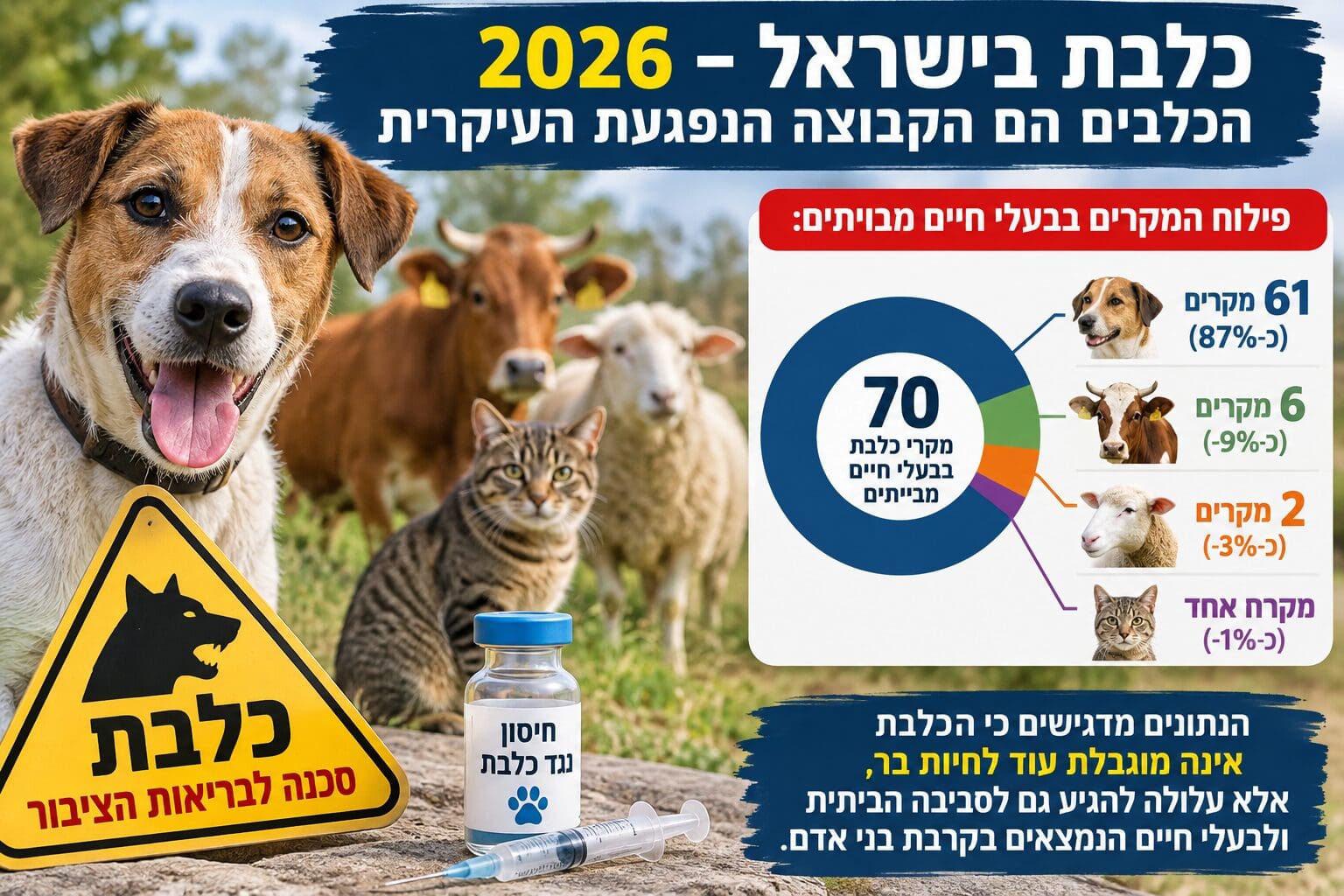
According to 2026 data, out of 115 incidents reported in the database, 70 were in domesticated animals, a figure that highlights the increasing risk to animals in close proximity to humans.
Dogs top the list of infected animals
The breakdown of rabies cases in domestic animals in 2026 indicates a clear dominance of dogs, with 61 out of 70 cases diagnosed in this group. In addition, six cases of rabies were recorded in cattle, two in sheep, and one case in a cat. The data illustrate the expansion of the disease beyond wildlife and the increasing risk of the virus reaching the domestic environment and animals in close proximity to humans.
The disease is spreading south and west.
Another trend emerging from the data is the geographical expansion of the disease hotspots. The lowland and mountain regions accounted for about 17% of rabies cases in the past two years, 38 cases compared to only 1.2% in the previous years. At the same time, the disease hotspots expanded from the northern region and the Seam Line to settlements in Sharon and the center of the country.
In total, rabies events were recorded in 296 localities and sites across Israel. In 61 of them, five or more events were confirmed. Among the most notable locations: Yardena, Majdal Shams, Menahemia and Alma, where 15 events were recorded each.
November to January is a period when more rabies cases are recorded.
The data indicate that rabies outbreaks in Israel come in waves. An analysis of the incidence over the years also reveals a seasonal pattern, with approximately 32% of all rabies cases detected in November, December, and January, a significantly higher rate than would be expected if the cases were spread evenly throughout the year.
The years in which a high number of events were recorded are 2009 with 85 events, 2017 with 74, 2025 with 102, and 2026 with 117 events so far.
How do you get rabies and what is important to know?
Rabies is an acute viral disease that affects the central nervous system of mammals, including humans. It is a highly dangerous disease, which after the appearance of clinical symptoms is almost always fatal. The virus is transmitted mainly through the saliva of an infected animal, usually following a bite, but scratching or the penetration of infected saliva into an open wound or the mucous membranes of the body, such as the eyes and mouth, can also cause infection.
Animals that may carry and transmit the virus include dogs, cats, foxes, jackals, bats, and other wild animals.
Have you been bitten or exposed to a suspicious animal? This is what you should do
In the event of a bite, scratch, or possible exposure to the saliva of an animal suspected of being infected with rabies, action must be taken without delay:
- Washing the wound: Wash thoroughly with running water and soap for at least 15 minutes.
- Disinfection: Disinfect the area using an appropriate disinfectant, such as 70% alcohol or iodine solution.
- Urgent medical attention: Go to the district health office or emergency room as soon as possible to assess exposure and receive preventive treatment as needed. Treatment may include vaccinations and sometimes the administration of antibodies against the virus.
- It is important to emphasize: Do not wait for symptoms to appear. Seek medical evaluation immediately after exposure, as preventive treatment is effective when given before signs of the disease appear.
Make sure your dogs are vaccinated.
One of the main ways to reduce the spread of rabies is to ensure that animals are vaccinated. According to Israeli law, dogs must be vaccinated against rabies in accordance with the instructions and on the specified dates. Dog and cat owners are asked to avoid contact with stray or wild animals, to report animals that are behaving abnormally, and to contact veterinary services in the event of suspected exposure.
117 rabies cases in less than a year, a new record in the database, and at least two cases diagnosed in Haifa in November all raise a warning sign for the public. Given the spread of the disease and the increasing shift to cases in dogs, vigilance, vaccinations, and rapid reporting of suspect animals are essential steps to protect public health.
Another sign of a country in collapse