

The third year of the massacre and the events of October 7th leaves the community of learners and teachers dealing with post-trauma alongside education for memory. How is the October 7th massacre commemorated in the city's high schools, are schools careful not to touch on the events of October 7th in order to protect students, or is it possible to process emotions that bring together pain with a vision for the future, and also how they think a national day of remembrance for the October 7th massacre should be presented in the education system.
We reached out to high school principals in Haifa and Tirat Carmel to learn, from veteran and new principals responsible for shaping youth education, about how their communities are coping with the memory of the October 7 massacre.
Vered Azari, CEO of Alliance High School Haifa:

How the school commemorates the October 7 massacre?
At Alliance Haifa, we chose to commemorate the events of October Seven out of the perception that remembrance is not just a look back, but also an educational act of responsibility, belonging, and building a future.
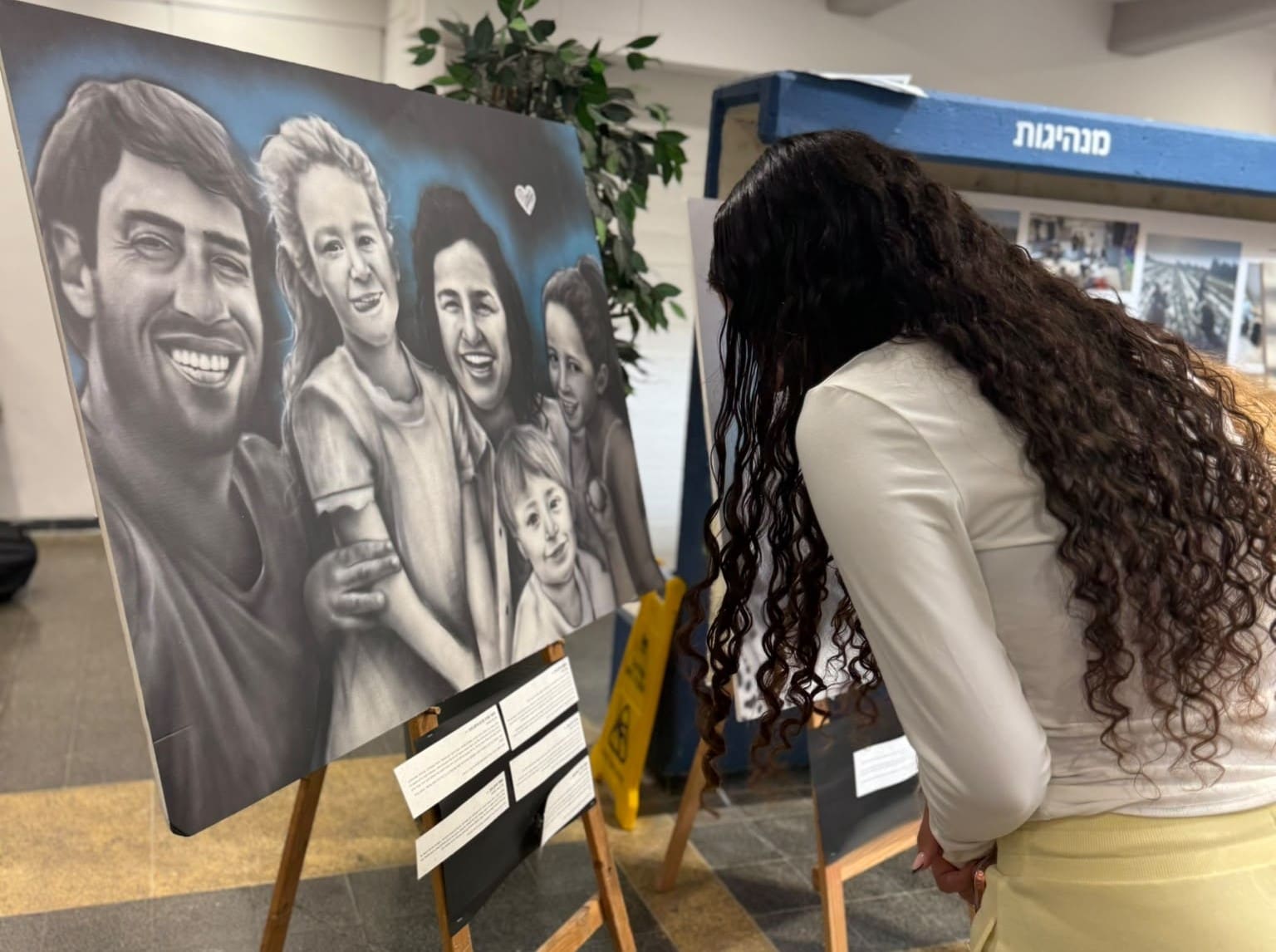
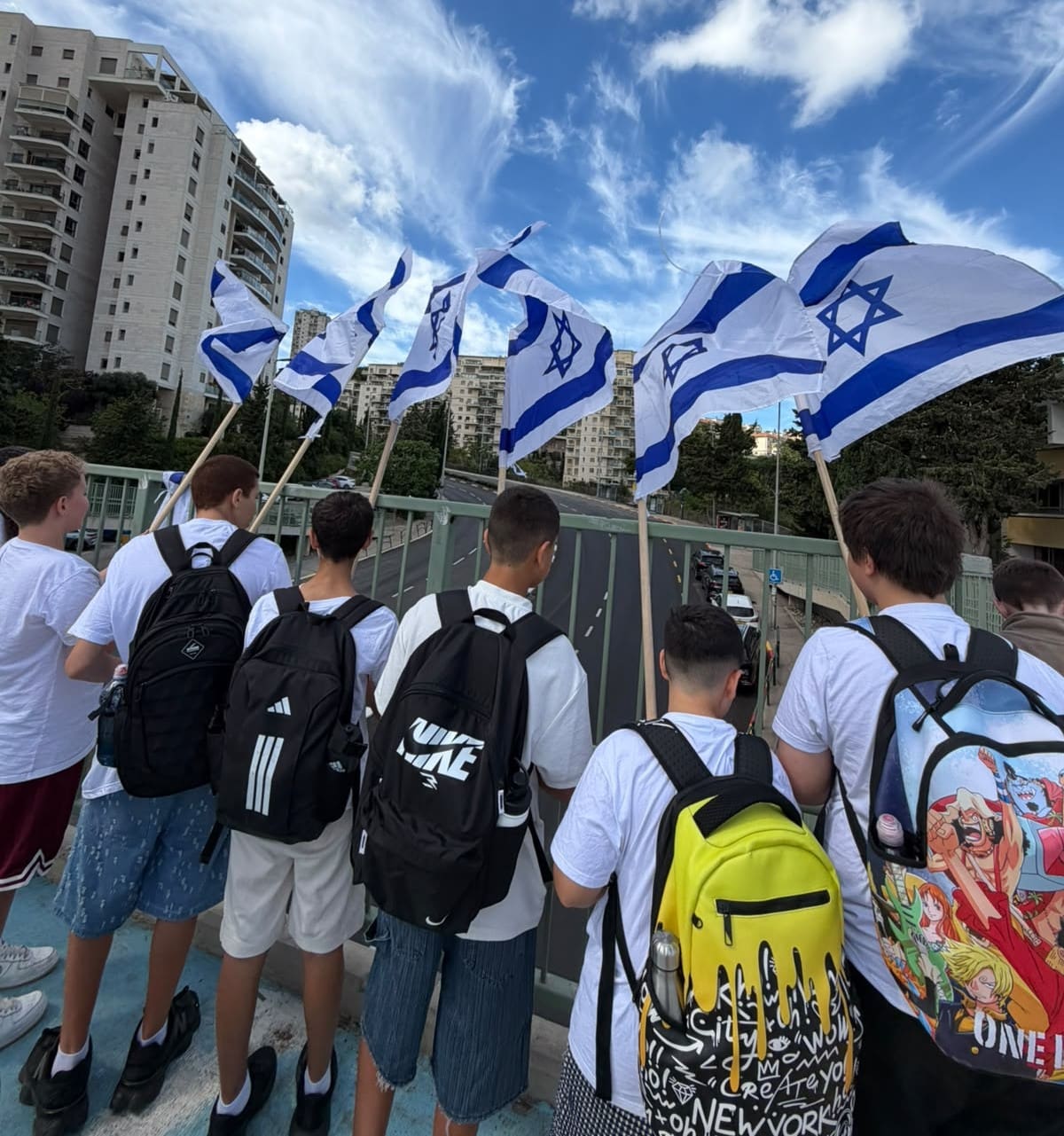
This year we held a variety of commemorative and remembrance activities: a memorial plaque was hung on the school bridge and a tiered stand was set up next to it that allowed for pause, communion, and conversation. A commemorative display was placed in the school grounds, ceremonies and educational hours were held, and meaningful meetings were held with people who carry with them the story of loss and coping.
Among the meetings was a meeting with Sabine Taasa, who lost her husband and son on October 7, as well as a meeting with Liad Baram, a bereaved father. These meetings were not intended only to tell the story of the disaster, but to allow the students to meet human testimony, to listen, to ask questions, to understand the meaning of mutual guarantee, and to connect personal memory with national memory.
In this way, we seek to provide an education for memory that is not content with a ceremony, but rather touches the person, connects to society, and reminds us of our responsibility to shape a humane, sensitive, and beneficial environment.
Have you moved from dealing with trauma to memory education??
I think this is not a sharp transition, but rather an expansion of educational responsibility. In the first year after the October 7th, we were primarily concerned with retention: creating a sense of security, emotional response, personal connection, and understanding that our community is dealing with a shocking reality. Even today, the trauma has not disappeared. It exists in families, in public discourse, in the memories of students and staff members, and in experiences of loss, reserve, anxiety, and uncertainty.
Alongside this, we are also in a place today where we have a duty to educate for memory. Education for memory, in my view, is education for values: for humanity, responsibility, sensitivity to others, resilience, involvement, and the ability to rise from a crisis. This is education that asks not only “What happened?” but also “What do we choose to do with this memory as people and as a society?”
This is precisely the spirit of Alliance: a school that believes that every person is capable, worthy, and entitled, and a school that seeks to advance the individual, society, and environment. Memory requires us to see every person, listen to their story, maintain their dignity, and strengthen their ability to be an active part of society.
Should schools protect children from difficult memories or allow them to be touched and processed??
School should be both a protected place and a place that allows for encountering complex realities. Children and youth do not live outside of Israeli reality: they hear, see, experience, and ask. Our role is not to distance them from every difficulty, but to allow them to encounter difficulty in a responsible, safe, and sensitive manner.
When done right, school gives students a language. It allows them to understand emotions, to distinguish between facts and rumors, to listen to different perspectives, to feel a sense of belonging, and to understand that they are not alone. It also teaches them that alongside pain and loss there are also virtues, mobilization, giving, civic responsibility, and the ability to rebuild.
This is a concept that connects with the Alliance goals: well-being alongside activism. We want our students to feel safe, belonging, and valued, while at the same time becoming active, thoughtful, sensitive, and engaged people, capable of influencing society and their environment.
Rabbi Ofek Meir, CEO of the Leo Beck Education Center, Haifa:

Has the school moved from dealing with trauma to educating for memory??
Not yet. It is too early to talk about the October Shabbat as just a memory. Israeli society is still in the midst of trauma, loss, and the consequences of war. Our role as educators is to create mental, spiritual, and intellectual anchors for students that will allow them to contain the pain, give it words and meaning, and gradually also believe that it can be healed and repaired. In my opinion, processing memory is not the stage after trauma; it is one of the main ways to deal with it. Leo Buck is not just a school but a community center and part of a community, and as such it is one of the tools that the community has to deal with trauma.
Should schools protect children from difficult memories or allow them to touch and process them??
In accordance with age and with great sensitivity, school must be a place that allows us to encounter and process difficult memories. This is what we do on Holocaust Day and Remembrance Day, and this is what we will have to do with the October Sabbath. But memory must not be reduced to pain and mourning. Education for memory must ask what values we want to grow from it: responsibility, citizenship, mutual guarantee and solidarity. "I will guarantee," says Yehuda - responsibility begins the moment a person stops saying what others should do and says: I am responsible.
What would you like October 7th Massacre Remembrance Day to look like in the years to come??
There are dates that go down in history books and there are dates that go down in body and soul. The seventh of October will remain with us forever, but in the Jewish tradition, memory is never just a thing of the past. "And you shall remember that you were a slave in the land of Egypt" is a commandment that turns memory into a moral responsibility. Therefore, I would like us to ask each year not only what we remember, but what we do with memory: Will the pain give rise to fear and hatred, or responsibility, kindness and solidarity? We cannot go back to the sixth of October; the educational question is what kind of society and what kind of country we choose to build from now on.
Ran Sabag, principal of Darka School of Arts and Sciences, Tirat Carmel:

How does your school commemorate the October 7 massacre?
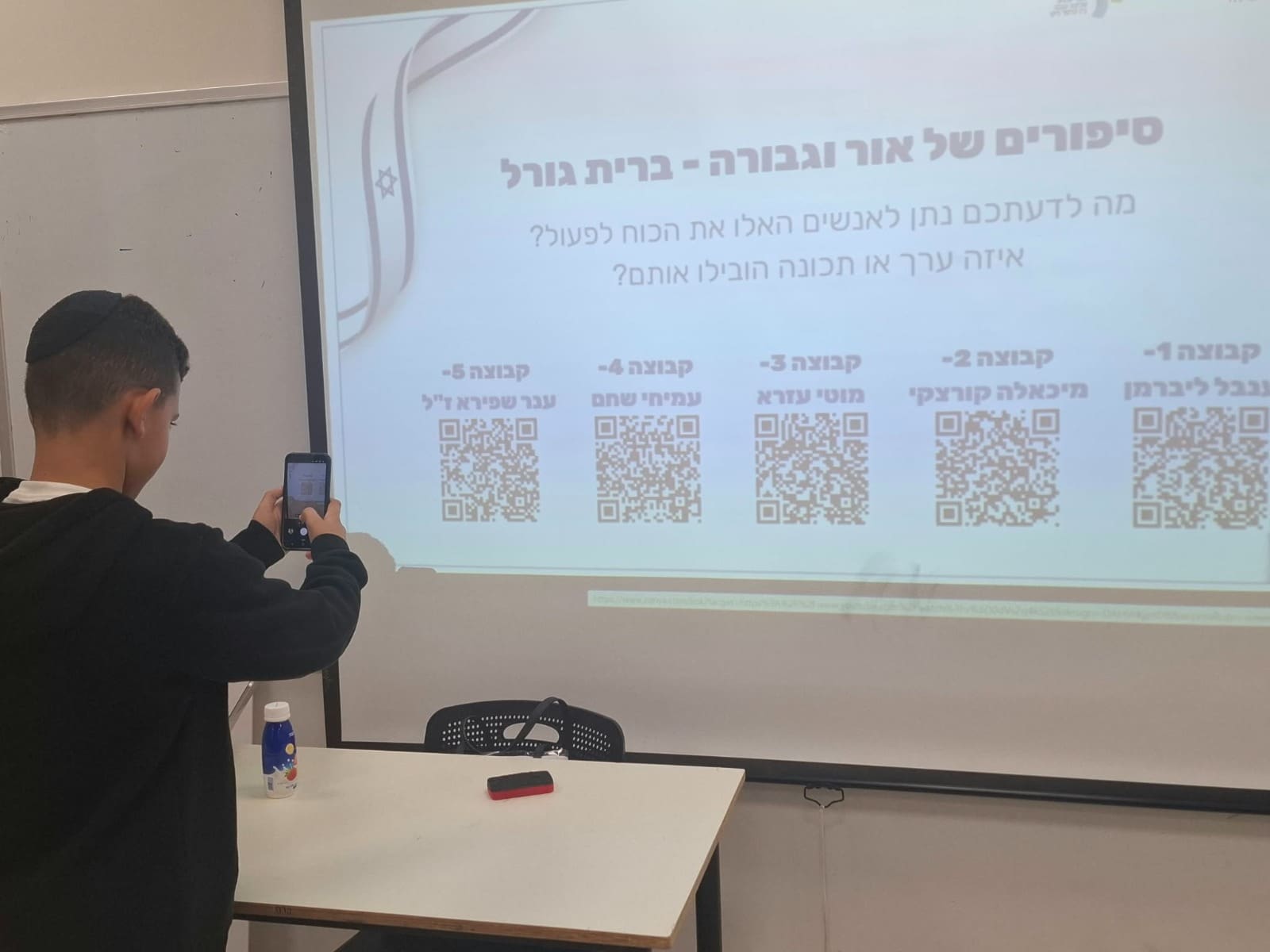
Our leading principle in marking the day at school is a connection between personal memory, value learning, and looking forward. The activity began with an initial processing of personal memories and feelings from that morning. Then, the students were exposed to the commemoration movement through stickers, listened to the song 'Drishat Shalom' by Shlomi Shabat, and explored the life stories behind the stickers. The students wrote pages of remembrance and attached them to school kappa boards that became memorial boards and testaments of hope. In the next part, we dealt with the 'Covenant of Fate' by watching videos about heroic and solidarity figures (such as Elchanan Clemenzon, Aner Shapira, and Inbal Lieberman), and we ended with the 'Covenant of Destiny' – a class workshop to formulate a values charter and a class compass of mutual guarantee and social responsibility inspired by the fallen and murdered."
Do you feel that the school has moved from dealing with trauma to educating for memory??
"In the first year, our focus was more naturally on coping, emotional response, and creating stability. Today, alongside all of this, a significant layer of shaping memory and connecting it to values education has been added. We ask that memory not only remain a place of pain, but also be a compass for social responsibility and mutual guarantee."
Does the education system provide enough tools to shape national memory? What are you currently lacking on a professional/emotional/organizational level to do so??
The education system provides an envelope and materials, and at the same time we discover new needs as we move forward, because this is an event that is not a closed history but a reality that is still present in all of our lives. I would be happy to see continued development in three directions: instructional materials that are more tailored to different ages and communities; ongoing support for teaching teams; and systematic time that allows for emotional and values-based discourse even beyond the days of remembrance themselves.
From our perspective, three key things are missing in the field: On the professional level, there is a lack of modular, personalized training materials for different age groups and the nature of the community. On the emotional level, there is a lack of focused, long-term support for teaching teams, who experience the complex national reality themselves and are simultaneously required to support and lead their students. On the organizational level, A regular, structured, systematic time is required for emotional and values-based discourse that is not limited to just a few days of remembrance.
Doron Aloni, director of Beit Biram, the Hebrew Reali in Haifa:
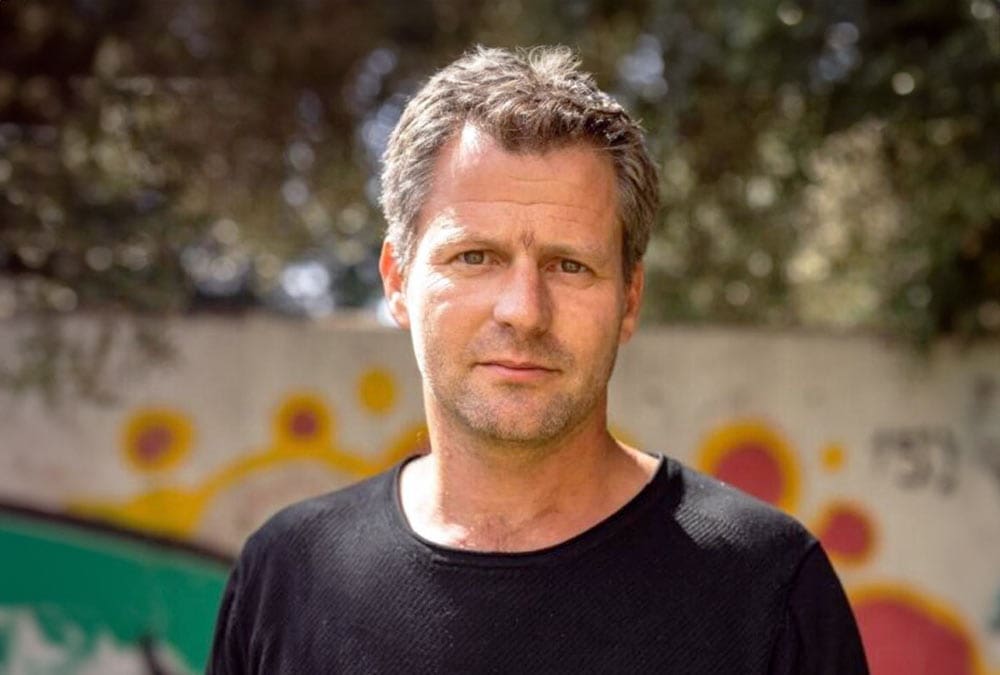
How do you balance the need to remember and process with the desire to protect students or enable essential routines?
This is the task of educators in the coming years, and it is particularly complex.
The complexity is evident in the transitions from routine to emergency and from emergency to routine that our students, like the rest of Israeli society, have experienced. This is a very sensitive seam.
On the one hand, we feel obligated to allow them to continue their tasks: to learn, develop, meet, travel, take exams, and perform the rest of the routine of adolescence. On the other hand, it is clear to us that conditions are constantly changing and each round is different from the previous one in terms of the nature of the fighting, the intensity of the emotional impact, and the coping of each age group. Our task is to adapt ourselves.
In times of emergency, we make sure to create a system adapted to distance learning that is derived from the nature of the round, which we must identify quickly.
It is important for us, in the name of future coping with the consequences of the period, to create learning, even remotely, that involves a familiar system, a meeting with familiar friends and teachers.
The issue of participation in the general effort is critical in balancing the various needs for youth. It is important to us that youth take part in the civic effort, which is why we dedicated days to helping farmers, to helping in the centers for evacuees, to helping teachers who have to teach remotely and help their children who are at home, to helping with babysitting the children of essential workers. During the years when the kidnapped were held captive by Hamas, we went out to stand at the entrance to the school to raise awareness of their situation. Participating in the effort may help students feel a sense of meaning amidst the lack of control over reality. Participation is also about creating the conditions that will allow students to respond and be an active part of the commemoration. For example, two of our graduates designed, when they were in the 10th grade, a sticker project for every fallen school graduate, through which they told about his identity. Others are partners in creating commemorative albums together with bereaved families, and many volunteers deal with social needs that still exist, in many circles, after the October Sabbath.
To what extent do you feel that your decisions are influenced by the personal circle of students and staff (loss of relatives, reserve, harm to the wider circle)?
Especially in the first year of fighting, but also later, many teachers are drafted into the reserves, and we are careful to create a support system from their workplace and the needs that arise in their private homes.
Bereavement hangs over the school that lost 18 of its graduates, you can feel it clearly.
First, bereaved siblings study at the school. A year and a half ago, at the class reunion that concluded the 12th grade preparatory period, two bereaved sisters courageously, eloquently, and sensitively presented their coping. At another reunion, a bereaved brother told the story of his brother's heroism, in a meeting with one of the politicians who came to the Biram home.
In contrast, a boarding school student shared with his class this week his experiences from the October Sabbath, in his kibbutz under siege, and the loss of his best friend in the massacre.
These are extremely important contents, they affect the climate in the school and they later require deep processing.
It should be remembered that the teachers' room educated the fallen very recently, and they can be seen as mourning teachers. This has significance in the manner of commemoration, in the design of the memory, and in the content that we emphasize.
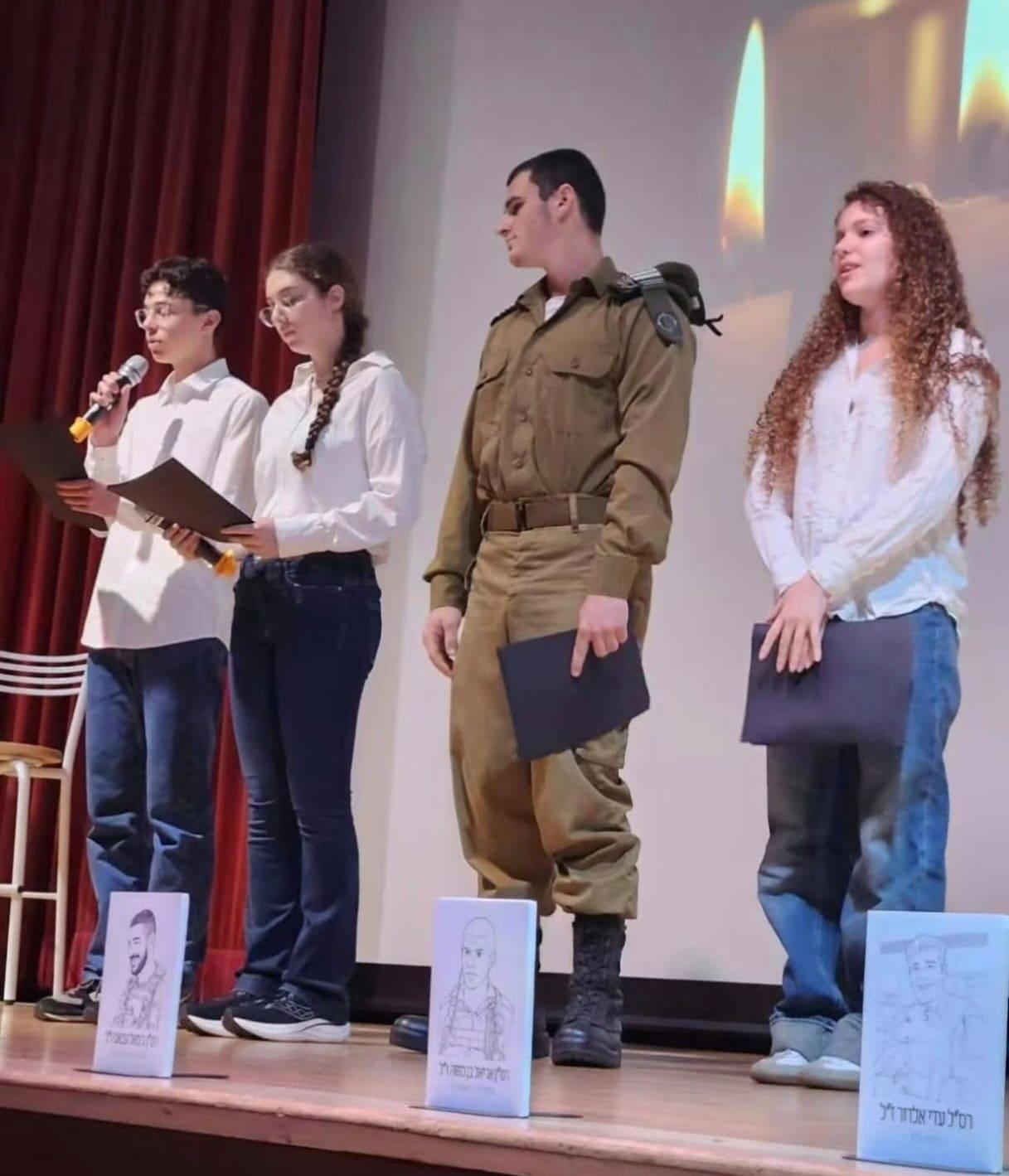
How would you like the October 7th Massacre Remembrance Day to look in the years to come?
Regarding the date, it is clear to us that we are marking the Massacre Memorial Day on the national day, but we understand that the foreign date also raises expectations for consideration and we will have to do so in the coming years.
We understand that this is a generation that is now shaping the culture of remembrance and formulating the messages and practices that will be passed down from generation to generation, year after year.
We would like the main messages to deal with the importance of remembering the fallen and murdered and the memory of the events, certainly for a society that wants to repair and build a better society. Alongside the memory, we would like to deal, year after year, with the responsibility shown by the fighters, with the civic spirit that has swept Israelis towards contribution, assistance and the manifestation of solidarity for years.
And finally, we would like to emphasize the importance of casting doubt, and here it is right to acknowledge those who warned, who marked, who identified, and the necessity of modesty, casting doubt, and raising questions, even if we are a minority or even individuals.
These are the values that we see fit to emphasize in these years. Naturally, it is likely that additional values will be emphasized in the future, and we invite the youth to be partners in shaping the values that we emphasize and the practices through which we will remember and learn.