


(haipo) Following the publication of the Environmental Emissions Registry (EER) report for 2025, the Haifa Bay Cities Association for Environmental Protection points to significant gaps between the plants' reports and findings collected in the field. At the same time, the Sharon-Carmel Cities Association sharply criticizes the continued operation of the coal-fired units at the Orot Rabin power plant, the most polluting plant in Israel this year as well.
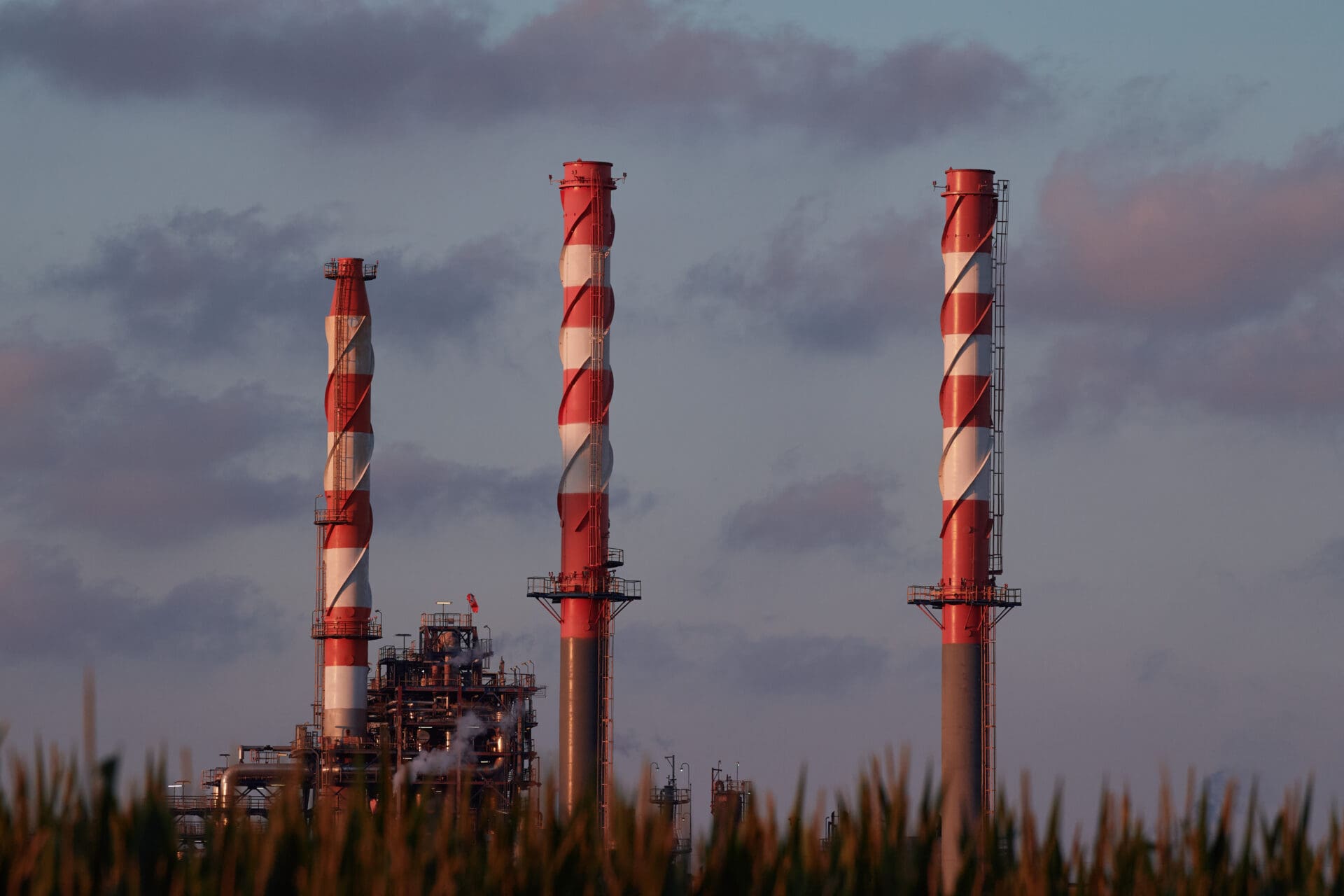
Emission from a tank in the Bazn ► View
What is the National Population Register and why is its data important?
The Environmental Emissions Registry (EER) is an official database of the Ministry of Environmental Protection, which centralizes reports from factories in Israel on the extent of emissions of pollutants into the air, soil, and water. The annual report allows the public, authorities, and professionals to understand who the major polluters are, what environmental trends are occurring, and whether there are gaps between the reports and the reality on the ground. The publication of the 2025 ERR report this year provoked strong reactions from environmental associations in the Sharon-Carmel and Haifa Bay areas, who warn of significant gaps between factory data and independent monitoring and control findings.
Orot Rabin Power Plant: Again at the Top of the Polluters List
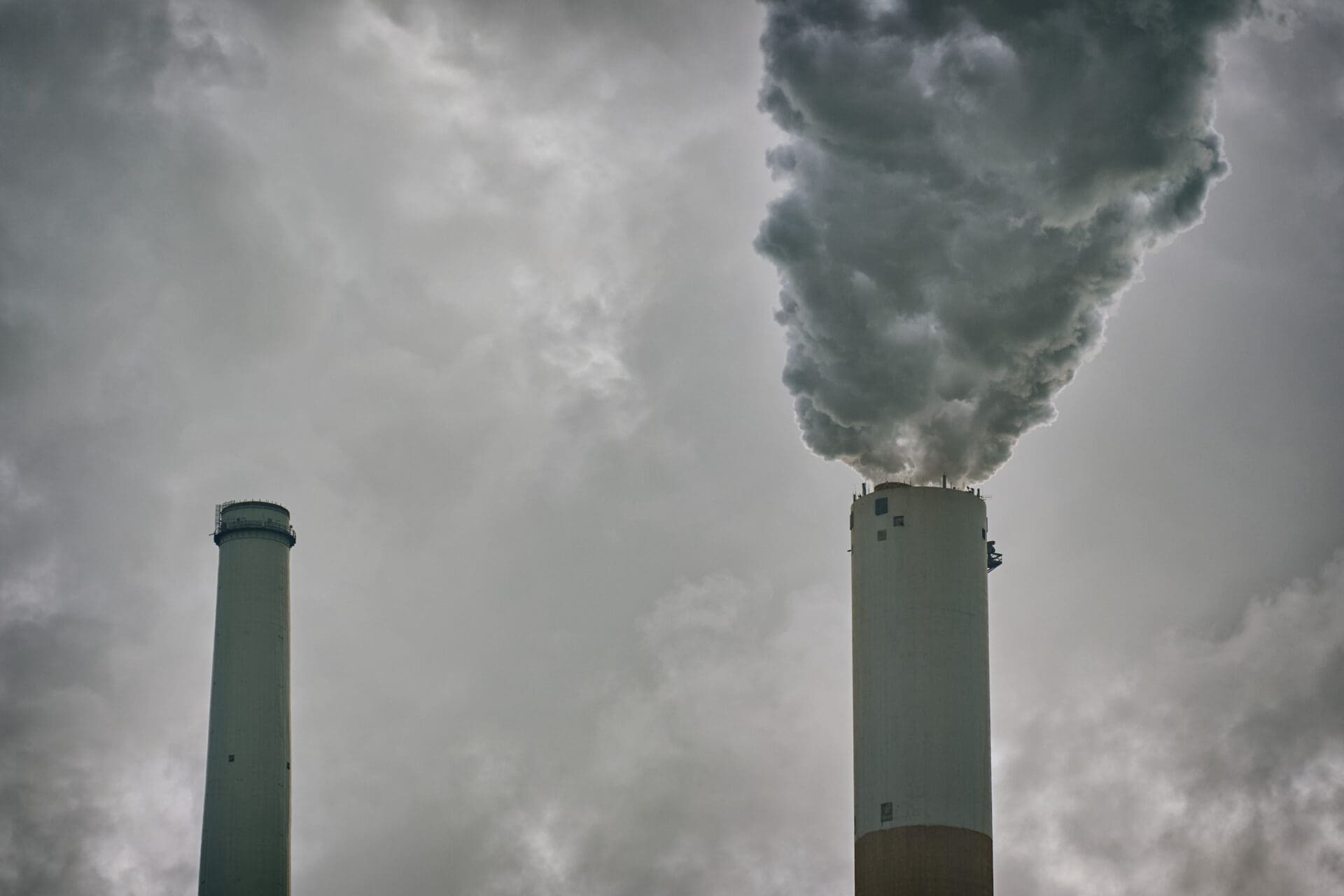
Nir Sahar, CEO of the Sharon-Carmel Environmental Cities Association, warns that even in 2025 the Orot Rabin power plant is The most polluting factory in IsraelAccording to him, the continued operation of coal-fired units 1-4 until 2028, along with the easing of environmental requirements and the use of more polluting coal, pose a real health hazard to the region's residents.
The union filed a petition against the extension of the units' activities, and within the framework of this petition, an opinion by Dr. Ofir Lavon was presented, indicating that Increase in mortality and morbidity As a result of their continued operation.
Serious gaps between reports and reality
Following the publication of the 2025 EPA report, the Haifa Bay Cities Association for Environmental Protection examined the factories' reporting data against monitoring, sampling, and documentation data from the field - and the findings are worrying.
Increase in emissions at the ZAN complex
According to the report, the ZEN factories reported a significant increase in emissions:
- 15 % NMVOC
- 11 % SO₂
- 25 % particles
- 44 % CO
The union warns that the reported data does not necessarily reflect the full extent of actual emissions.
Gadiv Affair: A tenfold or more discrepancy in the estimate of benzene emissions
The most severe example presented by the union concerns a malfunction in a storage tank at the Gadiv plant, which was damaged in 2024. The malfunction lasted about four months, during which time benzene was released from the tank. The emission was not included in the plant's initial report, and only following the union's request to the Ministry of Environmental Protection were the data updated. According to the plant's update, the scope of the emission was estimated at about 7 kg of benzene, but a professional examination conducted by the union indicated an estimated emission of about 70 to 100 kg of benzene during just one hour of the event period, a difference of ten times or more. The issue is currently under review by the Ministry of Environmental Protection.
Unreported events: emissions recorded on thermal camera and yellow smoke
In May 2025, union representatives identified, using a thermal camera from the union roof, an unusual VOC emission from one of the tanks in the ZAN compound. Following the identification, a surprise inspection was conducted at the plant and the emission was documented in the presence of plant representatives. The plant claimed that no unusual event occurred and no malfunction was found. The union requested documents to investigate the incident, but to date these have not been received, and the incident was not included in the report to the National Petroleum Corporation. In addition, in 2025, the union documented yellow smoke from one of the Carmel Olefins facilities. The plant's response to the union's inquiry was that there was not enough data to understand the source of the yellowish hue, and that the plant was not aware of any malfunction that occurred at the time in question.
Sensors in "saturation" and unreported emissions
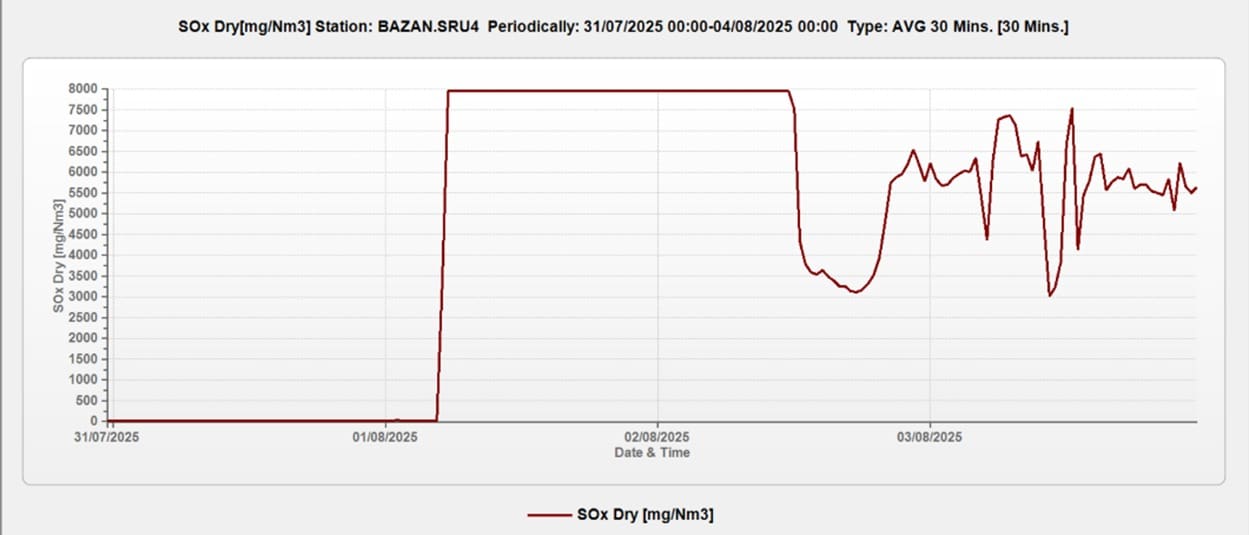
Additional findings raised by the union concern unusual events during which the sensor monitoring the concentration of sulfur oxides from the ZAN facilities entered a "saturation" state, meaning that the pollutants exceeded the device's measurement range. These emissions were not actually reported in the NPA report. On August 1, 2025, the MAHAG 4 facility was shut down, and the monitoring device reached saturation for more than 24 hours, but the increase in pollution was not reported. Following the union's request, the Ministry of Environmental Protection demanded that the plant calculate the increase in emissions, but this finding is not included in the current report. In addition, air quality monitoring data at stations near the ZAN complex also indicate an increase in pollutant monitoring in the last five years, and from time to time, deviations from the daily environmental value of carcinogenic substances are recorded.
About 94% of benzene emission incidents go unreported
Following the union's request, the Ministry of Environmental Protection has already tightened reporting requirements for benzene plants this year regarding unusual benzene emission incidents. However, according to tests conducted by the union, approximately 94% of benzene emission incidents are not reported at all. Against the background of these findings, benzene is seeking to establish another polluting facility, a sulfur solidification facility, while emissions of the same pollutants emitted from the planned facility, hydrogen sulfide and sulfur oxides, are on the rise, an increase that is reflected in the monitoring stations and environmental sampling at Check Post.
Union Chairman: "The polluter must report every emission and pay for the pollution"
Chairman of the Haifa Bay Cities Association for Environmental Protection and Deputy and Acting Mayor of Haifa, Avihu Hahn, He said that "the report from the Ministry of Environmental Protection should be the basis for inspection, not a kosher certificate for factories. When we find gaps between what is reported and what is discovered on the ground, we cannot continue as if everything is in order."
Hahn added that "the polluter cannot be both the one who pollutes, the one who reports, and the one who determines how much he has polluted," and called for the ZEN factories to pay for the pollution they have created over the years. "What is not reported is not erased from the air and is not erased from reality," he emphasized.
Union CEO: "Factory reports must stand the test of reality"
The Association's CEO, Dr. Lihi Shahar Berman, noted that "the professional work of the union allows us to examine the reports against data collected in the field. The cases we identified emphasize how important it is to have professional and independent supervision."
Dr. Shahar Berman emphasized that "the public is entitled to complete and accurate information. Every emission event should be examined and given real expression in data and reports, and not disappear just because it was not identified or reported by the plant."
Sharon-Carmel Union: "Orot Rabin – the most polluting factory in Israel even in 2025"
in parallel, CEO of the Sharon-Carmel Environmental Cities Association, Nir Sahar, sharply criticized the fact that the Orot Rabin power plant remained the most polluting plant in Israel even in 2025. Sahar pointed out that the state, instead of closing the outdated coal-fired units 1–4, extended their operation until 2028, relaxed environmental requirements, and even allowed the use of more polluting coal. The union filed a petition with the court against this decision, and an opinion by Dr. Ofir Lavon attached to the petition indicates that the continued operation of the units is causing a significant increase in mortality and morbidity in the area. "The union's position is clear: Units 1–4 must be closed, and at the same time, the Israeli government must formulate a national plan for the energy sector that will ensure energy security in routine and emergency situations, without jeopardizing the health of about a million residents of the Sharon-Carmel region," said Sahar.
Summary
The 2025 Environmental Impact Assessment Report reveals a complex picture: alongside the official reporting data, field findings raise concerns about significant gaps, unreported events, and increased pollutant emissions. Environmental associations are calling for increased oversight, full transparency, and steps to ensure the health of hundreds of thousands of residents living near industrial complexes.
Did the article interest you?
Close them immediately!
We sell our health for the sake of money.