


"Today I was on the verge of giving up," I wrote on April 30, 2019, as I stood in a dark corner at the edge of the Kiryat Eliezer neighborhood, at the end of the Salvador Street parking lot between the road safety education complex and the Maritime Museum, with gloves and empty garbage bags, trying to understand how I got into this situation.
Eight months earlier, I moved to the neighborhood, with great hopes of renewing the religious Zionist community that had shrunk over the years in the neighborhood and seeing where I could help improve the lives of all residents in the neighborhood. I chose to focus on improving infrastructure and cleanliness, but we are putting things first. We will talk about that later. At this point, I can only say that I have set out, and as Dr. Seuss says, "When you set out, you arrive at wonderful places," and writing in this column about social entrepreneurship is a direct continuation of that fascinating and wonderful journey that I could not have imagined would develop into this.
Therefore, I urge you now, listen to Dr. Seuss' advice and get going!
This column is here to accompany you throughout.
Where do you start?
When I arrived in the neighborhood, I asked myself, what can I do in my daily life to make the neighborhood a little better place?
I wanted to start a social enterprise in my neighborhood, but I didn't know where to start. In the TED talk, How to Start a Movement, I found the initial clue.
This is a short TED talk, about 5 minutes long, in which you see a video that shows a guy on a lawn, dancing alone. All the people on the lawn look at him like he's crazy, making strange, amateurish movements, and mostly looking like someone whose self-awareness has gone on a long hiatus.
Then the turning point occurs, a second person joins him. At that moment everything changes. The first one no longer just looks like a crazy person. Suddenly there are two. There is something in common. The second one doesn't just join the dance, he gives the first one legitimacy. Then, the third one joins in and suddenly we have a movement, from there the snowball continues to grow and more and more people join, and within minutes the whole lawn becomes one big party.
The message was shocking. Sometimes the most significant person is not the first, the leader, but rather the second person, the one who joins in, who believes in the idea, who shows others that this is no longer the madness of some madman, but the beginning of something social.
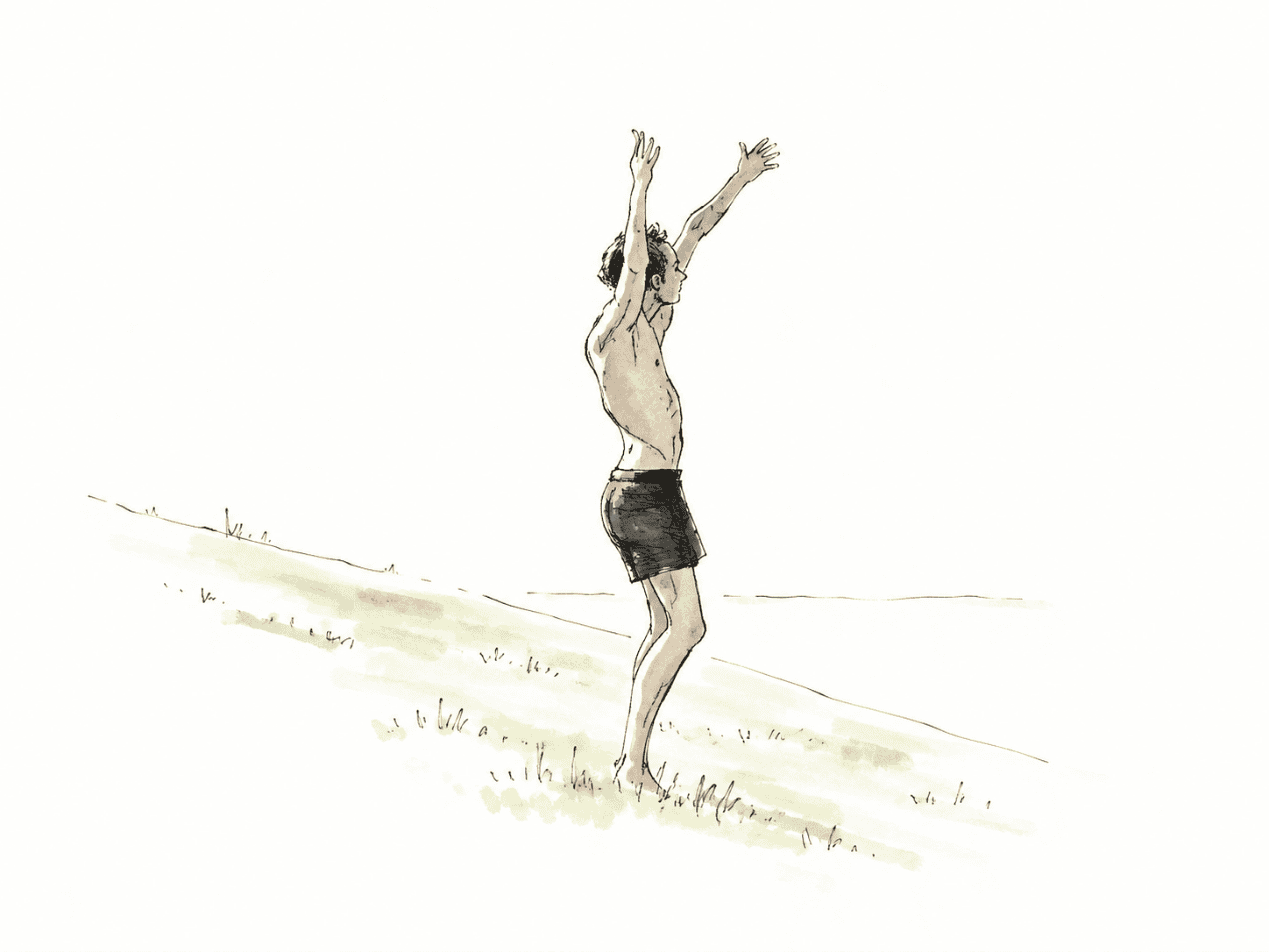
I chose to be one, number 2, who would join a lone madman for help. And I began to look for "madmen," and as we know, "if you've been tired and found one - believe it."
The birth of "an hour a week"
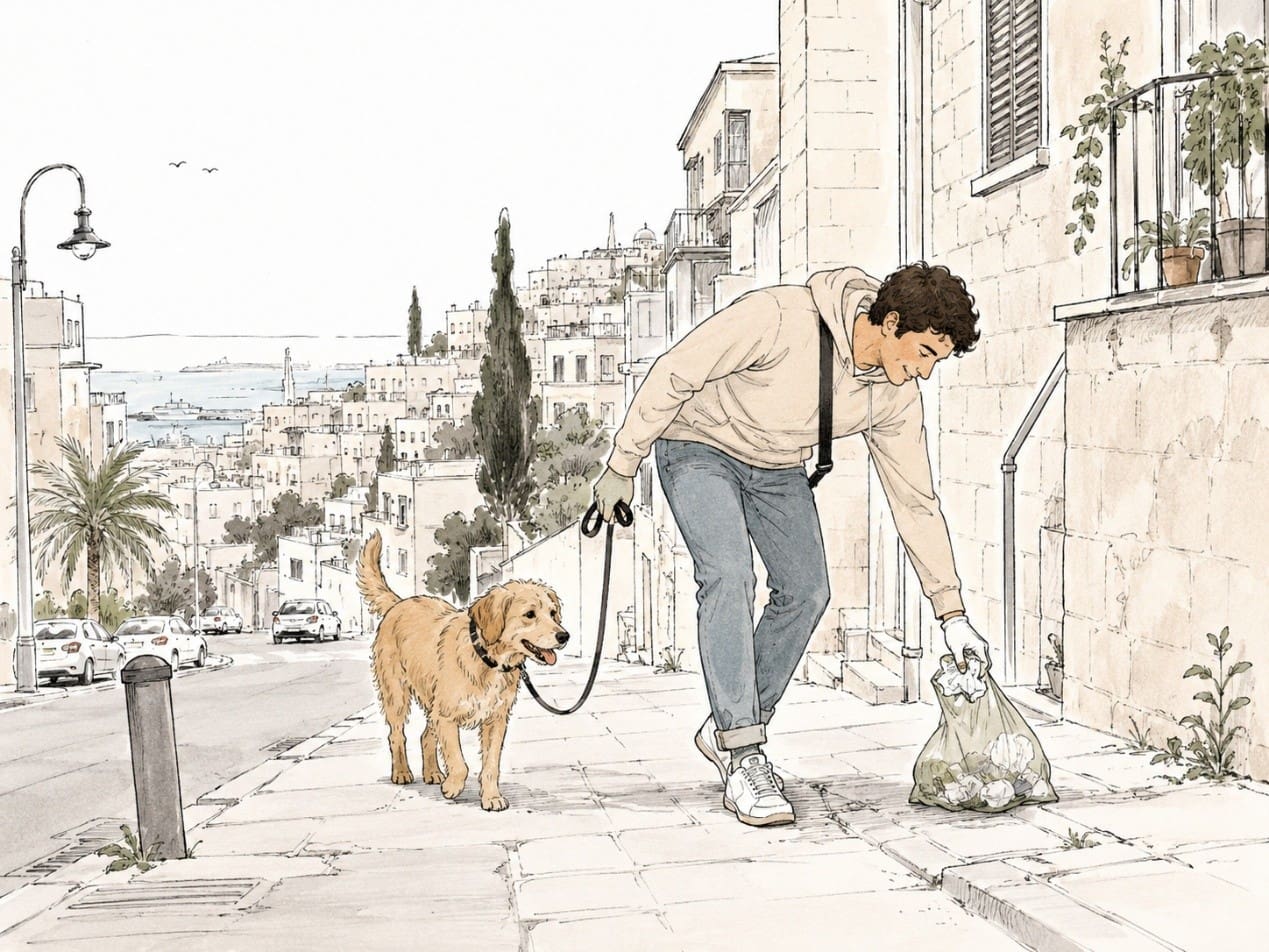
"My name is Itay Perez, I live on Bracha Habas Street in Haifa (Upper Hadar)," Itay wrote in February 2019. "I have a dog, so I get to walk Hadar often, especially around the house. I noticed that between the streets and in the bushes there is such an amount of garbage that it is no longer pleasant to walk in the neighborhood, both because of the smell and because of the dirt... For a year and a half I did nothing except complain and try to talk to the municipality.
Today I decided to take action… I took the dog and two bags of trash and we went for a walk/cleaning at the bottom of the building. We came back after an hour sweaty (at least I did) and with two bags full of trash + a vacuum cleaner, a laundry hanger and more and more…
When I got home, I thought, "What if every person in the neighborhood went out once a week, for an hour, to pick up some trash on the street?" I wonder what the street would look like then...
I know we all pay property taxes and a lot for the municipality to do these things, but I'm tired of waiting.
I made a decision today, every week I will go out for one hour with the dog and the garbage bags to try and make the place I live a more beautiful place, at least one that I will have fun walking around in.
On this page I will upload pictures every week of what I have collected, in the hope that the amount will gradually decrease..."
I got excited, I found the first "crazy" person. There's already someone who stands up and does something great. I can be the second person. I can open another branch in Kiryat Eliezer.
I contacted Itai and asked to be a “branch” of “One Hour a Week” in Kiryat Eliezer.
I started, I went outside. Every week a different street. Sometimes a spot near the synagogue, sometimes a different area in the neighborhood, sometimes a side street that no one feels is their responsibility. While moving, I met different people. Some shouted from the balconies. Some asked what we were doing. Some cheered. Some said we were suckers. Some joined and were dear partners in this journey.
But in April 2019, I found myself standing alone at the edge of the neighborhood in a dark corner and asking myself, Why? Why the hell am I doing this?
The million dollar question – why?
In that dark corner, I asked myself the question, the answer to which gave me the strength for all the activity in the project. "I reminded myself that this is not just a PR activity for the community, but really a value that I grew up with and believe in." I answered myself, "This is our country and it is important to keep it clean and beautiful, both on the main streets in the neighborhood and in the remote alleys, everywhere!" I remembered the stories I grew up on, about the rabbis who immigrated to Israel and cleaned the streets, out of joy at the immense privilege of living in the country and cleaning the streets... They saw value in it, there was a point to the effort!
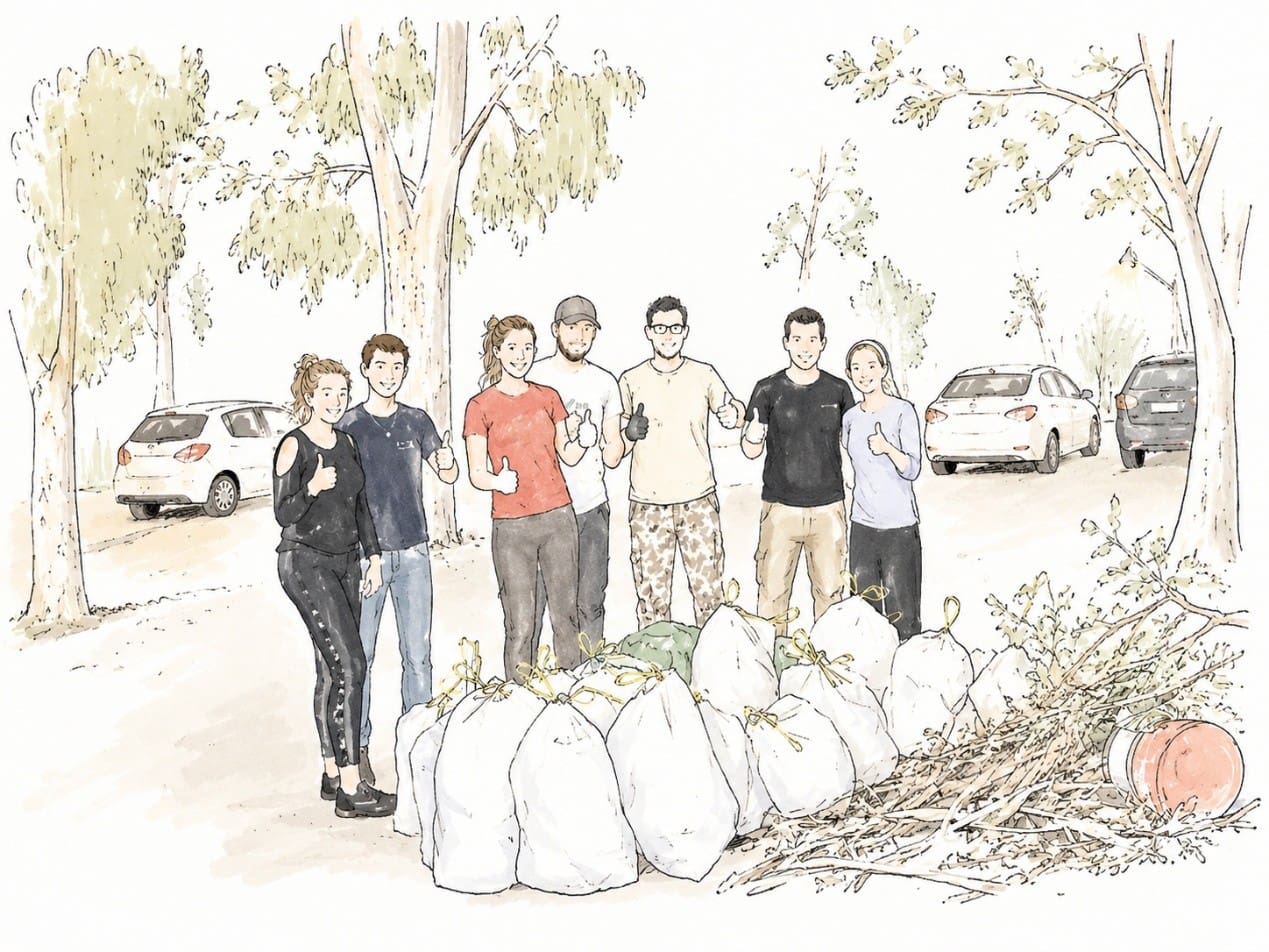
I continued, persistently despite the difficulty, and at the peak of the activity, we reached about 15 friends who went out to clean together.
Over time, I learned that the project is much more than cleaning, it concerns our relationship with public space.
The public space affects us. A child who grows up on a neglected street understands this, even if no one tells him in words, he understands, this place doesn't care about me and I don't have to care about it either. When the place looks well-kept and tidy, it sends us something completely different, there are people here who respect themselves, respect me, there is responsibility here, there is partnership here.
One of the important principles I learned at this point was that people don’t join in on a technical action. If you’re invited to “come pick up trash,” you’re not sure it’s going to excite you. But if you’re invited to join in on a bigger, more meaningful vision, that’s a different story.

The "One Hour a Week" Method
What have we done? We collected trash. A few bags at a time. But for me, that's where I discovered that you can start a social enterprise from scratch with four steps: Emotion, imagination, action and sharing.
The base is The feeling. Understand the problem. Who suffers from it? What does this problem look like on a daily basis? What is the pain it creates? What are the consequences of postponing treatment of this problem? All of these answers build for us the strong why that will enable the how.
The second step is The similarity. Come up with ideas. Let a wide range of options float. In the case of neighborhood cleaning, one could choose several ways: complain to the municipality, set up a petition, publish posts, go out to clean, create collaborations. Everyone chooses the path that suits them. That's the beauty of entrepreneurship, it's an ongoing experiment. We don't know in advance what will work.
The third step is act, even something small, the main thing is to get going. Don't wait for a perfect plan. Take two bags, go for a walk, see what happens. Then learn and improve.
The fourth step is to share. Promote the value. Share the vision and dream. Let more people get excited with you about the picture of the future victory and the small actions that pave the way there. When people saw a picture of residents cleaning up a neighborhood, it reminded them that cleanliness is not something that can be taken for granted. Maybe it also made someone think twice before leaving a disposable cup on the sidewalk. Maybe someone else will pick up the gauntlet and say, we need to do something on our street too.
Caring • Responsibility • Proactivity
If you had to distill the whole story of "An Hour a Week" into three words, these would be it. – Caring, responsibility, proactivity.
concern – The moment I see a problem and don't move on. responsibility – The moment when I don't say "It's not my problem," but ask what small part I can take. activity – The moment I stop just thinking or talking, get on the field and do it.
To me, this is the heart of social entrepreneurship. Not a title, not a budget, not an official position. First of all, caring. Then taking responsibility and taking action.
I believe our city is full of people who do this, even if they don't call themselves social entrepreneurs. People who maintain a community garden, who lead a trail, who lead a community, who organize a social gathering, an activity for children, help for immigrants, a cleaning group, assistance for the elderly or a neighborhood bar.
These people don't always appear in the headlines, they don't always have a budget, sometimes they work almost alone, but they are the hope of Haifa, they deserve to be recognized, they need to be helped.
Do you know people like this? Tell me so we can learn from them together, what is their secret? What did they learn on their journey?
To listen to the episode ◄ How to start a social enterprise with an investment of one hour a week?
Baruch Dror – Aeronautical engineer, MBA in Innovation and Entrepreneurship Management from the Technion, entrepreneur and social activist in Haifa. Writes about the people, communities and processes that shape the city, believing that leadership begins with creating spaces where people can take initiative and realize their full potential.
Did the article interest you?
The municipality is busy turning Kiryat Eliezer into the Hong Kong slums. Crowded 30-story towers. Another 65-story one because why not. More parking lots in between. It's not that they're making Kiryat Eliezer a good neighborhood full of green lungs and new educational buildings. It's not that there's a plan to add a metro line through the neighborhood and underground parking lots and the whole thing will be parks, walking paths and squares. No. They have a problem with developers. Each developer takes 2-3 housing estates and builds 1:5 towers of hundreds of apartments, dense like a forest next to the second developer who will do the same thing. 30 floors. 35 floors. Each building 120-150-180-220 residents. Take a quiet, calm neighborhood and shove another 20 residents into it. Where will they play? Where will they go for a walk with their dog when there will suddenly be another 500 families with dogs on the existing promenade? Where will all these thousands of children study? There are no answers. Kiryat Eliezer is before destruction. And it is not the only one.
I wish everyone would want to improve, build and fix...
Unfortunately, there are also those who only want to destroy!
Let's hope the situation improves!
"The shoemaker probably walks barefoot"... At the entrance to your apartment building there is always waste and garbage that for some reason is not collected... Maybe we should start there...?
Thank you very much, Meir, for this response.
The biggest fear that prevents many people from achieving their dreams is the fear of judgment,
Fear that someone will come along and divert the discussion from the value they wish to promote,
On a personal level in an attempt to challenge the legitimacy of their action for this value
And this fear paralyzes them.
And makes them not go away
And not to realize their ideas and dreams.
Thank you for the opportunity to tell you, dear friends who read this article and response,
When you start taking action, you will be criticized.
Here it is, you don't even have to imagine it.
When I cleaned, they said I was a sucker,
When I stopped, they say the cobbler goes barefoot…
Everything is fine
But the bottom line is that our world is becoming a better place because of you.
Those who don't let fear stop them,
Those who see a problem,
Show care, take responsibility, and lead the change.
Anyway, Meir,
If you already know where I live – let's talk about it and lead the change together.