


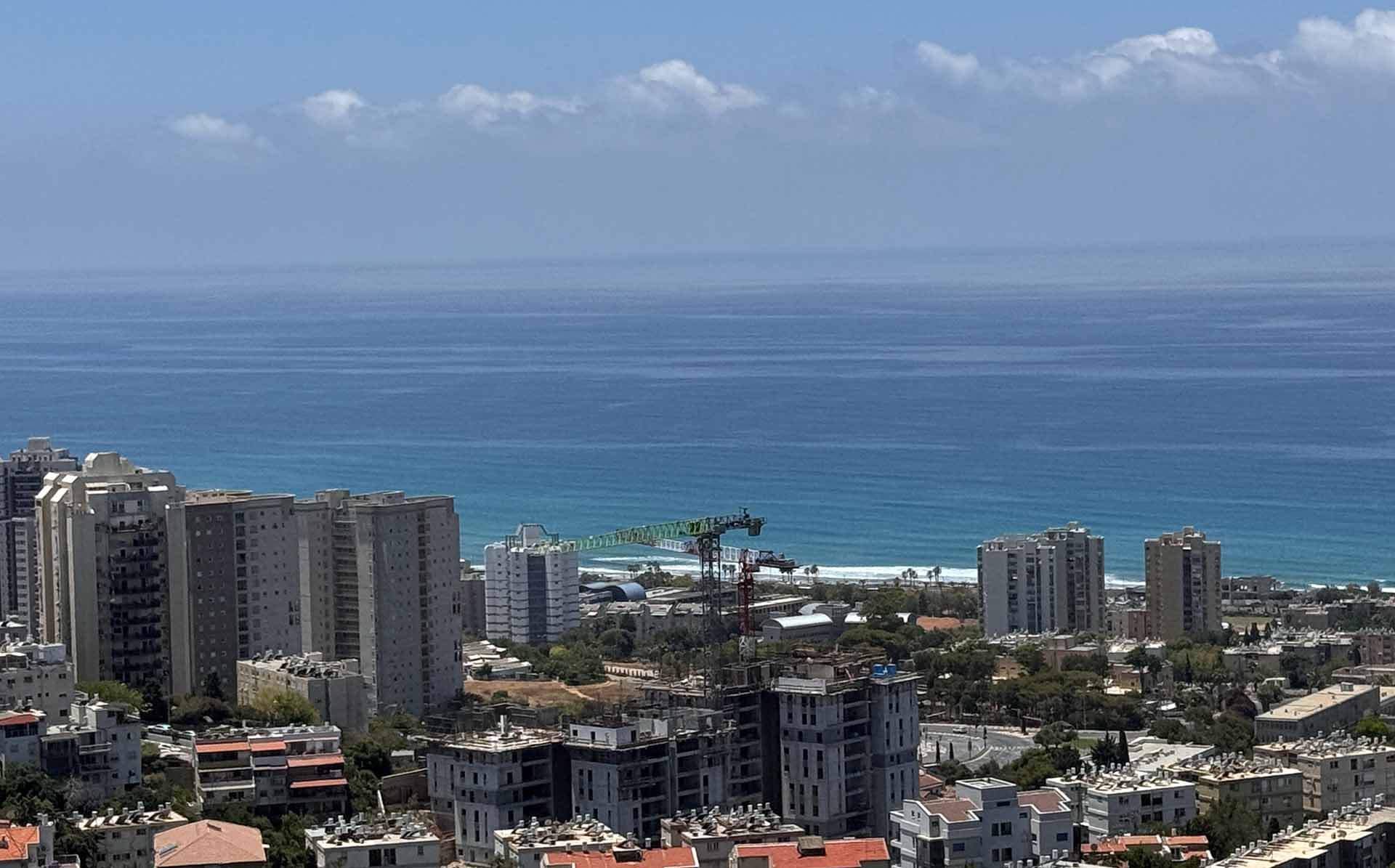
(Haipo) – Sunday, June 21, 2026, will mark the longest day and shortest night of the year. In the Northern Hemisphere, this is the official start of summer, after a period in which warm days have already been experienced. In Haifa, a change in the wind regime, the sea, and surfer activity along the beaches of Shikmona and Bat Galim is expected.
On the other hand, in the Southern Hemisphere (Australia, New Zealand, Argentina, etc.), winter will begin.
The beginning of summer and the change in wind regime
On the longest day of the year, spring officially ends in the Northern Hemisphere; and summer officially begins. Although warm days have already been recorded, the significant change is expected to come with the wind regime typical of the summer season.
In spring (and also in autumn), light winds usually blow in the morning and milder winds in the afternoon, mainly from the north and northwest, bringing with them cool air from Europe.
In summer, on the other hand, the wind usually starts out south in the morning (a wind coming from hot Africa), turns southwest at noon, and towards evening turns west to northwest and gradually weakens.
The sea in summer compared to spring (and autumn)
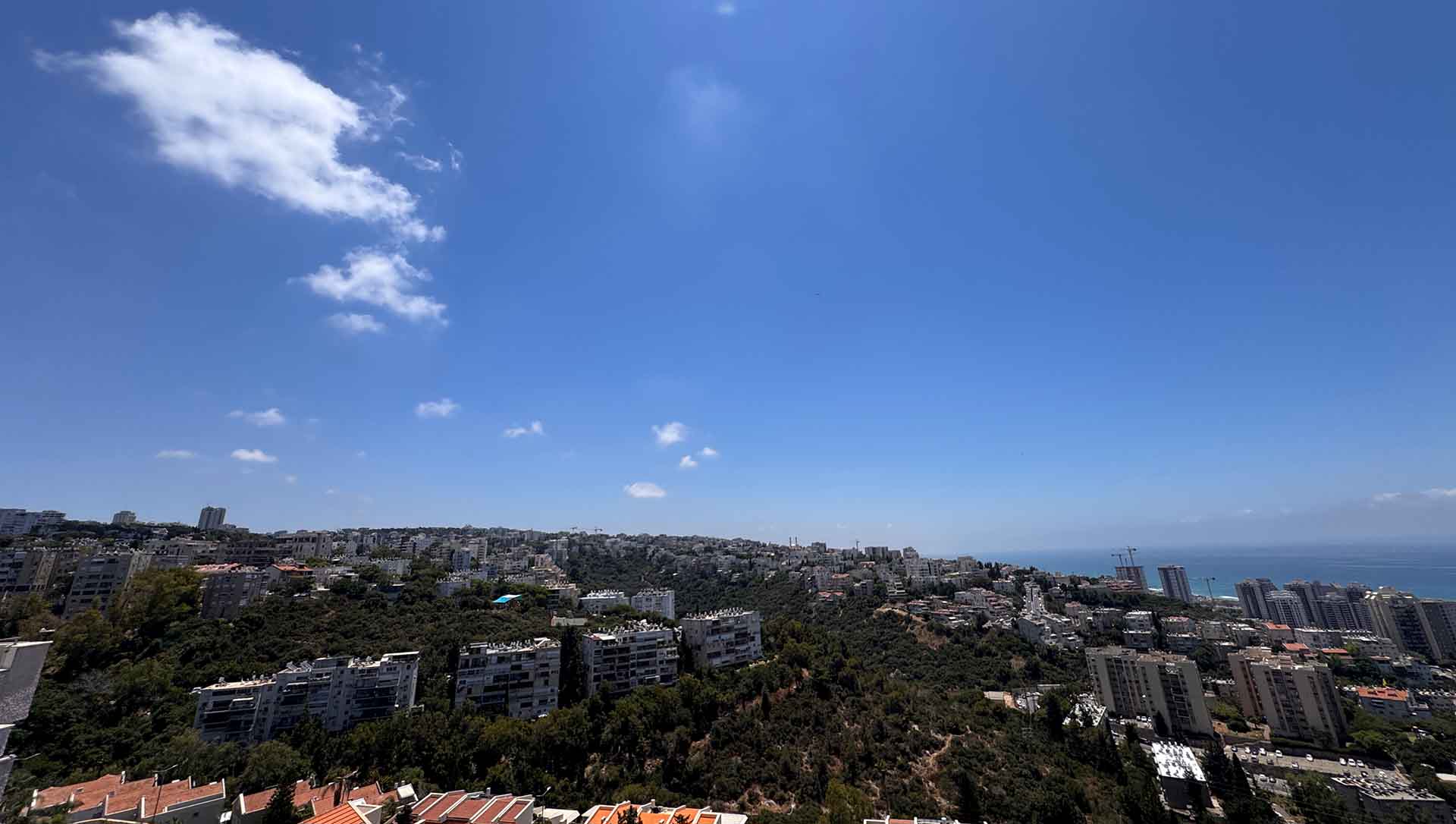
The change in winds, which is expected to begin as early as next week (the last week of June), also affects the sea conditions in the Haifa area. In the summer, the air becomes more humid and warmer, and the height of the sea waves increases. The waves are not necessarily storm waves, but the average waves in the summer are high, and usually the waves reach a height of 60 to 70 centimeters. Along with this, there are exceptional days when the sea is rougher and the waves may even reach a height of two meters. In spring and autumn, on the other hand, the sea is smoother on most days, and only when a northerly wind blows does it rise slightly in the afternoon and evening, usually without a real storm.

Haifa as a unique destination for surfers – during the summer
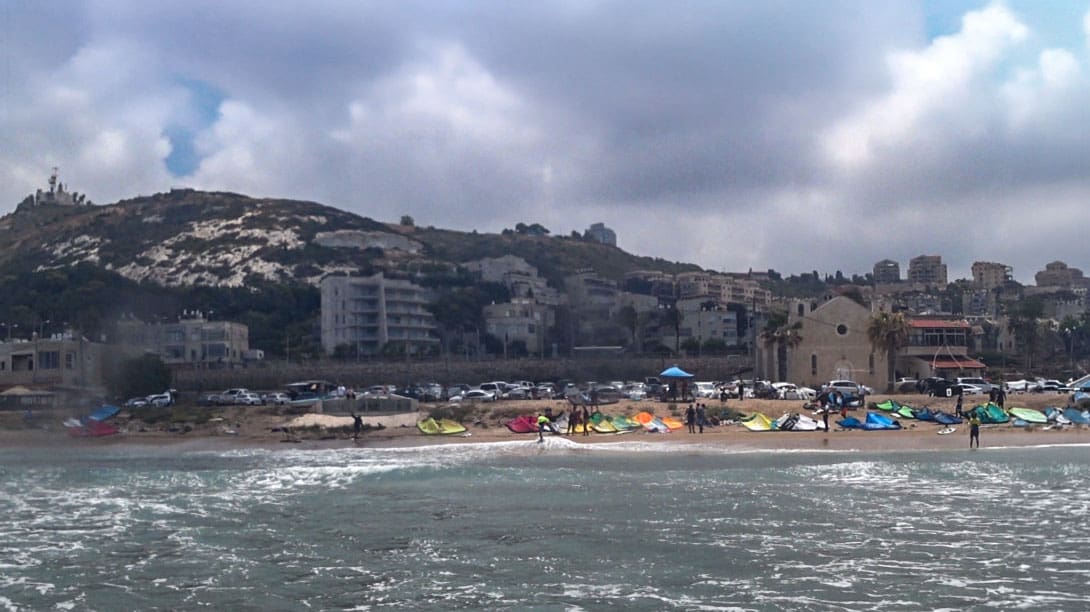
During the summer, many surfers from all over Israel come to the Haifa area, including windsurfers, kitesurfers, and wingsurfers. The reason for this is the unique location of Rosh Carmel, which receives strong winds relative to the rest of the country, along with waves of a special nature that enter the surfing area from the side. This combination allows for an extraordinary surfing experience, especially in the area of Shikmona Promenade and Bat Galim Promenade. Those of you who arrive at the promenades in the morning hours (11:00-14:00), during the summer, are expected to see a crowd of surfers enjoying conditions that are unmatched on other beaches in Israel.
The rock shelf and natural lagoon at Rosh Carmel
One of the most prominent features of Haifa's shores is a shallow rock shelf, which extends between the Institute for Marine and Lake Research and the Navy base, along a section of about 2,200 meters at the top of Mount Carmel. This shelf is actually a natural continuation of Mount Carmel, only it is located below the water surface. The rock includes niches and caves that serve as a habitat for many marine creatures, including fish, squid, mollusks, algae and sponges. In addition to its ecological importance, the rock shelf also serves as a factor that improves the waves breaking in the depths of the sea, creating a kind of lagoon where comfortable waves and smooth surfaces are created, especially suitable for surfing and wave riding.
Clear water and sea turtles on the beaches of Bat Galim
The rock shelf also contributes to clear water for most of the year, especially in the summer. Surfers sometimes enjoy the view of the bottom below them, and in between, the head of a sea turtle may also appear, rising to take a long breath, before diving back into the depths of the sea. The beaches of Bat Galim are home to a colorful community of sea turtles, which are regularly found in the area. On the nights of May and June, sea turtles come to the shore and look for pieces of sand to lay their eggs. Nature and Parks Authority inspectors, accompanied by volunteers, collect the turtle nests and safely transport them to a protected incubation farm, the location of which is kept secret so as not to disturb the hatchlings from hatching in August and September.
Haifa's gift: the black cloud and the relative coolness in Carmel
One of the interesting phenomena in Haifa is the slightly cooler weather compared to the coastal plain. In the southwest and west wind of the hot and humid summer days, a cloud forms over the Carmel, following the flow of moisture-saturated air that climbs up the mountain and condenses. Among surfers, the phenomenon is known as the “black cloud,” and it signals that the wind is strengthening in the Carmel area and that it is time to go surfing. The cloud creates partial shade over the western and central Carmel, thus lowering the temperatures in the summer by one to two degrees compared to other areas of the coastal plain.
The dangers of bathing and the recommendation for caution
Along with the surf conditions and the active sea, in the summer there is also a real danger to bathers. The waves, which increase in the westerly wind, create currents. Sometimes, these currents cause drownings, especially among those who go swimming in areas without a lifeguard or in the evening hours, when the lifeguard stations are closed. The lifeguards are experienced in identifying the currents, especially the rip currents that sweep into the depths of the sea, and their job is to watch over the bathers – for their safety.
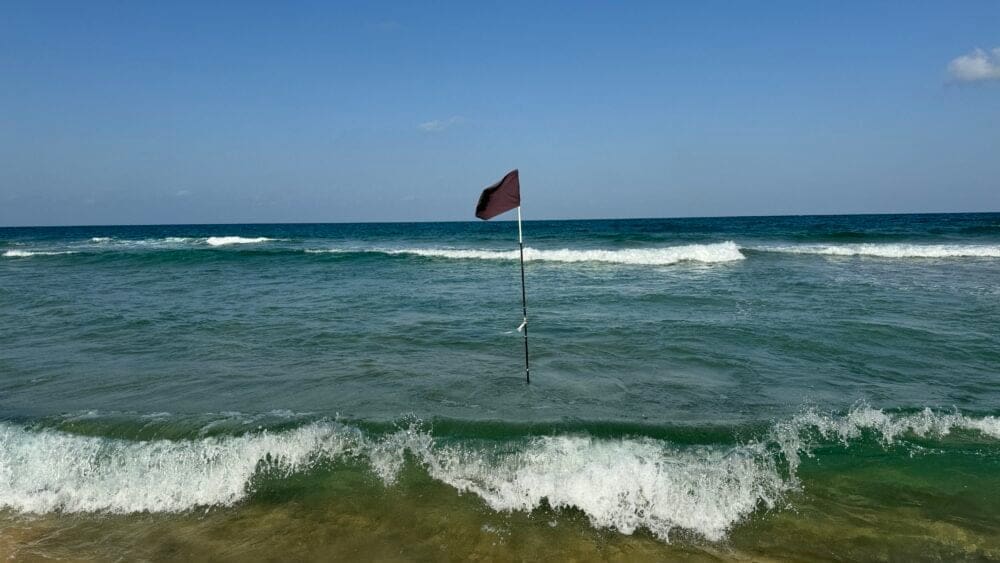
The warm water in the evening attracts bathers to take risks beyond bathing hours and sometimes this ends in disaster. My clear recommendation is to avoid swimming when the lifeguard stations are not active, and not to enter the water at beaches that are not under lifeguard supervision. Rip currents are sweeping into the heart of the sea and only experienced people know how to notice them.