


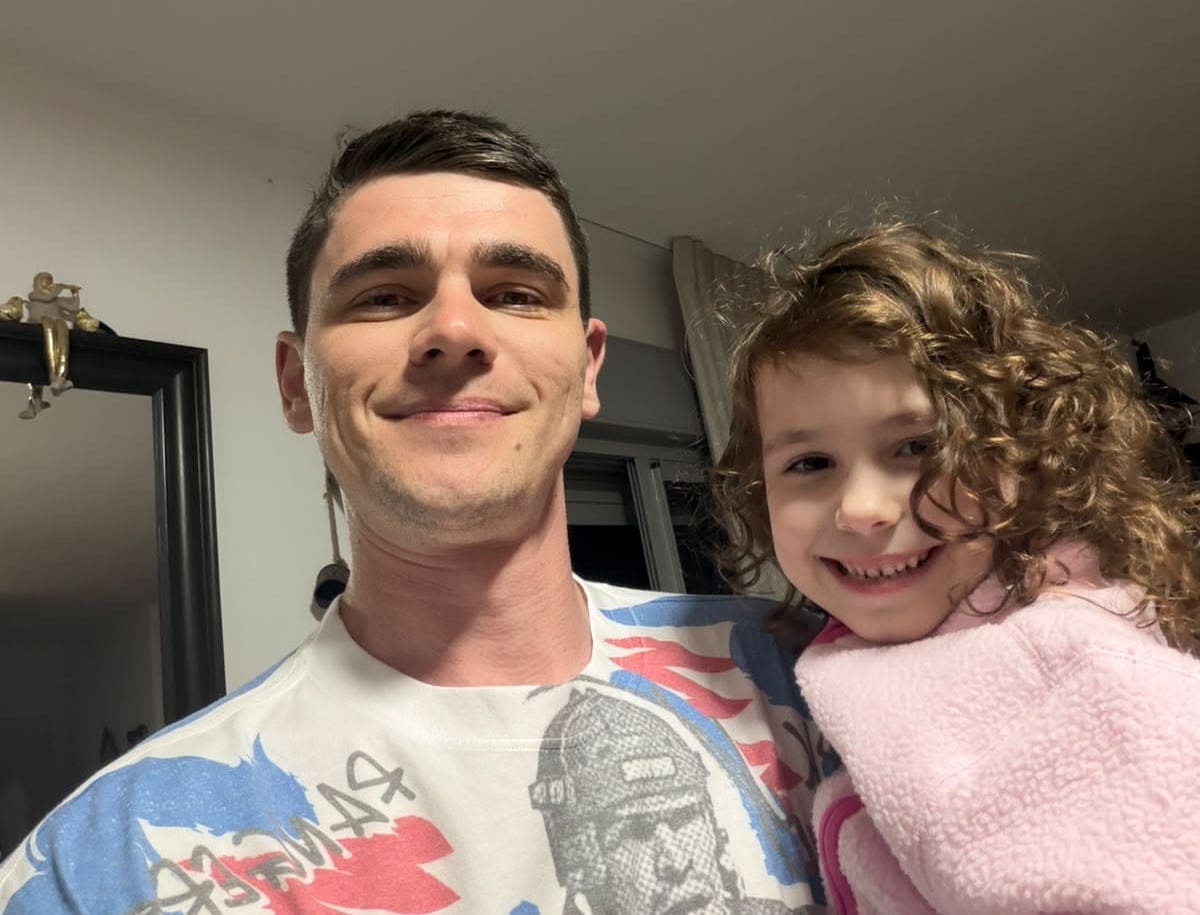
(Live here) – Special interview on the occasion of the release of Maxim Harkin's book – "Out of Print": Maxim Harkin, a resident of Tirat Carmel who was captured on October 7, 2023, during the Nuba party, and was released after about two years in Gaza, talks in an interview about his difficult experiences in captivity, his deep longing for his family, his moving encounter with his six-year-old daughter Monica, and the book he is now publishing as a testament to the terrible period he went through. Harkin, born in Russia, immigrated to Israel at the age of 17 and currently lives in Tirat Carmel.
The capture at the Nova party
Harkin was at the Nova party when the terrorists arrived. He arrived at the party a week after returning from Russia, where he had visited his daughter Monica, who lived with his ex-wife. When the alarms went off and the terrorists arrived, Harkin realized that if he wasn’t killed, he would be captured, so he threw away his officer’s ID and cell phone, thinking that if Hamas discovered that he was a reserve officer, it would only complicate things for him. Harkin was at Nova with a good friend and his wife, who were murdered. The terrorist tried to shoot Harkin as well, but the bullet narrowly missed his head, and he was taken to Gaza. In the first few months, he was held with two other hostages – Yosef Haim Ohana and Segev Kalfon. After the release of the four hostages Noa Argamani, Almog Meir Jan, Andrei Kozlov, and Shlomi Ziv by IDF forces in Operation Arnon in June 2024, the terrorists took Harkin down to underground tunnels, where he met other hostages and stayed with them in the tunnels until the day of his release.
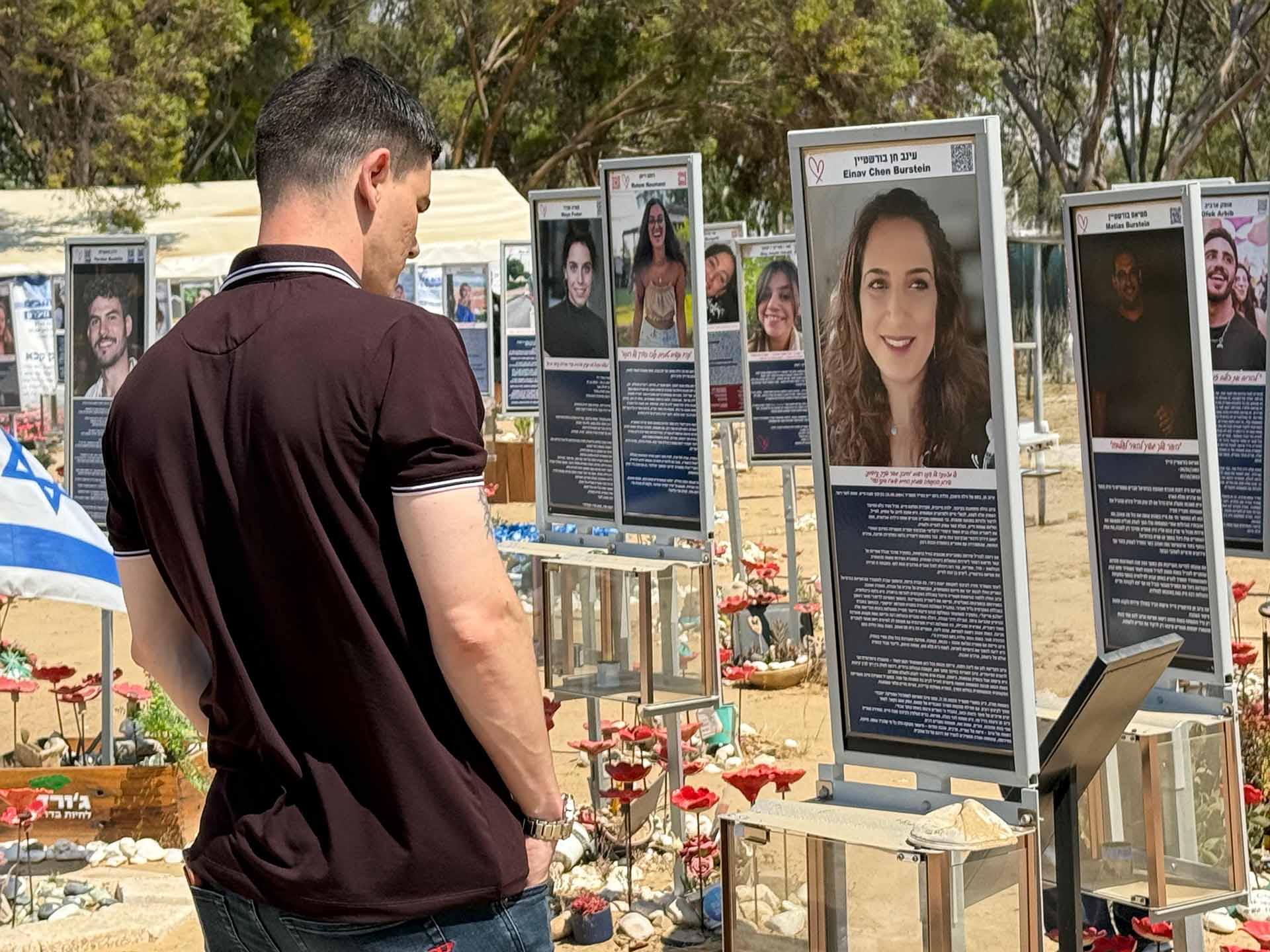
Two years of captivity – faith, radio, and hope
Harkin says that he had no doubt that God existed, and that at every moment in captivity he acknowledged that he was still alive. He says that most of the time he knew what the date was, observed and celebrated the Sabbath with the other hostages, and even fasted on Tisha B'Av and Yom Kippur. One of the significant moments in captivity was when he and the hostages managed to turn on a radio and hear broadcasts from Israel, but only in the early morning hours, around 5 a.m. At that moment, they realized how much they were fighting for them outside and how many people were taking to the streets and demanding the return of the hostages over and over again. Harkin says that this knowledge gave him immense strength to continue and hold on.
The April 2025 rift and the continued wait
Harkin describes one of the most difficult moments in captivity – in April 2025, when he learned that there was a deal to release the hostages. He says that it was clear to him and the hostages who were with him that children, women, the elderly and the wounded would be released first, and they expected the deal to continue until they were also reached. When the fighting resumed and it was clear to them that the deal was not continuing, he describes it as a very big break that required a lot of internal work to move on, because there was already hope for release. In practice, after the deal was terminated and the IDF returned to fighting, Harkin and his friends remained in captivity for another six months. However, Harkin says that every time he heard about a hostage being released, he was happy, and hoped that eventually he too would go home. He emphasizes that he has no doubt that he and the other hostages owe a lot to US President Donald Trump, who heard the protesters, understood the real plight and did everything to free the hostages.
Starvation: Weight Loss and Daily Coping in Captivity
Before his abduction, Harkin weighed 90 kilos, and when he returned from captivity he weighed only 50 kilos. I asked him how he managed to cope with the extreme starvation and abuse. He replied that when you realize that you have no choice or decision – not to go to the bathroom when you need to, not to eat when you want to, and not to drink when you are thirsty – then it becomes easier to cope with the lack, because you understand that this is simply the way it is.
He says that throughout the two years of captivity he held within himself the hope that he would eventually return to his family, adding that there is no other way to deal with extreme hardship like captivity – one must always be optimistic. According to him, of all the things he was missing, nothing came close to the deep longing for his family – for his parents, his brothers and his daughter Monica.
Meeting the daughter and returning to life
Harkin says that during his captivity, one of the things that occupied him the most was the thought of his daughter. He was very worried that because he had been kidnapped when she was three and a half years old, she would barely remember him. His greatest fear was that she would get confused and run to someone else – but in the moment of truth, the girl was not confused, ran to him, hugged him and told him how much she missed him. A few days ago, his daughter came to him for three months from Russia, where she lives with his ex-wife, and now he is enjoying being a full-time father. He says that he has a good relationship with his ex-wife and they are cooperating for the sake of Monica, who speaks Russian and will now also start learning Hebrew. Harkin currently lives in Tirat Carmel with his mother and younger brother.
The terrible harm to the families of the kidnapped
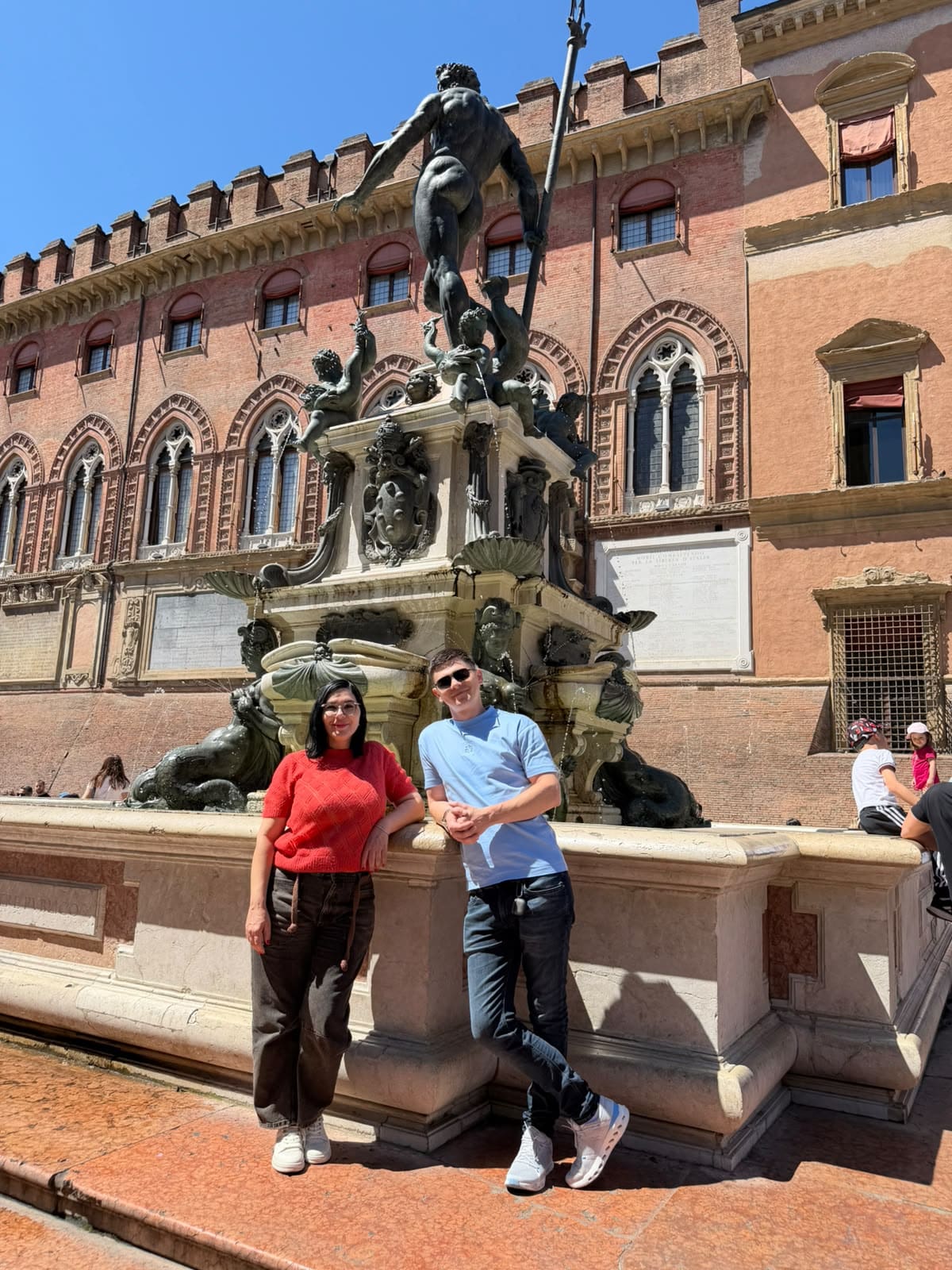
Harkin says it is difficult to understand the depth of the damage to the families of the abductees. He says that when he returned, he saw that his family had been damaged both mentally and physically, and sometimes it seems to him that what his mother went through in those two years was harder than what he himself had gone through – because she did not know what condition he was in, whether he would return and in what condition. He says there is nothing worse than that. He is now busy rehabilitating himself, and this is an opportunity for the entire family to try to heal. Harkin immigrated to Israel at the age of 17, his parents lived in Israel and he joined them. They lived in Haifa and moved from apartment to apartment. He was drafted into the army and served as a driver for three years, was discharged and began working to help support the family.
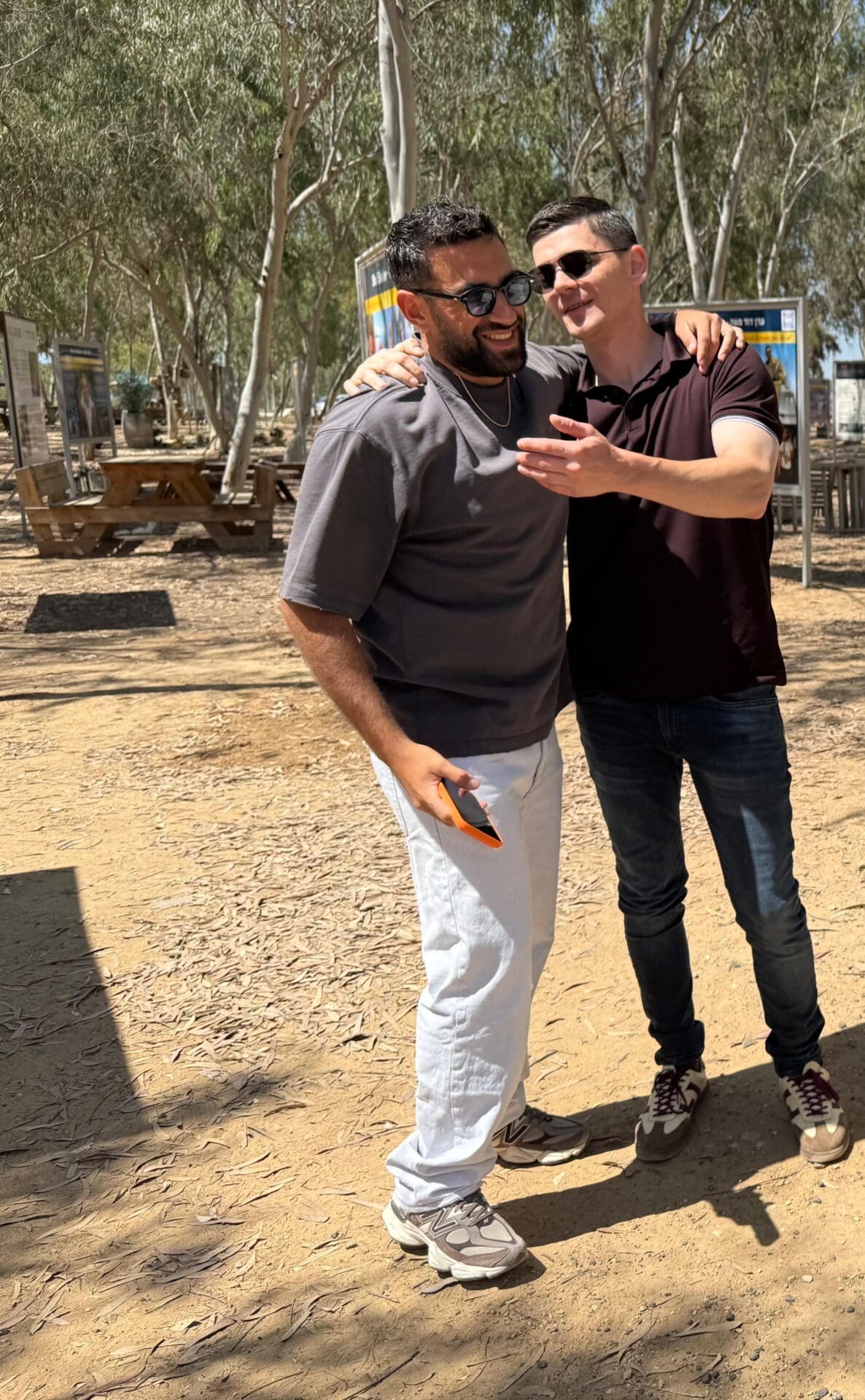
Criticism of the state's attitude towards reserve soldiers
Harkin gets emotional when people talk about the state and the IDF's attitude towards soldiers who go into reserve or serve and are injured. He claims that the state does not take enough responsibility and does not help enough soldiers who are injured or their families. He says that about a month ago, a friend of his died while serving in the reserves, leaving behind a mother and wife unable to support themselves, and he expects the state to take responsibility. According to him, if the state expects soldiers to sacrifice their lives, and sometimes reserve service irreversibly damages their health, the minimum the state is obligated to do is to help financially and not leave either the soldier or his family alone.
Testimony about abuse, the Nuba and the military elite
Harkin says he knew how many people were taken prisoner with him, because the terrorists enjoyed talking about what they considered a success. According to him, the terrorists told him that they had not planned in advance for there to be a large party, but as soon as they saw the party they began to stop and harm the partygoers. Harkin is convinced that the casualties in Nova prevented much greater harm to the civilian population, and says he does not even want to think about what would have happened if the terrorists had not stopped in Nova and had gone to houses in nearby towns. As for the military leadership, he says that everyone who was at the top cannot continue, but he has no complaints against the soldiers who did everything they could that day to prevent greater damage, and some of them paid for it with their lives.
The book, the message and the look ahead
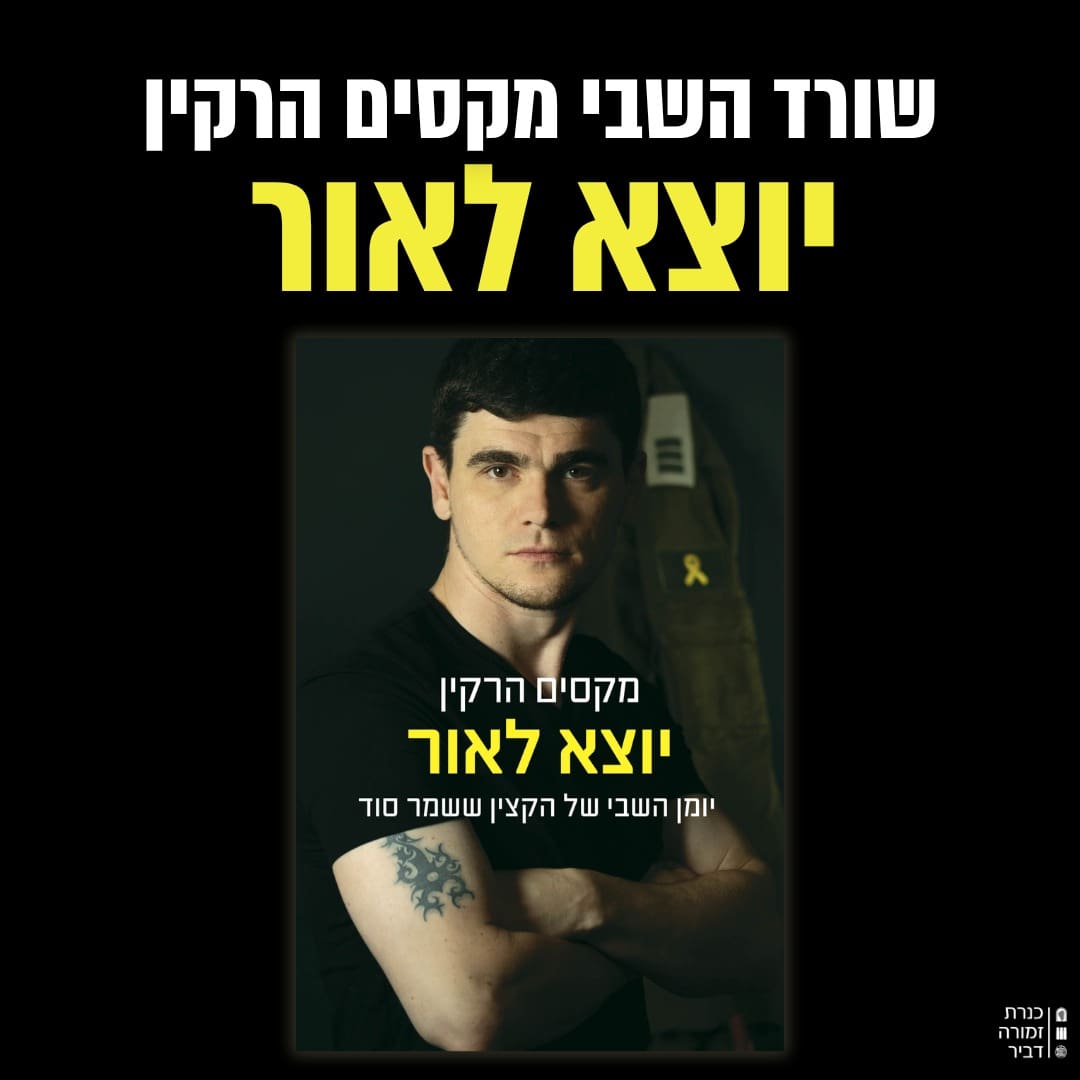
The book: Testimony of the abuse he endured in captivity
Harkin explains that the reason he is publishing a book is both so that there will be evidence of the abuse he endured in captivity, and also in the hope that people will learn from his story and take something away from it for their own lives.
He is currently also involved in propaganda, both in Israel and internationally, and speaks about how Hamas is a terrorist organization and that there is nothing in Islam that is as murderous as Hamas. Harkin says he would like to see the State of Israel move away from Gaza and its residents locked up there, working in Egypt, and a severe response to any attempt to violate the ceasefire.
He adds that the continued fighting is making it very difficult for him and the other hostages to recover, and that he would like to see the country the day after tomorrow – taking care of itself, reaching agreements and internal reconciliation. In the end, he says that everyone should take from his story and that of the other hostages the understanding that any problem can be dealt with, that time is the most precious currency, and that every moment in life should be used for pleasure, joy and to be with people they love – and always choose to believe in the good.
Menashe Shemesh, who headed the team that accompanied the Harkin family since the outbreak of the war, continues to accompany the family and Maxim since his return from captivity. Shemesh is currently assisting Harkin as he promotes his book.
Stay healthy, Maxim, the hero.
We must remember that the same ideology of danger and hatred also exists in Israel, and we must keep the Palestinian threat and enemy as far away from the borders as possible and create as wide a buffer zone as possible.
There are hundreds of injuries and incidents of violence that our fellow settlers experience in shame, and the media ignores them. And if settlers respond to riots in a specific way, it is immediately reported on the channels and websites of the poison.