


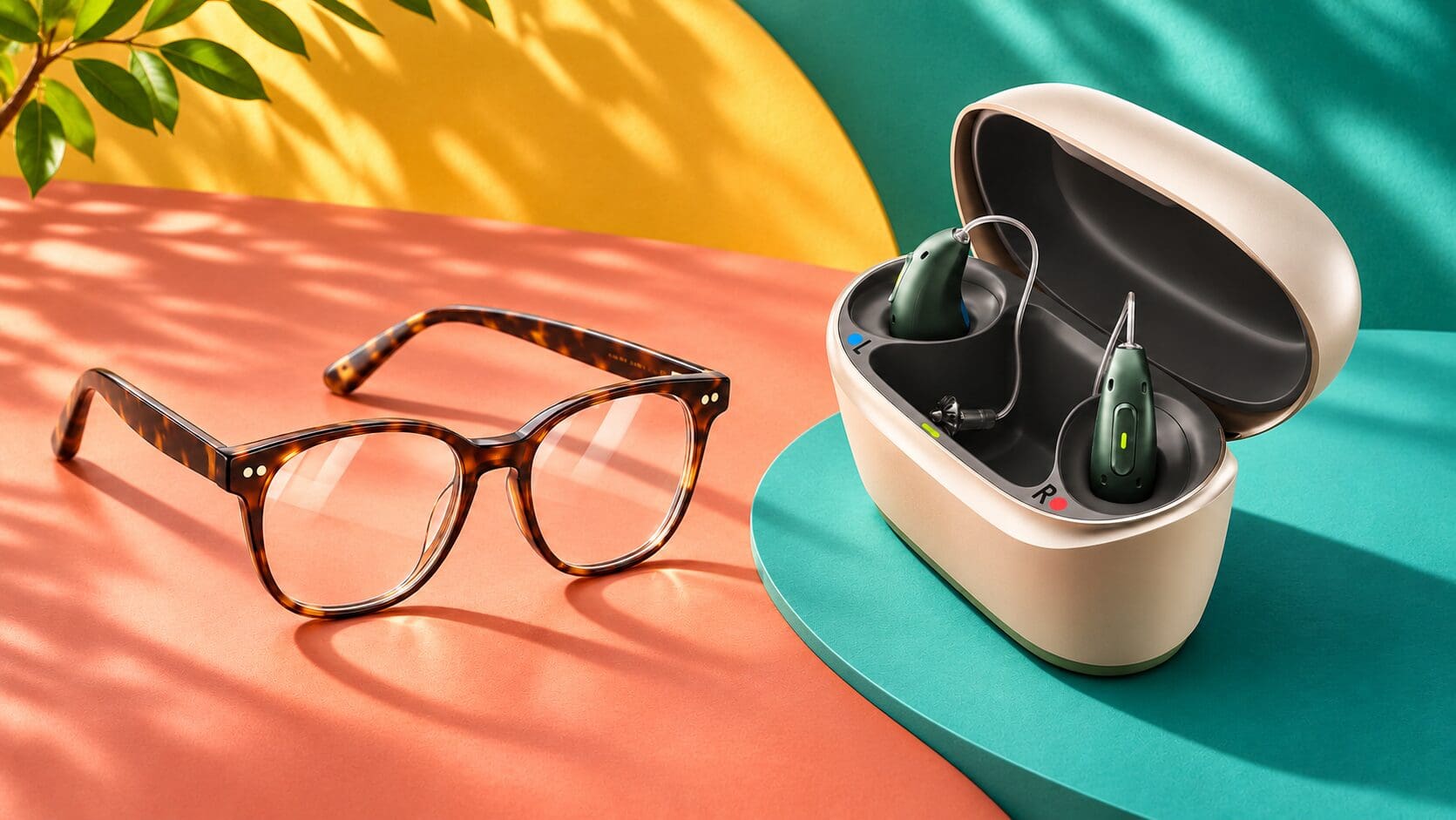
While wearing glasses has long been a natural and accepted part of everyday life, the use of hearing aids is still sometimes accompanied by concerns and stigma. Despite technological advances and advanced designs, many avoid having their hearing tested and having their devices fitted for fear of how others will react. Experts in the field are seeking to change this perception and remind us: Better hearing is, above all, quality of life..
Hearing loss is not just a matter of age.
Hearing loss is a common condition that affects millions of people worldwide, across all age groups. According to the World Health Organization, approximately 430 million people worldwide need rehabilitation due to disabling hearing loss.
This is also a significant phenomenon in Israel. Data from the Central Bureau of Statistics' 2024 social survey, published in November 2025, indicate that 2.8% of people aged 20 and over reported severe hearing difficulty or an inability to hear at all, even with the help of a hearing aid. Among people aged 65 and over, the rate was 8.2%. These data refer to severe cases of hearing loss, and do not include all people dealing with hearing loss of varying degrees of severity.
When hearing difficulty becomes part of the routine
Hearing loss doesn't always develop in a way that's immediately noticeable. Sometimes the first signs appear in everyday situations: difficulty understanding a conversation in a noisy restaurant, repeated requests from people to repeat themselves, difficulty on the phone, or the need to turn up the volume on the television. In many cases, family and friends are the first to notice the change.
Despite the signs and the impact on communication, not everyone is in a hurry to seek a hearing test. Fear of the appearance of the device, the reaction of others, and how its use will affect self-image causes people to postpone the examination and treatment.
Stigma still keeps people away from treatment
Similar to glasses, which have become both a fashionable and personal item over the years, hearing aids have also undergone significant changes in design and technology. However, the social attitude towards them is still not the same.
Evidence of this also emerges from the story of a well-known person in the public eye, who shared that his hearing difficulties are already affecting his work and communication with those around him, but he refrains from seeking treatment due to fear of stigma and the possible impact on his image.
This concern illustrates the need for open discussion about hearing loss. Beyond the difficulty in communication, untreated hearing loss can contribute to feelings of loneliness and social isolation, making it difficult to participate in family, social, and work life.
Today's hearing aids: smaller, smarter, and more advanced
In recent years, there has been significant progress in hearing aid technology. Today, devices can be found in a variety of sizes and designs, featuring advanced audio processing systems, and in some models, technologies based on artificial intelligence, which help distinguish between speech and background noise and adapt the sounds to the listening environment.
Among the innovations are rechargeable devices, Bluetooth connectivity that allows audio streaming directly from the phone and smart devices, and solutions designed to improve speech understanding even in noisy environments.
However, fitting a hearing aid is not limited to choosing a model or design. It is a professional and personal process, based on the results of the hearing test, the person's needs, lifestyle, and the environments in which they frequently spend time. A comprehensive examination, proper fitting, and support during the adaptation period are important parts of the process.
Hear better and maintain quality of life
Hearing aids do not restore normal hearing in every situation, but a professional fitting may improve speech understanding, facilitate communication, and enable more active and comfortable participation in daily life.
The change depends not only on technology but also on social perception. Just as wearing glasses is not currently seen as an unusual thing, so too should the use of hearing aids become a natural choice for people seeking to improve their quality of life.
There is no reason to let fear of the reaction of others prevent you from seeking a hearing test. Identifying the difficulty and seeking professional clarification are the first steps towards better coping with hearing loss and maintaining continuous contact with the people and the environment.