


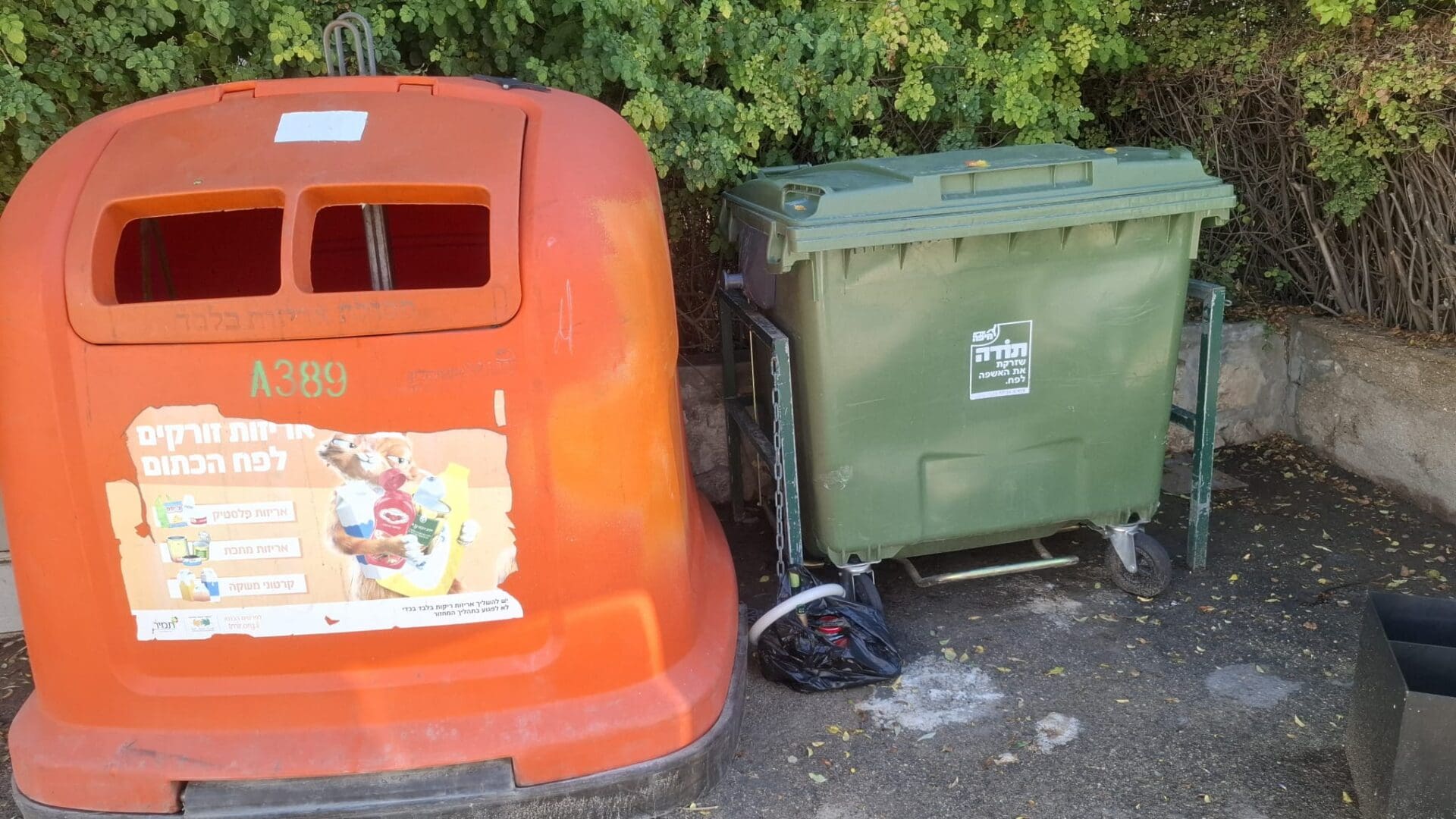
(haipo) Trash cans placed on sidewalks, locked trash rooms even in new buildings, bins located in private parking lots, and filthy, foul-smelling garbage containers have all become part of the landscape in Haifa's public space. A tour of the Bat Galim and Kabir neighborhoods raises questions about how the bins are placed, the responsibility for making decisions, and the lack of a fixed policy for cleaning them. The municipality claims that the location of the bins is determined according to the characteristics of the streets and the number of households, and that their cleaning is done according to need and residents' requests.
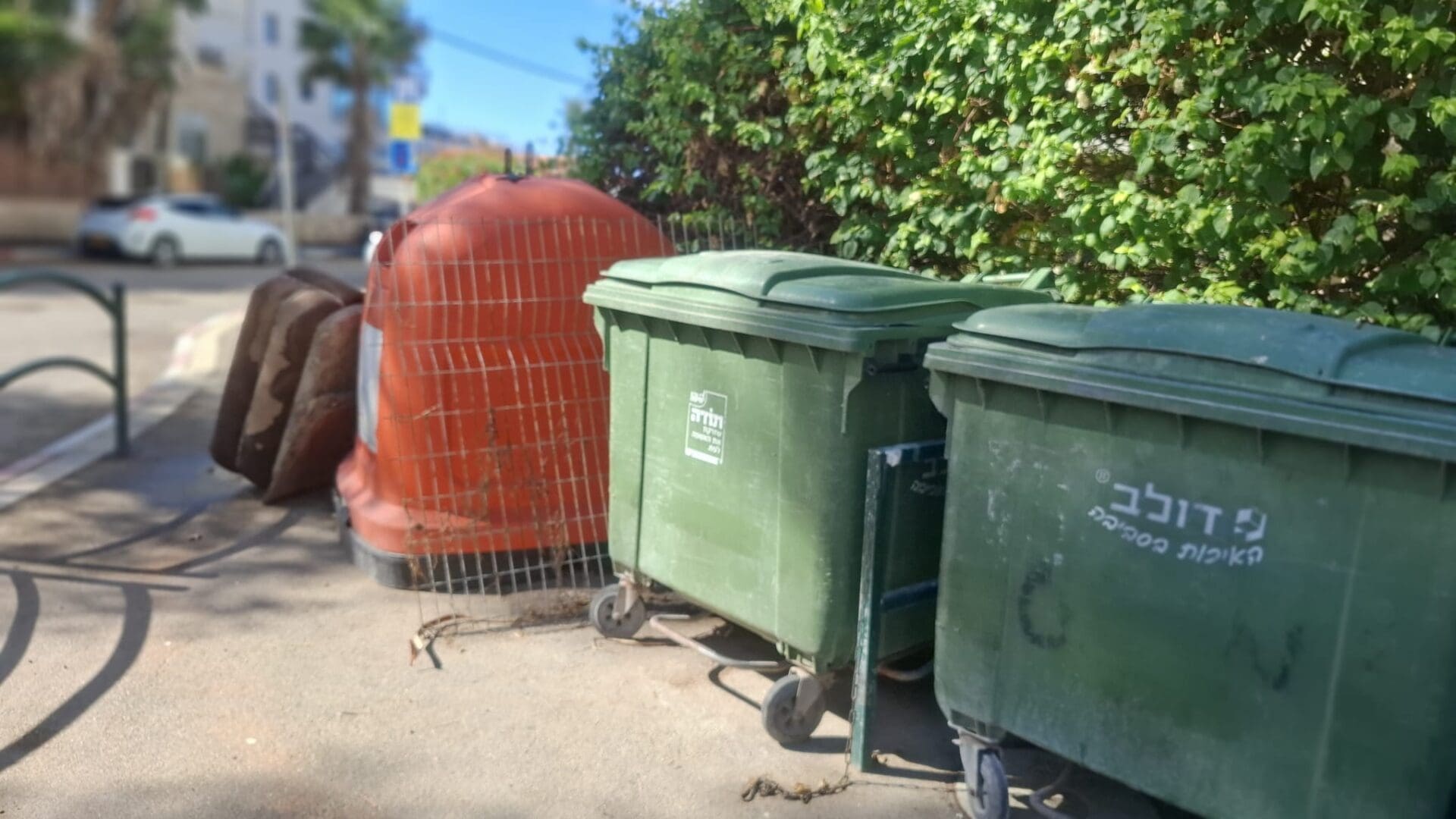
Trash cans on the sidewalks, even when there are trash rooms
The issue of garbage can placement in Haifa continues to arouse criticism from residents, and for good reason. Beyond harming the appearance of the street, it is also a sanitary hazard and a problem that sometimes affects the accessibility and ability of pedestrians to move freely. In various neighborhoods in the city, bins can be found placed on sidewalks, in private areas, and sometimes even in private parking lots. The situation raises questions about the criteria by which their location is determined, the division of responsibility between the various parties, and the degree of consideration for the needs of residents.
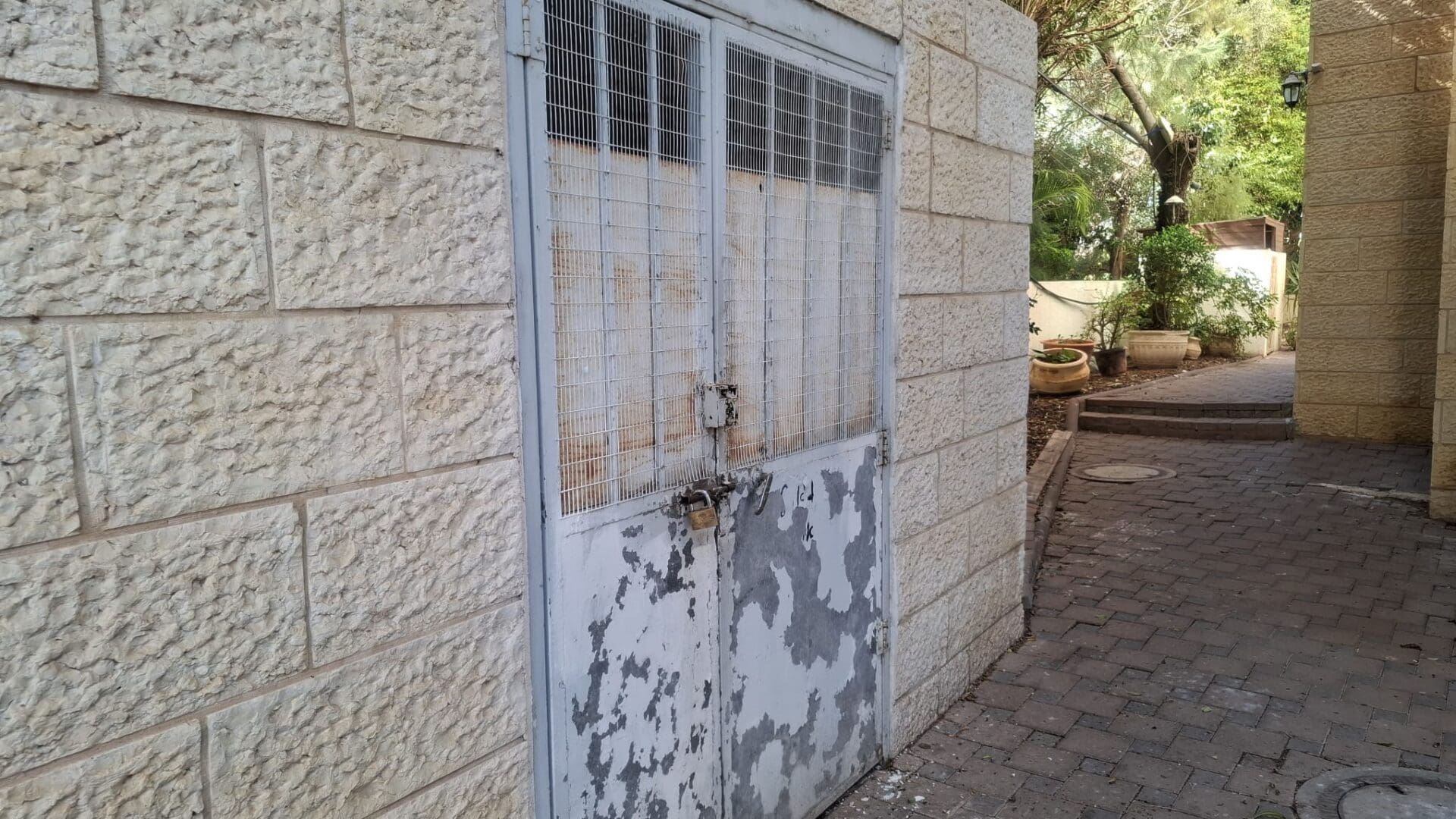
As part of a tour we conducted in the Bat Galim neighborhood, following inquiries received through the Haifa system, we encountered a phenomenon that is puzzling among residents. Even in new buildings that have undergone TAMA or construction clearance processes and where there are designated trash rooms, you can find bins placed on the sidewalk, while the trash rooms remain locked and are not used for their intended purpose.
The result is a situation where public spaces continue to bear the burden, even though in some cases there is an apparent solution within the building. Why are the trash rooms not being utilized, who is responsible for ensuring that they are available for use, and is there enforcement in cases where bins are placed on the street despite the existence of an alternative solution?
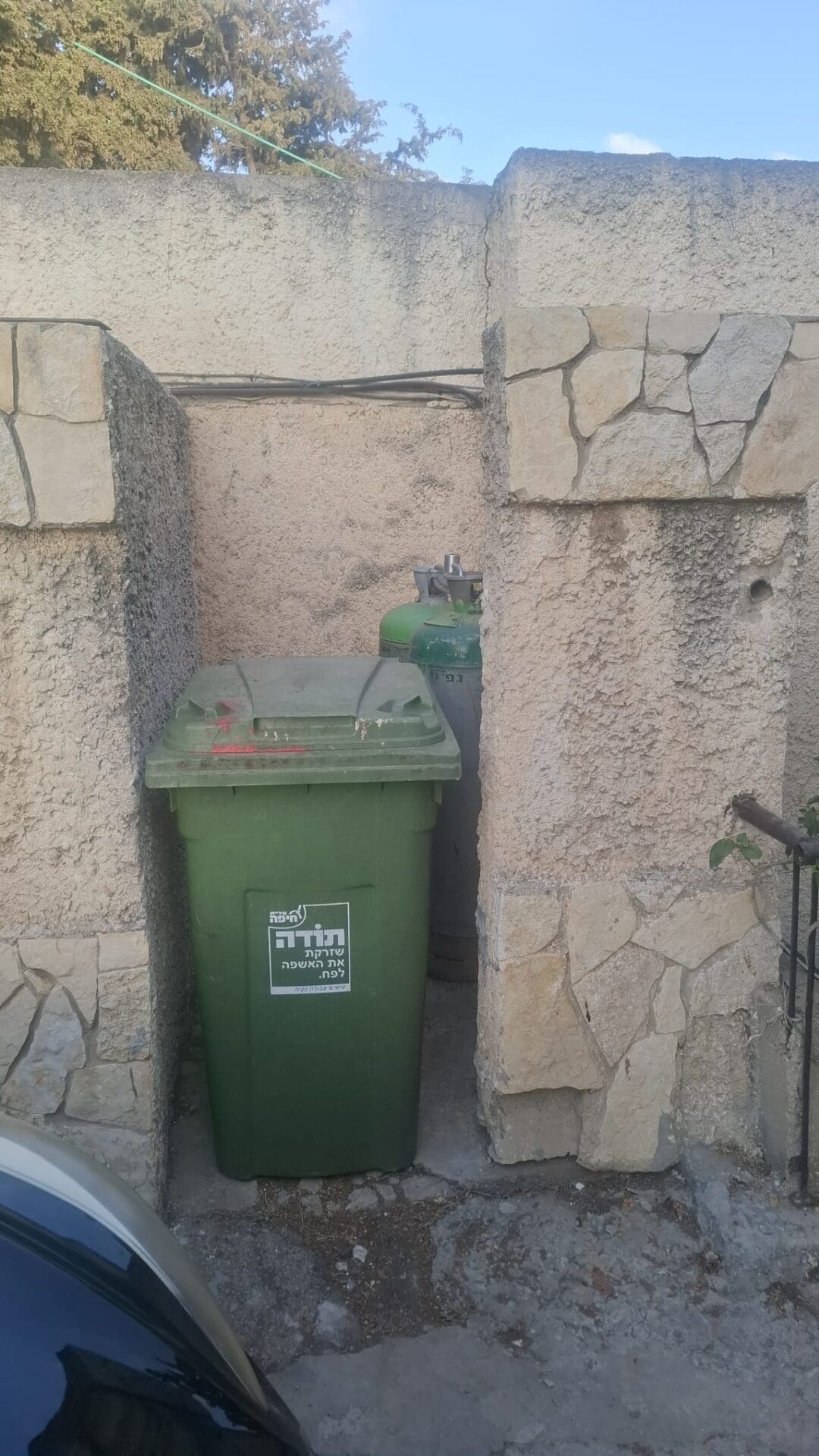
Kabbir, bins on the sidewalks and even in private parking lots
A similar picture emerges from the Kabbir neighborhood, where many trash cans are placed on the sidewalks. In addition, residents encounter cases where cans are placed inside private parking lots, sometimes in conditions that make it difficult to move between vehicles and to properly use the parking lot. The situation raises a simple but fundamental question: who determines where the cans will be placed, and based on what considerations? Are decisions made in accordance with the conditions of the area and the needs of the residents, and are alternatives examined that will prevent damage to both public and private spaces?
Even on streets where the sidewalks are narrow, including Yitzhak, David Pinsky, and Keller Boulevards, placing bins may reduce the width of the passage and make it difficult for pedestrians, parents with strollers, people with disabilities, and users of various means of mobility. In such places, any bin placed on the sidewalk may become a real obstacle.
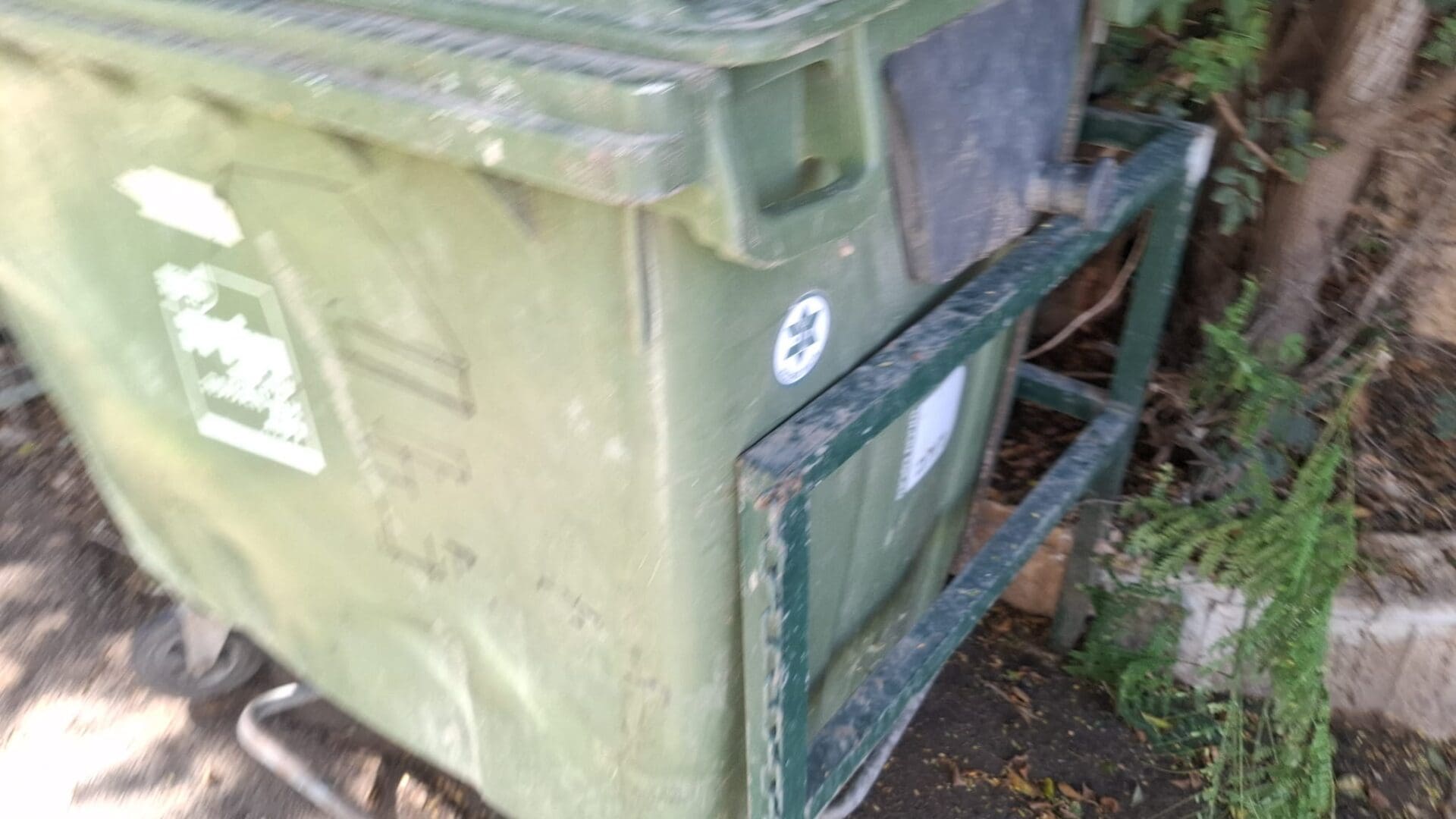
Dirty bins and a bad smell. Who takes care of the washing?
Alongside the issue of location, another problem arises that residents complain about. The sanitary condition of the trash cans. Sticky, dirty, and smelly trash cans are a familiar sight on the city's streets, and the problem is not limited to an unaesthetic appearance. The accumulation of dirt and trash residue can exacerbate odor nuisances and harm the quality of life in the residential environment. A check we conducted with the Haifa Municipality shows that the trash cans and trash carts are washed according to need and requests from residents, and not as part of a routine and regular periodic washing program.
This means that the treatment of dirt is carried out, according to the municipality's policy, according to the need and requests coming from the field. However, this raises a question. Is it appropriate to be satisfied with treatment following complaints, or is a proactive and regular maintenance system required, which will prevent the accumulation of dirt and odor hazards in advance?
The Haifa Municipality responded:
"Under the direction of Mayor Yona Yahav, the Haifa Municipality is working to regulate public space and reduce the placement of trash cans and garbage carts in public crossings, wherever possible. This is with the aim of maintaining a clean and orderly public space and enabling free, accessible and safe passage for pedestrians on sidewalks and in public crossings."
The location and quantity of the containers are determined according to criteria relating to the structure and character of the street and the number of houses in each neighborhood. On older streets, due to the characteristics of the construction, infrastructure and physical structure of the street, it is not always possible to place the bins in private areas or in a way that does not reduce the public space. In these cases, the municipality works to find suitable solutions as part of the street arrangement and rehabilitation processes.
Meanwhile, as part of the holistic rehabilitation processes of old streets, the municipality has placed emphasis on moving the storage containers to private areas, as much as possible. In the newer neighborhoods, the storage containers are placed inside designated trash rooms, so that public passages remain free of trash containers. As for the cleaning of the storage containers, there is no change in the municipality's policy. Trash cans and garbage carts are washed according to need and resident requests, as has been the practice over the years.
At this stage, the municipality does not plan to expand the use of buried bins throughout the city. This is due to operational considerations and experience gained from operating these types of systems, including problems related to groundwater infiltration into underground rooms, which could increase odor hazards, as has happened in other cities.
At the same time, the municipality is regularly examining various systems and methods for garbage removal, with the aim of streamlining the removal system, improving service to residents, and adapting the removal methods to the various characteristics of the neighborhoods and areas in the city. Within this framework, technological solutions are also being examined and promoted, including pneumatic garbage removal. Within the framework of this system, which is planned for some neighborhoods in the city, the garbage will be concentrated in a central system and at a designated terminal, from where it will be transferred to the transfer stations."
"The municipality will continue to examine and optimize the garbage removal system and storage solutions in the city, while adapting them to the characteristics of the neighborhoods and the need to maintain a public space that is as clean, accessible and free as possible."
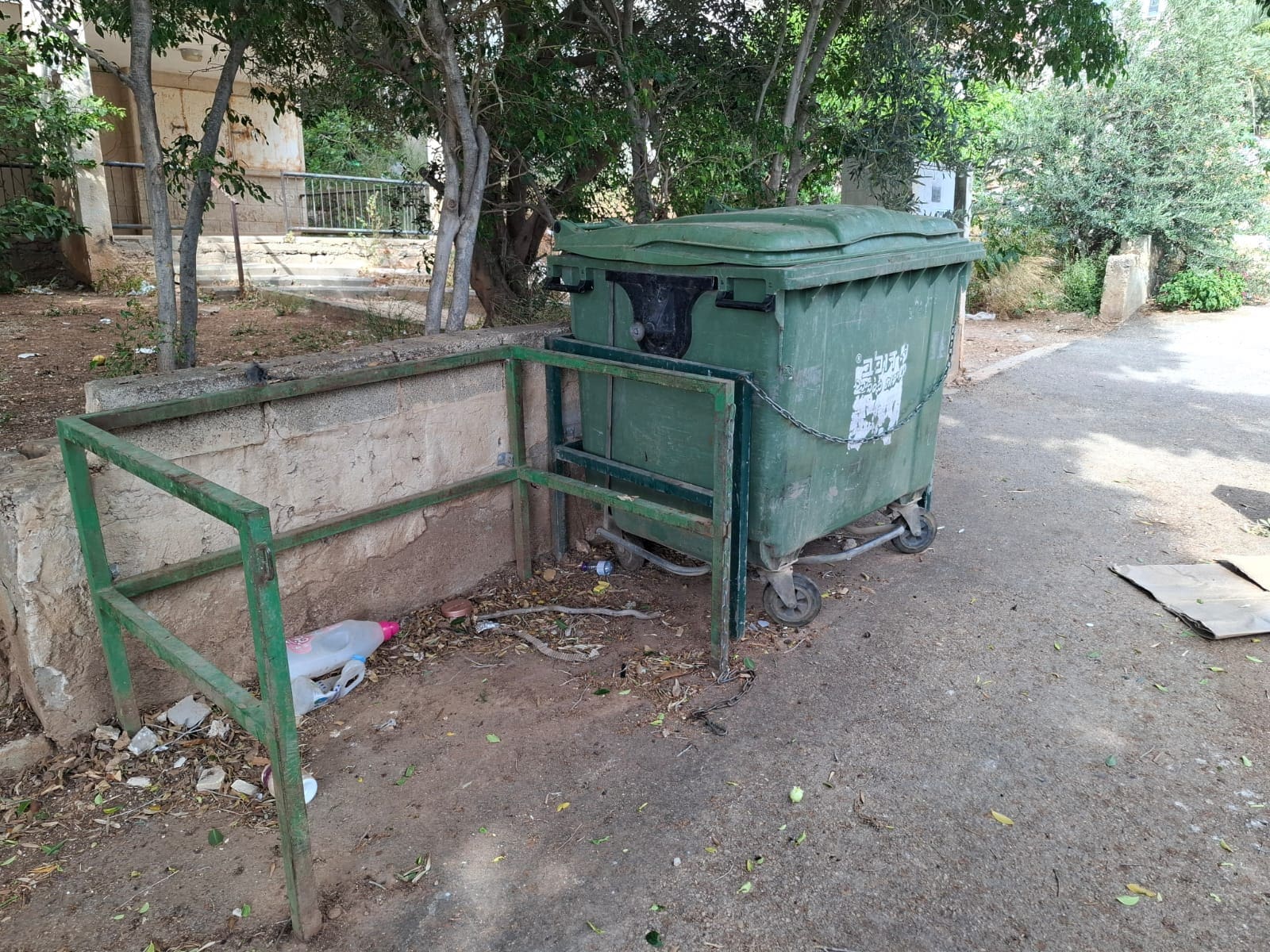
Between policy on the ground and reality on the streets
The municipality's response presents a policy that seeks to reduce the placement of bins in public spaces, but the tour of the area raises questions that remain open: What happens when a new building has a designated trash room, but the bins continue to stand on the sidewalk? Who checks why trash rooms remain locked? How is the location of the bins determined in places where they impair accessibility or the use of private parking lots? And is it possible to set a fixed frequency for their cleaning, instead of relying on residents' requests?
Until practical solutions are found, trash cans will continue to be an integral part of the urban landscape, sometimes even in places where one would expect another solution to be found.
Ultimately, proper management of the garbage system is not limited to emptying the contents of the bins. It also requires careful planning of their location, ongoing maintenance, maintaining accessibility, and clear responsibility for dealing with hazards. Haifa residents are entitled to a clean, safe, and accessible public space, and the question that remains is to what extent the declared policy will be reflected on the streets themselves?
What kind of groundwater intrusion? The entire city is built on the mountain ridge. We are not in the Jezreel Valley.
I wonder why there is no groundwater infiltration in Nesher? The entire city is networked with nice, neat buried bins.
Perhaps the difference is the orderly conduct of the various municipal departments.
This is one of the things that separates the good urban development in Tel Aviv from Haifa.
Tel Aviv simply will not allow such a thing and is throwing as many trash cans off the sidewalks as possible.
There is no such thing as a tower locking the trash room and placing bins outside, it doesn't exist because they will be fined immediately.
The Haifa Municipality needs a new policy where the sidewalks are open to pedestrians and any bins placed on them must be within the boundaries of the surrounding houses or there will be no trash can there. Do not allow bins in the middle of the sidewalks. If the buildings do not include an area for bins, the municipality should expropriate space from front yards or entrances to the buildings and place the bins there or build a bin shelter instead of a parking space on the street. The sidewalks should be free of obstacles
We also need to provide a solution for cleaning the bins in the garbage rooms. The stairwell cleaners can't really clean the large bins, and even if they did, all the dirt would spill into the stormwater system, which is really not good. Only the municipality has facilities for emptying the large bins, and it needs to take care of their cleanliness!
Fire the mayor already.
The feeling throughout the city is that we live in an Arab village.
Property taxes skyrocket, with almost zero return for citizens
100 percent true in all sorts of areas.. Unfortunately, that's the description.
On Silver Street, in the alley above the main street, a street cleaner hasn't come in for three weeks. According to the director of the NW Sanitation Department, they have no employees.
The city is filthy. In the area where I live in the center of Carmel, there is still dirt today that was there on Friday. They didn't clean up for Shabbat and they didn't clean up today either.
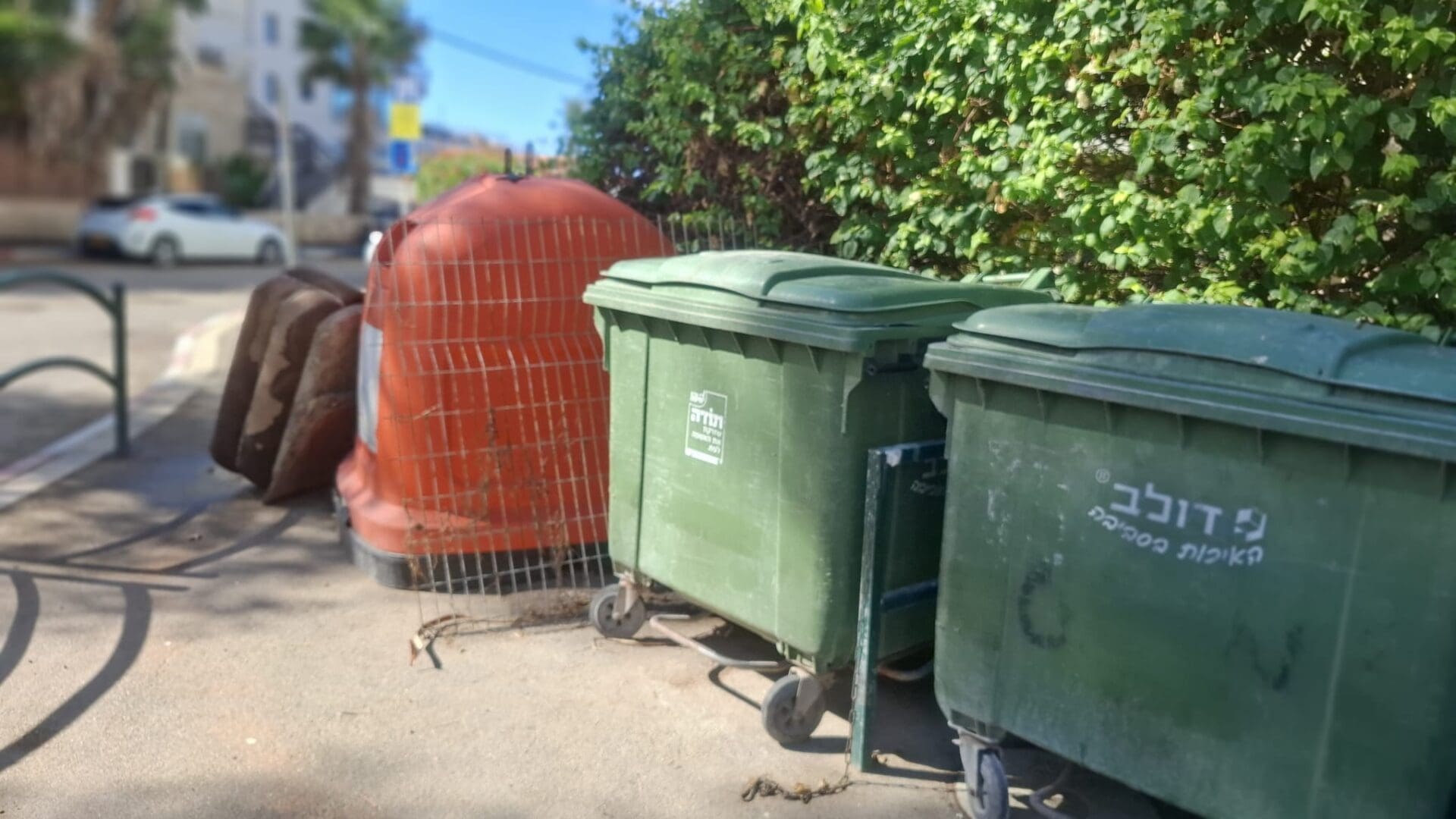
Some of the bins photographed in the article are recycling bins. There is a problem with them too. There were 3 bins on Sha'ar El-Habanon Street. The bin that was intended for paper was removed from the site and was also removed from other streets in the area. The park on Sha'ar El-Habanon Street has been full of dirt since Friday. The bridge that contains the Panorama Towers towards Bank Hapoalim has also been full of filth since Friday. I heard from a friend that the Louis Promenade is also quite dirty. I complained to the municipality last week and they promised to answer me. I'm still waiting. The subject of my complaints hasn't really been addressed.
The Ethiopian cleaners who walk with the bins pick up trash for half an hour and then sit on a bench for half an hour and make phone calls and maybe other business but certainly not clean. When they return to clean, they simply pick up what is convenient as they walk, not all the dirt on the sides.
This is infuriating.