


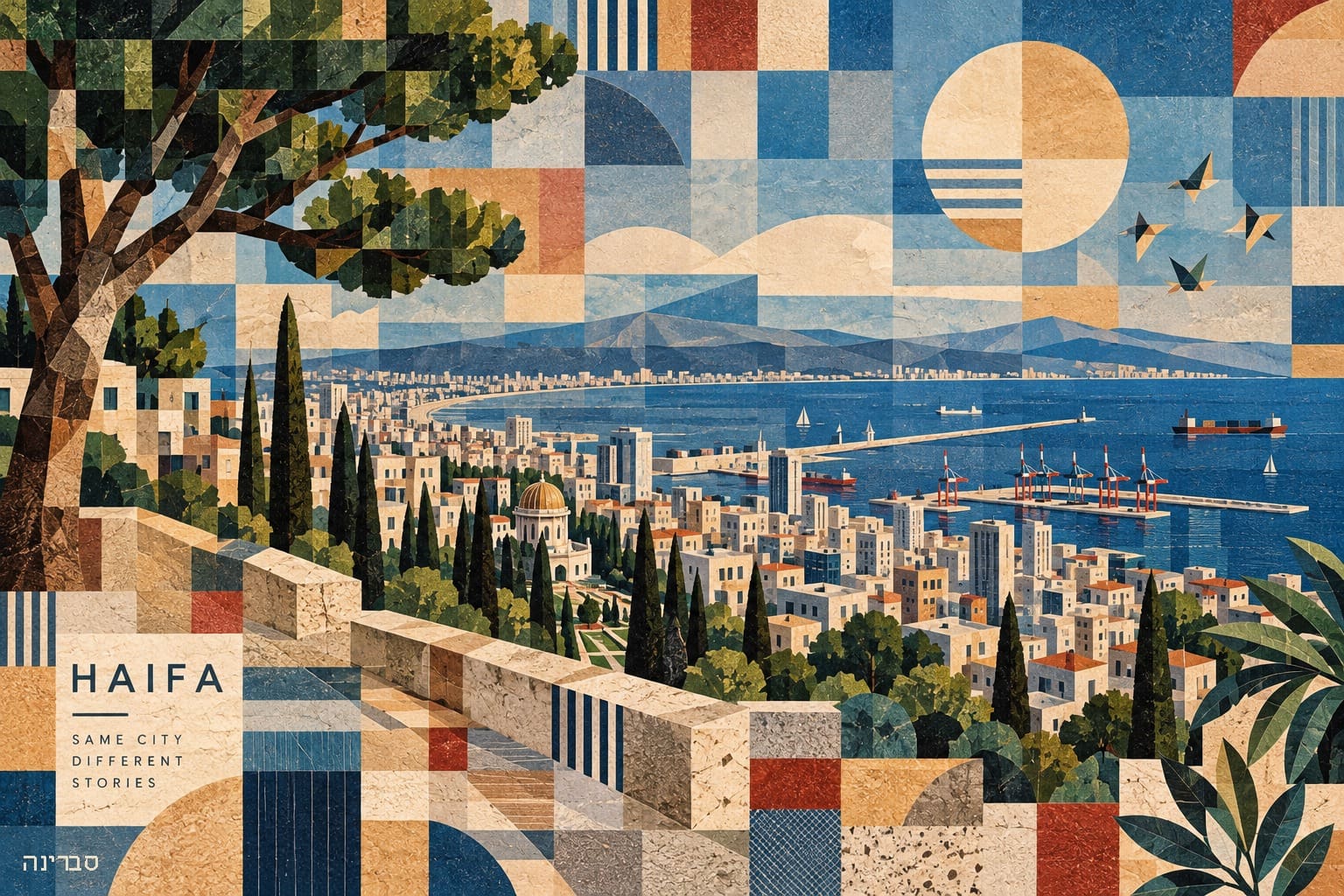
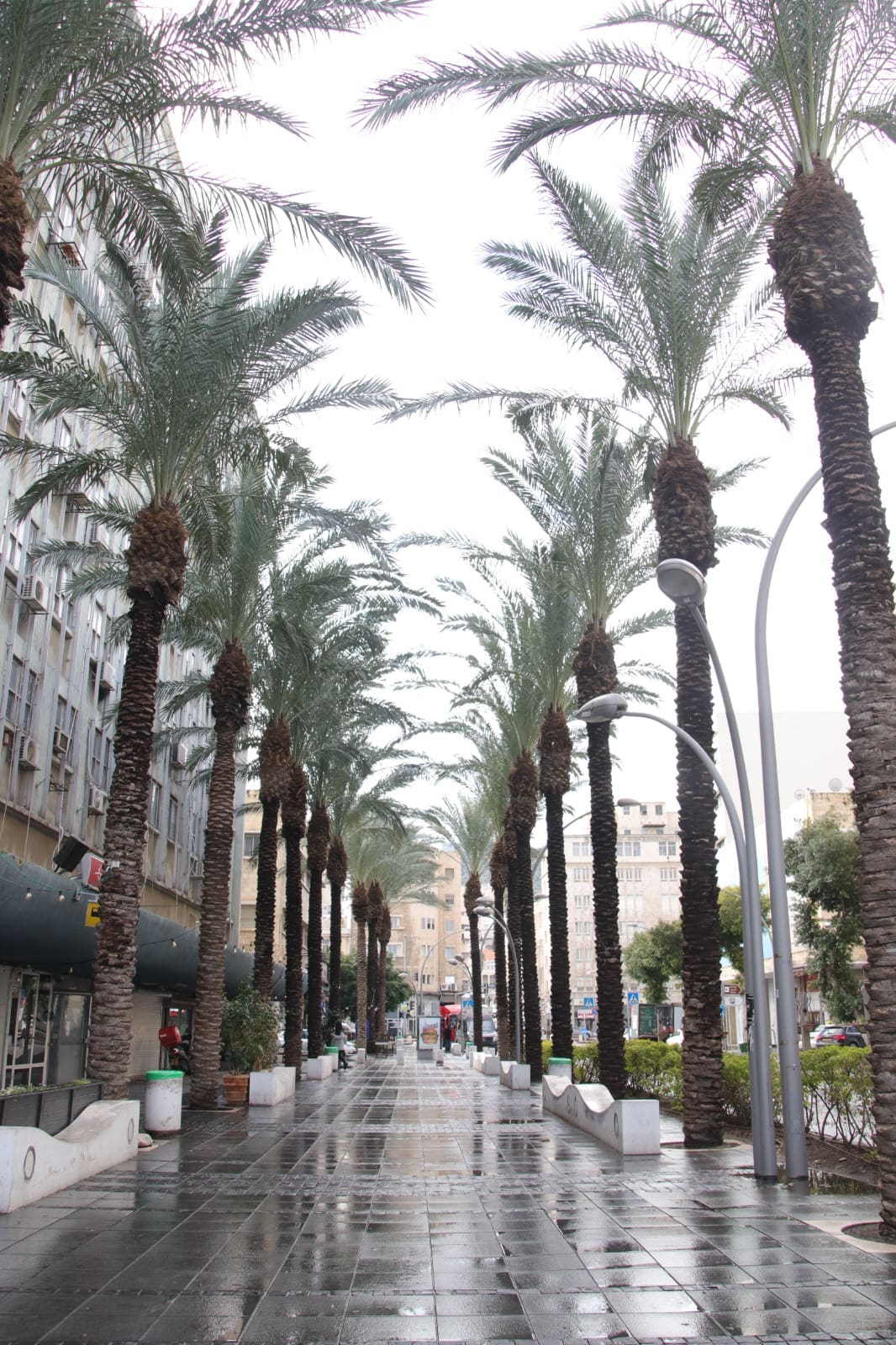
There are places in Haifa that we almost no longer need to photograph to recognize: the Baha'i Dome on the mountain, the bay, the refineries, the sea, the palm trees and the old buildings next to the new towers.
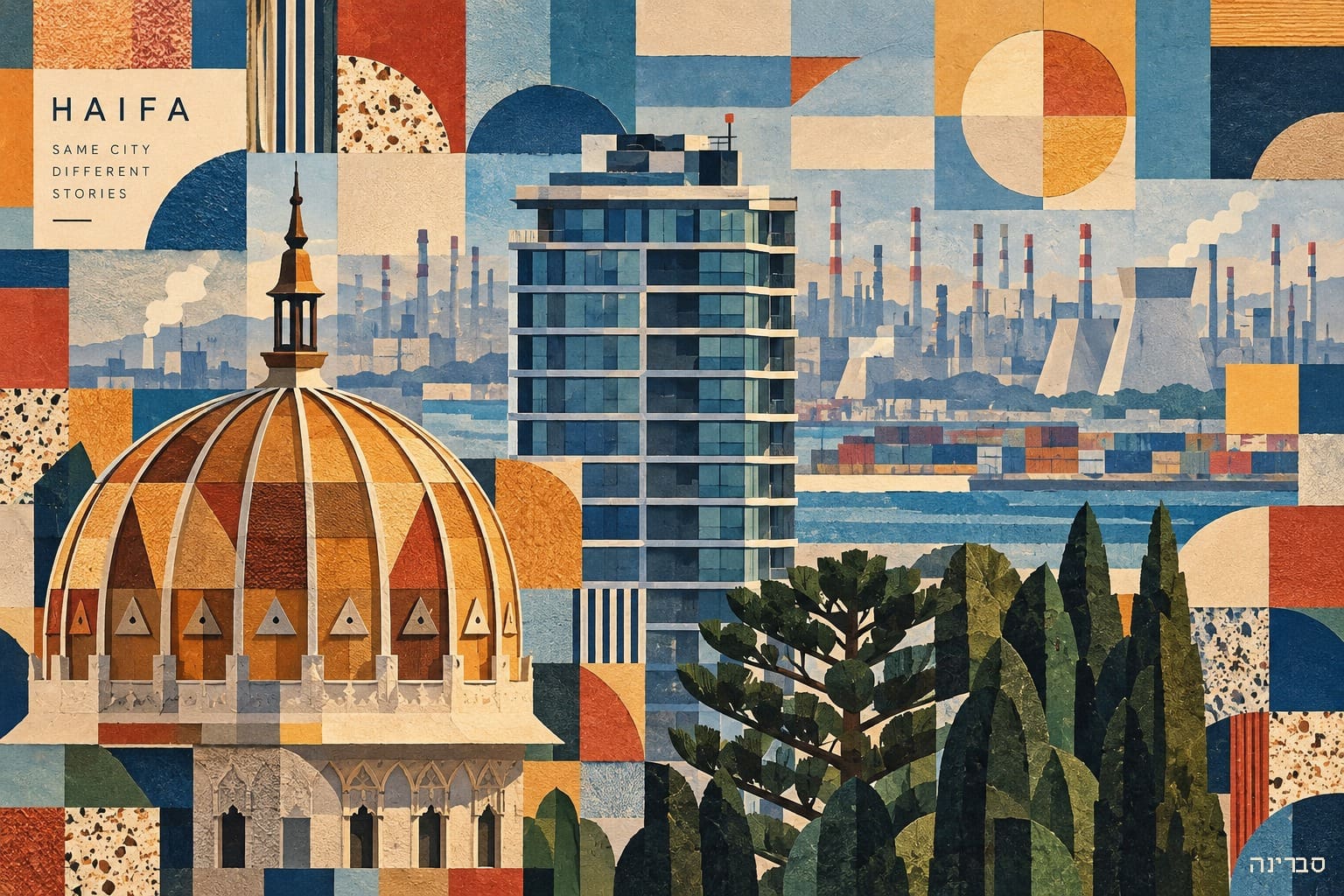
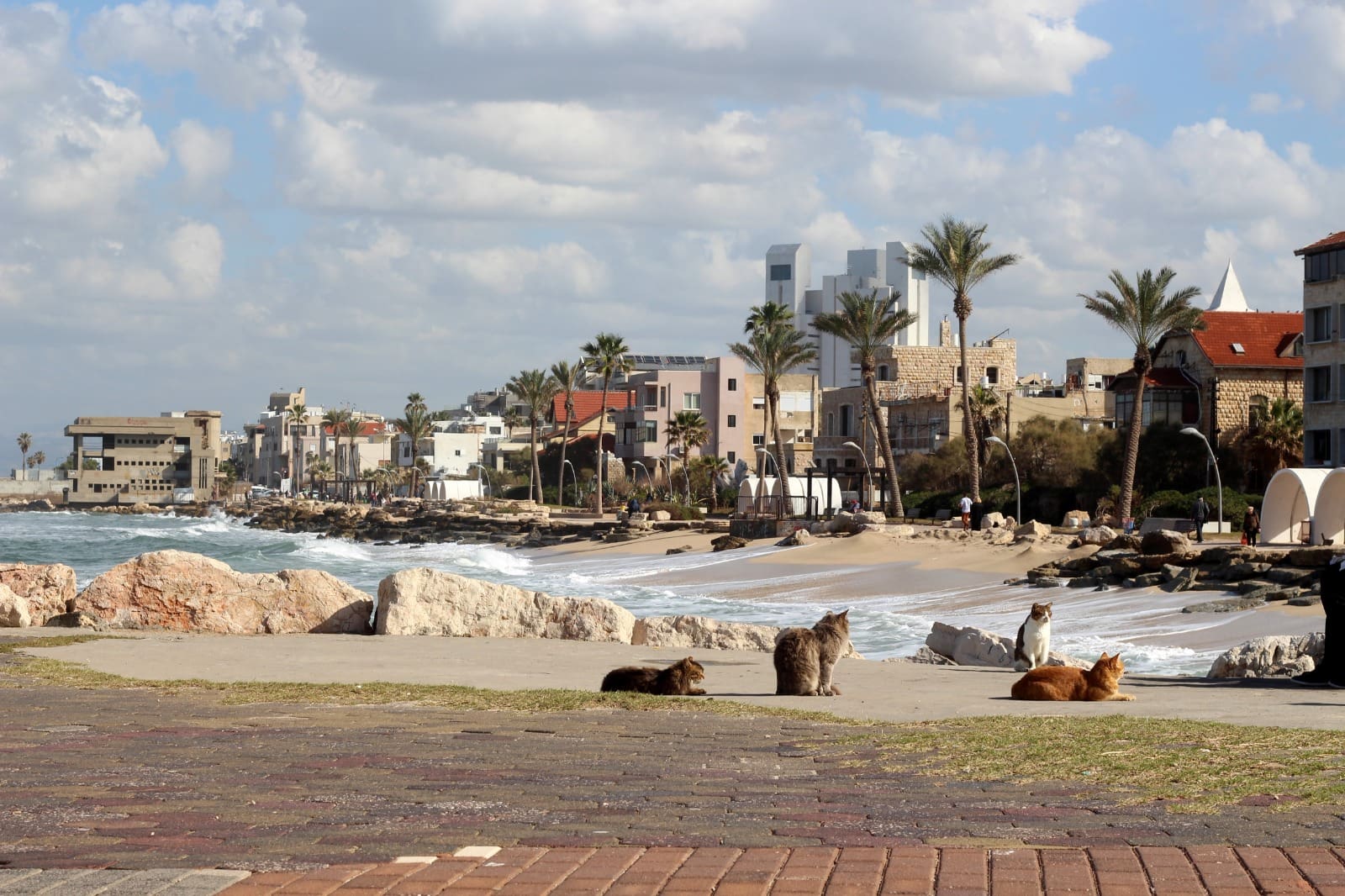
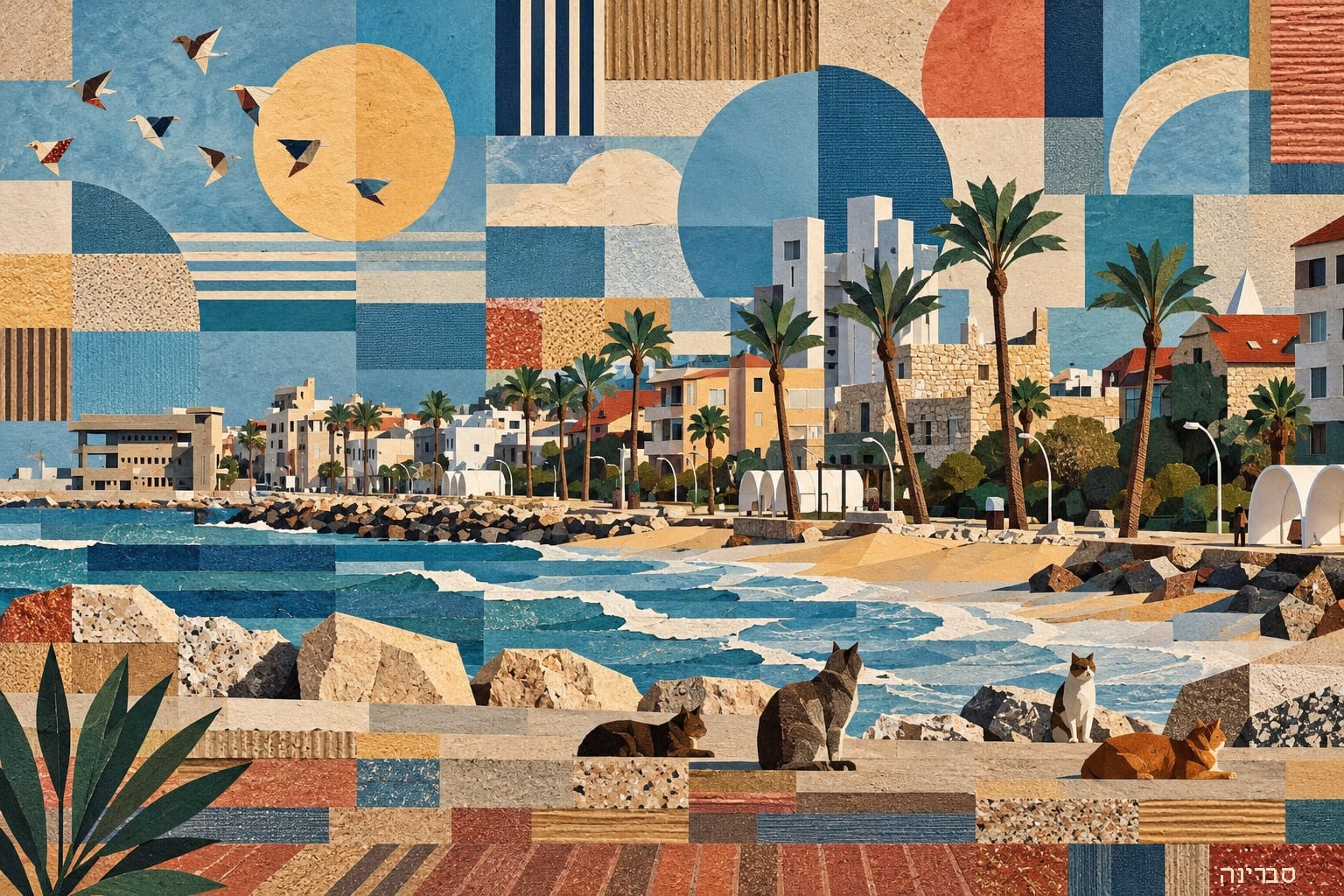
Recently I tried to do something different with some of my photographs from Haifa. Instead of leaving them as they are, I took them as a starting point and imaginatively decomposed them into shapes, colors, stripes and layers, like a collage made of paper. The result is a series in which Haifa is still present and clear, but looks a little different.
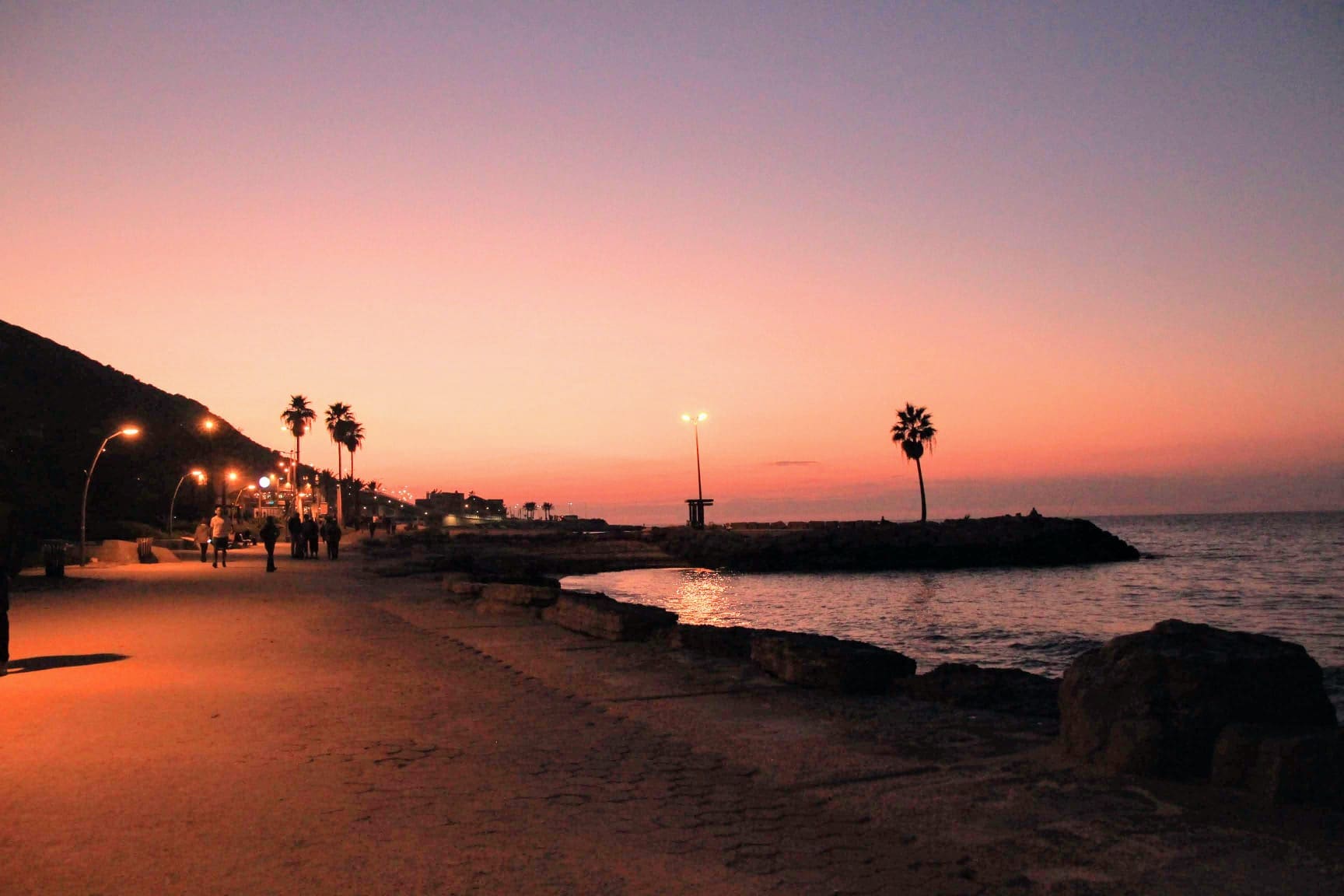
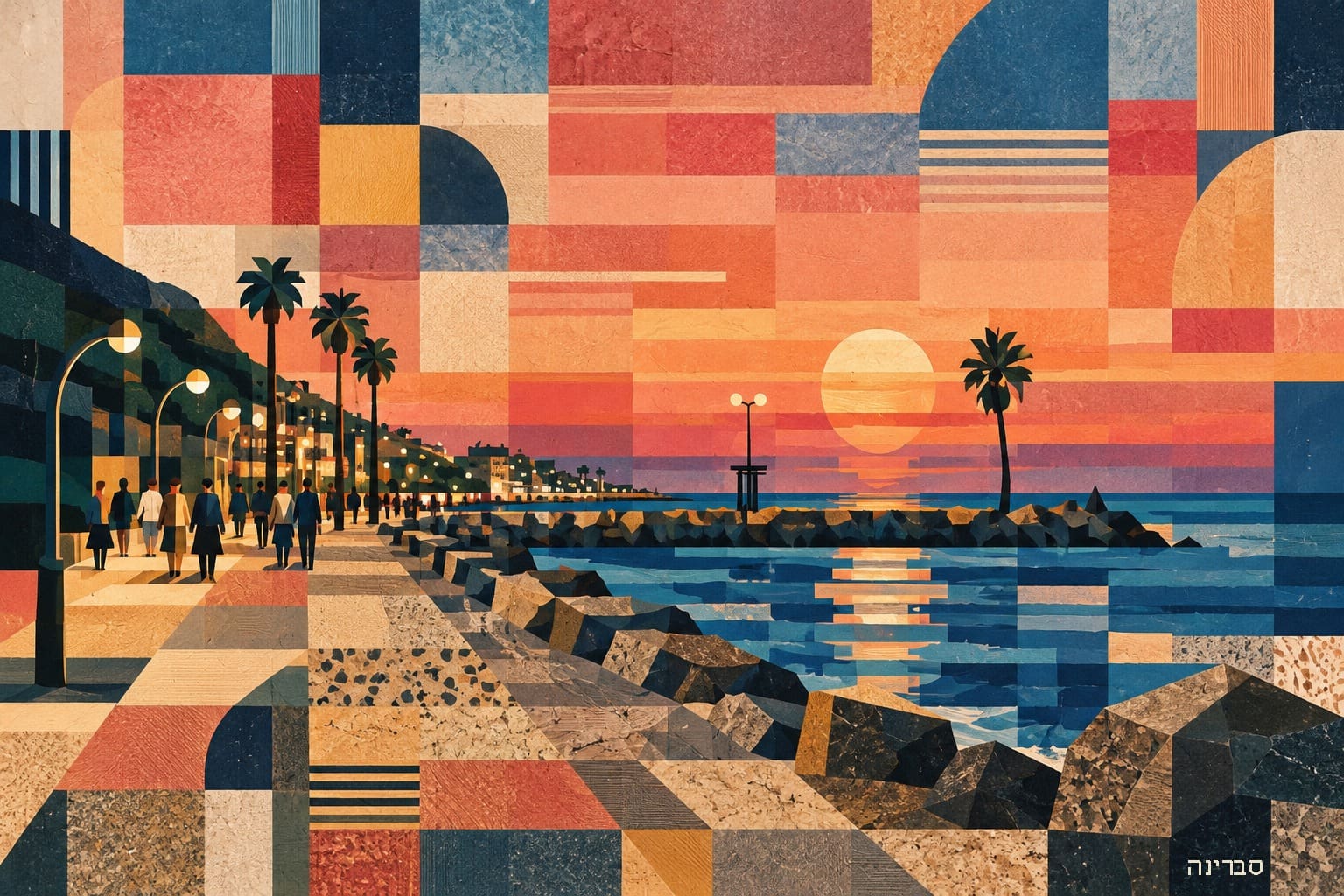
To disassemble to see again
In the process of working, I was particularly interested in what happens when you remove the expectation from photography that it be a photograph of a place. When you look at a building not just as a building, but also as a geometric shape, when a road line becomes a stripe of color, a window becomes a square, a mountain becomes a surface, and sky and sea can meet each other almost like pieces of paper.
There's something about collage that allows you to do this naturally. It's not completely bound to reality. You can put things together that aren't next to each other, change the scale, emphasize a certain color, leave one familiar detail and turn everything else into something almost abstract.
It was precisely from this disintegration that a new way of looking at the city began to emerge for me.
The original photographs are important to me, and here they became raw material. I didn't want to "reshape" them, but rather to see how far it is possible to take a familiar place and move it a little to the side, enough so that we have to look at it again.
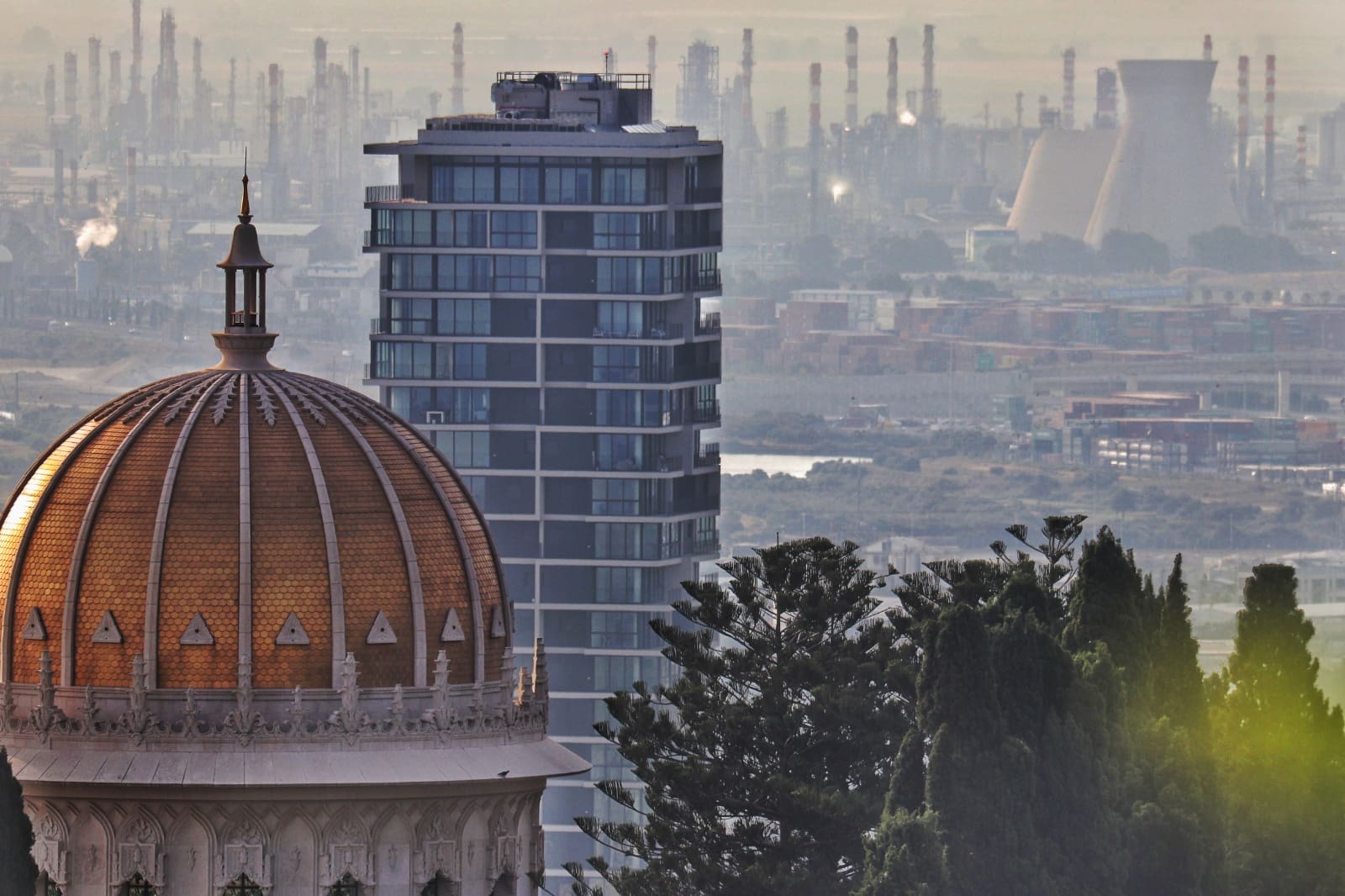
Between photography, collage and artificial intelligence
This is where artificial intelligence also entered the process.
I use AI as a tool in the creative process, but not as a replacement for photography or an idea. The photographs, the places, and the observation of the city started with me. Then came the stage where I tried to translate what I saw into another language, geometric, layered, almost paper-like.
The use of artificial intelligence naturally raises questions about art and creation. Is work made with the help of an AI tool still the work of the person who conceived it? Does the mere ability of everyone to use the same tool make the result less personal?
I don’t have a definitive answer to these questions. I also don’t think that every work done with AI is necessarily art, just as the mere use of a camera doesn’t make every photograph a work of art.
For me, the more interesting question is what the person does with the tool. What image does he choose? What does he want to change? What does he leave? What color, shape, or angle interests him? When does he know how to stop?
In this sense, this work is still a continuation of the action from which it all began, just look.
The familiar Haifa, through slightly different eyes
Maybe that's also why I chose Haifa. I've been a resident of the city for 40 years, and I walk around with my camera in the streets and neighborhoods, photographing the local nature, birds, cats, buildings and street photography. In Hadar, in the downtown area and in other places in the city. I keep finding things that catch my eye. It seems to me that Haifa has many stories to tell, a historical story about an old building, the history of the city's railway, a neighborhood that is changing, or simply a small moment on the street.
It's a city that's very easy to identify. It has mountains, sea, and a bay; old neighborhoods alongside new construction; nature within the city; architecture, industry, colors, layers of history.
But when you break those images down into shapes and colors, something changes. Suddenly the Baha'i Dome can only be a triangle or an arch. The bay becomes a blue expanse. Buildings become rectangles. The skyline becomes a system of lines. Something almost naive even. And then, for a moment, we may stop recognizing the place and only then recognize it again.
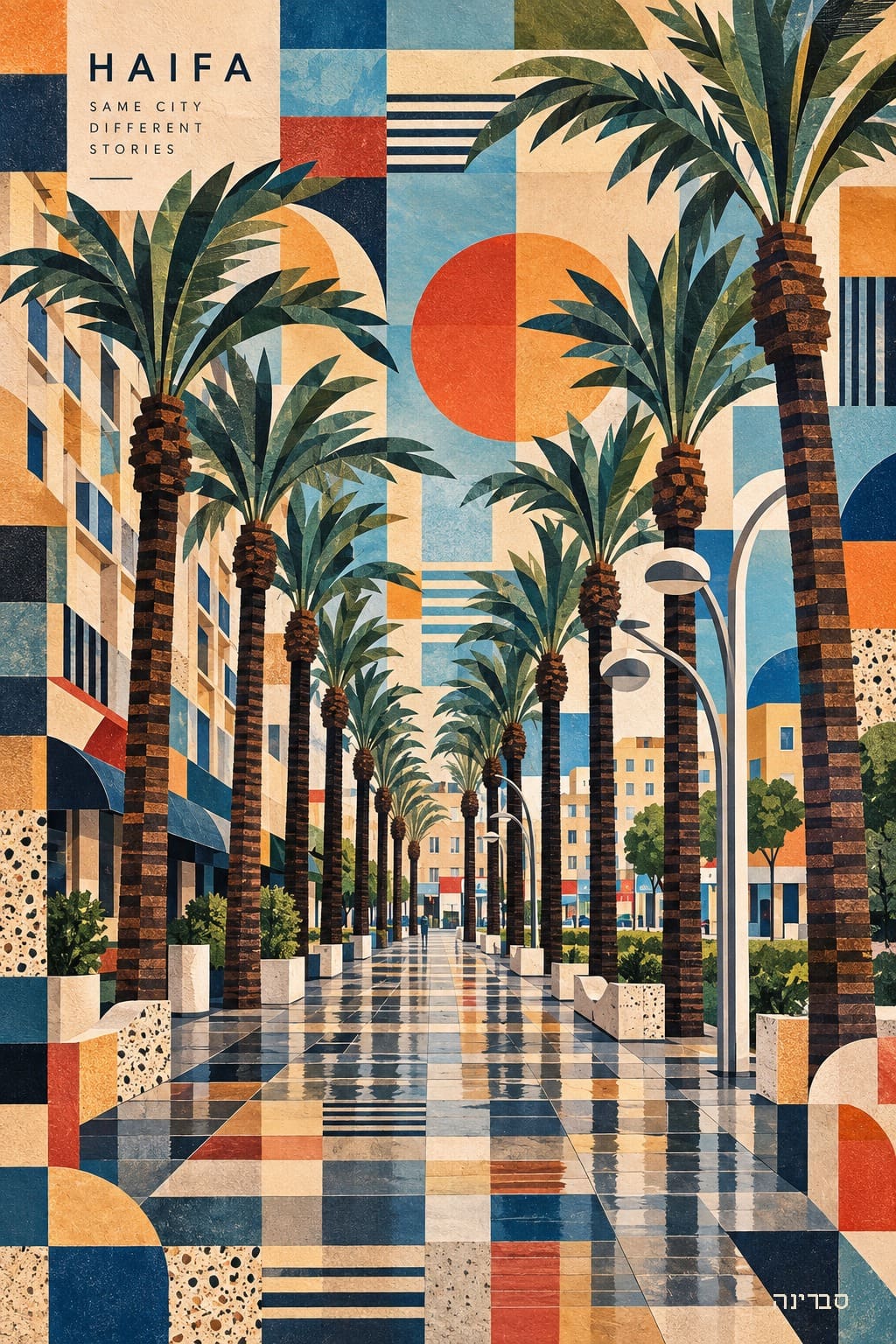
And that, for me, is the whole point.
Not to invent a new Haifa, but to try to see anew the Haifa that is already before our eyes, this time with the help of today's tools. I am not trying to praise artificial intelligence or criticize it, but simply to examine what happens when you combine a new tool with something that has been familiar to me for years — photography.
Did the article interest you?
The first work is reversed from right to left.
Maybe the AI has gone crazy?
Lovely works!
Thank you very much Sharon