


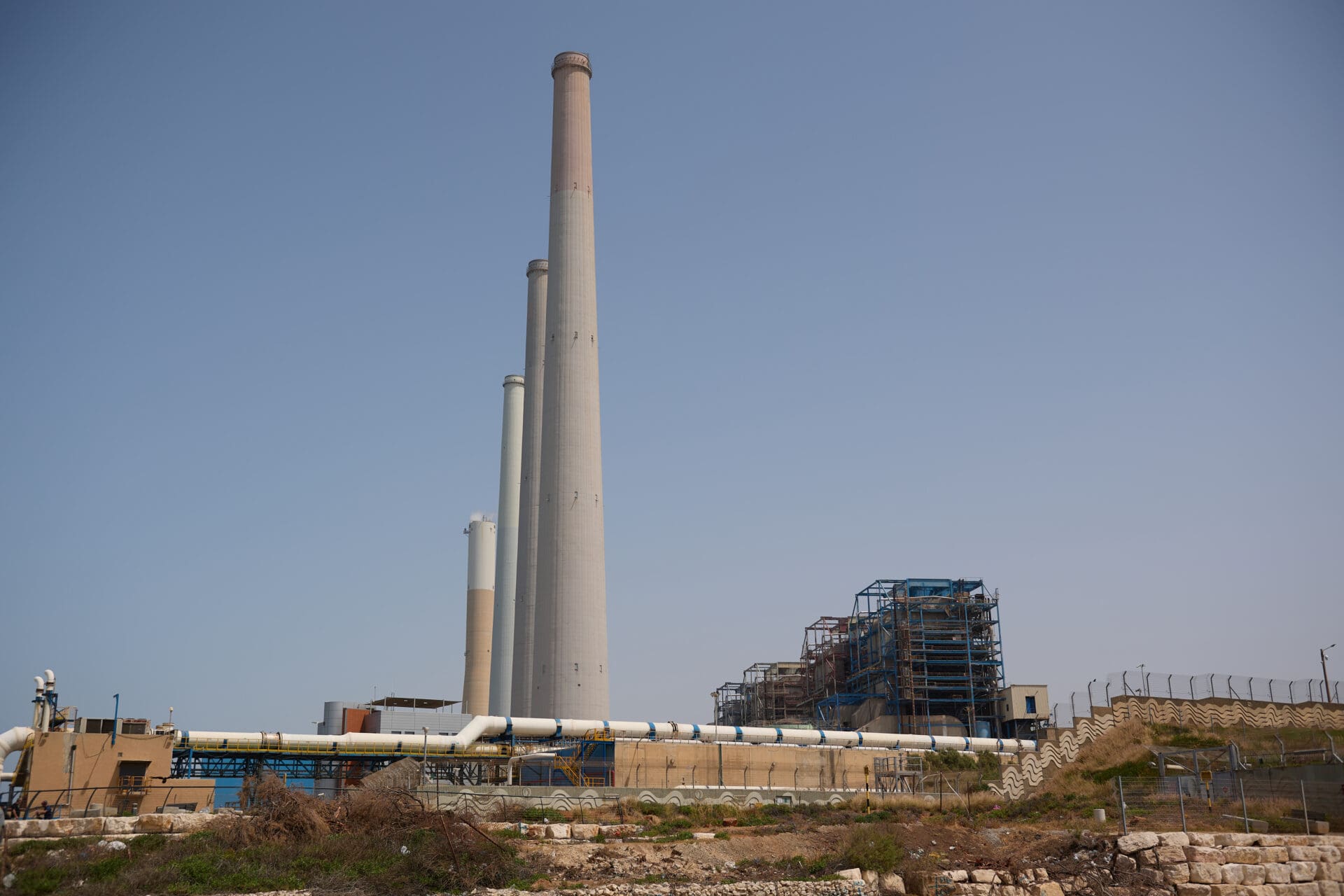
(haipo) The Sharon-Carmel Cities for the Environment Association submitted a professional opinion to the Ministry of Environmental Protection, which includes the findings of tests conducted in June during the operation of coal-fired units 1-4 at the Orot Rabin power plant. The data shows that particle emissions were measured above the permitted level for approximately 40% of the operating time, a finding that raises a demand for stricter control over the operation of the units.
Abnormal emissions in 112 hours out of 282 operating hours
The expert opinion was prepared by Hanan Zahalka, director of the Air and Energy Monitoring Department at the association. The data shows that out of 282 hours in which the units were operated, particulate emissions above the permitted level were measured in 112 hours. During the operations, malfunctions were also recorded in the systems that are supposed to reduce pollution: in unit 4, a malfunction occurred in the particulate filtration system, and in unit 2, a malfunction was discovered in the system for reducing sulfur emissions. Nevertheless, high particulate emissions were measured even during the operation of units in which no malfunction was reported at all.
Increase in sulfur concentrations despite the absence of an official exception at monitoring stations
The air monitoring stations in the area did not record any deviations from environmental standards following the operations, but several stations measured an increase in sulfur oxide concentrations. The opinion indicates that the recurrence of malfunctions in the pollution reduction systems, along with the high levels of particulate matter that were measured, require stricter control before any further operation. In addition, it is required to ensure that the Electric Company carries out a full inspection, repair, and maintenance of the systems that are supposed to reduce particulate emissions, and to require detailed documentation of the source of each malfunction, how it was treated, the tests performed after the repair, and the steps taken to prevent its recurrence. In addition, an operating permit from the Ministry of Environmental Protection is required to be granted only under suitable weather conditions, in order to minimize the risk of harm to residents of the area.
Petition to the Court against the Ministry of Environmental Protection
The findings are being published in light of a petition the union filed with the court against the Ministry of Environmental Protection, after the ministry extended the operation of the units until 2028 and reduced the emission permit requirements. In the petition, the union demands that the continued operation of units 1–4 be stopped. The petition was accompanied by a medical opinion from Dr. Ofir Lavon, according to which the permit relaxations and the operation of the coal-fired units may lead to a significant increase in morbidity and mortality in the area.
"The fight is for the health of about a million residents"
Nir Sahar, CEO of the Sharon-Carmel Environmental Cities Association, said: "The opinion shows that 40% of the time the activity is running, particle emissions are measured above the permitted level, this is a fact that cannot be ignored. Even if no abnormality was recorded at the monitoring stations in the area, the findings illustrate the problem of continuing to operate old and polluting units. The situation at Orot Rabin illustrates the immediate need to formulate and implement a national plan for the energy sector, which will ensure energy security on the one hand and environmental and health security for the residents of Israel on the other."
Attorney Eli Abutbul, Head of the Zichron Yaakov Council and Chairman of the AssociationHe added: "These figures clearly illustrate our demand for the closure of the polluting coal units. It is impossible for the state to continue to extend the operation of the old coal units time and time again, despite the health and environmental consequences. This struggle is for the health and quality of life of about a million residents of the Sharon-Carmel region."