


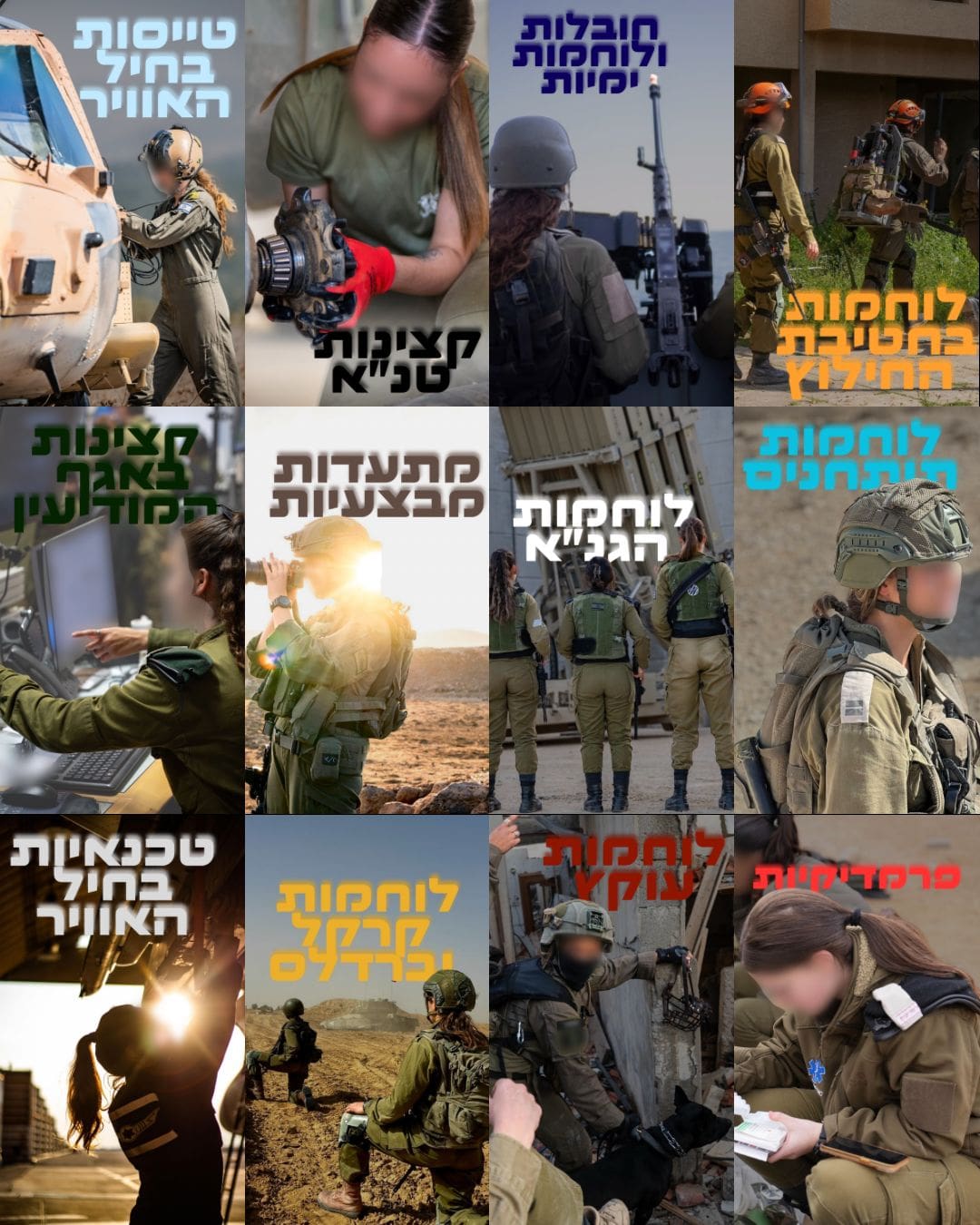
(haipo) Today (Sunday, 08/03/2026), Israel, along with the world, celebrates International Women's Day, a day dedicated to the achievements, struggles, and contributions of women in all areas of life. On this day, when we talk about equality, leadership, and breaking boundaries, the public debate surrounding women's service in the IDF is intensifying. While many women play critical roles in the security apparatus, some even risk their lives on the battlefield, voices are heard claiming that their service burdens the army or is less significant. The gap between the discourse and the reality on the ground raises deep questions about the place of women in the security apparatus and the path that still remains to be taken.
One of the most proud things about the latest operation is Air Force Fighters: About 30 female aircrew fighters, including pilots and navigators, are taking part in strikes in the skies of Iran, in Operation "The Roar of the Lion." Alongside them, many women are also working on the ground crews, ensuring the best preparation of the planes and armaments for the attack.
Lionesses on the Frontline: 30 Women Take Part in Strikes Deep Inside Iran - Operation "Lion's Roar"
The public debate surrounding women's service in the IDF
In recent weeks, there has been a heated debate in Israeli society about the importance of women serving in the IDF. While many in the public see female soldiers as an integral part of the military system and appreciate their contribution, others claim that women are given concessions, are not suitable for every role, and sometimes even constitute a burden on the army. The debate intensified following statements by political figures, including Finance Minister Bezalel Smotrich, who declared that he would try to prevent his wife from serving in the IDF. On the other hand, the reality on the ground presents a completely different picture: female fighters who physically defended the settlements of the IDF on October 7, female pilots and navigators who participated in strikes in Iran as part of Operation Roar of the Lion, and female soldiers who serve in all levels of the army, from intelligence to infantry.
The Female Service Revolution: From Administrative Roles to Combat
In recent decades, the IDF has undergone profound change. While in the past women were mainly assigned to administrative positions, today they are found in almost every military career. The significant turning point was the High Court of Justice Alice Miller in 1995, in which the court ruled that women should not be prevented from taking a pilot course. Miller herself did not become a pilot, but she opened the door to an entire generation of women who fulfilled their dream.
Since then, the IDF has expanded the integration of women in almost every field: infantry, armor, air defense, search and rescue, intelligence, cyber, technology, training, and more. Women command teams, vessels, weapons systems, and operational units. They are an integral part of the combat formation and the senior command.
IDF data on the occasion of International Women's Day
In honor of International Women's Day, the IDF published official data indicating a significant change:
- 21.2% of IDF fighters are women — compared to only 7% in 2015.
- 50% of the fighters in the air defense system are female fighters.
- 20% of reserve soldiers are women — An unprecedented figure.
- 90% of combat roles are now open to women.
The data indicates a clear trend: women are becoming a central part of the combat system, and not just in combat support roles.
Female soldiers from Haifa: A prominent female presence in operational formations
In Haifa, too, the contribution of women to the IDF is clearly felt. Female soldiers from the city serve in intelligence, technology, medicine, training, and combat roles. Many of them lead teams, participate in operational activities, and fulfill sensitive roles. For them, service is not just a duty, it is a mission.
In the city's schools, such as Reut, Ironi H, art classes, and other educational institutions, you can find many graduates who have enlisted in significant positions. Some of them go on to become officers, others integrate into intelligence systems or technological units, and there are also those who choose full combat tracks.
Between criticism and reality: what's really happening on the ground?
Despite public criticism, the operational reality presents a different picture. On 07/10, there were female fighters who physically defended the settlements of the encirclement, some of whom were killed in battle. Female observers warned of infiltrations, female rescue and search and rescue fighters operated under fire, and female pilots and navigators participated in strikes in Iran as part of Operation "The Roar of the Harrier."
The fact that women serve in regular service and in combat reserves eases the burden on the fighters, especially at a time when Israel is fighting on multiple fronts and reservists are called up for service hundreds of days a year.
Lt. Col. (res.) Tehila Hazut: “The army has undergone a real revolution”

Lt. Col. (res.) Tehila Hazut-Rubin, married and mother of two, group facilitator and leadership lecturer, a graduate of 24 years of service in the human resources department of the Navy, describes the change the IDF has undergone over the years: "I think the army has come a long way. Women are today at key crossroads, they are an essential part of the decision-making table and are integrated into a wide variety of systems, from intelligence to combat. It is true that there is always more to do, but there is no doubt that the reality today is very different from before."
Hazut emphasizes that she never expected any relief: "If I want to achieve something, I set a goal and act. That's how my mother raised me. Every choice has a price. Senior positions in the army require almost 24/7 availability, and it's especially challenging when you have a family. But I always felt that my voice was heard and that I was a significant part of decision-making."
She also talks about a familiar phenomenon among many women, "imposter syndrome": "No matter how many achievements I had, there was always an inner voice that asked if I was worthy. Today I know I am. Part of my role as a commander was to help my subordinates and subordinates see their strengths and dare."
Hazut also describes the change in the human resources system: "In the last decade, there has been a significant shift. Today, a large part of the senior command in the system is made up of women. In the end, what matters is what each one brings to the table: professionalism, responsibility, and the ability to lead people."
Women as commanders, fighters, and system leaders
Hazut emphasizes that in complex systems like the military, traits like emotional intelligence and empathy are not "soft skills," they are strategic abilities: "The ability to understand both processes and people is critical. This is what makes it possible to lead units, manage crises, and deal with complex situations."
According to her, the reality on the ground proves that women don't just "integrate," they lead: "Women in the IDF today are commanders, fighters, captains, pilots, intelligence officers, and managers of complex systems. This is not a matter of slogan, this is reality."
The perception of female service throughout history: The perspective of Brigadier General (Res.) Hedva Almog
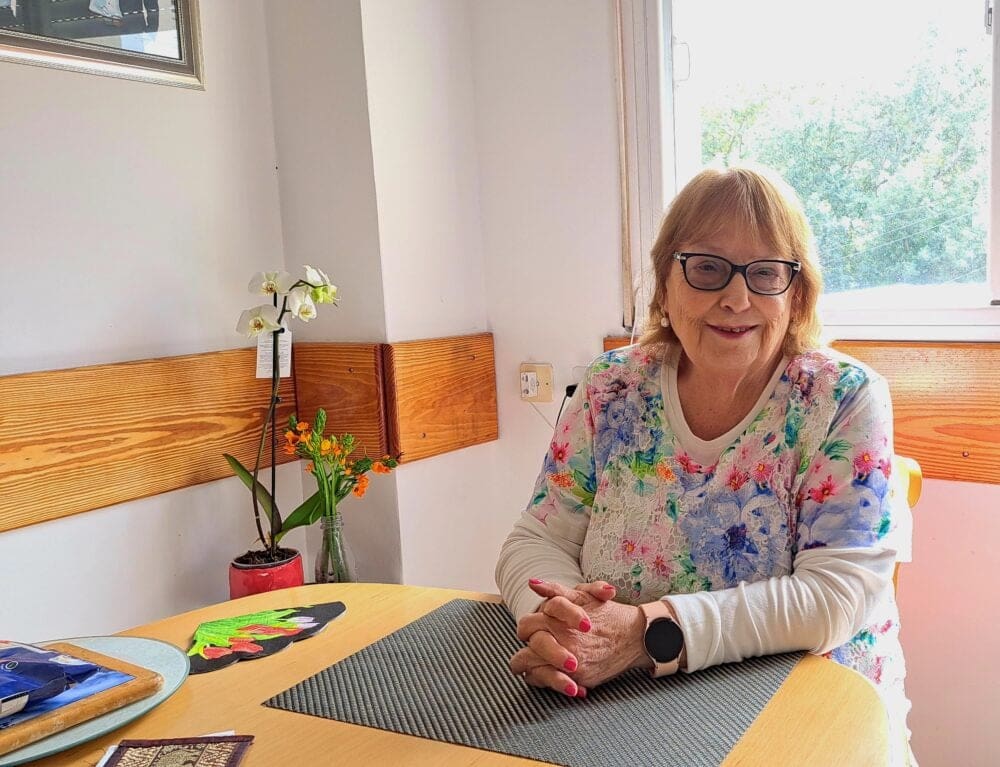
Brigadier General (Res.) Hedva Almog, chairwoman of the Association for the Commemoration of the Fallen of the Nahal and their Heritage, reminds us that the integration of women into the army is not a new phenomenon, but part of the history of the people even before the establishment of the state. "Even during the Palmach period, women were part of the fighters and held liaison and additional operational positions," she says. With the establishment of the state, it was determined that women would fill a variety of positions in the IDF — but not combat roles.
According to her, the operational reality after the Six-Day War and the Yom Kippur War forced the army to recalculate its course: "The IDF took on more and more missions, and it did not have enough manpower. At that time, they thought it was not worth investing in women in long courses because they serve less time and do not serve in the reserves." But later, the defense establishment realized that half of the population could not be given up, especially when there are female soldiers who are willing to remain in the permanent service if they can integrate into significant roles. Thus, tracks like Caracal and other roles were opened up to women, and they have proven themselves time and time again.
"Female soldiers in the Iron Sword War and even before that demonstrated composure, professionalism, and determination," Almog emphasizes. "They talked about women being hysterical on the battlefield, but in the moment of truth they showed extraordinary ability and are a source of great pride." Almog adds that the IDF realized in retrospect that it had made a mistake in dismissing such high-quality human capital. "When I took on the role of First Lieutenant, I asked myself how I would make a mark. I realized that if we want to see women climb the ranks, there must be many more women in the rank of lieutenant colonel and above. When women sit at the decision-making table, the decisions that are made are better."
Looking to the future: more women in senior positions
Hazut believes that the trend will continue: "We will see more and more women in the most senior positions. The process has already begun, and it is irreversible," she concludes with an optimistic attitude: "The army is a reflection of society. As society progresses, so will the army. Women bring with them abilities, thinking and values, and the army benefits from this."
Did the article interest you?
My stunning wife, what a huge contribution to the Pantheon you are.
For the sake of women, religion and state must be separated! According to the Or Party and former Rabbi Yaron Yadan