


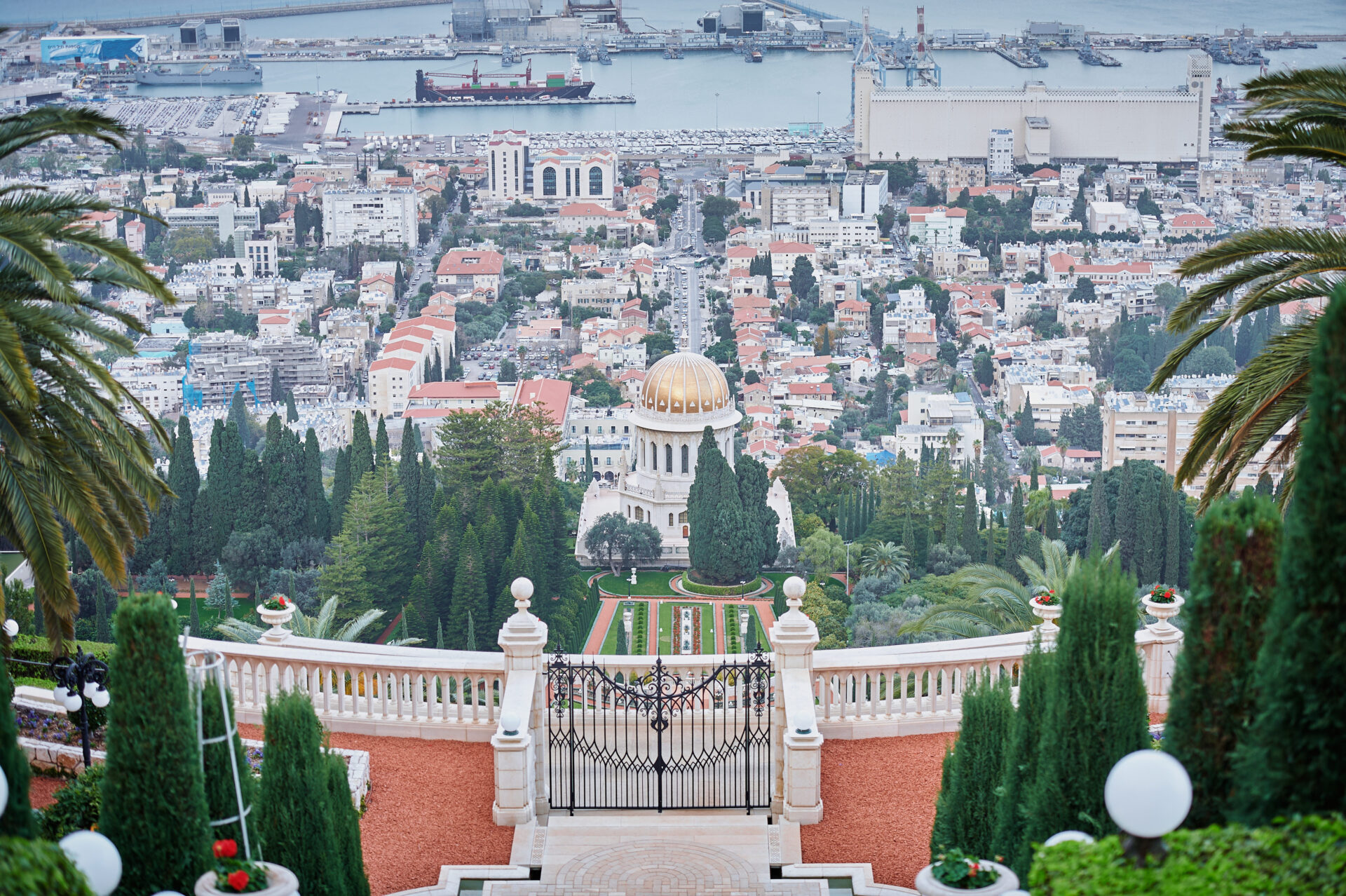
Haifa ranks third in Israel in emigration abroad • A particularly worrying statistic
(haipo) Despite its status as a relatively stable and quiet city, Haifa recorded one of the most notable jumps in the country in the rate of outbound immigrants in 2024, 7.7% of all Israelis leaving the country. This is the highest rate in the city in 15 years, placing it directly behind Tel Aviv and Jerusalem.
Over the past decade, Haifa has stood out as a city with a relatively stable immigration rate, typically hovering around 4.5%–5.5% of all immigrants leaving the country. However, new data from the Central Bureau of Statistics for 2024 presents a different and worrying picture. Haifa has climbed to third place in the country with 7.7% of those leaving, an exceptional figure compared to previous years.
Examining the immigration table for the years 2010–2024, it can be seen that the rate of immigrants from Haifa has consistently fluctuated around a constant average. In 2010, for example, the city’s share was 4.7%, and in 2015 it dropped slightly to 4.5%. In 2020–2022, Haifa also concentrated around relatively moderate rates (5.1%–4.8%). However, in just two years, a sharp jump was recorded, from 5.5% in 2023 to 7.7% in 2024, the sharpest increase among large cities.
Where is Haifa located in relation to other cities?
The data shows that in 2024 only two cities overtook Haifa:
- Tel Aviv-Jaffa is at the top with 14% of all outgoing immigrants.
- Jerusalem, in second place with 6.3%.
- Haifa, as mentioned, is third and ahead of cities such as Rishon LeZion (3.2%), Netanya (6.9%) and Petah Tikva (2.2%).
The meaning is clear. Haifa has become one of the main immigration hubs in Israel, a phenomenon that requires attention from policymakers.

And where does Haifa rank among the returnees?
The data regarding returning immigrants presents a completely different picture. While Haifa stands out in terms of emigration, among returnees it maintains stability and is consistently placed in the middle of the list, around fourth/fifth place among the largest cities.
The rate of returnees to the city has fluctuated around 4% over the years, with slight fluctuations. In 2023, there was a sharp jump to 5.6%, but in 2024 the figure dropped back to 4%, just like in the previous decade. In fact, Haifa has not recorded a significant change in its attractiveness for Israelis returning to the country.
Compared to other cities in 2024:
- Jerusalem leads with 9.4%.
- Tel Aviv-Yafo is second with 10%.
- Netanya closes the trio with 3.2%.
- Haifa, with 4%, is in the middle of the range, not standing out negatively, but also failing to attract more returnees than before.
The growing gap between the high number of leavers and the stable number of returnees highlights a clear trend of increasing negative migration.

Outgoing migration versus incoming migration – the national situation
Against the backdrop of the increase in outbound migration, the national data for 2024 indicate a significant gap:
82,774 Israelis left the country, compared to 24,150 who returned. This is the largest gap in the past decade. The proportion of Jews and others among those leaving continues to be very high.
What can explain the immigration to Haifa?
While the data does not indicate the reason for the increase, several processes may explain the trend:
- The cost of living and the economic slowdown.
- The local housing crisis and limited supply of new apartments in high-demand areas.
- The tense security situation in the north and the proximity to the Lebanese border.
- Natural migration of young people to the center for employment and studies.
- National data also shows a high rate of emigration of Jews and others, which stands at approximately 94%.

A trend that requires intervention
A 7.7% jump in people leaving Haifa is not an isolated phenomenon, but rather a significant signal of a change in the city's status.
While Haifa maintains stability among returnees, the sharp increase in departures creates a negative migration balance, which could lead to social, economic, and planning impacts in the coming years.

Avihu Hahn, Deputy Mayor and Chairman of the Green Party of Haifa, told Haifa following the data: "Haifa is a city of a university and a Technion that produces many talented young people with high academic and technological abilities that create substantial opportunities for employment in developed countries in both Europe and the US. From the perspective of the substantial environmental impacts, mainly the concern about air pollution in the Haifa metropolis, the struggle to evacuate the BZN that is not progressing as quickly as required and is creating uncertainty among families and young people regarding the BZN closure plan, and the fear of raising children with environmental impacts, constitute a stimulating factor for emigration from Haifa.
Of course, there are other factors that are also common to other cities, such as: the cost of living, housing aspects, aspects of the legal revolution, the division among the country's residents, and more. In order to stop this drift, we must act vigorously with government officials to evacuate the area on a rapid schedule, promote the processes for cleaning the bay and the land, create incentives and employment solutions for the city's young people, expand the necessary investments in the areas of the environment and quality of life in the city, and create a friendly and attractive city for its residents."

More David Etzioni, council member and chairman of the Our House faction, told the paper: "The figure of 7.7% emigration from Haifa abroad is the highest in 15 years. It's painful, but not surprising. As a Haifa resident, I understand very well why this is happening: the cost of living is high and does not match the level of services, employment opportunities are limited, carcinogenic air pollution continues to harm the quality of life, and the city's reputation has been eroding for years. Unfortunately, the current city leadership does not present a real plan to curb the trend, and the Committee to Prevent Emigration is almost non-functional.
But it is possible and necessary to change direction. Haifa needs a real revolution in youth employment, an innovative employment center in the fields of high-tech, green energy and smart medicine that will give the younger generation a real reason to stay. Alongside this, the city must offer truly accessible housing, with long-term rental projects at prices that young people can afford. Haifa also needs to return to being a living and breathing city: a city with culture, entrepreneurship, open spaces and public transportation that connects neighborhoods and does not push people away from it.
Beyond all of this, Haifa must rebuild a sense of belonging and Haifa identity. Young people need to feel like they are partners in the city's future and not temporary guests. This is a national challenge for all intents and purposes, and Haifa can and should be the city that leads the change. What is needed now is courageous leadership that is willing to look at reality as it is and begin to truly act for the younger generation."
Fakhar Bayadsi, a city council member from the Hadash faction, told the Times: "The data is sad, but unfortunately not surprising. It is a direct result of great neglect on the part of the government over the years, deliberate disregard for the city's needs, lack of budgets for the city's development, and consistent treatment of Haifa as the state's backyard. When an entire city deals with such a reality alone, the results are known in advance.
Haifa has been in a challenging reality for years: threatening wars without adequate protection, without protection in the old neighborhoods, dangerous and polluting industries and reservoirs of hazardous materials in the heart of an urban space, and factories that the state not only refuses to evacuate, but allows their expansion and deepening of their grip on the city. All of this directly harms the health of the residents and their quality of life, and who can really be surprised by the data in light of such prolonged neglect?
And yet, alongside the numbers and criticism, we have a clear responsibility: to continue investing in education, culture, infrastructure, and to provide a real and equitable response to all residents without exception. Even in the face of a difficult reality, we must not give up on the ability to build a better, safer, and more just future for Haifa and everyone who lives in it. This is the city of all of us, and we have no other Haifa."
👀It is clear that ✨️Haifa has begun to be "flooded"... and not just with "rainwater" in the "underground tunnel", but also... in the "upstream" of the bridge, with no connection to... from the "downstream" of the bridge...!!!@@@
"S K N E" = It is clear to "all of us": Why? About what? About whom? To whom? For what purpose????
* A Z H R H sign. ADD
The situation in Haifa has been deteriorating for about two decades.
Negative migration of Israelis outside the city, to Kiryat Ata, Yokneam Illit, Nesher and even Tirat Carmel.
On the other hand, migration from the northern villages, and the transformation of the city into a noisy and dangerous racetrack, are crimes that are only increasing, especially in the Hadar neighborhood.
And of course, the neglect of infrastructure towards the coast (who said flooding at the Paz Bridge).
And another important aspect. Air pollution. Remind me, when will they evacuate the BAZN?!
Tell the unpleasant truth.
Many immigrants from Ukraine retained Ukrainian citizenship.
During the Ukraine war, many Western countries gave refugee visas to Ukrainian citizens, who took advantage of this and immigrated to receive refugee benefits there. Opportunism
Indeed, as it is written, the city is moving backwards.
Young Jews flee, minorities become the majority
It's not pleasant to walk around the beach promenade (also a shameful promenade that is not appropriate for the third largest city)
Outdated public transportation
What to do:
1. Prevent immigration of minorities by admissions committees
2. Fight crime and car racing
3. Develop a quality promenade that will attract tourism – travel to Tel Aviv and learn (lighting at night, lockers for those who come to the beach, chairs and amenities at a symbolic price) – and develop normal cafes and restaurants in the coastal area.
4. Improving underground public transportation
5. Promoting urban renewal to attract quality young people back (the coastal neighborhoods today are a big trash can with tremendous untapped potential)
So come on, tired, chatty politicians, start working for your paycheck.
The surge is the result of Ukrainian and Russian immigrants who fled the war in 2022-202 and whose goal was to use their network of contacts in Haifa as a migration station abroad. They settled in Haifa to take advantage of benefits such as the Immigrant Absorption Association and a network of contacts and family in Haifa. During the war in mid-2024 after the missiles from Lebanon, a large number decided to leave, when as mentioned for many this was their goal from the beginning and the war here accelerated their departure.
So don't get excited. A large number are even considering returning to Israel after experiencing difficult immigration and xenophobia in Europe.
Some are leaving, in my opinion, because the city is slowly being conquered like in Europe, and immigrants are moving there from the villages and cities of the Galilee, and residents of the Haifa sector have also started living and buying in neighborhoods where they once did not live.
So some may be afraid of the Wall Watch events or not interested in living in a neighborhood or building that is becoming mixed and cannot financially move to homogeneous communities or cities like in the center of the country, which is sometimes 3 times more expensive.
And in my opinion, this is a failure of leadership and governance, and certainly not of the ordinary citizen who, from his point of view, is manipulating within the framework of the law. Instead of the legislator creating alternatives for living in separate neighborhoods within the mixed cities with an emphasis on those who are interested, they ignore the weak residents, who have no problem buying an apartment for 3-4 million in a homogeneous city in the center of the country.
"Danger!" "Warning - Red!" sign!
It is forbidden to sell or rent to "Arabs" in an old Jewish neighborhood! Regarding "Hahadashot"... You can differentiate the population in different complexes... like in "Harlem"...!!!@@@