


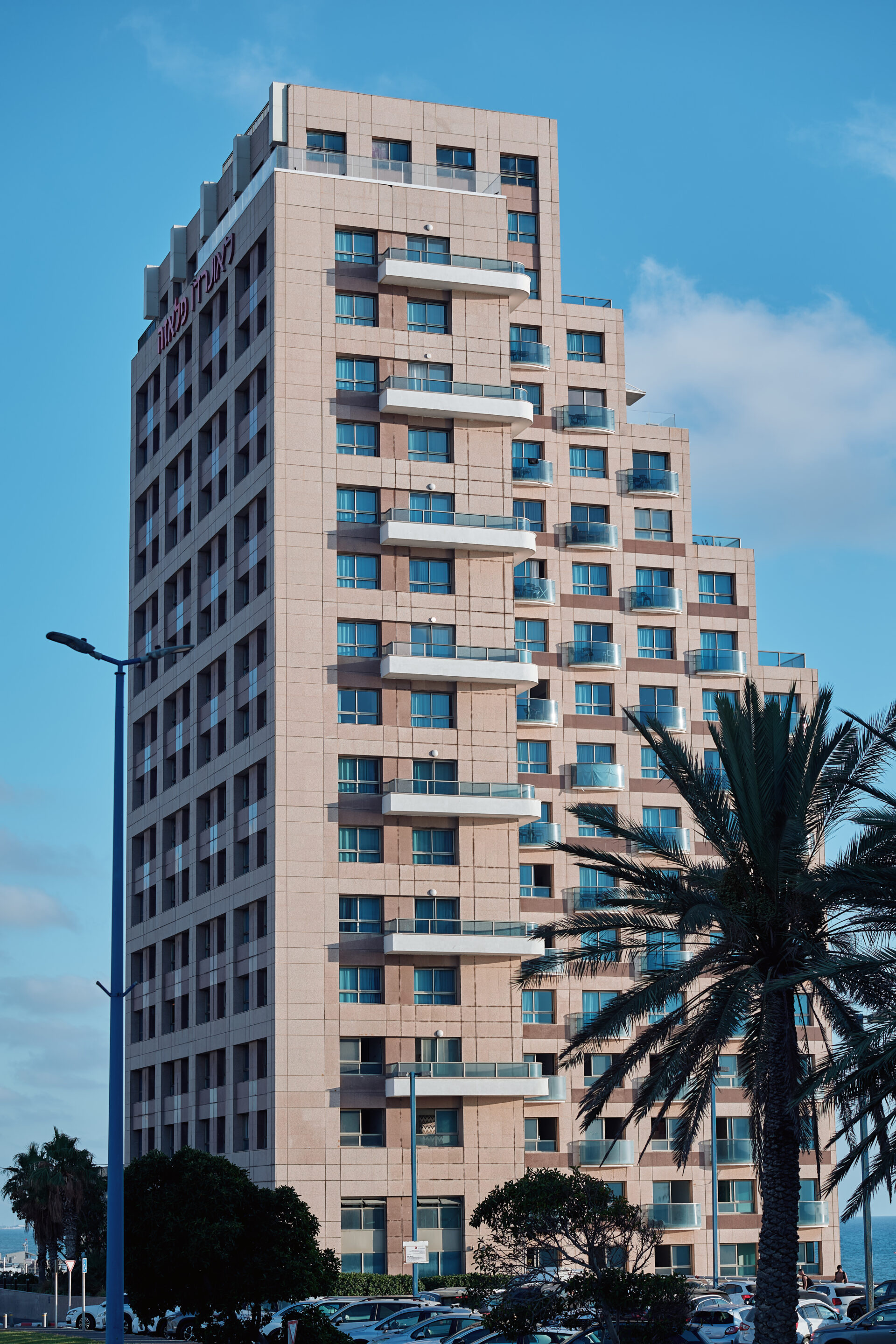
(haipo) – The Central Bureau of Statistics publishes up-to-date data on overnight stays in tourist hotels in Israel for the period January-September 2026, and they indicate a complex situation in the hotel industry. The “Harry’s Roar” operation, which began on February 28, 2026, had a significant impact on the number of overnight stays and room occupancy across the country. Alongside a decrease in occupancy, there was an increase in tourist overnight stays, but the general trend indicates a volatile and challenging market.
15.1 million overnight stays: a decrease compared to last year
During the first nine months of 2026, 15.1 million nights In tourist hotels in Israel, a decrease compared to 15.8 million nights In the same period in 2025.
Segmentation by guest type
- Israeli overnight stays: 12.7 million (84% of all overnight stays) — down from 13.8 million in 2025
- Tourist overnight stays: 2.5 million (16% of total overnight stays) — an increase from 2.1 million in 2025
The data reflects some recovery in inbound tourism, alongside a decline in domestic demand.
Room occupancy: National decline, gaps between districts
The national room occupancy rate was 50 %, compared to 53 % In the same period last year.
Occupancy by districts
- The South – 66% (highest)
- Tel Aviv – 50.1%
- Center – 49.6%
- Haifa – 48.5%
- Jerusalem – 37.2%
- The North – 36.1% (lowest)
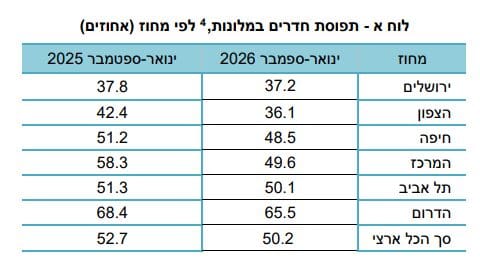
The data indicate significant damage in the northern and central provinces, likely due to their proximity to conflict zones.
Haifa stands out: relatively high occupancy during a volatile period
According to CBS data, Haifa continues to display relatively stable performance in the hotel industry. In the breakdown by selected localities, Haifa recorded:
- 53% occupancy in September 2026
- Occupancy of 52.9% in July–August
- Sharp decline in March (24.5%) following the start of the campaign
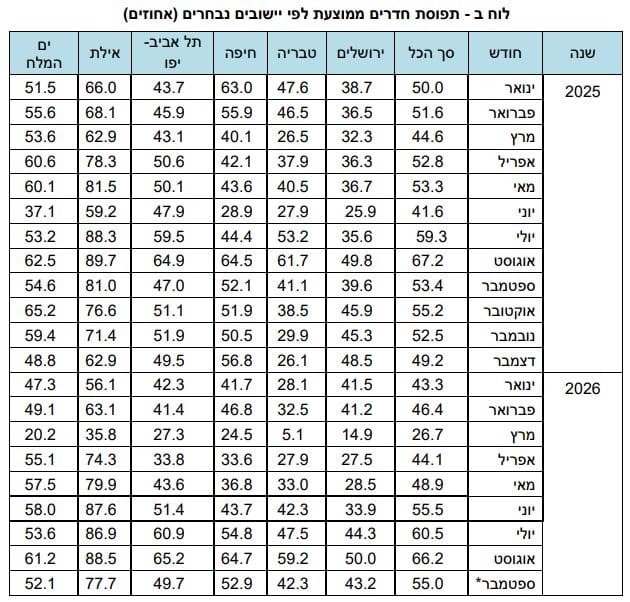
Despite the volatility, Haifa ranks second in the country in September, after Eilat (78%).
Eilat leads, Tiberias at the bottom
Examining the data for September 2026:
- Eilat – 78% occupancy
- Haifa – 53%
- Dead Sea – 52%
- Tiberias – 42% (lowest)
Eilat continues to be a major driver in the hotel industry, even during complex security periods.
The impact of military operations: sharp fluctuations in demand
The CBS notes that since the "Iron Swords" War (October 2023) to Operation "Am Kalavi" (June 2025), the hotel industry has experienced dramatic changes:
- Sharp decline in tourist overnight stays
- Vacation cancellations for Israelis
- Accepting evacuees in hotels
- Closing hotels in dangerous or uneconomic areas
Operation "Harry's Roar" led to a further decrease in occupancy and number of nights, especially in March-April 2026.
Trends: Increase in tourist overnight stays, stability in Israeli overnight stays
According to seasonally adjusted data:
- Israeli overnight stays: 1.4 million per month on average — stability
- Tourist overnight stays: 396 thousand per month — an increase of 5.3% on average per month
The trend indicates a certain recovery in incoming tourism, despite the security situation.
Summary: The hotel industry faces a complex reality
The data shows a hotel industry that continues to operate under challenging conditions:
- Decrease in room occupancy
- Sharp volatility between months
- Direct impact of security operations
- Partial recovery in inbound tourism
- Relative stability in Israeli overnight stays
Haifa stands out favorably with relatively high occupancy, but the national picture indicates a market that continues to deal with uncertainty.
Did the article interest you?